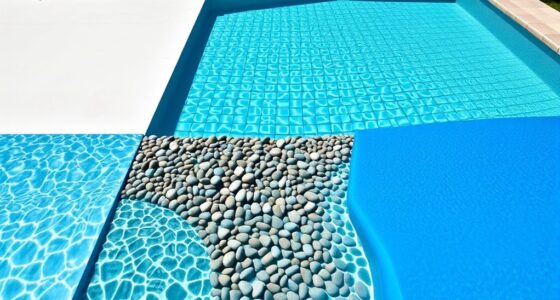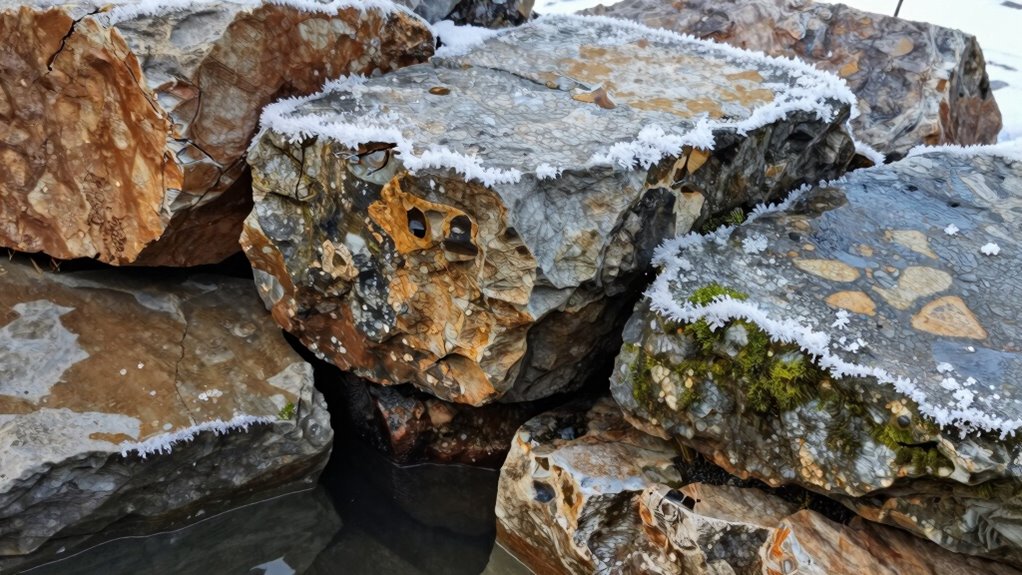
In freeze-thaw climates, natural stone around pools can be tricky. Water absorbed by softer stones like limestone or sandstone expands when frozen, causing cracks and damage. Harder stones like granite resist this better, especially if properly sealed and installed with quality techniques. Keep in mind, regular maintenance and inspections are crucial for longevity. Want to uncover more tips to protect your pool area and keep it stunning? Stay tuned for essential insights.

Get pool and patio gear delivered free with Prime
- Fast, free delivery on millions of items
- Prime Video, Amazon Music and more included
- Member-only deals all year
Key Takeaways
- Natural stone’s porosity can lead to water absorption, increasing risk of damage during freeze-thaw cycles.
- Harder stones like granite resist cracking better but still require proper sealing and installation.
- Regular inspections and maintenance are essential to detect and repair freeze-thaw damage early.
- Proper sealing reduces water infiltration but is not entirely foolproof in cold climates.
- Choosing low-porosity, durable stones along with correct installation extends longevity around pools.
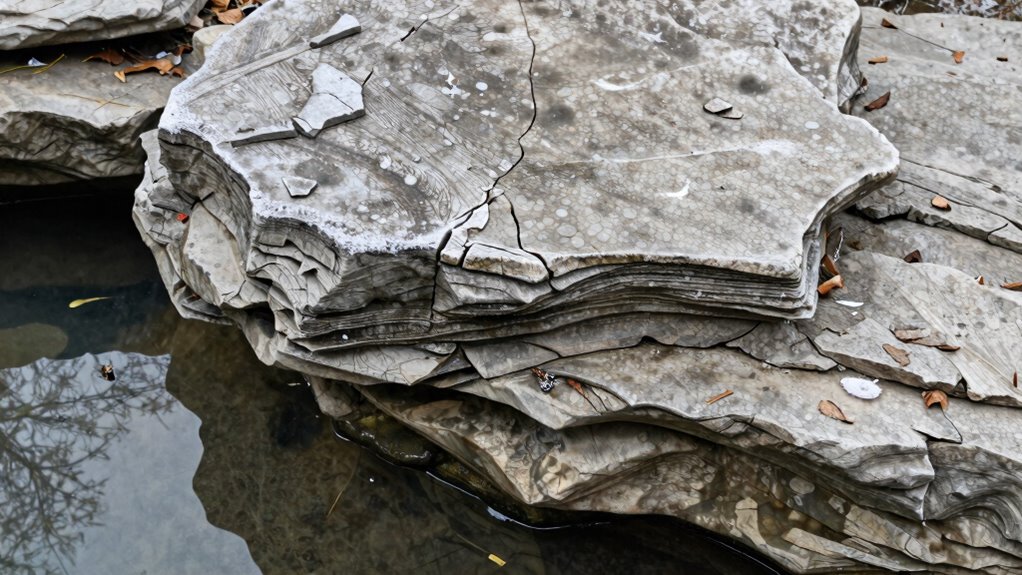
Natural stone’s porous nature means it absorbs moisture, which can be problematic in cold climates. When temperatures drop below freezing, any water trapped within the stone expands as it turns to ice. This expansion can cause cracks, spalling, or even full breakage over time. As a result, your once-beautiful poolside area might develop uneven surfaces or loose stones, diminishing the visual appeal and safety. To avoid this, proper installation and sealing are crucial. Sealing the stone helps reduce water absorption, but it’s not a foolproof solution—regular inspections and maintenance are necessary to catch early signs of damage. Understanding the porous nature of natural stone** helps you better manage moisture and prevent damage. Choosing the right type of natural stone is another key factor. Harder stones like granite or certain types of slate tend to resist cracking better than softer stones like sandstone or limestone. These more durable options can withstand the freeze-thaw cycles better, helping preserve your poolside aesthetics over the years. Still, even the toughest stones require proper installation and ongoing stone maintenance to keep their integrity in cold weather. Proper sealing techniques and choosing durable stone types are essential steps to prolong the lifespan of natural stone in freeze-thaw climates. Additionally, selecting stones with low porosity can significantly reduce the risk of water infiltration and damage. Proper installation methods are also vital to prevent water penetration and movement within the stone. Recognizing the importance of material quality can further influence the longevity of your stone surfaces. Ultimately, natural stone around pools in freeze-thaw climates demands a proactive approach. You should expect some wear and tear, but with the right choice of stone, correct sealing, and regular maintenance, you can enjoy the natural beauty of stone without sacrificing durability. While it might require extra effort, the timeless appeal of natural stone makes it well worth the investment** for a stunning, functional outdoor space.
natural stone pool surround sealant
As an affiliate, we earn on qualifying purchases.
As an affiliate, we earn on qualifying purchases.
Frequently Asked Questions
How Does Natural Stone Impact Pool Safety in Cold Climates?
Natural stone can enhance your pool area with aesthetic diversity, but in cold climates, it can impact safety if not chosen carefully. Frost can cause the stone to crack or become uneven, increasing slip risks. You should weigh cost considerations, as durable, freeze-thaw resistant stones may be more expensive. Proper installation and maintenance are essential to guarantee safety and longevity, making natural stone a smart choice if you prioritize style and resilience.
Are There Specific Natural Stones Best Suited for Freeze-Thaw Conditions?
Think of choosing natural stone for your pool area as picking the right armor. You should opt for dense, durable stones like granite or slate, which handle freeze-thaw cycles well. Lighter-colored stones reflect more heat, reducing surface stress. Proper installation techniques, like using expansion joints and proper sealing, guarantee longevity. These choices help your stone withstand harsh weather, keeping your pool beautiful and safe year-round.
What Maintenance Is Required for Natural Stone Around Pools in Winter?
In winter, you should regularly clean your natural stone around the pool to prevent dirt buildup. Apply a high-quality sealant using proper stone sealing techniques to protect against moisture and freeze-thaw damage, ensuring the pool surface durability. Check the stone periodically for cracks or chips, especially after storms, and promptly repair any issues. Proper winter maintenance helps preserve the stone’s beauty and structural integrity during harsh weather conditions.
Can Natural Stone Be Installed Over Existing Pool Decks in Cold Areas?
Think of your pool deck as a canvas waiting to be painted anew. You can install natural stone over existing pools in cold areas, but it’s like adding a delicate layer—requiring careful preparation. While it enhances pool aesthetics, consider cost implications, as removal and prep work can add up. If done right, you get a stunning transformation, but weigh the expenses against the beauty you’ll gain.
How Does Natural Stone Affect Pool Heating Efficiency in Freezing Weather?
Natural stone can affect your pool’s heating efficiency in freezing weather by impacting thermal insulation and heat retention. Its dense surface absorbs and retains heat better than other materials, helping to keep the water warmer longer. However, if the stone is porous or improperly installed, it may lose heat faster. Proper sealing and selecting the right type of natural stone can optimize heat retention, making your pool more energy-efficient during cold seasons.
low porosity granite for outdoor use
As an affiliate, we earn on qualifying purchases.
As an affiliate, we earn on qualifying purchases.
Conclusion
While natural stone around your pool can add timeless beauty, it’s wise to reflect on the subtle complexities of freeze-thaw climates. With a little extra care and attention, you can enjoy its elegance without worry. Think of it as a gentle dance—balancing durability and aesthetic charm. When you understand the nuances, your poolside oasis can remain stunning and inviting, season after season, quietly revealing its natural grace in every detail.
freeze-thaw resistant natural stone
As an affiliate, we earn on qualifying purchases.
As an affiliate, we earn on qualifying purchases.
As an affiliate, we earn on qualifying purchases.
Halloween Picks
halloween
As an affiliate, we earn on qualifying purchases.