When choosing between plaster, pebble, and vinyl for your pool, consider aesthetics, durability, and maintenance. Plaster gives a smooth, classic look but may crack or stain over time. Pebble offers a natural, textured finish that resists stains and lasts longer. Vinyl is budget-friendly and quick to install, but it can puncture and may need replacement sooner. Exploring these options further will help you find the perfect fit for your pool and lifestyle.

Get pool and patio gear delivered free with Prime
- Fast, free delivery on millions of items
- Prime Video, Amazon Music and more included
- Member-only deals all year
Key Takeaways
- Plaster offers a smooth, customizable finish but requires resurfacing every 7-10 years, while pebble is more durable with a textured, natural look.
- Pebble surfaces last 15-20 years and resist staining and algae better than plaster, which may crack or stain over time.
- Vinyl is a budget-friendly, quick-install option with easy maintenance but needs replacement every 5-10 years due to punctures and fading.
- Pebble provides enhanced safety with better traction, whereas plaster and vinyl offer smooth, comfortable surfaces.
- Initial costs vary: plaster is affordable upfront, pebble costs more but lasts longer, and vinyl is the least expensive but less durable.
Are you wondering which pool surface material is best for your backyard oasis? Choosing the right surface impacts both how your pool looks and how long it lasts. The three main options—plaster, pebble, and vinyl—each bring unique qualities that can match different preferences and needs. Understanding their strengths helps you make a confident decision.
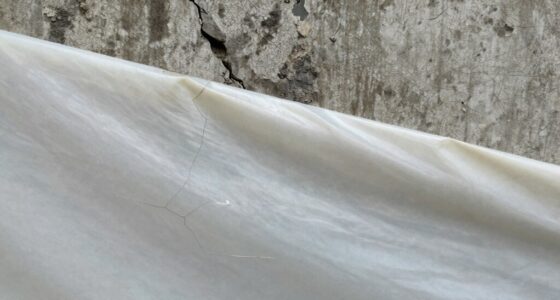
Starting with plaster, it’s the most traditional choice. It offers a smooth, sleek finish that can be tinted in a variety of colors, providing a clean, classic look for your pool. When it comes to surface aesthetics, plaster provides a polished appearance that can be customized to match your backyard design. However, its surface durability depends on quality and maintenance. Over time, plaster tends to develop cracks and stains, especially if you don’t keep up with regular chemical balancing. Typically, plaster pools need resurfacing every 7 to 10 years, which can add to long-term costs. While initially more affordable, it might require more upkeep, but its smooth surface feels comfortable under your feet and invites a relaxing swim.
Starting with plaster offers a classic, smooth finish that can be customized but may require resurfacing every 7-10 years.
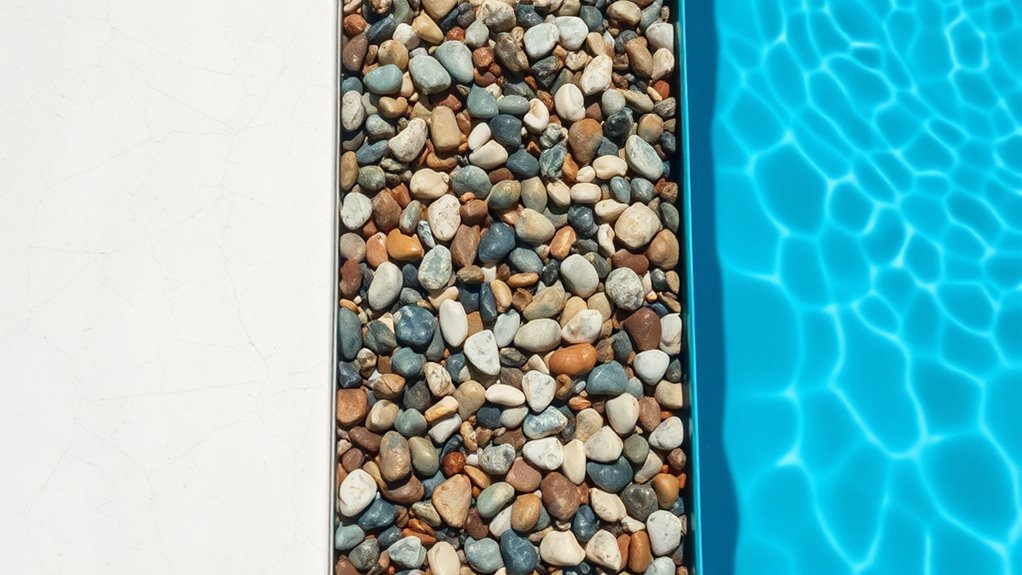
Pebble surfaces take aesthetics a step further, offering a textured, natural look that many find appealing. Made from small, colorful stones embedded in the surface, pebble finishes are highly durable and resistant to staining and wear. Their surface durability is superior to plaster, often lasting 15 to 20 years with proper maintenance. The textured finish adds a unique visual appeal, creating a shimmering, multi-tone effect that mimics natural water features. This makes your pool stand out and enhances its overall beauty. Additionally, pebble surfaces resist algae and calcium buildup better than plaster, reducing cleaning time. They may cost more upfront, but their longevity and visual appeal can justify the investment. The textured surface can also provide better traction, making it safer, especially around wet areas.
Vinyl surfaces are a different story altogether. They’re typically installed as a liner within a custom shell, offering a quick and less expensive way to get your pool up and running. In terms of surface aesthetics, vinyl offers a wide range of patterns and colors, mimicking everything from tiles to natural stone. While the initial cost is lower, vinyl isn’t as durable as plaster or pebble. It’s prone to punctures, tears, and fading over time, usually needing replacement every 5 to 10 years. However, vinyl pools excel in providing a smooth surface that feels gentle on your skin and is easy to clean. The flexibility of vinyl allows for creative designs and quick installation, making it a popular choice for budget-conscious homeowners. But keep in mind, vinyl’s less robust surface durability means it might require more frequent repairs or replacements, especially if you have sharp or heavy objects around the pool.
Choosing the right pool surface boils down to balancing surface aesthetics with pool durability and your budget. Each material has its own charm and practical considerations, so think about what fits your lifestyle and design vision best.
As an affiliate, we earn on qualifying purchases.
Frequently Asked Questions
Which Pool Surface Material Is Most Eco-Friendly?
You’ll find that vinyl pools are generally the most eco-friendly option since they use fewer materials and produce less waste during installation. For sustainable materials, look for eco-friendly options like recycled or locally sourced aggregates. While plaster and pebble surfaces have their benefits, vinyl pools typically have a lower environmental impact. Choosing these options helps reduce your pool’s carbon footprint and supports sustainable practices.
How Do Maintenance Costs Compare Across Materials?
You’ll find that maintenance costs vary across pool surface materials. Vinyl pools generally have lower initial costs but may need replacements or repairs sooner, affecting long-term savings. Pebble finishes tend to be more durable, reducing maintenance expenses over time, while plaster requires regular upkeep and resurfacing, increasing costs. Conducting an all-encompassing cost analysis helps you understand long-term savings, enabling you to choose a surface that balances upfront costs with ongoing maintenance needs effectively.
Which Surface Resists Algae Growth Best?
You notice your pool stays cleaner longer, thanks to its surface resisting algae growth better. Pebble surfaces, with their lower porosity, offer superior algae prevention because they don’t trap debris or nutrients easily. In contrast, plaster’s higher porosity makes it more prone to algae buildup, requiring more frequent cleaning. Vinyl surfaces are smooth and less porous, but they can still harbor algae if not maintained properly.
Are There Specific Health Concerns With Certain Surfaces?
Certain pool surfaces can raise health concerns based on chemical compatibility and slip resistance. Vinyl, for example, reacts poorly with some chemicals, potentially causing irritation or degradation. Pebble surfaces tend to be slip-resistant, reducing fall risks, but may trap debris. Plaster can develop rough patches that harbor bacteria if not maintained properly. You should regularly check your pool’s surface, guarantee chemical balance, and choose a material that minimizes slips and health risks.
How Does Climate Influence Material Durability?
Climate impacts your pool’s health like the weather shapes a landscape, affecting material longevity. Hot, sunny climates speed up wear on vinyl and plaster, causing cracks and fading, while pebble finishes resist chemicals better in harsh conditions. Cold climates can cause freeze-thaw damage, reducing durability. So, you should select materials suited to your climate to guarantee your pool stays beautiful and lasts longer, saving you money in the long run.
As an affiliate, we earn on qualifying purchases.
Conclusion
Choosing between plaster, pebble, and vinyl pools isn’t just about cost—it’s about experience. While plaster offers a smooth, classic look, pebble provides durability and texture, and vinyl promises affordability and ease. Each material shapes your pool’s feel and longevity, much like selecting a canvas for a masterpiece. So, weigh your priorities carefully: is it beauty, resilience, or budget? Your perfect pool surface awaits, ready to turn your backyard into a personal oasis.
As an affiliate, we earn on qualifying purchases.
As an affiliate, we earn on qualifying purchases.
Columbus Day / Indigenous Peoples' Day Picks
long weekend sales
As an affiliate, we earn on qualifying purchases.