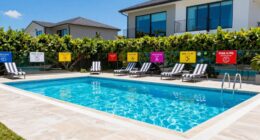
You should regularly review your pool’s accessibility features to ensure ADA compliance and promote inclusivity. This includes inspecting ramps, lifts, and assistive devices to guarantee they’re functional and well-maintained. Make certain pathways are obstacle-free, slip-resistant, and wide enough for safe movement. Position accessibility options visibly and intuitively. Staff training is essential; they need to understand ADA standards and how to assist visitors respectfully. Staying proactive helps create a safe, welcoming environment for all—if you continue, you’ll discover key tips to enhance accessibility even further.
Key Takeaways
- Regularly review and update accessibility features to comply with current ADA standards and regulations.
- Ensure pathways around the pool are obstacle-free, wide, and slip-resistant for safe access.
- Maintain and properly position ramps, lifts, and assistive devices for easy, intuitive use.
- Train staff consistently on ADA requirements, equipment operation, and effective communication with visitors with disabilities.
- Conduct routine inspections to identify and resolve accessibility issues promptly, fostering an inclusive environment.
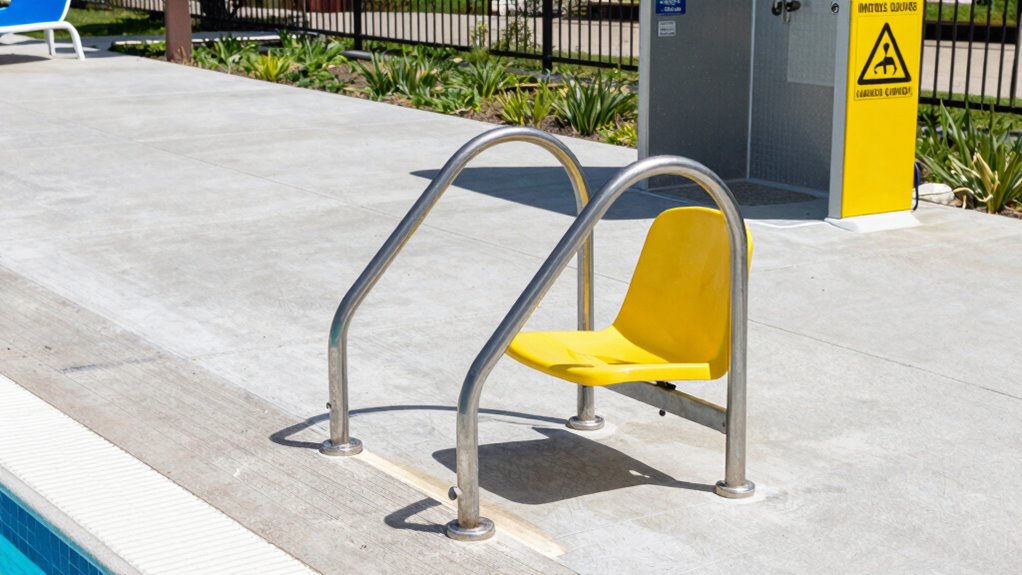
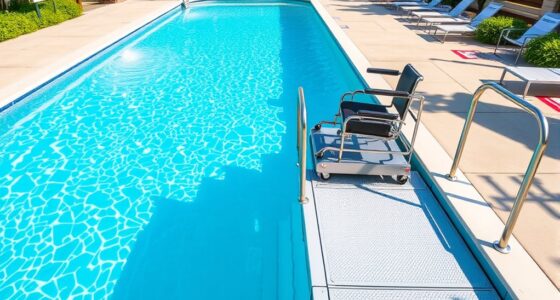
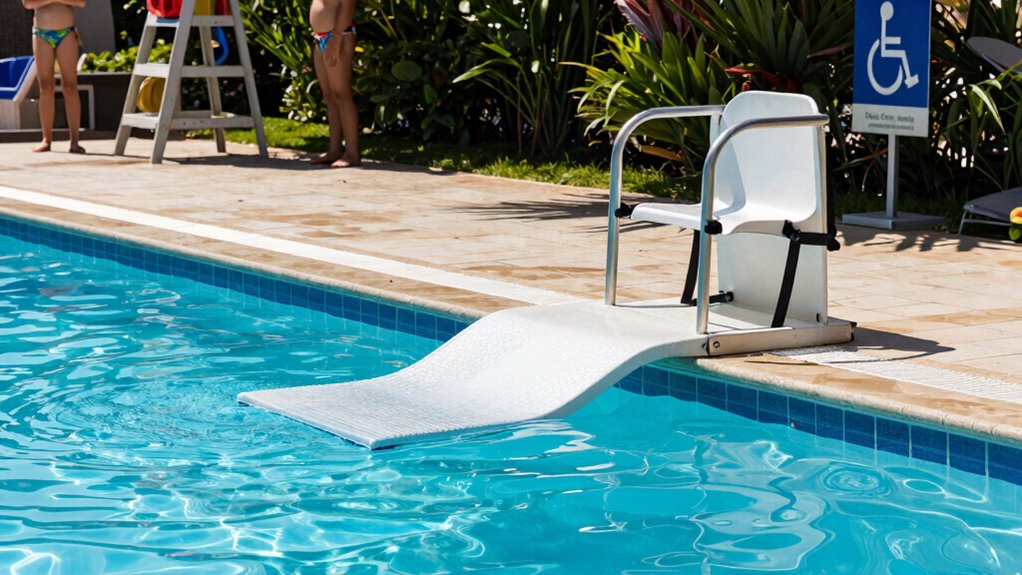
Ensuring ADA compliance is essential for public pool operators, as it guarantees access and safety for all visitors. One of the key aspects you should revisit regularly is poolside accessibility. This means making sure your pool is equipped with ramps, lifts, and other assistive devices that enable individuals with disabilities to enter and enjoy the water safely. These features aren’t just about meeting legal requirements; they create an inclusive environment where everyone can participate. Regularly inspecting and maintaining these accessibility tools is crucial to ensure they are functioning correctly and meet current standards. You should also evaluate the surrounding pathways, ensuring they are wide enough, free of obstacles, and surfaced with slip-resistant material to prevent accidents. The placement of these features should be intuitive, so users can easily identify and access them without confusion or delay. When you prioritize poolside accessibility, you’re actively removing barriers that could prevent someone from enjoying your facility, which is at the heart of ADA compliance. Additionally, keeping up with ADA standards ensures that your facility remains compliant and demonstrates your commitment to accessibility. Staying informed about current accessibility regulations helps you adapt your practices proactively and avoid potential updates that could impact compliance. Moreover, understanding the specific requirements for assistive devices can help you select and maintain the most effective equipment for your pool.
Beyond the physical setup, staff training plays a vital role in maintaining a truly accessible and welcoming environment. You need to ensure your team understands ADA requirements thoroughly and knows how to assist visitors with disabilities confidently and respectfully. Proper staff training includes instruction on how to operate accessibility equipment, such as pool lifts, and how to communicate effectively with individuals who have various disabilities. It’s about fostering a culture of awareness, patience, and proactive assistance. Your staff should also be prepared to recognize potential accessibility issues and address them promptly, whether it’s a malfunctioning lift or an obstructed pathway. Conducting regular training sessions and refreshers helps keep the team informed about the latest ADA standards and best practices. Additionally, empowering your staff to engage with visitors empathetically enhances safety and comfort, making your pool a truly inclusive space.

Aqua Creek Mighty Pool Lift, ADA Compliant, Anchor Not Included, 400 lbs. Capacity (White)
- Anchor Not Included: Does not include anchor
- Adjustable Seat Height: Customizable seat height
- Direct Drive Rotation: Smooth rotation mechanism
As an affiliate, we earn on qualifying purchases.
As an affiliate, we earn on qualifying purchases.
Frequently Asked Questions
How Often Should ADA Accessibility Features Be Inspected?
You should inspect ADA accessibility features regularly, ideally monthly, to guarantee facility signage remains clear and emergency procedures are accessible. Frequent inspections help identify issues like damaged signage or malfunctioning ramps, maintaining compliance and safety. By staying proactive, you ensure that all patrons, including those with disabilities, can navigate your pool confidently and safely. Consistent checks reinforce your commitment to accessibility and help address potential problems before they become emergencies.
Are There Specific Training Requirements for Pool Staff Regarding ADA Compliance?
Yes, there are specific training requirements for your pool staff regarding ADA compliance. You need to guarantee your staff undergoes regular staff training on ADA regulations, including understanding accessible features like pool signage and assistive devices. Proper training helps staff assist all visitors effectively, recognize accessibility issues, and communicate clearly with guests with disabilities. This training should be ongoing, keeping staff updated on ADA requirements and ensuring they can assist all patrons confidently and compliantly.
What Are the Penalties for Non-Compliance With ADA Standards?
Ignoring ADA standards is like sailing into dangerous waters; penalties can be severe. You may face hefty fines, legal actions, or loss of operating licenses. Non-compliance with accessibility signage and emergency communication requirements can lead to lawsuits and damage your reputation. Staying compliant protects your pool and patrons, ensuring everyone can enjoy the facility safely. Regular audits and staff training help you steer clear of these risks and promote inclusivity.
How Can Pools Improve Accessibility for Individuals With Sensory Disabilities?
You can improve accessibility for individuals with sensory disabilities by adding sensory-friendly features like calming zones, textured surfaces, and adjustable lighting. Use clear accessibility signage to guide visitors and inform them about available accommodations. Consider installing sound-absorbing materials to reduce noise levels and create a more comfortable environment. These enhancements help guarantee everyone feels welcome and safe, making your pool truly inclusive for all visitors with sensory sensitivities.
Are There Funding Options Available for ADA Accessibility Modifications?
Yes, you can access funding options like funding grants and accessibility grants to support ADA modifications at your pool. These grants are often provided by federal, state, or local agencies, and some private organizations also offer financial assistance. To secure funding, you should research available grants, check eligibility criteria, and submit detailed applications demonstrating your commitment to improving accessibility. This support can substantially offset costs for necessary ADA upgrades.

Nuvium 1" Rise Rubber Threshold Ramp for Doorways, Wheelchair Ramp
- Non-slip surface for safety: Grooved surface reduces skidding risk
- Made from natural rubber: Indoor and outdoor use, odor safe
- Customizable size: Cut and splice to fit thresholds
As an affiliate, we earn on qualifying purchases.
As an affiliate, we earn on qualifying purchases.
Conclusion
Just like a well-maintained pool invites everyone to enjoy its waters, revisiting ADA access basics guarantees your facility welcomes all. By staying informed and proactive, you create an inclusive environment that reflects care and compliance. Remember, accessibility isn’t a one-time fix but an ongoing commitment—like ripples spreading outward. Keep these principles at the forefront, and you’ll ensure your pool remains a safe, inviting space where everyone can make a splash.

Drainage Non Slip Flooring Mats Swimming Pool Bathroom Anti-Fatigue Rubber Matting 3×10 Ft Heavy Duty Commercial Anti Slip Floor Mats for Garage Restaurant Sauna SPA,Gray/Grey,0.9×3M
- Large, Cuttable Size: 3×10 ft, 5.5mm thick, customizable
- Durable PVC Material: High-quality, wear-resistant, non-deforming
- Effective Drainage Design: Wave-shaped holes for water runoff
As an affiliate, we earn on qualifying purchases.
As an affiliate, we earn on qualifying purchases.
As an affiliate, we earn on qualifying purchases.