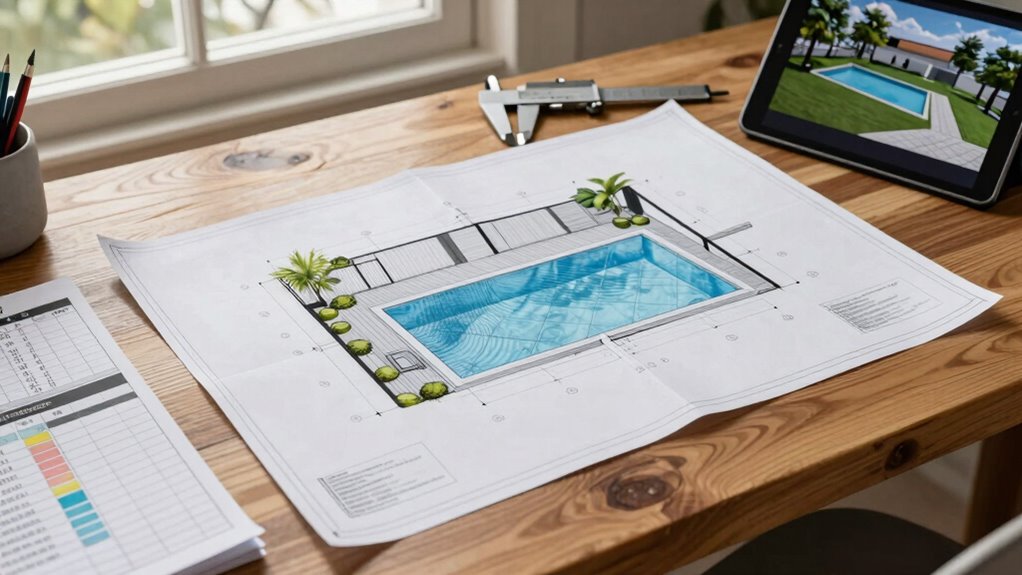

Your pool plans, drawings, and equipment schedules work together to create a smooth, coordinated project. Plans and drawings show you the layout, landscape integration, and placement of features, while equipment schedules detail all systems like pumps and filters. Together, they help you avoid costly mistakes, guarantee safety compliance, and streamline installation. By carefully coordinating these components, you’ll achieve a functional, beautiful pool environment—continue to explore how these elements come together for a successful build.

Get pool and patio gear delivered free with Prime
- Fast, free delivery on millions of items
- Prime Video, Amazon Music and more included
- Member-only deals all year
Key Takeaways
- Pool plans provide detailed layouts that guide the placement of equipment and features in the drawings.
- Drawings visually represent the design, integrating equipment schedules for accurate component placement.
- Equipment schedules list all necessary components, ensuring their placement aligns with the plans and drawings.
- Proper coordination prevents conflicts, safety issues, and ensures equipment fits within the landscape design.
- Cohesive integration of plans, drawings, and schedules streamlines construction and ensures compliance with safety standards.
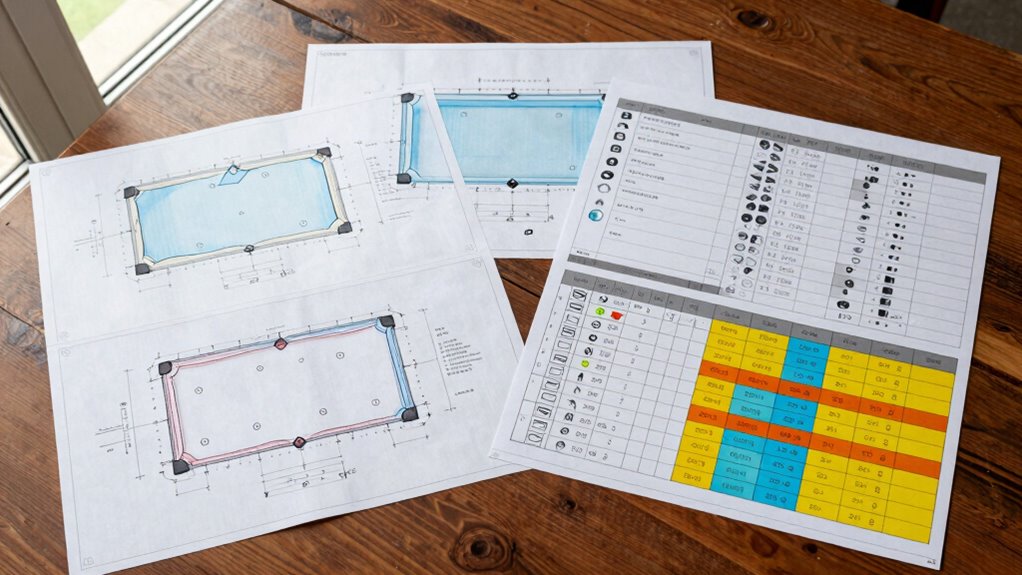
When designing a pool, having detailed plans, drawings, and equipment schedules is essential to guarantee everything comes together smoothly. You need a clear, thorough blueprint that integrates the landscape design seamlessly with the technical aspects of the project. This means considering how your pool will sit within the surrounding environment—trees, patios, and other features—while also ensuring safety regulations are strictly followed. You landscape design influences the pool’s placement, accessibility, and aesthetic appeal, so it’s vital to include these details early on. Proper planning helps prevent costly mistakes and guarantees the space looks and functions exactly as you envision.
Your pool plans should include precise drawings that specify dimensions, depth levels, and the positioning of features like steps, lighting, or waterfalls. These drawings act as a roadmap for all involved in construction, guiding the installation of the pool itself as well as related features like decking and landscaping. When you coordinate these drawings with your landscape design, you ensure the pool integrates naturally into your yard, avoiding issues like uneven terrain or obstructions that could interfere with safety or functionality. Additionally, understanding equipment schedules is crucial for ensuring that all components are properly coordinated and installed efficiently. Incorporating safety regulations into your plans from the outset also helps streamline compliance and reduces the risk of future modifications. Being aware of local building codes ensures your project adheres to legal standards and avoids potential penalties.
Precise pool drawings ensure seamless integration with landscape, safety, and functionality for a smooth construction process.
Safety regulations are a fundamental part of your planning process. Your equipment schedule must account for safety features such as fencing, alarms, and anti-entrapment devices, all of which are mandated by local codes. Including these details in your plans from the start makes it easier to meet legal requirements and avoid delays. It’s also essential to plan for drainage, lighting, and barriers that prevent accidents and maintain a safe environment around your pool. By aligning these safety features within your drawings, you create a space that’s both beautiful and compliant, giving you peace of mind.
Your equipment schedule should detail every component needed—pumps, filters, heaters, and circulation systems—so you know exactly what to purchase and install. This schedule should correspond with your drawings, ensuring that the placement of equipment doesn’t interfere with landscaping or safety measures. For example, placing a pump near a deck or in a location accessible for maintenance but out of reach of children combines functionality with safety and aesthetic considerations. This integrated approach helps streamline installation, reduces surprises, and keeps your project on schedule and within budget. Clear communication between your design and installation teams further ensures all elements work harmoniously during construction.
In the end, your pool plans, drawings, and equipment schedules work together to create a cohesive, safe, and visually appealing outdoor space. By paying close attention to how they connect—especially considering landscape design and safety regulations—you set yourself up for a successful project that meets your needs and stands the test of time.
Products Worth Considering

Ring Alarm 5-Piece Wireless Security System

Ring Alarm 14-Piece Wireless Security System Kit

Levoit Vital 100S-P Air Purifier with Washable Pre-Filter
As an affiliate, we earn on qualifying purchases.
Frequently Asked Questions
How Do I Interpret Technical Symbols on Pool Plans?
To interpret technical symbols on pool plans, start by referring to the legend or key provided on the drawing, which explains each symbol used in the pool design. Pay close attention to symbols representing equipment, plumbing, and electrical components. Understanding symbol interpretation helps you accurately visualize how the pool will be built and guarantee all elements align with your design intentions. Practice reading symbols consistently to make future project assessments easier.
What Are Common Mistakes in Pool Equipment Schedules?
A common mistake in pool equipment schedules is overlooking specific details like capacity, flow rates, or compatibility, which can cause issues with pool maintenance and equipment troubleshooting later on. You might also misread symbols or abbreviations, leading to incorrect equipment selection. Always double-check that the schedule aligns with your pool’s needs, and guarantee all specs are accurate to avoid costly replacements or repairs down the line.
How Do Plans Accommodate Future Pool Upgrades?
Ever wondered how your pool plans can handle future upgrades? You should incorporate flexibility into your design for future expansion and upgrade planning. This means leaving space for additional equipment, choosing adaptable piping layouts, and using versatile systems. By considering these factors from the start, your pool can seamlessly accommodate upgrades down the line without costly modifications, ensuring longevity and ease of maintenance.
What Permits Are Required Based on These Drawings?
You need to submit a permit application to your local building authority, ensuring your pool plans meet all regulatory compliance standards. This process confirms your drawings adhere to safety codes, zoning laws, and environmental regulations. By securing the proper permits, you can proceed confidently, knowing your project aligns with legal requirements. Always review specific local requirements, as permit types and submission procedures can vary depending on your location.
How Do I Verify the Accuracy of Pool Drawings?
To verify the accuracy of pool drawings, you should compare them with actual site measurements and confirm they meet safety standards. Check for clarity on pool safety features and verify material specifications align with project requirements. Consult with a qualified engineer or inspector to review the plans, ensuring that safety protocols are incorporated and materials are specified correctly. This helps prevent issues during construction and guarantees a safe, compliant pool.
Conclusion
By understanding how pool plans, drawings, and equipment schedules fit together, you’re like the conductor of a well-orchestrated symphony. Each element plays its part, ensuring your pool project flows smoothly from blueprint to splash. When these pieces align, you’ll see your dream pool come to life seamlessly. Remember, the harmony of planning is the key to turning your water wonderland into a reality that’s as perfect as a clear, sparkling pond.