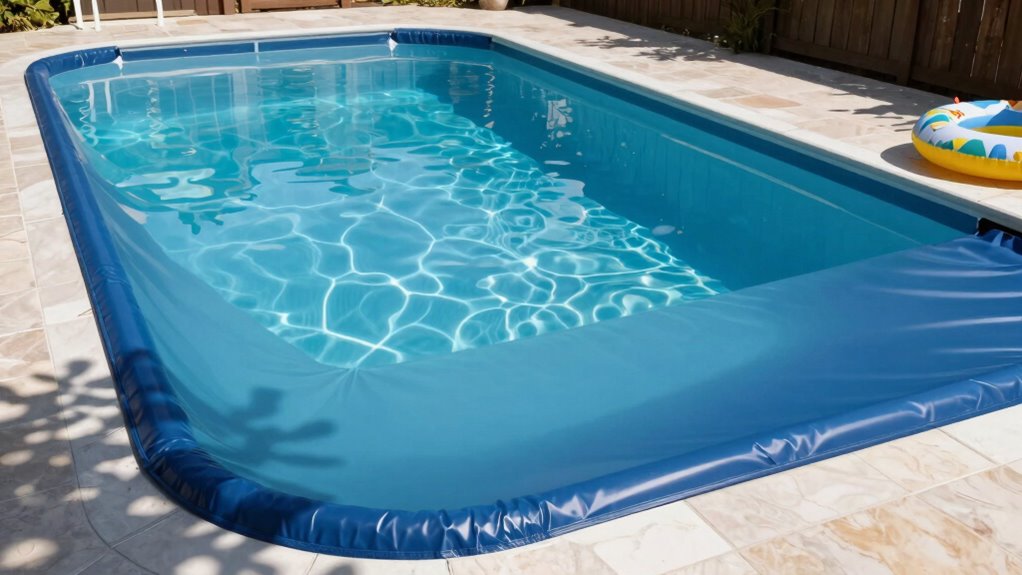

Pool covers help by reducing heat loss, keeping debris out, and protecting against mold, which extends your pool’s lifespan and conserves energy. However, they can create a false sense of security because they don’t prevent accidents without supervision. Damage or improper installation can weaken their effectiveness. If you want to know how to keep your family safe and maximize your cover’s benefits, there’s more to take into account.
Key Takeaways
- Pool covers reduce heat loss, save energy, and prevent debris buildup, enhancing pool safety and maintenance.
- They help extend pool lifespan but do not eliminate risks without regular inspection and supervision.
- Improper installation or damage can compromise safety, creating a false sense of security.
- External factors like weather can affect cover effectiveness, requiring proactive adjustments.
- Relying solely on covers without supervision can lead to accidents, emphasizing the need for vigilance.
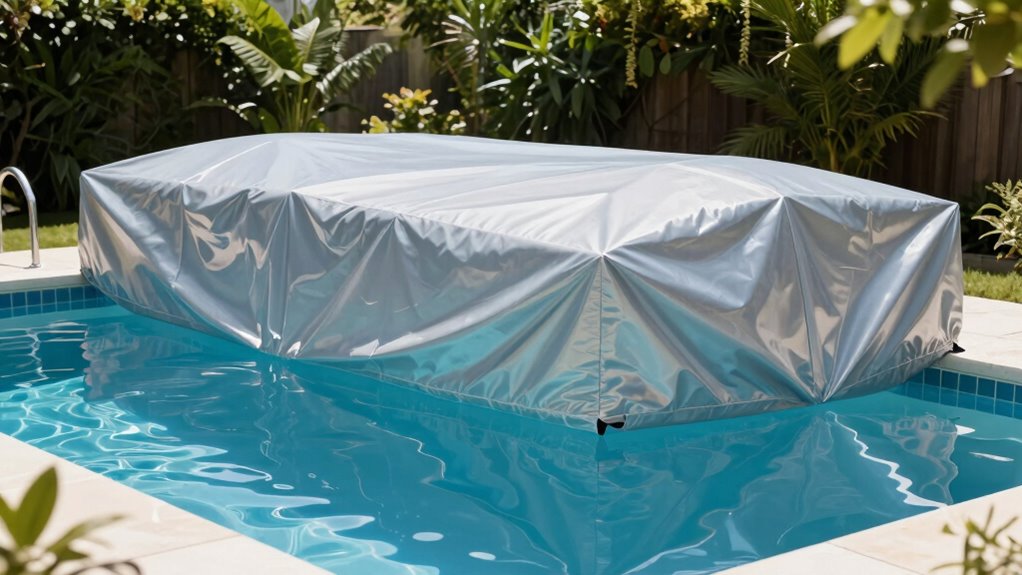
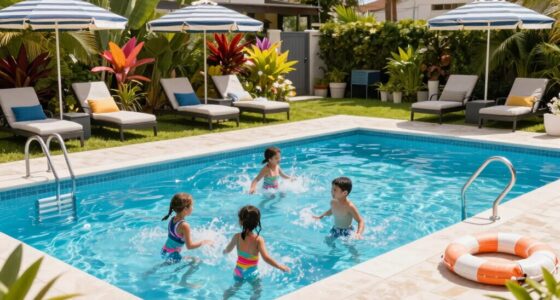
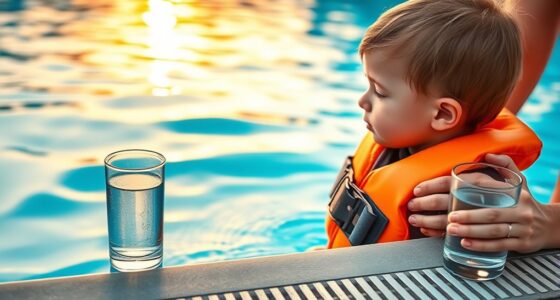
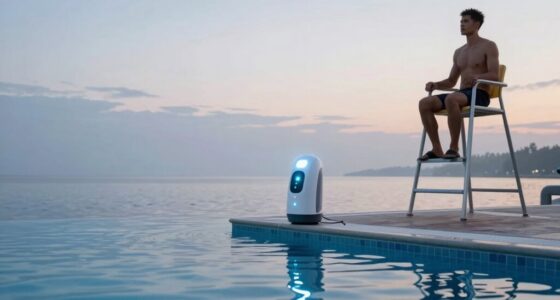
While pool covers are often praised for their safety and energy-saving benefits, relying solely on them can create a false sense of security. It’s tempting to believe that a sturdy cover keeps everyone safe, but you need to be proactive about safety precautions beyond just covering the pool. Never assume that a cover alone prevents accidents—always supervise children and pets, especially when the pool isn’t in use. Even the most robust cover can be compromised if it’s damaged or improperly installed, so regular inspections are essential. Check for tears, loose fittings, or wear that could make the cover less effective. Remember, safety isn’t just about having a cover; it’s about guaranteeing it functions correctly and that everyone around the pool understands the importance of caution.
Maintenance considerations also play a vital role in the effectiveness of your pool cover. You’ll need to routinely clean the cover to prevent debris buildup, which can lead to mold or deterioration over time. Leaves, dirt, and algae can accumulate and weaken the material, reducing its lifespan and safety. When cleaning, use gentle methods recommended by the manufacturer to avoid damaging the cover’s integrity. Additionally, proper storage during the off-season prevents unnecessary wear, especially if you have a cover that isn’t designed for year-round exposure. Regularly inspecting the cover for tears or holes allows you to catch issues early before they compromise safety or energy efficiency. Proper maintenance extends the life of your cover and assures it continues to help conserve energy and keep debris out of your pool. Moreover, understanding pool cover materials can help you select the most durable and weather-resistant options for your needs. Being aware of how different material properties impact longevity can guide your investment in a more reliable cover. Regular maintenance and knowledge about cover durability also contribute to ensuring your pool remains safe and energy-efficient over time. Additionally, staying informed about weather conditions can help you anticipate when extra precautions or cover adjustments might be necessary to maintain safety and efficiency.

VEVOR Inground Pool Safety Cover 18' x 36' Rectangle with 4x8ft Center End Step, Safety Pool Covers Green Mesh, 15-Year Warranty, Triple Stitched, MAX Strength Winter Safety Cover for Children & Pets
- Perfectly Sized for Most Pools: 20×38 ft cover for 18×36 ft pools
- Resistant High-Strength Material: Made from durable polypropylene with triple stitching
- Complete Hardware Included: Brass anchors, stainless-steel springs, and tools included
As an affiliate, we earn on qualifying purchases.
As an affiliate, we earn on qualifying purchases.
Frequently Asked Questions
How Long Do Pool Covers Typically Last Before Needing Replacement?
Pool covers typically last between 5 to 10 years before needing replacement, depending on the pool material durability. You should monitor for signs of wear, such as tears, fading, or looseness, which indicate it’s time for cover replacement. Proper maintenance can extend their lifespan, but ultimately, knowing the cover’s age and condition helps you determine when to replace it, ensuring safety and efficiency for your pool.
Are There Specific Types of Pool Covers Better for Winter Protection?
For winter protection, you should choose a solid, insulated pool cover. These covers excel in insulation effectiveness, keeping your pool warmer and reducing energy costs. Compared to mesh covers, solid covers tend to be more expensive initially but provide better insulation and longevity. If you prioritize energy efficiency and durability during winter, investing in a high-quality solid cover is worthwhile, offering superior protection and saving you money in the long run.
Can Pool Covers Prevent All Debris From Entering the Pool?
A pool cover can block most debris, but claiming it prevents *all* is like calling a sieve a perfect filter. You’ll still get some leaves and dirt slipping through, especially if the cover’s not durable or if debris is heavy. To minimize debris filtration issues, choose a cover with high durability, and regularly clean it to prevent buildup. Remember, no cover is entirely foolproof—stay vigilant for the best results.
How Do I Properly Maintain and Clean My Pool Cover?
To properly maintain and clean your pool cover, regularly inspect its cover durability for signs of wear or damage. Use gentle cleaning techniques, such as rinsing with a garden hose and scrubbing with a soft brush and mild detergent to remove dirt and debris. Avoid harsh chemicals that could compromise the cover’s material. Storing the cover properly during off-season helps prolong its lifespan, ensuring it remains effective and durable.
Do Pool Covers Affect the Chemical Balance of Pool Water?
Pool covers can impact water chemistry by affecting chemical effects, like reducing evaporation and debris entry, which helps maintain proper chemical balance. However, if you don’t regularly check and adjust your water chemistry, the cover might lead to issues like pH imbalance or algae growth. You need to monitor chemical levels consistently, especially after covering or uncovering, to guarantee your water stays balanced and safe for swimming.
As an affiliate, we earn on qualifying purchases.
Conclusion
Remember, a pool cover is like a safety net—valuable but not foolproof. It helps prevent accidents and keeps your pool cleaner, giving you peace of mind. However, don’t let it lull you into false confidence; always supervise children and never assume the cover is a substitute for vigilance. As the saying goes, “A chain is only as strong as its weakest link.” Stay alert, stay safe, and enjoy your pool responsibly.
As an affiliate, we earn on qualifying purchases.
automatic pool cover maintenance kit
As an affiliate, we earn on qualifying purchases.
As an affiliate, we earn on qualifying purchases.