Pool chemistry problems rarely begin with just one number because maintaining clean, safe water depends on multiple interrelated factors. Adjusting one element, like pH or stabilizer, affects others, creating a delicate balance. Ignoring their interconnectedness can lead to issues like cloudy water or algae. To keep your pool crystal-clear, you need to understand how these variables work together and affect the whole system. Keep exploring to uncover how to master this complex balance efficiently.
Key Takeaways
- Pool chemistry involves multiple interconnected factors; adjusting one parameter often impacts others.
- Small changes in pH or stabilizer can disrupt chlorine effectiveness, leading to broader issues.
- Ignoring the holistic water balance can cause problems like cloudiness, algae, or corrosion.
- Effective maintenance requires continuous monitoring and adjusting all key variables simultaneously.
- Problems rarely stem from a single number but from the complex interactions among all water chemistry factors.
Have you ever struggled to keep your pool water balanced? If so, you’ve probably noticed that managing pool chemistry isn’t as simple as hitting one perfect number. It’s a complex dance involving multiple factors that influence each other. For example, chlorine balancing isn’t just about adding enough sanitizer; it also depends on the pH level, temperature, and other chemicals in your water. When one element is off, it can throw off the entire system. That’s why pool chemistry problems almost never start with just one number. You need to look at the bigger picture to understand what’s really going on. Additionally, understanding the interconnectedness of water chemistry factors is crucial for effective maintenance. Recognizing how changes in one element can cascade into others helps prevent small issues from turning into major problems.
Another key aspect to consider is the importance of proper stabilizer levels, which help protect chlorine from sunlight and prolong its effectiveness. Chlorine balancing, in particular, depends heavily on pH adjustments. If your pH is too high or too low, it can make chlorine less effective at killing bacteria and algae. When pH levels are high, chlorine becomes less available as a disinfectant, which means you might think your chlorine levels are fine, but your water isn’t truly sanitized. Conversely, if your pH is too low, you risk corrosive water that can damage your pool equipment and irritate swimmers’ skin. To achieve *ideal* chlorination, you must constantly monitor and adjust both chlorine levels and pH. It’s a balancing act where changing one parameter can affect the others. For example, adding pH increasers or decreasers influences the chlorine’s efficacy, so you need to adjust both carefully and in tandem. Recognizing the complex interactions between these variables is key to maintaining a healthy pool. Also, understanding buffer capacity helps prevent sudden pH shifts that could disrupt water chemistry.
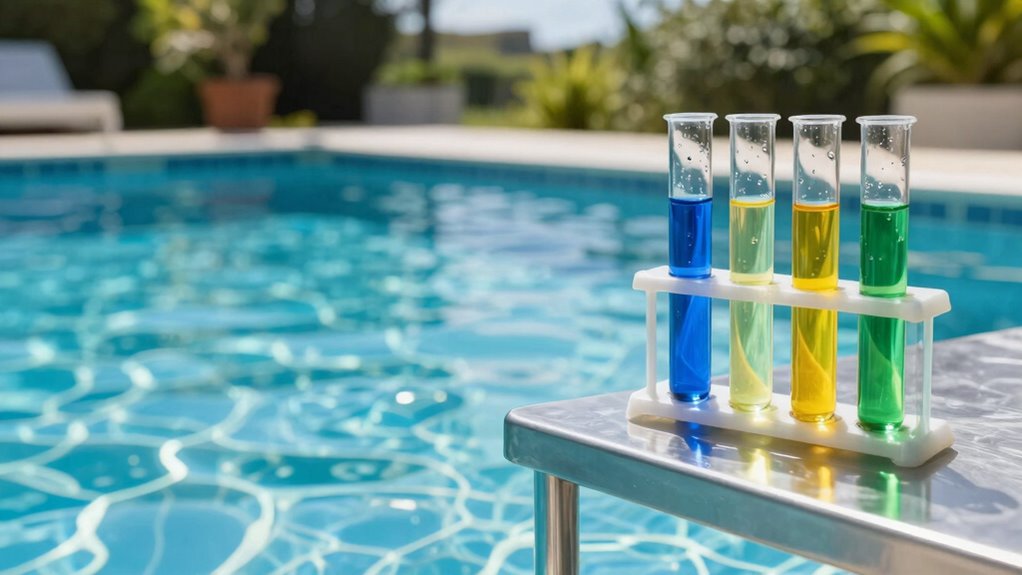
Many pool owners make the mistake of focusing on just one aspect of chemistry, like adding chlorine without checking the pH. But if you ignore pH adjustments, your chlorine may become ineffective, leading to cloudy water, algae growth, and possible health risks. That’s why understanding how these variables interact is *essential*. Pool chemistry isn’t static—it’s a dynamic system that requires regular testing and adjustments. When you test your water, look at all the key factors: chlorine, pH, alkalinity, calcium hardness, and stabilizer levels. Only by considering these together can you diagnose what’s causing problems and fix them effectively. Being aware of water chemistry variables allows for more precise control and better troubleshooting.
In essence, pool chemistry problems are rarely straightforward because each factor influences the others. Managing your pool’s chemistry involves constant monitoring and making precise adjustments—especially with chlorine balancing and pH adjustments—that work in harmony. Ignoring the interconnectedness of these elements will only lead to ongoing issues. So, instead of focusing on just one number, embrace the complexity and stay vigilant. That way, you’ll keep your water crystal clear, safe, and properly balanced.

Poolmaster 22260 5-Way Swimming Pool or Spa Water Chemistry Test Kit with Case, Essential Collection
- Water Chemistry Testing: Tests Chlorine, Bromine, pH, Alkalinity, Acid Demand
- Clear-View Test Block: Includes transparent round test block with color chips
- Solution Set Included: Contains 1oz solutions for tests #1-#3, 0.5oz for #4-#5
As an affiliate, we earn on qualifying purchases.
As an affiliate, we earn on qualifying purchases.
Frequently Asked Questions
How Do Temperature Changes Affect Pool Chemistry Balances?
Temperature changes directly impact your pool chemistry by causing pH fluctuations and alkalinity shifts. As water warms, pH can rise, making your water more basic, while cooling can lower it. These shifts affect sanitizer effectiveness and water clarity. You need to monitor and adjust chemicals accordingly to maintain balance. Keeping an eye on temperature helps prevent chemistry issues, ensuring your pool stays safe, clean, and comfortable for swimmers.
What Are Common Signs of Chemical Imbalance in Pools?
You’ll notice signs of chemical imbalance in your pool through cloudy water, strong chlorine smell, or skin irritation. pH fluctuations can cause discomfort and reduce sanitizer effectiveness, while chemical stability issues may lead to algae growth or corrosion. Keep an eye on your water’s clarity, and test regularly to maintain proper pH levels. Address imbalances promptly to guarantee safe, clear, and comfortable swimming conditions.
How Often Should Pool Water Be Tested?
You should test your pool water at least twice a week for proper pool maintenance. Regular chemical testing helps you keep the water balanced and safe for swimming. During hot weather or heavy use, test more frequently to catch imbalances early. Use a reliable test kit to measure pH, chlorine, and other chemicals, ensuring your pool remains clean, clear, and hygienic for everyone enjoying it.
What Equipment Is Essential for Maintaining Proper Pool Chemistry?
Imagine your pool as a delicate dance, needing the right tools to keep perfect rhythm. You’ll need a reliable test kit to monitor pool pH and chlorine levels, ensuring balance and safety. A floating chlorinator or skimmer helps distribute chemicals evenly, while a good thermometer tracks temperature. Test strips or digital testers are essential for quick checks, helping you maintain a pristine, inviting pool that’s safe and sparkling all season long.
Can Household Chemicals Be Safely Used to Adjust Pool Water?
You can use household chemicals to adjust pool water, but you must prioritize chemical safety. Always read labels carefully and follow instructions to prevent accidents. Household alternatives like baking soda, vinegar, or bleach can help, but they might not be precise or safe for your pool’s chemistry. It’s best to use dedicated pool chemicals whenever possible, as they’re formulated for safety and effectiveness. When in doubt, consult a professional.
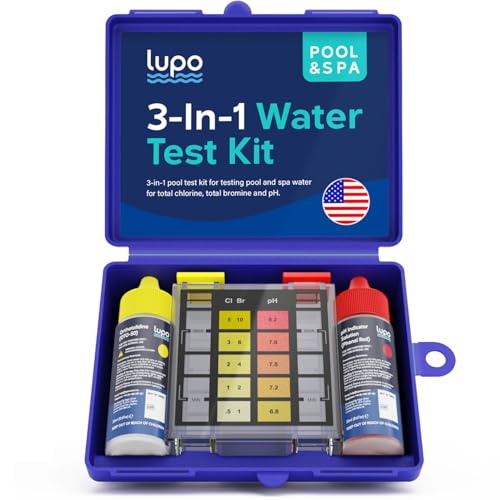
Lupo 3-in-1 Pool Test Kit | Pool Testing Kit for Residential Swimming Pools & Spas for Testing Total Chlorine, Total Bromine & pH | Pool Chemical Test for Quick & Accurate At-Home Pool Water Testing
- 3-in-1 Testing Kit: Tests chlorine, bromine, and pH levels
- Quick Results: Get accurate results in seconds
- Trusted Accuracy: USA Swimming approved testing system
As an affiliate, we earn on qualifying purchases.
As an affiliate, we earn on qualifying purchases.
Conclusion
Think of pool chemistry like a delicate dance; each step depends on the harmony of multiple elements. When one number shifts, it throws the entire rhythm off. Problems rarely start with just one variable because they’re part of a complex choreography, where every factor influences the next. By understanding this interconnected dance, you can better anticipate issues and keep your pool sparkling and balanced, never missing a beat in the process.

Hayward CL200EF in-Line Automatic Chlorine Feeder, Offline Pool Chlorinator and Chlorine Dispenser, Up to 9 lb Capacity, for In-Ground Swimming Pools
- Automatic Off-Line Chlorination: Consistent chlorine distribution for pools
- High-Capacity Chlorine Feeder: Holds up to 9 lbs of chlorine
- Corrosion-Resistant Construction: Durable, chemical-resistant housing
As an affiliate, we earn on qualifying purchases.
As an affiliate, we earn on qualifying purchases.

Clorox® Pool&Spa™ Swimming Pool 2-in-1 Perfect Balance, Maintains Balanced pH and Alkalinity Levels, 8LB (Pack of 1)
- Maintains pH and alkalinity: Balances pool's pH and alkalinity levels
- Reduces skin and eye irritation: Prevents dryness and redness for swimmers
- Protects pool equipment: Extends equipment and surface lifespan
As an affiliate, we earn on qualifying purchases.
As an affiliate, we earn on qualifying purchases.