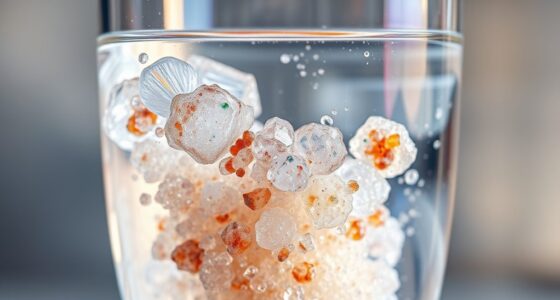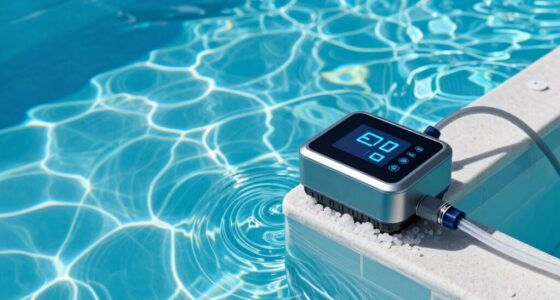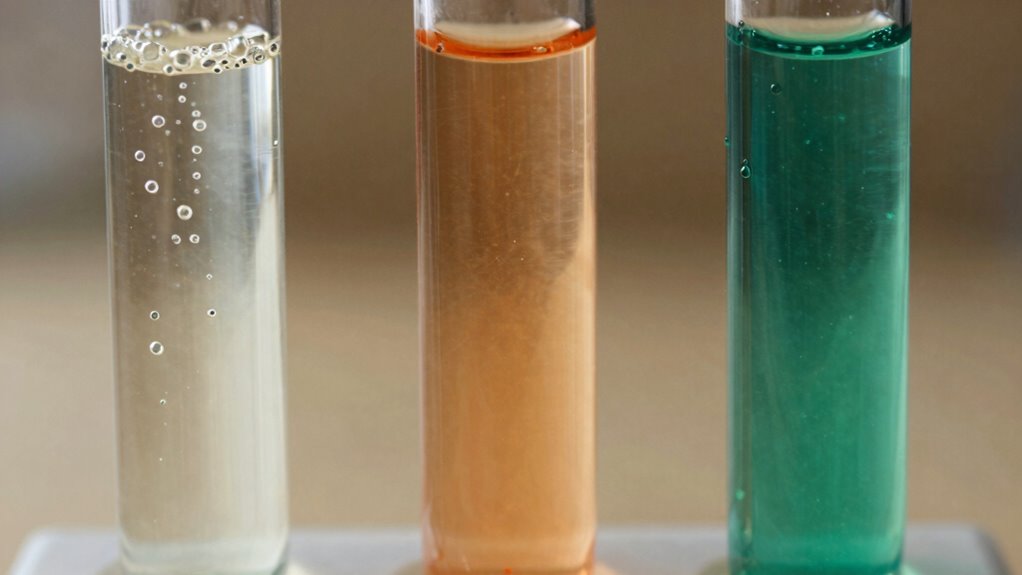

Sanitizing involves maintaining a consistent level of free chlorine to kill bacteria, pathogens, and prevent illnesses, while oxidizing breaks down organic contaminants like oils, sweat, and sunscreen to keep water clear and odor-free. Simply adding more chlorine might seem easy, but it can cause irritation and damage equipment without fixing underlying issues. Understanding these processes helps you use chemicals wisely and keep your pool safe. Keep exploring to learn how these steps work together for perfect water quality.

Get pool and patio gear delivered free with Prime
- Fast, free delivery on millions of items
- Prime Video, Amazon Music and more included
- Member-only deals all year
Key Takeaways
- Sanitizing maintains a consistent chlorine level to kill bacteria and pathogens, ensuring water safety.
- Oxidizing breaks down organic contaminants like oils and sweat, improving water clarity and odor.
- Adding more chlorine without proper testing can lead to over-chlorination, skin irritation, and equipment damage.
- Proper chemical balance involves understanding when to sanitize versus oxidize, preventing issues like algae growth.
- Misunderstanding these processes can cause inefficient chemical use, poor water quality, and higher maintenance costs.
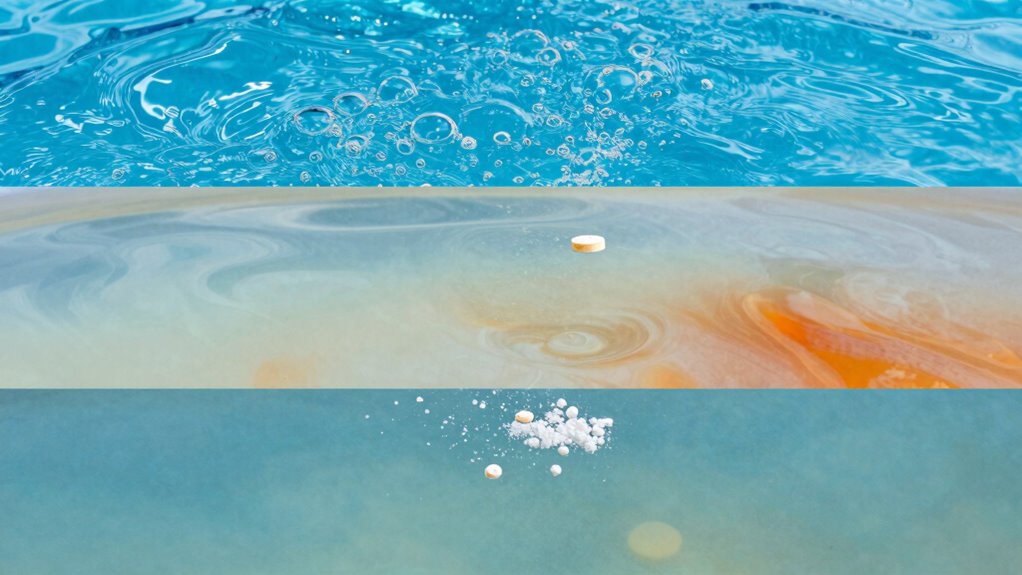
Understanding the difference between sanitizing, oxidizing, and simply adding more chlorine is essential for maintaining a safe and clean pool. When you’re managing your pool, it’s easy to assume that just adding chlorine keeps everything in check, but that’s a misconception. Proper pool maintenance hinges on understanding these distinct processes and their roles in maintaining chemical balance and ensuring pool safety.
Sanitizing is the primary method to keep your pool free of harmful bacteria and pathogens. It involves maintaining a consistent level of free chlorine that actively kills germs and keeps the water safe for swimmers. When you add chlorine for sanitizing, you’re establishing a residual that continuously fights off microbes, preventing illnesses and infections. If your chlorine levels are too low, even if the water looks clear, bacteria can thrive, compromising pool safety. Regular testing and adjustment of chlorine levels are crucial to uphold the chemical balance, which in turn keeps the water safe and inviting. Additionally, understanding water chemistry helps you better maintain the proper chemical levels and ensure effective sanitization.
Maintaining proper free chlorine levels is essential for keeping your pool free of bacteria and safe for swimmers.
Oxidizing, on the other hand, isn’t about killing bacteria directly but focuses on breaking down organic contaminants like sweat, oils, sunscreen, and other debris that can cloud your water and produce unpleasant odors. When these contaminants accumulate, they can create chloramines—compounds that not only irritate your skin and eyes but also reduce chlorine’s effectiveness. Using oxidizers, such as non-chlorine shock treatments, helps to eliminate these substances quickly. This process regenerates your chlorine’s capacity to sanitize effectively, ensuring your pool remains clear and safe. Regular oxidizing treatments are essential for maintaining a proper chemical balance, especially after heavy usage or storms that introduce debris. Proper understanding of chloramine formation allows you to better manage water quality and swimmer comfort. Neglecting this distinction can lead to increased chemical costs and potential health issues for swimmers.
Furthermore, neglecting the distinction between these processes can lead to inefficient chemical use and increased costs over time. Properly balancing oxidizers and sanitizers not only improves water quality but also extends the lifespan of your pool equipment. Recognizing chemical balance as a key factor helps prevent common issues like algae growth and cloudy water, making your pool maintenance more effective and less stressful.
Simply adding more chlorine might seem like an easy fix when the water isn’t clear or smells off, but it can be counterproductive if your chemical balance isn’t right. Over-chlorination can lead to skin irritation, damage pool equipment, and create chloramines, which diminish water quality. Instead, understanding when to oxidize or adjust your sanitizing levels ensures you’re not just throwing chemicals into the water blindly. Testing your water regularly and understanding the distinct roles of sanitizing and oxidizing help you keep your pool safe, balanced, and enjoyable for everyone. Recognizing proper chemical levels is key to effective pool management and avoiding common mistakes.
In essence, your goal should be a well-maintained chemical balance that prioritizes pool safety. Knowing the difference between sanitizing, oxidizing, and simply adding more chlorine helps you make smarter decisions. It allows you to respond appropriately to your pool’s needs, ensuring clear, safe water without unnecessary chemical overload. Proper pool care isn’t just about adding chemicals—it’s about using them wisely and understanding how each process contributes to a healthier swimming environment. Proper understanding of pool water chemistry ensures you can troubleshoot issues effectively and maintain a healthy, inviting pool environment.
As an affiliate, we earn on qualifying purchases.
Frequently Asked Questions
How Often Should I Sanitize My Pool?
You should disinfect your pool at least once a week to prevent pool algae growth and maintain chemical stability. During hot or heavy usage periods, increase sanitizing frequency. Regular testing ensures proper chlorine levels, helping to keep the water clear and safe. Remember, consistent sanitizing not only fights algae but also preserves the effectiveness of your pool chemicals, ensuring a clean and healthy swimming environment.
Can Over-Oxidizing Harm My Pool Equipment?
Yes, over-oxidizing can harm your pool equipment by increasing chemical imbalance risks, which may lead to corrosion. When you add too much oxidizer, it can cause pH and alkalinity levels to fluctuate, damaging filters, pumps, and other equipment. To protect your investment, always follow manufacturer instructions and maintain proper chemical levels, avoiding excessive oxidizer use that could accelerate pool equipment corrosion and compromise your pool’s longevity.
What’s the Best Method to Balance Chlorine Levels?
To balance your chlorine levels effectively, focus on maintaining proper chemical balance and pH stability. Test your water regularly and adjust chlorine levels accordingly—aim for 1-3 ppm. Keep the pH between 7.2 and 7.6 to guarantee chlorine works efficiently. Avoid over-chlorinating, which can disrupt pH stability and damage your equipment. Consistent testing and adjusting help keep your pool safe, clean, and properly balanced.
How Do I Know if My Sanitizer Is Effective?
You wonder if your sanitizer’s working? Watch for clear signs like consistent water clarity and a balanced pH. Pool chemical interactions can affect sanitizer effectiveness, so regularly test chlorine levels with a reliable kit. If levels fall below the recommended range, your sanitizer might be compromised. Keep an eye on your test results and water appearance—these clues reveal whether your sanitizer truly guards your pool or needs a boost.
Are There Alternative Chemicals to Chlorine for Pool Sanitation?
Yes, there are alternative sanitizers and non-chlorine options for pool sanitation. You can consider using bromine, which works similarly to chlorine but produces less odor. Mineral sanitizers, like copper or silver ion systems, offer effective sanitation without chlorine. Ozone and UV systems are also popular non-chlorine choices, providing clean water by killing bacteria and algae efficiently. These options can reduce chemical use and improve water quality.
As an affiliate, we earn on qualifying purchases.
Conclusion
Now that you understand the difference, think of your pool like a busy garden. Sanitizing is like watering the plants to keep them healthy, oxidizing is removing the fallen leaves and debris, and adding more chlorine is like applying a protective shield against pests. By balancing these steps, your pool becomes a sparkling oasis—inviting, clear, and safe. With each effort, you transform your backyard into a refreshing paradise, ready for you to jump in and relax.
As an affiliate, we earn on qualifying purchases.
As an affiliate, we earn on qualifying purchases.
Halloween Picks
halloween
As an affiliate, we earn on qualifying purchases.