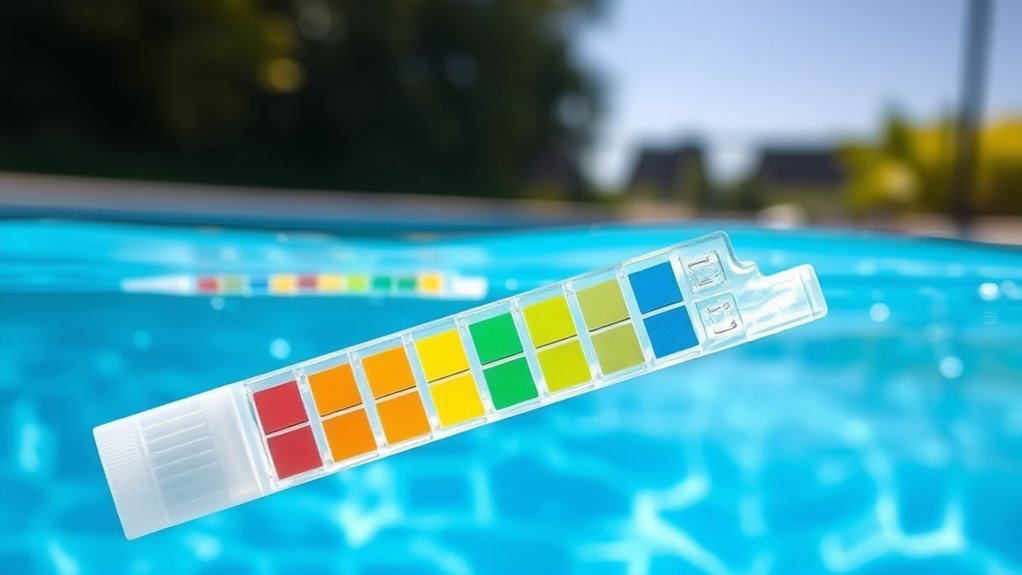

To understand your pool water test results, first check the levels of pH, chlorine, alkalinity, and other key factors. Make certain pH stays between 7.2 and 7.8, chlorine is 1-3 ppm, and alkalinity is balanced to prevent issues. If levels are off, adjust with pH reducers, alkalinity agents, or sanitizer accordingly. Monitoring these results regularly helps you maintain clear, safe water. Keep reading to discover how to fine-tune your pool’s chemistry for perfect balance.
Key Takeaways
- Compare test values to recommended ranges for pH (7.2-7.8), chlorine (1-3 ppm), and alkalinity (80-120 ppm).
- Identify whether levels are too high or low to determine necessary chemical adjustments.
- Use test color charts or digital readers for accurate interpretation of results.
- Record test data regularly to spot trends and identify potential equipment or chemical issues.
- Take prompt action if levels deviate from safe ranges to maintain water clarity, safety, and equipment health.

Reading your pool water test results might seem confusing at first, but with a clear understanding, it becomes straightforward to keep your pool safe and clean. The key is knowing what each test result indicates and how to respond appropriately. When you test your water, you’re checking for chemical balancing, which involves maintaining proper levels of chlorine, pH, alkalinity, and other chemicals. These levels are essential because they directly impact water clarity, safety, and comfort. If your test shows that the pH is too high or too low, or if chlorine levels are off, you’ll need to adjust your chemical balance to ensure the water remains safe for swimming. Proper chemical balancing not only makes your pool healthier but also extends the lifespan of your equipment, as balanced water minimizes corrosion and scale buildup.
Understanding your pool test results helps you maintain safe, clear, and well-balanced water for a healthy swimming environment.
Understanding your test results also involves recognizing the importance of equipment maintenance. Regular testing helps you identify issues like algae growth, cloudy water, or metal stains early, so you can address them before they escalate. If your test indicates high pH or alkalinity, you might need to add pH reducers or alkalinity adjusters. Conversely, if pH is too low, pH increasers can help restore balance. Chlorine levels should typically be maintained between 1 and 3 parts per million (ppm). If your test shows lower levels, you’ll need to shock the pool or add sanitizer to eliminate bacteria and algae. When levels are too high, it can cause skin irritation and reduce the effectiveness of the sanitizer, which means your equipment has to work harder to keep the water safe.
Keeping your chemical levels in check is a continuous process. After testing, always record your results and compare them to recommended ranges. This helps you see trends over time and plan your chemical adjustments more accurately. Remember, maintaining proper chemical balance isn’t just about adding chemicals; it’s also about ensuring your filtration and circulation systems are working correctly. Clean filters, functioning pumps, and well-maintained skimmers all support proper water chemistry. If you notice your test results are consistently off, it might be time for a thorough equipment inspection or professional servicing. Additionally, understanding the Kia Tuning options available for pool-related equipment can help optimize your system’s performance and longevity.
In essence, reading your pool water test results is a crucial step towards effective pool management. It guides your decisions on chemical adjustments and equipment care, ensuring your pool remains inviting, safe, and in top condition. By understanding what the numbers mean and taking prompt action, you keep your pool healthy and prolong its equipment’s lifespan, making your swimming experience enjoyable and worry-free.
pool water test kit
As an affiliate, we earn on qualifying purchases.
As an affiliate, we earn on qualifying purchases.
Frequently Asked Questions
How Often Should I Test My Pool Water?
You should test your pool water at least twice a week during peak swimming season to maintain proper pool maintenance. Regular testing helps you monitor water chemistry, ensuring chemical levels stay balanced and safe. If your pool gets heavy use or weather changes occur, test more frequently. Consistent testing keeps your water clear, safe, and inviting, making pool maintenance easier and preventing issues like algae growth or corrosion.
What Do I Do if Test Results Are Inconsistent?
If your test results are inconsistent, first check for test result variability caused by poor sample collection or expired test reagents. Make certain you’re using a reliable test method and follow instructions carefully. Retest the water after some time, and compare results. If discrepancies persist, consider switching to a different testing kit or method for better accuracy. Consistent testing and accurate methods help maintain safe, balanced pool water.
Can I Use Pool Water Test Strips Indoors?
Yes, you can use pool water test strips indoors, but keep in mind that indoor maintenance might influence test strip durability. Humidity and temperature fluctuations can impact the accuracy of your results. Make sure to store test strips properly in a cool, dry place, and follow the manufacturer’s instructions. Using them indoors is convenient, just ensure the environment doesn’t compromise their effectiveness for reliable readings.
How Long Should I Wait After Adding Chemicals to Test?
You should wait at least 15 to 30 minutes after adding chemicals before testing your pool water to guarantee accurate test results. This allows sufficient time for chemical reactions to occur, giving you a true reading of your water’s chemistry. Rushing the process can lead to inaccurate test result accuracy, so patience is key. Always follow the specific instructions on your chemical products for the best results.
Are Digital Testers More Accurate Than Test Kits?
A picture is worth a thousand words, and digital testers often provide more accurate results than traditional test kits. They excel in digital accuracy and offer consistent test reliability, making them a dependable choice for pool owners. While test kits can be precise, digital testers reduce human error and give instant readings. If you want quick, dependable results, investing in a digital tester is a smart move for maintaining ideal water quality.
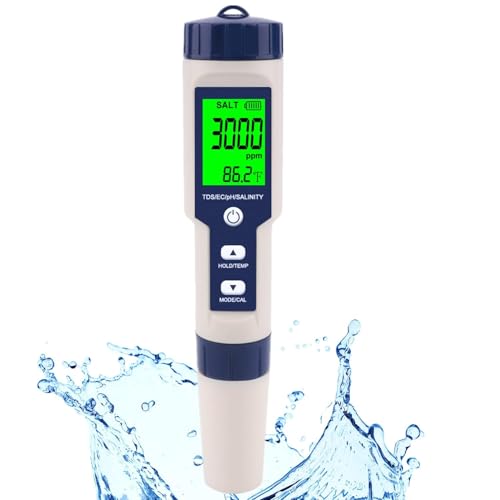
Pool Salt Tester & PH Meter, Hofun Digital Salinity Meter and PH Tester for Aquarium and Pool Saltwater Water, 5 in 1 Salinity PH Temp EC and TDS Meter, Aquarium Swimming Pool Hot Tub, High Accuracy
Wide Usage PH Meter : Hofun ph meter is an essential tool to improve your life quality. This…
As an affiliate, we earn on qualifying purchases.
As an affiliate, we earn on qualifying purchases.
Conclusion
Now that you know how to interpret your pool water test results, maintaining a sparkling clean pool becomes a breeze. Just like a trusty alchemist of yore, you can balance chemicals and keep your water crystal clear. Remember, regular testing is your secret weapon, and don’t be afraid to consult a pro if things get tricky. With a bit of know-how, your pool will be the fairest waters in all the land—no magic required!
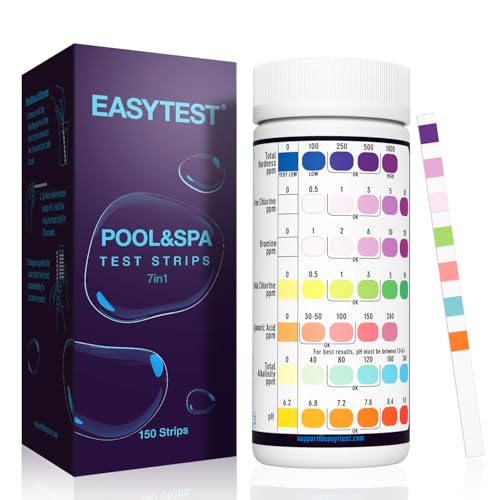
EASYTEST 7-Way Pool Test Strips, 150 Strips Water Chemical Testing for Hot tub and Spa, Accurate Test Bromine, Total Alkalinity, pH, Free Chlorine, Total Hardness, Cyanuric Acid, and Total Chlorine
AFFORDABLE 150 STRIPS: This water chemical testing kit contains 150 test strips. Enough balanced for your swimming pool,…
As an affiliate, we earn on qualifying purchases.
As an affiliate, we earn on qualifying purchases.
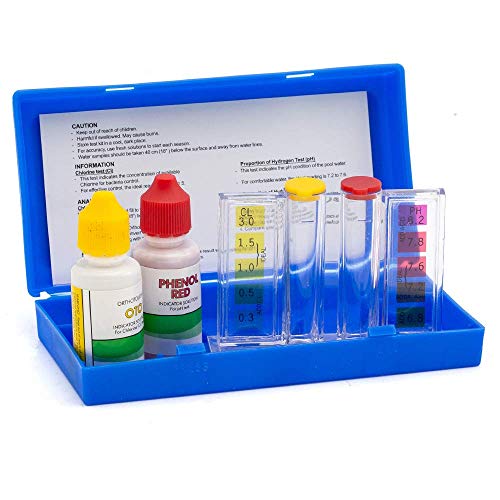
WWD POOL Swimming Pool Spa Water Chemical Test Kit for Chlorine and Ph Test (2 Way Test Kit)
2 Way Pool Water Test Kit For Test For OTO, CL, and PH Level
As an affiliate, we earn on qualifying purchases.
As an affiliate, we earn on qualifying purchases.