
To learn pool chemistry without feeling overwhelmed, start by focusing on a few key parameters like pH, chlorine, and alkalinity. Use simple test kits regularly to keep track of these levels and make small, consistent adjustments. Keep a log of your results and changes to spot patterns over time. Building confidence comes from routine and understanding basic principles. Stick with it, and you’ll find managing your pool becomes easier and more enjoyable as you gain experience.

Get pool and patio gear delivered free with Prime
- Fast, free delivery on millions of items
- Prime Video, Amazon Music and more included
- Member-only deals all year
Key Takeaways
- Start with basic concepts like pH, chlorine, and alkalinity to build a solid foundation.
- Use simple test kits and track results consistently to monitor water health easily.
- Learn small, routine adjustments instead of trying to perfect all at once.
- Keep a log of tests and changes to recognize patterns and prevent mistakes.
- Focus on routine and confidence-building practices to make pool maintenance manageable and rewarding.
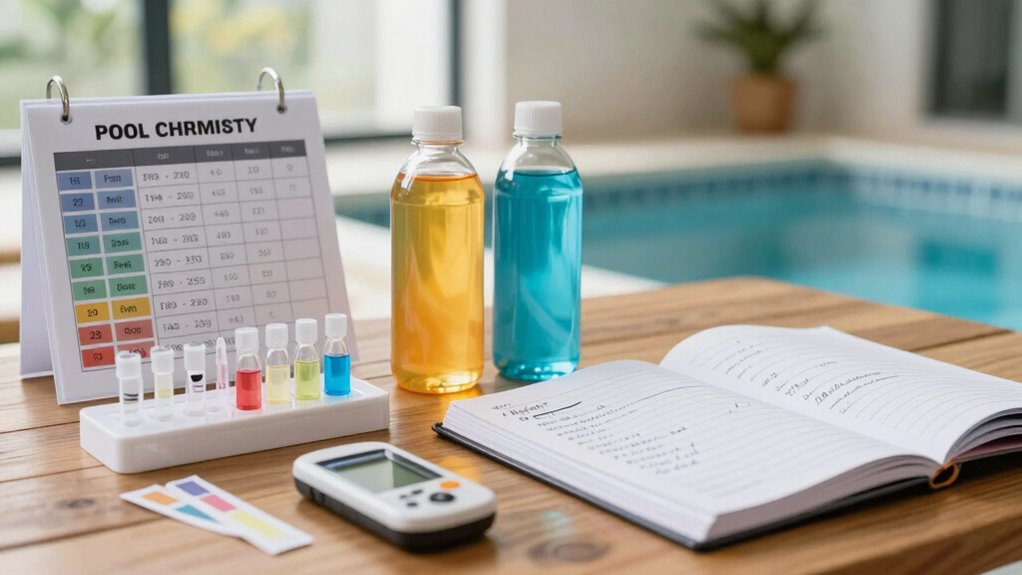
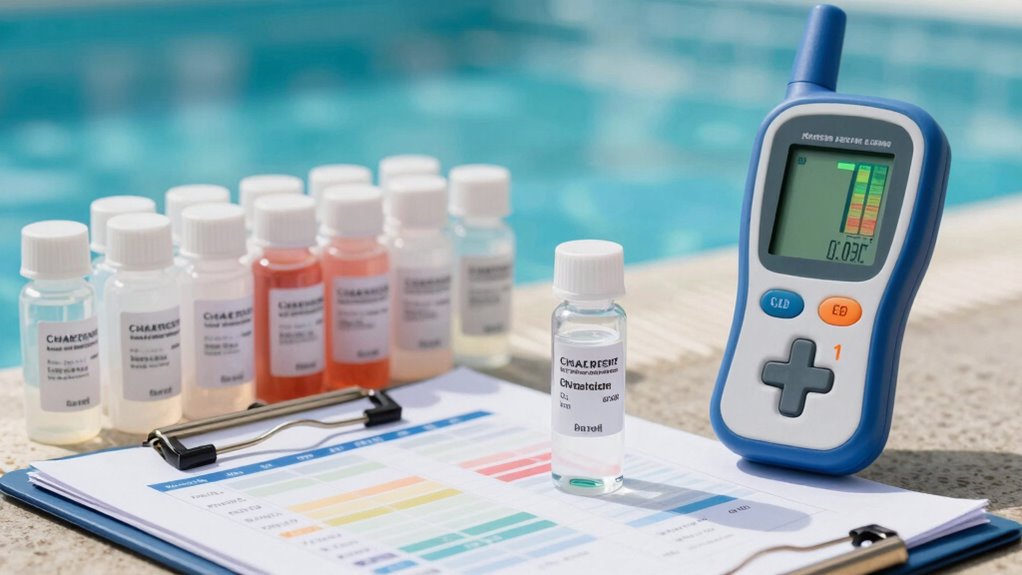
Are you curious about how to keep your pool clean and safe? Learning pool chemistry might seem intimidating at first, but breaking it down into manageable steps makes it much easier. One of the most important skills to master is understanding chemical balancing. When your pool’s water is properly balanced, it’s healthier, safer, and clearer. To do that, you need to get comfortable with water testing. Regular water testing is your first step in maintaining a safe swimming environment. It’s simple: you use test strips or a liquid test kit to measure key parameters like pH, chlorine levels, alkalinity, and calcium hardness. These readings give you a snapshot of your pool’s current condition.
Once you know your water’s test results, you can adjust the chemical levels accordingly. For example, if your pH is too high, you’ll add a pH reducer; if it’s too low, you’ll add a pH increaser. Balancing these chemicals guarantees your chlorine works effectively and prevents issues like algae growth or skin irritation. It might take a little practice to interpret test results accurately, but soon it becomes second nature. Remember, consistency is key—testing your water weekly helps you catch problems early before they escalate. Water testing is a fundamental skill that helps you maintain proper water chemistry and prevent problems before they start. Additionally, understanding the role of stabilizers can improve chlorine efficiency and protect your pool water from UV degradation.
Regular weekly testing and adjustments keep your pool balanced, clear, and safe for all swimmers.
It’s also helpful to keep a log of your test results and adjustments. This way, you can track patterns and anticipate what your pool needs as seasons change or after heavy use. Understanding water chemistry and its role in maintaining a healthy pool environment is essential for long-term success. Additionally, familiarizing yourself with common issues like alkalinity imbalance can help you troubleshoot more effectively and avoid costly mistakes. Remember, learning pool chemistry isn’t about memorizing complex formulas; it’s about understanding the basic principles of water balance. With consistent testing and small adjustments, you’ll keep your pool crystal clear and inviting without feeling overwhelmed. As you gain confidence, managing your pool’s chemistry becomes a simple, rewarding part of your routine that ensures safe, enjoyable swimming all season long.
As an affiliate, we earn on qualifying purchases.
Frequently Asked Questions
What Are the Basic Pool Chemicals I Need to Know?
You need to know basic pool chemicals like chlorine, pH adjusters, alkalinity increasers, and stabilizers. Chlorine keeps the water sanitized, while pH adjustment chemicals help maintain a proper chemical balance, preventing issues like algae growth and skin irritation. Alkalinity increasers stabilize pH levels, making them easier to control. Understanding these essentials helps you keep your pool safe, clean, and comfortable without feeling overwhelmed.
How Often Should I Test My Pool Water?
You should test your pool water at least once a week to keep up with pool maintenance and guarantee proper water balancing. Regular testing helps you catch imbalances early, preventing issues like algae growth or cloudy water. During heavy use or after storms, test more often. Use a reliable test kit to check pH, chlorine, alkalinity, and other chemicals, adjusting as needed for a safe, balanced swimming environment.
Can I Learn Pool Chemistry Without Prior Experience?
Yes, you can learn pool chemistry without prior experience. Start by understanding basic concepts like pH, chlorine levels, and chemical storage safety. Focus on pool safety first to prevent accidents, then gradually grasp how chemicals interact. Use online resources or tutorials for simple explanations. Regular testing helps you learn patterns, and always store chemicals properly to avoid hazards. With patience, you’ll become confident managing your pool chemistry effectively.
Are There Simple Tools to Help Me Understand Pool Chemistry?
Think of pool chemistry as a delicate dance—you need the right tools to stay in step. Simple DIY testing kits act like your dance partner, guiding you through pool chemical safety with ease. These kits are straightforward, affordable, and perfect for beginners, helping you measure pH, chlorine, and alkalinity without feeling overwhelmed. With them, you’ll confidently keep your pool sparkling and safe, mastering chemistry one step at a time.
How Long Does It Typically Take to Learn Pool Chemistry?
It usually takes a few weeks to get comfortable with pool chemistry through consistent water testing and chemical balancing. As you regularly test your water, you’ll start understanding the target ranges for pH, chlorine, and alkalinity. With practice, managing chemical levels becomes second nature. Remember, patience is key. The more you test and adjust, the more confident you’ll become in maintaining a healthy, balanced pool environment.
As an affiliate, we earn on qualifying purchases.
Conclusion
Learning pool chemistry might seem like a formidable dance at first, but with patience, you’ll find your rhythm. Embrace each small step as a gentle whisper guiding you toward mastery, rather than a thunderous leap. Over time, the once-overwhelming notes become a harmonious melody, revealing the true beauty beneath the surface. Trust in your journey, and soon you’ll navigate these waters with confidence, turning complexity into a graceful flow rather than an insurmountable wave.
As an affiliate, we earn on qualifying purchases.
As an affiliate, we earn on qualifying purchases.
Halloween Picks
halloween
As an affiliate, we earn on qualifying purchases.