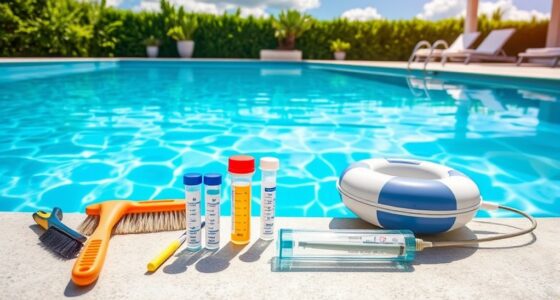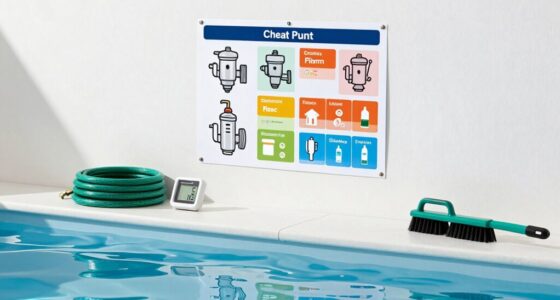
Pool maintenance seems complicated until you understand five key concepts. When you manage water chemistry through proper balancing and test results, it becomes easier to keep your pool safe and clear. Recognizing how equipment works and troubleshooting issues early prevents costly repairs. Connecting these ideas helps you see how chemicals and equipment influence each other, making routine tasks feel simple. Mastering these principles proves that pool upkeep is manageable, and if you keep exploring, you’ll gain even more confidence in caring for your pool.

Get pool and patio gear delivered free with Prime
- Fast, free delivery on millions of items
- Prime Video, Amazon Music and more included
- Member-only deals all year
Key Takeaways
- Understanding chemical balancing prevents issues like cloudy water and algae, simplifying maintenance routines.
- Correctly interpreting test results guides effective chemical adjustments, reducing guesswork.
- Recognizing equipment problems early ensures smoother operation and minimizes costly repairs.
- Connecting chemical and equipment knowledge helps see how each affects overall pool health.
- Mastering core concepts turns complex tasks into straightforward, manageable steps for routine pool care.
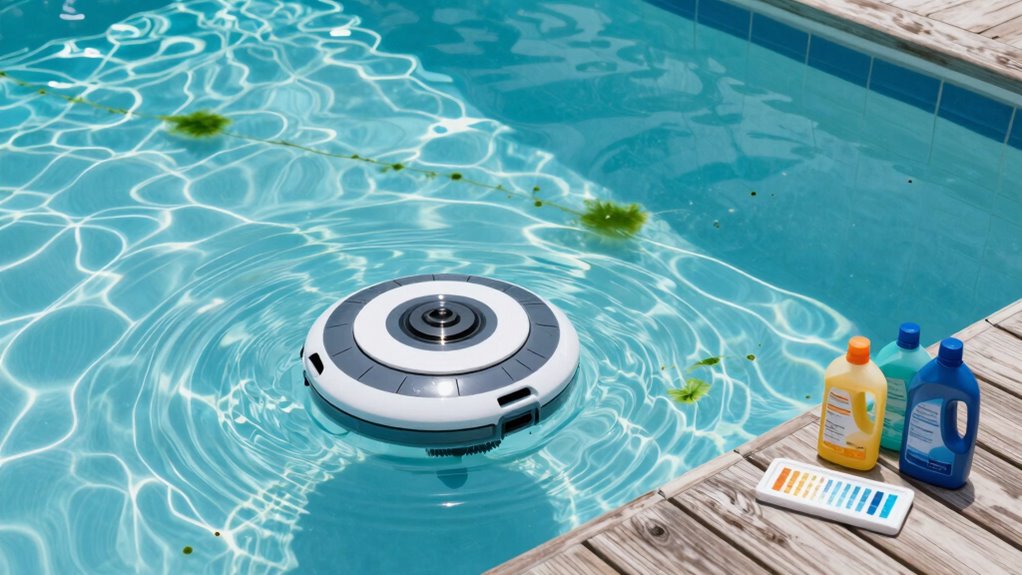
Maintaining a clean and safe pool requires understanding some essential concepts that keep the water crystal clear and inviting. One of the biggest hurdles is grasping how chemical balancing works. When you add chemicals like chlorine, pH adjusters, or algaecides, you’re not just throwing in substances—you’re actively managing the water’s chemical composition. If the pH gets too high or too low, it can lead to issues like cloudy water or algae growth. You need to monitor these levels regularly, using test kits to guarantee everything stays within the ideal range. Proper chemical balancing prevents problems before they start, saving you time and effort in the long run. When you comprehend how each chemical reacts and how to maintain the right balance, the process becomes less overwhelming, and your pool stays safer and more inviting. Recognizing chemical reactions and understanding how to control them is fundamental to effective pool maintenance. Additionally, understanding how to interpret test results accurately helps you make informed adjustments, further simplifying the process. Learning about water chemistry and how different chemicals interact can also help you troubleshoot issues more effectively.
Another aspect that often complicates pool maintenance is equipment troubleshooting. Your pool relies on a series of machines—pumps, filters, heaters—that work together to keep the water clean and comfortable. When something malfunctions, it can feel like a challenging task to identify and fix the issue. But if you understand how the equipment functions, troubleshooting becomes more straightforward. For example, if your pump isn’t circulating water properly, you check for clogs, leaks, or electrical issues rather than guessing blindly. Recognizing common signs of equipment problems and knowing how to respond helps you avoid costly repairs and unnecessary frustration. Learning to maintain and troubleshoot your pool equipment empowers you to handle minor issues before they escalate into major repairs. Developing basic knowledge of pool equipment operation can significantly reduce downtime and repair costs, especially when combined with routine inspections.
Many people feel overwhelmed because they see pool maintenance as a series of complex, disconnected tasks. But once you understand the core concepts—like chemical balancing and equipment troubleshooting—the process starts to make sense. You begin to see how each part influences the other, and your confidence grows. Regular testing of water chemistry and routine equipment checks become second nature, making upkeep less of a chore and more of an ongoing, manageable routine. When you develop this understanding, the perceived complications of pool maintenance diminish. Instead, it becomes a series of simple steps that, once mastered, keep your pool sparkling and safe for everyone to enjoy. Ultimately, the more you learn about these key concepts, the easier and more satisfying pool maintenance becomes.
Products Worth Considering

TCL T7 Series 85-Inch 4K 144Hz QLED Smart Google TV

Bose SoundLink Flex (2nd Gen) Portable Bluetooth Speaker

Bose TV Speaker Compact Soundbar with Bluetooth and HDMI-ARC, Black
As an affiliate, we earn on qualifying purchases.
Frequently Asked Questions
How Often Should I Test My Pool’s Water Chemistry?
You should test your pool’s water chemistry at least twice a week during peak swimming season to guarantee safety and proper balance. In off-peak seasons, testing once a week may suffice. Regular testing helps maintain pool safety, preventing algae growth and skin irritations. Incorporate seasonal maintenance routines, like adjusting chemicals and cleaning filters, to keep your pool safe and in top condition year-round.
What’s the Best Way to Remove Algae From the Pool?
To remove algae from your pool, start by brushing the affected areas to loosen algae, then shock the pool with a strong chlorine treatment. Keep algae prevention in mind by maintaining proper chemical levels and ensuring good filtration. You can also reduce algae growth by minimizing pool shading, which limits algae-friendly sunlight. Regular maintenance and keeping the water balanced are key to preventing algae buildup and keeping your pool clear.
How Do I Know When to Replace My Pool Filter?
Ironically, your pool filter’s lifespan is often a mystery until it’s painfully obvious. When you notice persistent cloudiness, reduced flow, or increased pressure despite regular filter maintenance, it’s time to replace it. Filter maintenance tips include cleaning or backwashing regularly and checking for signs of wear. Typically, a pool filter lasts 1-3 years, but if performance declines even with proper care, replacing it guarantees your pool stays crystal clear.
What Are Common Signs of a Chemical Imbalance?
You’ll notice signs of chemical imbalance when your pool water turns cloudy, develops a strong odor, or causes skin and eye irritation. Regular water testing techniques help you detect issues early, ensuring proper pool chemical safety. If pH levels are off or sanitizer levels are too low, it indicates an imbalance. Keep testing your water frequently and adjust chemicals accordingly to maintain a safe, clean, and inviting swimming environment.
How Can I Prevent Pool Equipment From Malfunctioning?
To prevent pool equipment from malfunctioning, stick to regular pool maintenance routines like checking filters, pumps, and skimmers frequently. Keep an eye out for signs of trouble, and don’t hesitate to troubleshoot equipment issues early. Proper chemical balancing also helps prevent strain on your equipment. By staying consistent with maintenance routines and troubleshooting promptly, you guarantee your pool equipment runs smoothly and lasts longer, saving you time and money.
Conclusion
Once you grasp these five concepts, maintaining your pool becomes like tending a vibrant garden—once understood, it’s a rewarding dance rather than a formidable task. Think of your pool as a sparkling oasis, where clarity and cleanliness shimmer like a diamond in the sun. With each step you take, you’re sculpting a pristine haven, transforming what once felt complicated into a smooth, flowing rhythm. Soon, your pool will be a shimmering mirror of your effort and understanding.