
TL;DR

Get pool and patio gear delivered free with Prime
- Fast, free delivery on millions of items
- Prime Video, Amazon Music and more included
- Member-only deals all year
A forgotten bag of spring bulbs is not automatically a lost cause in November. Planet Natural advises checking bulb condition, species and local soil conditions before choosing to plant outdoors, protect a planted pot or start a controlled indoor-forcing project. Success is not guaranteed, and the right cold conditions vary by bulb and location.
Healthy spring bulbs found in November may still be planted, but the best next step depends on the bulb species, its condition and whether local soil remains workable, according to a report from Planet Natural. The options include planting in a garden bed, planting in a pot that can be protected through winter, or chilling a planted pot for later indoor flowers; none guarantees a spring display.
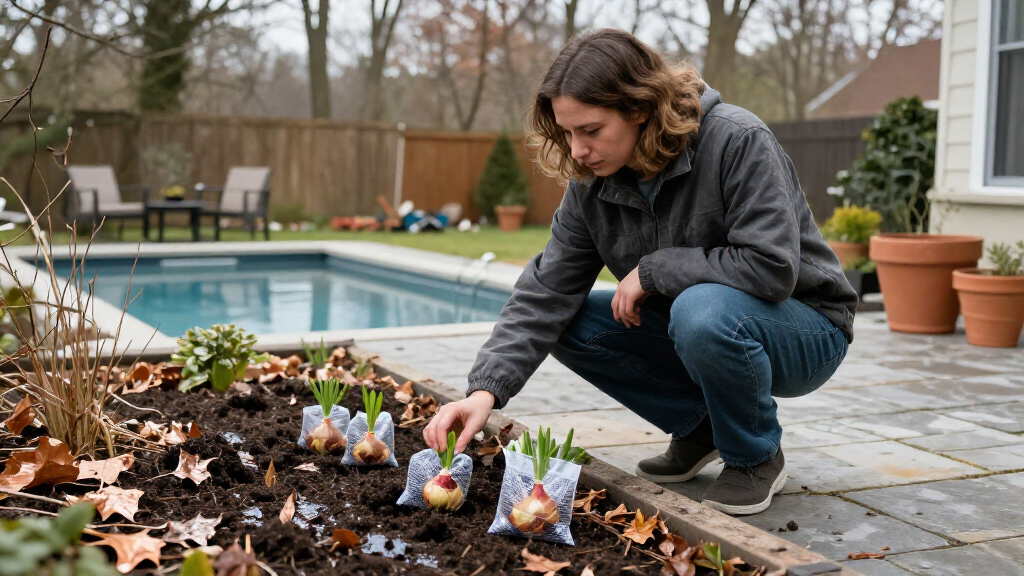
Planet Natural recommends emptying the bag and checking the bulbs before deciding. Firm bulbs that feel reasonably heavy are generally better candidates than those with wet, soft decay, spreading mold on damaged tissue, a bad smell or severe shriveling. Dry, loose outer skins are not by themselves evidence that a bulb is rotten, and a small green tip does not automatically rule out a firm bulb. Handle emerging growth gently, and keep the package label.
Species matter because bulbs do not all share the same planting depth or cold requirements. Sort mixed bags before planting, and follow the package instructions for depth and spacing. Paperwhite narcissus and amaryllis are commonly grown indoors without the same chilling routine as tulips, hardy daffodils and hyacinths, the report says. If the name is uncertain, avoid treating all bulbs as interchangeable.
If soil can be dug to the required depth without being frozen hard or soggy, prompt planting may be the simplest option. Choose a well-drained site, position bulbs as directed and water only as needed to settle the soil. If the bed is unsuitable, a pot with drainage holes and well-draining mix offers another route, but the container still needs appropriate winter protection. Forcing bulbs for indoor blooms requires a planted pot and a controlled cold period, not simply storing loose bulbs indefinitely in a refrigerator.
Three Routes for Saving Bulbs
The choice affects whether the bulbs can establish roots, avoid rot or freezing damage, and receive the cold conditions required for flowering. A bag left in a warm cupboard does not provide a reliable substitute for planting or species-appropriate storage, while putting a pot outdoors without considering its exposure can leave bulbs vulnerable to harsher temperature swings than bulbs in garden soil.
Late planting can still be a reasonable attempt when the ground allows it, but it gives roots less time to develop before winter. That means spring flowering may be uneven. A protected pot or an indoor forcing project can help when a garden bed is no longer workable, but each takes planning: a pot needs drainage and a suitable winter location, while forcing requires a measured cold period and temperature monitoring.
For readers, the practical point is to decide based on conditions rather than the month alone. Inspecting and sorting the bulbs first can prevent a poor candidate or a species with different needs from shaping the plan for the whole bag.
Products Worth Considering

Philips Hue Festavia Globe Outdoor String Lights, 32 Bulbs, 91 ft

Ring Battery Doorbell (2nd Gen) and Indoor Cam Plus Bundle, Matte Mocha and Black

Sonos Era 100 SL Compact, Microphone-Free Speaker – Black
As an affiliate, we earn on qualifying purchases.
Local Conditions Set the Planting Window
November is not a universal cutoff for planting spring bulbs. The report cites Iowa State guidance allowing tulips and other spring-flowering bulbs to be planted into late November or early December if the ground remains unfrozen. That advice describes a possible window in Iowa, not a deadline that applies across the country. Local weather, elevation and the onset of winter affect whether soil can still be prepared at the correct depth.
A frozen surface crust that thaws may differ from ground frozen through the planting depth. Soggy soil that smears and compacts is also a poor planting medium. For indoor forcing, the report cites Illinois Extension guidance of roughly 12 to 15 weeks of chilling for many spring bulbs, with requirements varying by species and cultivar. Some tulips may need longer; supplier instructions should take precedence, especially if bulbs may already have been precooled.
The Bulbs’ Exact Needs Matter
The source does not identify a particular bag, its bulb varieties, how long it has been stored or the local weather where a reader lives. Those details determine the appropriate route, including planting depth, cold duration and whether a container can safely remain outdoors. The report also cautions that a garage or shed is not automatically suitable: temperatures vary, and a sunny space can warm during the day.
Even firm bulbs planted late may not flower evenly, and the guidance does not promise that every bulb will be salvageable. Forcing periods vary by species and cultivar, and bulbs that were precooled may have different remaining cold requirements. Readers should check the packaging or supplier directions and use local gardening or Extension advice for winter protection.
Inspect, Plant and Monitor
Start by spreading the bulbs on a tray, retaining the label and separating species if possible. Set aside bulbs with soft, wet decay or substantial damage; keep firm bulbs with dry outer tunics for consideration. Then test the intended bed at the required planting depth. If soil is workable and well drained, plant according to the package instructions and label the spot with the date.
If the ground is frozen or unsuitable, choose a draining pot and identify a protected location before placing it outside. Check the pot’s moisture periodically without leaving the mix saturated. For indoor forcing, verify that the species is suitable, follow its cold-period instructions and monitor the holding temperature; keep the planted pot away from ripening fruit. The next step is guided by actual conditions, and local guidance should inform decisions where winter temperatures are severe.
Key Questions
Can spring bulbs still be planted in November?
Often, if the soil is workable at the required depth and drains well. Planet Natural cites Iowa guidance allowing planting into late November or early December when the ground remains unfrozen, but that timing is specific to local conditions and is not a national deadline.
Which bulbs from the bag should be set aside?
Bulbs with wet soft areas, spreading decay, an unpleasant smell or substantial mold associated with damaged tissue are poor candidates. A dry, loose outer skin or a small green tip alone does not mean a firm bulb is unusable.
Can I put the bulbs in a refrigerator?
Forcing may involve chilling a planted pot under controlled conditions, but loose bulbs should not automatically be put in a refrigerator. Follow species-specific instructions, use a thermometer and keep forcing pots away from ripening fruit.
How long do bulbs need to chill for indoor flowering?
Planet Natural cites Illinois Extension guidance of roughly 12–15 weeks for many spring bulbs, with variation by species and cultivar. Some tulips may need longer, so check the supplier’s directions and account for any precooling.
Source: planetnatural.com