TL;DR

Get pool and patio gear delivered free with Prime
- Fast, free delivery on millions of items
- Prime Video, Amazon Music and more included
- Member-only deals all year
Vinegar is not a universal deck cleaner: Trex lists white vinegar for hard-water deposits on some current composite boards, while other surfaces and brands require different care. For ordinary dirt, the report recommends warm soapy water, a suitable brush and careful rinsing; cleaner runoff can damage plants.
Vinegar is suitable for only a limited deck-cleaning task, according to a Gardening Know How report: Trex approves white vinegar for removing hard-water deposits from some of its current composite boards, but its guidance warns that acid can lighten board color. The report advises checking the deck maker’s care instructions before using vinegar, because materials and finishes respond differently and rinse water can harm nearby plants.
For ordinary dirt on composite decking, Trex recommends warm, soapy water and a soft-bristle brush, with scrubbing along the boards’ embossed grain. Vinegar is listed for a more specific problem: chalky deposits left by repeated sprinkler contact. Trex advises rinsing thoroughly and testing a small, inconspicuous spot first because products containing acid or bleach can lighten the boards.
Other manufacturers may give different instructions. TimberTech’s care guide does not mention vinegar, according to the report, and instead directs owners toward its diluted deck cleaner or a pH-neutral detergent for railings. Its current capped boards also have restrictions on some other cleaning products. If a manufacturer has not approved a cleaner, the report says, its effect on that surface is uncertain.
On a wood deck, the finish matters: bare boards and stained or painted boards do not necessarily call for the same treatment. The report notes that oxalic acid brighteners are used in some bare-wood preparation, but that is not a blanket endorsement of household vinegar on finished decking. It recommends following the stain or paint maker’s instructions rather than repeatedly applying straight vinegar.
Cleaner Choice Depends on the Deck
The practical issue is not simply whether vinegar can remove a mark. Using an unapproved cleaner can affect a deck’s color or finish, while runoff can reach landscaping, a pond or a storm drain. The report says household vinegar is typically about 5% acetic acid, which can burn leaf tissue on contact. Plants directly hit by the rinse water may develop brown, damaged leaves; young plants can be especially vulnerable.
That makes the cleaning method relevant beyond the boards themselves. A product described as natural is not automatically harmless to plants, and a biodegradable label does not mean a cleaner cannot affect aquatic life before it breaks down. Where wash water flows should be part of the decision, particularly on decks that slope toward a garden bed or fish pond.
Products Worth Considering

Roborock F25 GT Set Cordless Wet Dry Vacuum Cleaner and Mop with 2 Brushes

Shark Navigator Lift-Away Upright Vacuum Cleaner, NV356E

Blueair Blue Pure 511i Max Smart Air Purifier
As an affiliate, we earn on qualifying purchases.
Safer Cleaning Starts With the Label
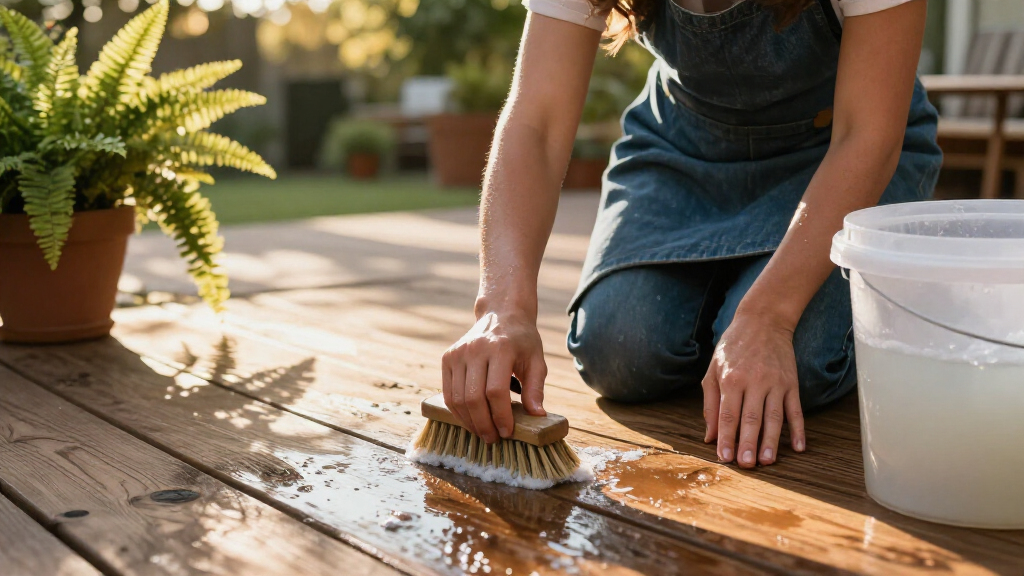
For routine maintenance, the report recommends sweeping away leaves before washing, then using warm water, a small amount of dish soap and a brush suited to the decking material. Trex calls for soft bristles; TimberTech’s guidance specifies medium-to-stiff nylon for its composite. Cleaning one section at a time and rinsing before suds dry can help keep the process controlled.
Wood with mildew or gray weathering may need a wood-specific cleaner rather than soap alone. The report points to an oxygen-based powdered wood cleaner as one option, while warning that chlorine bleach can damage some finishes and wood fibers and can harm plants it splashes. For pressure washing, manufacturer limits vary: the report cites a maximum of 3,100 psi with a fan tip at least 8 inches from certain Trex lines, while TimberTech specifies 1,500 psi for rinsing only, sprayed along the grain. Trex does not recommend pressure washers on its early-generation lines.
Regular upkeep can reduce the need for stronger products. Trex recommends spring and fall cleaning to clear pollen and leaf litter, which can contribute to mold growth when buildup remains on the boards. Leaves trapped between boards can hold moisture against the surface; the report suggests clearing those gaps and paying attention to shaded areas and spots under branches.
“White vinegar is approved for hard-water deposits on some current Trex composite boards.”
— Trex care guidance, as summarized by Gardening Know How
Unapproved Cleaners Carry Unknowns
The report does not establish that vinegar is safe for every composite board, wood species, stain, paint or deck coating. Compatibility depends on the specific product and finish, and the supplied material does not identify every Trex line covered by the current approval beyond describing it as applying to some current lines. Owners should consult the care guide for their exact decking and finish before applying a cleaner.
The extent of potential damage from a particular vinegar application also cannot be determined without details such as its concentration, how long it remains on the surface and how it is rinsed. The report gives general cautions, not results from a controlled comparison of cleaners or a guarantee that a given method will prevent discoloration or plant damage.
Check Product Guidance Before Washing
Before cleaning, identify the decking material and finish, then check the current manufacturer care guide and the instructions on any stain or cleaner. For a permitted vinegar use, test a small hidden area first, use it only for the stated purpose and rinse thoroughly. Keep wash water away from plants, ponds and storm drains where possible.
For routine dirt, start with a broom, warm soapy water and a brush appropriate to the deck. If using a pressure washer or a stronger cleaner, follow the specific pressure and application limits for that product and surface. The report does not announce a new industry rule; its guidance is to treat vinegar as a narrow, manufacturer-dependent option rather than a default deck wash.
Key Questions
Can I use vinegar to clean any composite deck?
No general approval applies to every brand or board. The report says Trex lists white vinegar for hard-water deposits on some current composite lines, while TimberTech’s guide does not mention vinegar. Check the care instructions for your exact deck before using it.
What should I use for routine deck dirt?
The report recommends warm water with a small amount of dish soap and a brush suited to the material. Trex calls for soft bristles; TimberTech specifies medium-to-stiff nylon for its composite. Rinse before the suds dry.
Can vinegar damage plants near a deck?
It can. Household vinegar contains acetic acid, which the report says can damage leaf tissue on contact. Keep runoff off garden plants, especially seedlings and broadleaf plants, and consider where rinse water will flow.
Is vinegar safe for a stained or painted wood deck?
The report does not give a general yes. It says the finish maker’s instructions should guide cleaning of stained or painted boards. Check the stain or paint label before using vinegar, since repeated use may affect a finish in an unknown way.
Can I pressure-wash composite decking?
Limits differ by manufacturer and product line. The report cites Trex guidance allowing up to 3,100 psi with a fan tip held at least 8 inches away for certain lines, while TimberTech specifies 1,500 psi for rinsing only. Follow the instructions for your exact boards; Trex does not recommend pressure washers for its early-generation lines.
Source: gardeningknowhow.com