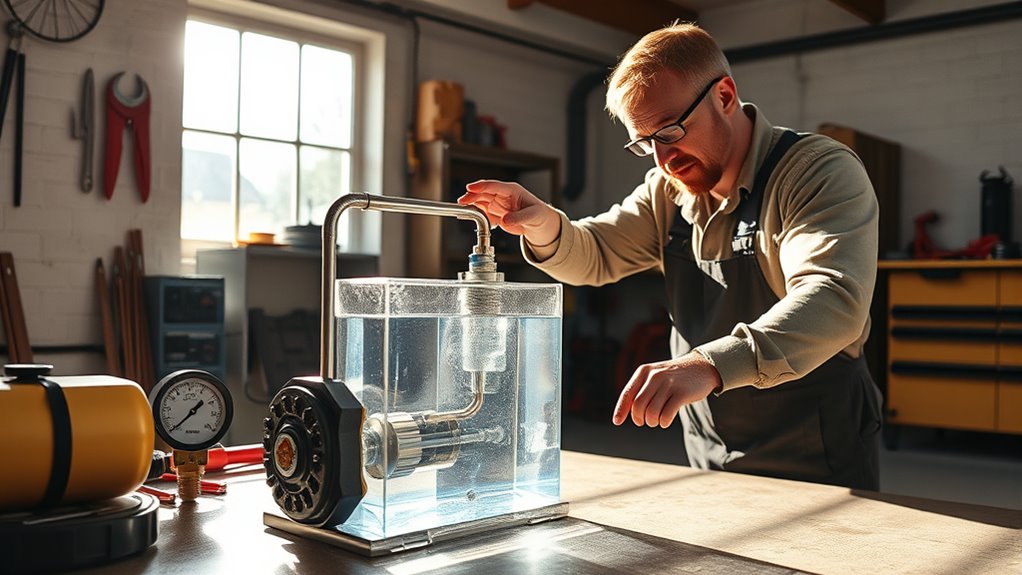

Understanding hydraulic principles helps you see how water moves through your home’s pipes. When you turn on a fixture, water flows based on pressure, pipe size, and layout. Larger pipes reduce resistance, while long or complex routes cause pressure drops. Knowing these basics can help you identify problems like low pressure or surges. By mastering these concepts, you’ll be better equipped to maintain and improve your plumbing system, ensuring smooth and reliable water flow throughout your home.
Key Takeaways
- Water pressure is the force pushing water through pipes, crucial for proper fixture operation.
- Larger pipes decrease resistance, maintaining steady pressure during multiple water uses.
- Pipe length and bends increase resistance, potentially lowering water pressure at fixtures.
- Installing pressure regulators can help control and maintain optimal water pressure.
- Routine maintenance and understanding household water demand prevent pressure drops and surges.
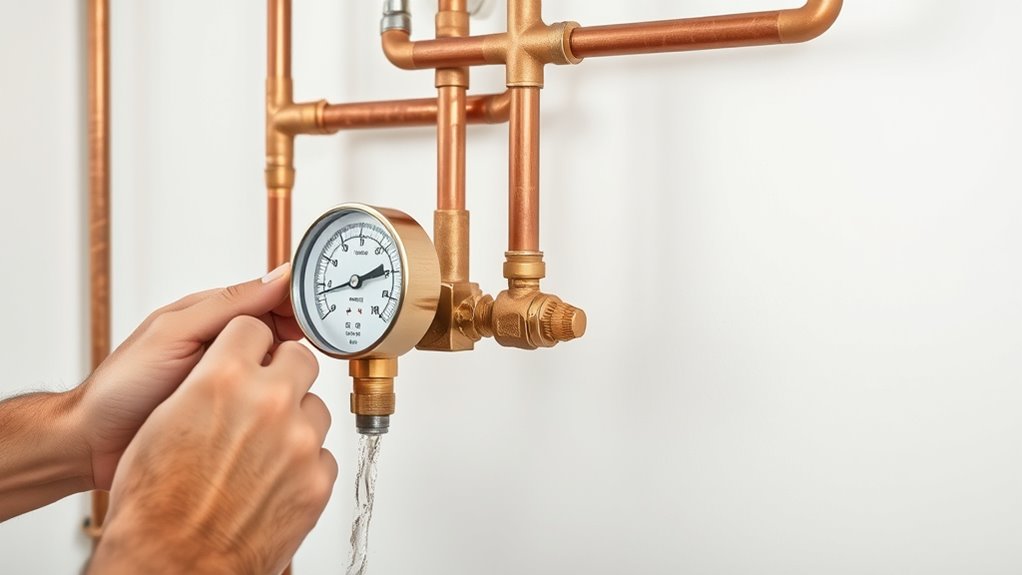
Understanding hydraulic principles is fundamental for homeowners who want to maintain and troubleshoot their plumbing systems effectively. When you grasp how water pressure and pipe sizing interact, you gain the ability to identify issues early and make informed decisions about repairs or upgrades. Water pressure refers to the force exerted by water as it moves through your pipes, and maintaining the right level is essential for ensuring your fixtures work properly. Too high, and it can damage pipes and fixtures; too low, and your water flow becomes weak, affecting everything from showers to appliances. Recognizing how water pressure varies within your system helps you pinpoint problems like blockages, leaks, or incorrect pipe sizing that may be causing pressure drops or surges.
Pipe sizing directly influences how well water flows through your home and how pressure is maintained. Larger pipes generally allow more water to pass through with less resistance, helping maintain steady pressure even when multiple outlets are in use. Conversely, smaller pipes create higher resistance, which can lead to reduced water pressure and slower flow rates. When planning plumbing upgrades or repairs, understanding the relationship between pipe size and water pressure helps you choose the right materials and dimensions. For example, if you notice weak water flow in multiple fixtures, it might be due to undersized pipes that can’t handle the demand. Upgrading to larger pipes can dramatically improve water pressure and overall system performance.
It’s also important to consider how pipe length and configuration impact water pressure. Long runs of pipe or complex layouts with many bends increase resistance, reducing pressure at the fixtures. This is why proper pipe sizing and layout are essential for ensuring consistent water flow throughout your home. When troubleshooting low water pressure, check for sections of pipe that may be too narrow or obstructed, and evaluate whether pipe sizing aligns with your household’s water demand. Installing pressure regulators or adjusting existing ones can help maintain ideal water pressure, but these solutions work best when you understand the underlying hydraulic principles. Additionally, routine maintenance and awareness of lifestyle factors, such as multiple simultaneous water uses, can help prevent pressure issues before they become serious problems.
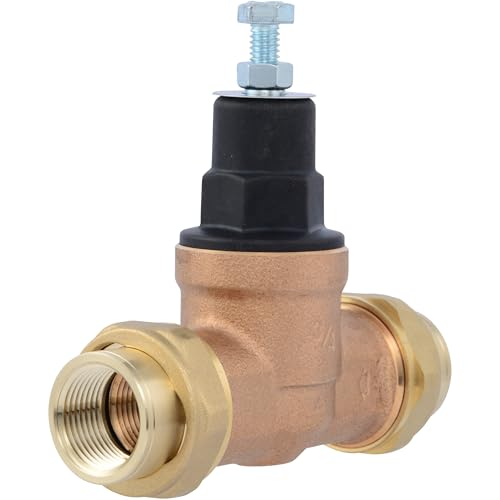
Cash Acme EB45 Pressure Regulating Valve, Double Union, 3/4 Inch NPT Female, Poly Top, 60 PSI, PVA16P-DUTH-60, Brass
- Type: Pressure Regulating Valve
- Connection Size: 3/4 Inch NPT Female
- Design: Double Union, Inline
As an affiliate, we earn on qualifying purchases.
As an affiliate, we earn on qualifying purchases.
Frequently Asked Questions
How Can I Tell if My Home’s Hydraulic System Is Malfunctioning?
You can tell if your home’s hydraulic system is malfunctioning by checking the hydraulic fluid levels; if they’re low, it’s a sign of a problem. Also, monitor your pressure gauge readings—if they’re inconsistent or too high or low, your system might need attention. Unusual noises, slow operation, or leaks are additional clues. Regularly inspecting these aspects helps catch issues early before they worsen.
What Are Common Signs of Hydraulic Leaks in Residential Systems?
You might notice the telltale signs of hydraulic leaks, like damp spots or a sudden drop in water pressure. Unusual noises, such as hissing or banging, often hint at pipe corrosion or air trapped in the system. Keep an eye out for water stains or a musty smell, which suggest leaks are quietly seeping. Address these signs promptly to prevent further damage and guarantee your system runs smoothly.
Is It Necessary to Regularly Maintain My Home’s Hydraulic Components?
Yes, you should regularly maintain your home’s hydraulic components. Regular maintenance helps guarantee hydraulic fluid stays clean and at ideal levels, preventing system failure. It also supports proper pressure regulation, which keeps your system running smoothly and efficiently. By checking for leaks, replacing filters, and inspecting pressure settings, you safeguard your system’s longevity and performance, saving you money and avoiding unexpected breakdowns.
Can Hydraulic Issues Affect Water Pressure Throughout My House?
Yes, hydraulic issues can cause pressure fluctuations throughout your house. Pipe blockages or leaks often lead to inconsistent water flow, reducing pressure in some areas and causing fluctuations in others. Regular maintenance helps prevent these problems, ensuring your system runs smoothly. If you notice pressure drops or inconsistent flow, it’s a good idea to have a professional inspect your pipes for blockages or leaks to restore peak water pressure.
Are There DIY Methods to Troubleshoot Hydraulic Problems at Home?
Ah, the days of yore when a wrench and a keen eye sufficed! You can try a DIY repair by first inspecting your system—check for leaks, blockages, or unusual pressure drops. Turn off the main water supply, then examine your pipes and fixtures. If you notice issues, cleaning aerators and replacing faulty valves might help. Remember, a thorough system inspection can often pinpoint hydraulic problems before calling in a pro.

Kitchen Sink Drain Kit,1-1/2”,for Most Kitchen Sink Drain Repair Kit and Bathroom Sink Drain Kit, Kitchen Sink P Trap Drain Kit 1 1/2” for Sink Plumbing Kit, Completed Sink Pipe Replacement Kit
- Universal Compatibility: Fits most 1.5-inch sink drains
- Easy One-Stop Installation: Includes detailed DIY instructions
- Complete Plumbing Kit: All necessary parts for repairs
As an affiliate, we earn on qualifying purchases.
As an affiliate, we earn on qualifying purchases.
Conclusion
Understanding hydraulic principles is like holding the keys to your home’s water system. When you grasp how pressure and flow work together, you’re not just a homeowner—you’re the captain steering your household’s health. Remember, every valve, pipe, and pump is an essential piece of your home’s heartbeat. By mastering these basics, you guarantee smooth operation and long-term reliability. Think of yourself as the guardian of this unseen but crucial force, keeping your home flowing effortlessly.

SENCTRL 0-200 Psi Water Pressure Gauge Test with Lazy Hand, Lead-Free, Waterproof, 2.5" Dial Size, 3/4" Female Garden Hose Thread, Stainless Steel Case, for Home Potable Water, House Tube
- Waterproof and Corrosion Resistant: IP67 waterproof stainless steel case
- Clear, Fog-Resistant Dial: Design reduces internal fogging and moisture damage
- Lead-Free Wetted Materials: Made with lead-free brass, stainless steel, and food-grade silicone
As an affiliate, we earn on qualifying purchases.
As an affiliate, we earn on qualifying purchases.
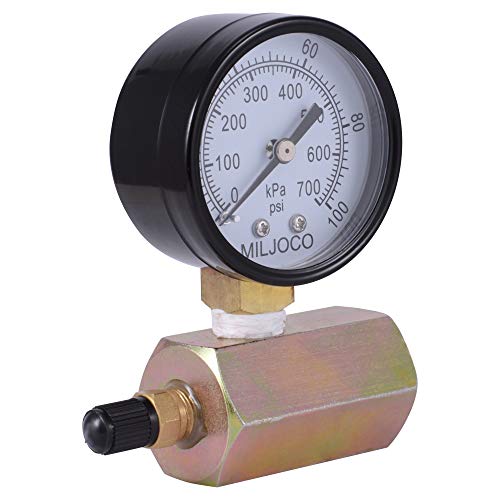
SharkBite 3/4 Inch Pressure Test Kit, 100 PSI, Push to Connect Brass Plumbing Fitting, PEX, Copper, CPVC, 25489Z
- Pressure Testing Compatibility: Tests air or gas pressure
- Dial Display: 2-inch dial shows 0-100 PSI
- Easy Installation: Push-to-connect design, no tools needed
As an affiliate, we earn on qualifying purchases.
As an affiliate, we earn on qualifying purchases.