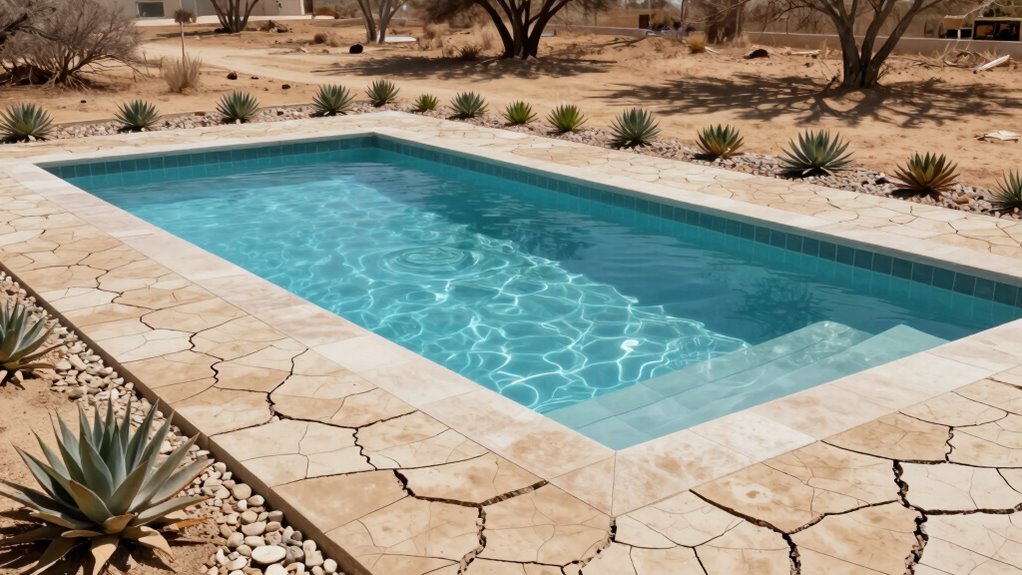

In regions facing drought restrictions, you’ll need to change how you operate your pool. You can’t fill it with hose water or add excess chemicals. Instead, you focus on conserving water by using covers, recycling existing water, and reducing backwashing. Maintenance becomes more frequent and careful, emphasizing water efficiency. These rules protect the environment, but they also require you to adapt daily routines and equipment. Keep exploring to see how these changes impact pool management even further.

Get pool and patio gear delivered free with Prime
- Fast, free delivery on millions of items
- Prime Video, Amazon Music and more included
- Member-only deals all year
Key Takeaways
- Pool filling is restricted, often prohibiting filling with hose water to conserve overall water resources.
- Use of pool covers and recycling existing water reduces evaporation and minimizes chemical adjustments.
- Filter backwashing is limited to prevent water waste, requiring careful system monitoring.
- Routine maintenance emphasizes chemical balance, debris removal, and equipment efficiency under water restrictions.
- Eco-friendly practices are promoted to align pool management with drought-related environmental conservation efforts.
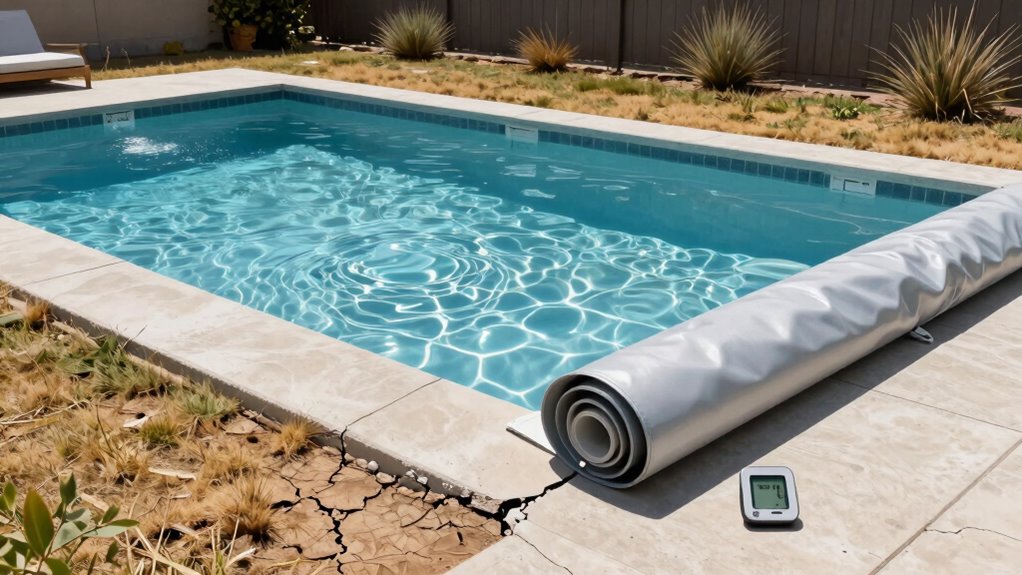
During a drought, pool owners and operators must follow specific rules to conserve water and guarantee safety. These regulations often lead to changes in how pools are maintained, prompting a shift in routines and priorities. Water conservation becomes the top priority, and you’ll find yourself adjusting your pool maintenance practices to meet new restrictions. For example, many regions limit or ban filling pools with hose water, so you might need to rely more on recycling existing water or using covers to reduce evaporation. Maintaining your pool’s water level becomes a delicate balancing act—too low and it risks equipment damage, too high and you could be wasting precious resources.
As restrictions tighten, regular pool maintenance takes on added importance. You’ll need to be vigilant about checking and adjusting water chemistry to prevent issues like algae growth or corrosion, especially since adding water is often restricted. Skimming debris and cleaning filters might be more frequent tasks, as stagnant water can quickly become a breeding ground for bacteria when water levels are kept low or evaporation rates increase. To conserve water, some regions encourage the use of pool covers, which help minimize evaporation and keep the water temperature stable. These covers also reduce the need for frequent chemical adjustments, making pool maintenance more efficient. Additionally, implementing water-efficient practices can help pool owners reduce water waste and stay within regulatory limits, especially as water conservation becomes a key focus.
You might also have to rethink your approach to chemicals and filtration. Since water addition is limited, maintaining proper chemical balance is even more critical to avoid costly repairs or health hazards. Some areas restrict backwashing of filters to save water, so you’ll need to monitor your filtration system carefully and follow guidelines for cleaning and maintenance without wasting resources. Pool operators are increasingly adopting innovative solutions like water-saving pumps and automated controllers that optimize water use and chemical levels, all aimed at balancing safety with conservation efforts. Additionally, understanding biodiversity can encourage environmentally friendly practices that support local ecosystems even during water restrictions.
solar pool cover for water conservation
As an affiliate, we earn on qualifying purchases.
As an affiliate, we earn on qualifying purchases.
Frequently Asked Questions
How Do Drought Rules Vary Between Different Regions?
Drought rules vary between regions, often requiring you to reduce water usage and implement water conservation measures. You might need to limit pool filling, restrict frequent refills, or use drought-tolerant landscaping around your pool. These rules emphasize water conservation and can also impact pool safety, as lower water levels may affect filtration and chemical balance. Staying informed about your local regulations helps you operate your pool responsibly while maintaining safety.
Are There Exemptions for Public Pools During Drought Restrictions?
Yes, there are often exemptions for public pools during drought restrictions. You might find that local authorities allow certain public pools to operate because they serve essential community needs or are part of public health initiatives. However, these exemptions usually come with strict guidelines, like limited operating hours or reduced capacity, to conserve water. Always check your region’s specific drought restrictions to see if your public pool qualifies for an exemption.
What Are the Penalties for Non-Compliance With Drought Rules?
If you don’t follow drought rules, you could face legal penalties, including fines or other sanctions. Violating water conservation measures can lead to hefty fines, court summons, or even water service disruptions. It’s essential to stay informed and comply with local restrictions to avoid these consequences. By adhering to drought rules, you help conserve water and support community efforts during periods of shortage, preventing legal penalties and promoting responsible water use.
How Do Drought Rules Impact Pool Maintenance Costs?
Think of drought rules as a tightrope walk over a dry, cracked landscape. They raise your pool maintenance costs by demanding water conservation and encouraging pool water recycling. You’ll need to invest in efficient equipment and regular checks to comply. While it may seem like extra effort now, these measures help preserve water, ensuring your pool remains a invigorating oasis without draining your budget.
What Alternative Water Sources Are Used for Pools During Droughts?
During droughts, you might turn to alternative water sources like rainwater harvesting and water recycling systems for your pool. Rainwater harvesting collects rainwater, reducing reliance on municipal supplies, while water recycling systems treat and reuse pool water, minimizing wastage. These methods help you comply with drought restrictions, lower your water bills, and maintain your pool without sacrificing your swimming experience.
As an affiliate, we earn on qualifying purchases.
Conclusion
So, while drought rules might make you rethink your pool’s water usage, they also turn your backyard oasis into a symbol of survival rather than leisure. Ironically, all those rules meant to conserve water could end up making your pool the most exclusive, least-used feature on your property. But hey, at least you’ll have a good story about that summer you fought the drought and lost—sort of like a badge of honor for being environmentally responsible, right?
As an affiliate, we earn on qualifying purchases.
As an affiliate, we earn on qualifying purchases.
Fall Picks
fall essentials
As an affiliate, we earn on qualifying purchases.