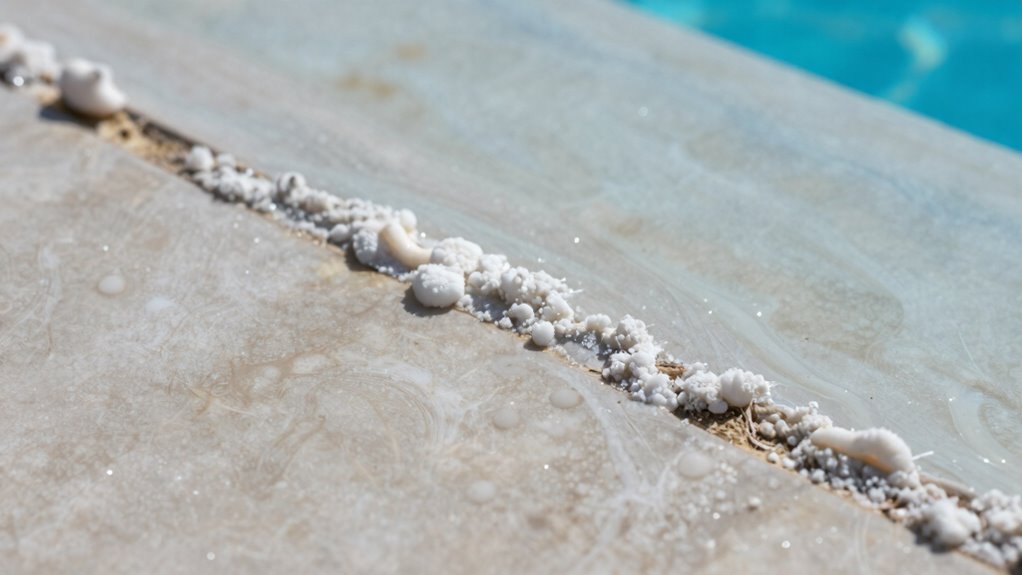

Calcium hardness protects your pool or water feature surfaces by forming a barrier that prevents scaling, corrosion, and damage. When levels are balanced, it keeps surfaces smooth, clear, and durable over time. But if calcium becomes too high, thick deposits and scale form, clogging pipes and reducing efficiency. Conversely, low calcium makes water aggressive, causing surfaces to weaken and corrode. Keep an eye on your levels to maintain this delicate balance—and discover what happens when it’s out of sync.

Get pool and patio gear delivered free with Prime
- Fast, free delivery on millions of items
- Prime Video, Amazon Music and more included
- Member-only deals all year
Key Takeaways
- Proper calcium hardness forms a protective barrier against scaling and corrosion, safeguarding surfaces over time.
- Low calcium hardness causes aggressive water that damages surfaces and accelerates deterioration.
- High calcium hardness leads to mineral buildup, clogging pipes and reducing equipment efficiency.
- Imbalanced calcium levels can shift from protecting to damaging surfaces if not regularly monitored.
- Maintaining optimal calcium hardness with proper water chemistry prevents surface damage and prolongs lifespan.
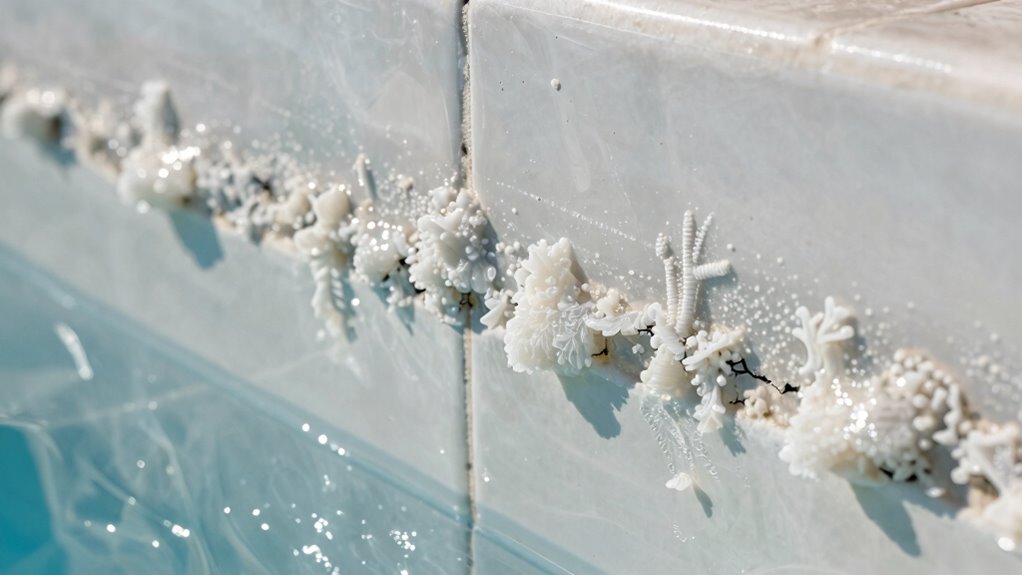
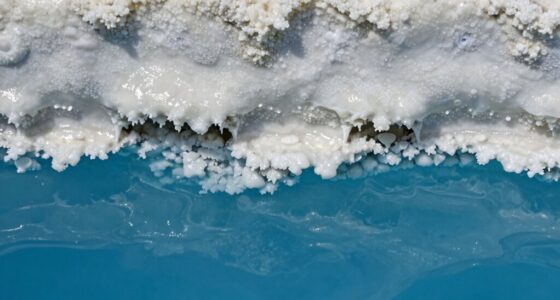
Calcium hardness plays a essential role in maintaining the integrity of various surfaces, especially in pools, water features, and plumbing systems. When calcium levels are just right, they form a protective barrier that minimizes issues like scaling buildup and surface corrosion. This balance helps keep surfaces smooth, clear, and less prone to damage. Proper calcium hardness prevents minerals from depositing excessively, which can lead to unsightly and damaging scale. When calcium levels are too low, surfaces become more vulnerable to corrosion because the water becomes aggressive, attacking metal and plaster surfaces. Conversely, when calcium is too high, it can cause scaling buildup, forming thick, chalky deposits that clog pipes and cover surfaces.
Maintaining balanced calcium hardness protects surfaces from corrosion and scaling, ensuring clarity and durability.
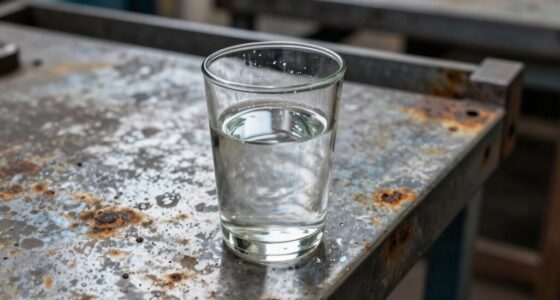
In the case of low calcium hardness, your water may seem aggressive, stripping away protective coatings and exposing surfaces to corrosion. This process weakens the material over time, creating rough patches, pitting, or even leaks. The corrosive water tends to dissolve the calcium in plaster or metal, accelerating deterioration. On the flip side, excess calcium leads to mineral deposits that settle on surfaces, creating a thick layer of scale. This scaling not only looks unsightly but also impairs heat transfer and reduces the efficiency of filtration systems. Scale buildup can also cause blockages in plumbing, leading to costly repairs and replacements.
Maintaining the right calcium hardness level is essential to avoid these problems. When calcium levels are balanced, water remains less corrosive and less prone to scaling. This equilibrium helps preserve the surface integrity of your pool or water feature, preventing damage that could cost you time and money. Regular testing and adjusting calcium levels ensures your surfaces stay protected. If you notice signs of scaling, such as white deposits on tiles or equipment, or signs of corrosion like pitted surfaces, it’s a sign your calcium hardness is out of balance. Correcting these issues promptly by adjusting calcium levels can prevent further damage. Additionally, understanding the role of water chemistry helps in maintaining optimal levels and protecting your surfaces effectively. Proper management of water chemistry parameters, including calcium hardness, alkalinity, and pH, is crucial for long-term surface protection.
However, it’s important to understand that calcium hardness isn’t a one-time fix. It requires ongoing monitoring, especially as water chemistry changes with use, evaporation, or chemical treatments. Keeping calcium levels within recommended ranges helps your surfaces stay protected for years to come, but neglecting this balance invites problems. Too much calcium leads to scaling, while too little invites corrosion. Striking the right balance is key to ensuring your surfaces remain durable, smooth, and corrosion-free—until, of course, that balance is disrupted.
As an affiliate, we earn on qualifying purchases.
Frequently Asked Questions
Can Calcium Hardness Be Adjusted Without Draining the Pool?
You can adjust calcium hardness without draining your pool by adding calcium increasers or decreasers, depending on your water mineral balance needs. To raise calcium hardness, use a calcium chloride product; to lower it, add a calcium hardness reducer. Regular calcium hardness regulation helps maintain proper water balance, preventing scale buildup or corrosion. Always test your water first, then follow product instructions carefully to achieve the ideal calcium level without draining your pool.
How Does Calcium Hardness Vary With Water Temperature?
A stitch in time saves nine, and understanding water chemistry is key. As water temperature rises, calcium hardness increases because warmer water dissolves more calcium, altering your pool’s balance. Temperature effects impact calcium levels, making it essential to monitor hardness regularly. When water gets colder, calcium hardness decreases, risking corrosion or scaling. Keep a close eye on temperature changes to maintain ideal water chemistry and protect your pool surfaces.
Are There Alternative Methods to Protect Surfaces Besides Calcium Hardness?
You can protect surfaces through water filtration systems that remove minerals and contaminants, reducing the need for calcium hardness. Additionally, maintaining proper chemical balancing in your water helps prevent scaling and corrosion, safeguarding your surfaces. These methods work together to keep your water clean and balanced, minimizing damage caused by mineral buildup. Regularly monitoring and adjusting your water treatment processes guarantees your surfaces stay protected without relying solely on calcium hardness.
What Are the Signs of Excessive Calcium Buildup?
You’ll notice mineral deposits forming on surfaces, appearing as white or cloudy spots. Excessive calcium buildup can cause rough textures, making surfaces feel gritty, and can lead to surface damage over time. You might also see reduced water flow or cloudy water in your pool or plumbing. If you observe these signs, it’s a clear indication that calcium levels are too high, risking long-term damage and requiring treatment to prevent further issues.
How Often Should Calcium Hardness Levels Be Tested?
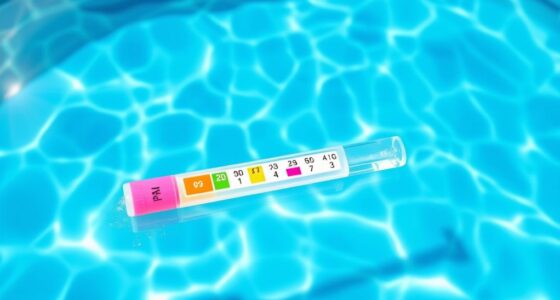
You should test your calcium hardness levels at least once a month through calcium testing. Regular testing helps you monitor water saturation and prevent buildup issues. If your water’s calcium hardness is too high or low, it can damage surfaces or reduce water quality. Consistent testing allows you to make necessary adjustments, maintaining proper water balance and protecting your pool or system from potential harm caused by improper calcium levels.
automatic pool water chemistry tester
As an affiliate, we earn on qualifying purchases.
As an affiliate, we earn on qualifying purchases.
Conclusion
Think of calcium hardness as a gentle guardian, coating surfaces with a shimmering shield that keeps them safe from wear. But beware—the same layer that protects can become a relentless barrier, dulling the beauty and inviting residue. Like a delicate dance, maintaining the right balance guarantees your surfaces stay radiant and resilient. When calcium’s grip turns oppressive, it’s time to step in before the surface’s glow fades into a stubborn, chalky haze.
pool calcium hardness adjustment kit
As an affiliate, we earn on qualifying purchases.
As an affiliate, we earn on qualifying purchases.
As an affiliate, we earn on qualifying purchases.
Halloween Picks
halloween
As an affiliate, we earn on qualifying purchases.