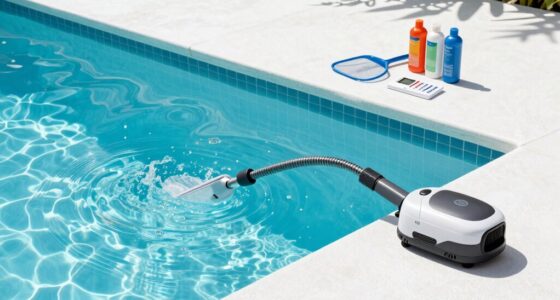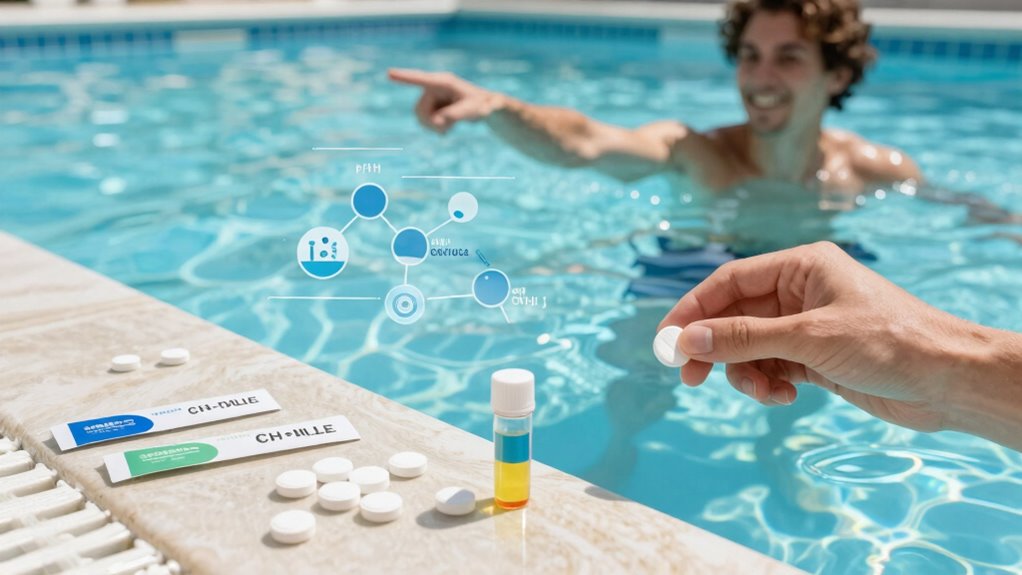

Pool chemistry might seem complicated, but it’s really just about a few simple ideas that keep your water safe and clear. Think of pH as water’s acidity level, and alkalinity as its buffer to keep pH stable. Chlorine or sanitizers kill bacteria and algae. By testing regularly and making small adjustments, you can easily maintain a healthy pool without the fuss. Keep exploring, and you’ll discover how to keep your pool perfectly balanced with minimal effort.

Get pool and patio gear delivered free with Prime
- Fast, free delivery on millions of items
- Prime Video, Amazon Music and more included
- Member-only deals all year
Key Takeaways
- Use simple analogies, like comparing pH to balancing a lemonade recipe for taste.
- Focus on practical benefits, such as a cleaner, safer pool, rather than complex chemical details.
- Highlight how regular testing and adjustments prevent problems like cloudy water or algae.
- Emphasize safety precautions to reassure about easy, safe handling of pool chemicals.
- Explain that understanding basic pool chemistry helps keep the pool inviting without needing deep science knowledge.
Understanding pool chemistry is essential for keeping your pool safe, clean, and inviting. When you grasp the basics, you can maintain the right chemical balance, which keeps the water clear and healthy. Think of the chemicals as the pool’s helpers, working behind the scenes to prevent algae growth, bacteria, and cloudy water. It’s not about memorizing complex formulas but understanding how these chemicals work together to create a safe environment.
Knowing the basics of pool chemistry keeps your water safe, clean, and inviting with simple, effective chemical balance.
First, it’s important to recognize that chemical balance is about maintaining the right levels of pH, alkalinity, and sanitizer. The pH measures how acidic or basic your water is. If it’s too low, the water becomes corrosive, damaging equipment and irritating your skin. If it’s too high, algae can thrive, and the water may become cloudy. Alkalinity acts as a buffer, helping to keep the pH stable. When alkalinity is off, pH swings happen more often, complicating your pool maintenance. Sanitizers, like chlorine, kill germs and algae, ensuring the water remains safe to swim in. Without proper balance, your pool can quickly turn into a breeding ground for bacteria and algae, making it unsafe and unpleasant. Regular testing helps you catch these issues early and maintain proper levels.
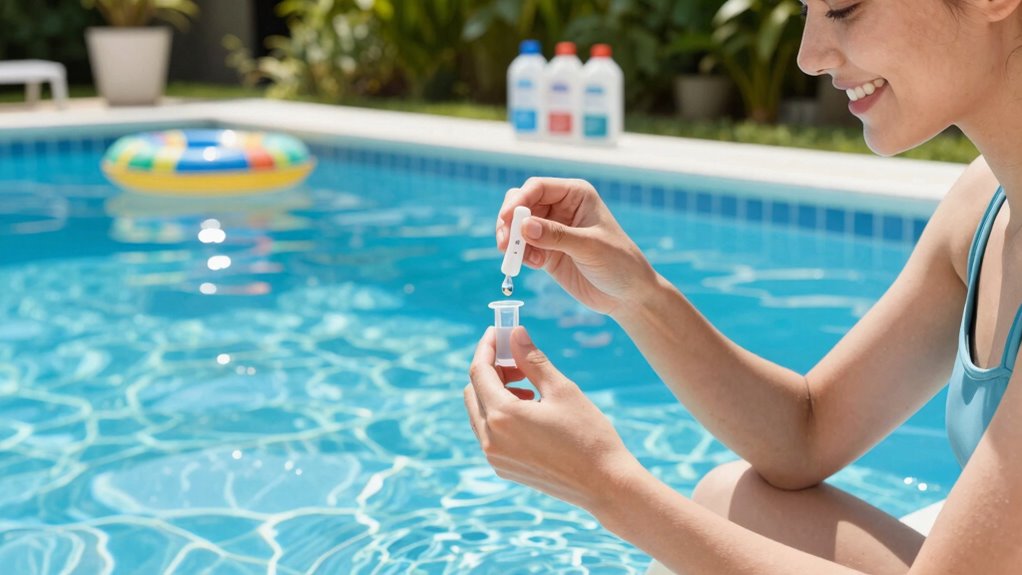
You don’t need to be a chemistry expert to keep these levels in check. Regular testing with simple kits or digital testers can tell you if your pH, alkalinity, and sanitizer levels are within the recommended range. Once you know where you stand, adding the right chemicals becomes straightforward. For example, if the pH is too high, you add a pH reducer; if it’s too low, you add pH increaser. Maintaining proper chemical balance is about consistency—testing weekly and adjusting as needed. This proactive approach helps you understand pool chemistry, which reduces the risk of costly repairs or health issues. Knowing how each chemical interacts helps you better interpret test results and make informed adjustments.
Safety precautions are vital when handling pool chemicals. Always read labels carefully and follow the manufacturer’s instructions. Wear gloves and eye protection to prevent irritation or accidents. Never mix chemicals directly, as this can cause dangerous reactions. Store chemicals in a cool, dry place away from children and pets. Proper storage also helps prevent accidental chemical reactions that could be hazardous. By respecting safety precautions, you ensure that your pool maintenance doesn’t become a hazard. Learning about chemical reactions can help you avoid dangerous mishaps and ensure safe handling.
In the end, understanding the basics of pool chemistry isn’t about mastering complex science; it’s about creating a safe, clean environment. With a little knowledge and regular testing, you can keep your pool in perfect condition, making swimming enjoyable without the stress of chemical mishaps.
Products Worth Considering

Philips Hue White and Color Ambiance A19 Smart Bulb Starter Kit, 2-Pack

Bose SoundLink Flex Bluetooth Speaker (2nd Gen) – Portable Outdoor Speaker with Hi‑Fi Audio, Waterproof and Dustproof, USB‑C, Up to 12 Hours

Dyson V8 Cyclone Cordless Vacuum
As an affiliate, we earn on qualifying purchases.
Frequently Asked Questions
How Often Should I Test My Pool Water?
You should test your pool water at least twice a week to maintain proper pool maintenance and chemical stability. Regular testing helps you catch imbalances early, preventing issues like cloudy water or algae growth. If your pool gets heavy use or after a storm, test more often. Using a reliable test kit, you can easily monitor pH, chlorine, and other levels to keep your pool safe and clear.
What Are the Signs of Chemical Imbalance?
Think of your pool as a delicate dance, where chemical indicators are the rhythm and balance is the harmony. If you notice cloudy water, algae growth, or a strong chlorine smell, these are clear imbalance symptoms. Your pool’s chemical indicators, like pH and chlorine levels, reveal the discord. When these are off, the pool’s health suffers, so watch for these signs and adjust your chemicals promptly to restore harmony.
Can I Use Household Products to Balance Chemicals?
You shouldn’t use household alternatives or DIY remedies to balance your pool chemicals. These products aren’t meant for pools and can cause dangerous imbalances or damage your equipment. Instead, stick to pool-specific chemicals designed for balancing pH, alkalinity, and chlorine levels. If you’re unsure, consult your pool’s manual or a professional. Proper chemical balance keeps your pool safe, clean, and enjoyable without risking costly repairs.
What Safety Precautions Are Needed When Handling Pool Chemicals?
You should always prioritize pool safety and proper chemical handling to prevent accidents. Wear protective gear like gloves and goggles, and work in a well-ventilated area to avoid inhaling fumes. Store chemicals securely, away from children and pets. Never mix chemicals directly, as dangerous reactions can occur. Following these safety precautions guarantees you manage your pool chemicals responsibly, reducing risks and keeping your swimming environment safe and enjoyable.
How Long Does It Take to Balance Pool Chemistry?
Balancing your pool chemistry typically takes a few hours, but it depends on your current levels and the size of your pool. You’ll want to use proper balancing techniques, like testing regularly and adjusting chemicals carefully. Avoid chemical misconceptions—overdoing chemicals won’t fix issues faster and can cause problems. With patience and proper techniques, you’ll see your pool reach ideal levels, ensuring safe, clear water for swimming.
Conclusion
Think of your pool as a delicate dance, where each chemical plays a crucial role in keeping everything in harmony. When you understand how chlorine, pH, and alkalinity work together, you’re the conductor guiding this dance smoothly. It’s not about complex formulas, but about keeping the rhythm steady so your pool stays clean and inviting. Once you get the beat, managing pool chemistry becomes a simple, satisfying dance you’ll enjoy every time you swim.