TL;DR

Get pool and patio gear delivered free with Prime
- Fast, free delivery on millions of items
- Prime Video, Amazon Music and more included
- Member-only deals all year
Gardening Know How’s lawn-seeding report says slow sprouting does not necessarily mean grass seed has failed: different varieties take different amounts of time, and cool soil or poor moisture can delay germination. It recommends improving seed-to-soil contact, keeping the top inch of soil consistently damp and applying a light compost covering.
Gardening Know How’s report on grass-seed germination says a lawn that still looks bare after two weeks may not indicate failed seed: varieties sprout at different speeds, and soil temperature, seed placement and moisture all affect how quickly seedlings appear. It outlines three steps gardeners can take to improve conditions: put seed in contact with soil, keep the seedbed damp and add a thin layer of screened compost.
The report gives different timelines for common cool-season grasses. Perennial ryegrass can emerge in about five to 10 days, while tall fescue often takes one to two weeks. Kentucky bluegrass is slower: it can take at least two weeks and sometimes closer to a month. A mixture containing several varieties may therefore appear uneven at first.
Temperature and placement matter as well. The report says cool-season seed generally needs soil above about 50 degrees Fahrenheit to germinate; colder ground may delay growth until spring. Seed left on dead thatch or leaves can dry out rather than reach the soil. The report recommends mowing existing grass to about 1.5 to 2 inches, removing debris, loosening the surface and lightly raking seed into the top 1/8 to 1/4 inch of soil.
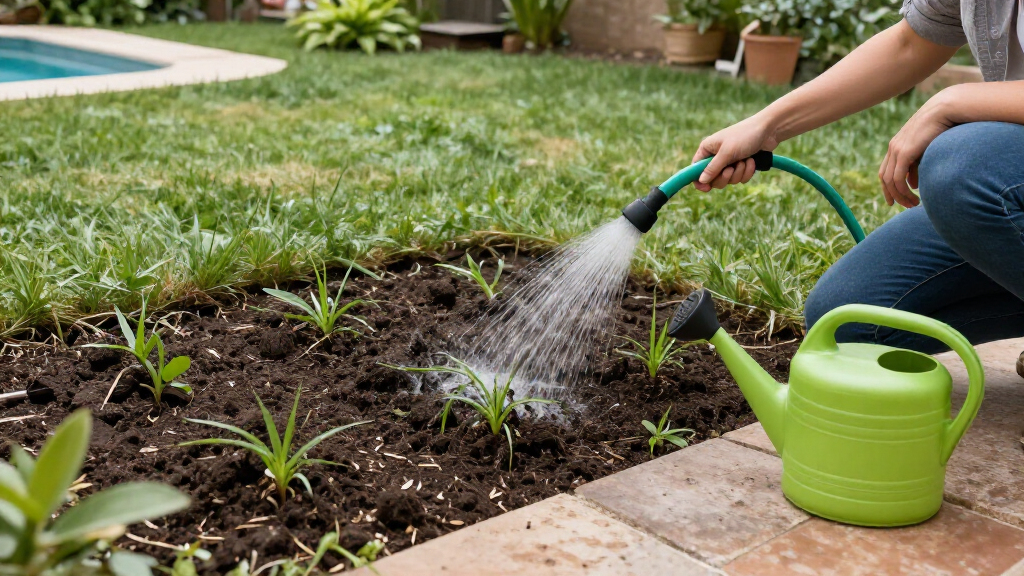
For moisture, it advises short, light watering once or twice daily, with an additional brief sprinkle when conditions are breezy or the surface dries quickly. The top inch of soil should stay damp, not muddy, the report says. A layer of screened compost no more than about 1/4 inch deep can help limit drying and shield seed from heavy rain. The source cautions against applying a thicker layer.
Why Even Moisture and Contact Matter
Slow or patchy emergence can prompt homeowners to sow more seed or assume a lawn repair has failed. The timelines in the report show why that conclusion may be premature, particularly with bluegrass or a mixed seed bag. Checking the variety and soil conditions first can help gardeners distinguish a normal delay from conditions that may be preventing germination.
The recommended steps focus on the seed’s immediate environment: contact with soil, steady moisture and a light protective covering. They do not guarantee a particular sprouting date. Grass that has emerged also is not fully established; the report says seedlings need several more weeks to develop roots, so early green growth is not a signal to stop caring for the new lawn.
Products Worth Considering

Philips Hue Festavia Globe Outdoor String Lights, 32 Bulbs, 91 ft

Bose TV Speaker (2nd Gen) Compact Soundbar with Bluetooth and HDMI Connectivity

Dyson Car+Boat Cordless Handheld Vacuum
As an affiliate, we earn on qualifying purchases.
Fall Timing Depends on Region
The report describes fall as a useful period for seeding many cool-season lawns because the soil can retain summer warmth while air temperatures cool, and rainfall may become more frequent. But the workable window varies by location. It puts the usual window in parts of the upper Midwest and other northern areas at roughly mid-August to mid-September, often closing by October. In parts of the South, such as Tennessee, seeding may remain possible into mid-October.
Late planting leaves less time for grass to establish before a hard freeze. The report distinguishes these cool-season grasses from warm-season varieties such as Bermuda, zoysia and bahiagrass, which it says are generally seeded in late spring or early summer after the soil warms. Local conditions and the grass already growing in a yard matter when choosing both seed and timing.
“Cool-season seed generally won’t germinate until the soil is above about 50 degrees Fahrenheit.”
— Gardening Know How report
What Affects the Sprouting Clock
The report does not provide a single expected emergence date for every lawn or seed blend. It also does not establish that the three techniques will produce faster results in every soil or weather condition. Seed type, local soil temperature, moisture, planting depth and the time remaining before frost can all affect what happens.
Its regional dates are broad guidance rather than a forecast for a specific property. The source does not give a publication date or identify a particular lawn, seed lot or local weather pattern. If seed remains absent after the expected range for its variety, the material does not determine whether it has failed, dried out, been buried too deeply or faced other conditions.
Check Conditions Before Reseeding
Gardeners waiting for new growth can check the seed label for the grass varieties and compare their expected germination times, then inspect whether seed is touching soil and whether the surface remains damp. A soil thermometer can help check temperature, as the report suggests. Any decision to reseed should also take account of the local planting window and the time before a likely hard freeze.
Once seedlings have roots, the report recommends watering less often but more deeply. It does not specify an exact point at which every lawn should change its watering schedule, so gardeners will need to respond to local conditions and the growth of the seedlings.
Key Questions
How long does grass seed usually take to sprout?
It varies by grass. The report says perennial ryegrass may emerge in about five to 10 days, tall fescue in one to two weeks, and Kentucky bluegrass in at least two weeks and sometimes close to a month.
Does no grass after two weeks mean the seed failed?
Not necessarily. A slow variety such as bluegrass may take longer. Soil that is too cold, seed resting on thatch, or a seedbed that dries out can also delay or prevent emergence, according to Gardening Know How.
How often should newly sown grass seed be watered?
The report suggests short, light sprinkles once or twice a day, with another brief watering when the surface dries quickly. The aim is to keep the top inch damp but not muddy, rather than soaking the ground.
How deep should compost go over grass seed?
Use a thin layer of screened compost, no more than about 1/4 inch deep, the report advises. The seed and soil should still be visible through it; a thicker covering is not recommended.
Source: gardeningknowhow.com