
Understanding pool industry terms can seem confusing at first, but you can master them with some basics. You’ll learn how chemicals like pH, alkalinity, and sanitizer levels work together to keep your water safe and clear. Common phrases like “shock treatment” or “algae bloom” will make more sense as you recognize their purpose. Keep familiarizing yourself with these terms, and you’ll find maintaining your pool becomes much easier and more manageable over time.

Get pool and patio gear delivered free with Prime
- Fast, free delivery on millions of items
- Prime Video, Amazon Music and more included
- Member-only deals all year
Key Takeaways
- Understanding basic pool terms like “shock treatment” and “algae bloom” simplifies communication and troubleshooting.
- Familiarity with water chemistry concepts (pH, alkalinity, sanitizer levels) helps maintain clear, safe water.
- Recognizing common tools (test strips, liquid kits) and their use makes monitoring easier.
- Knowing routine practices (skimming, brushing, vacuuming) ensures proper pool maintenance.
- Clear definitions of industry jargon prevent confusion and promote effective pool care.
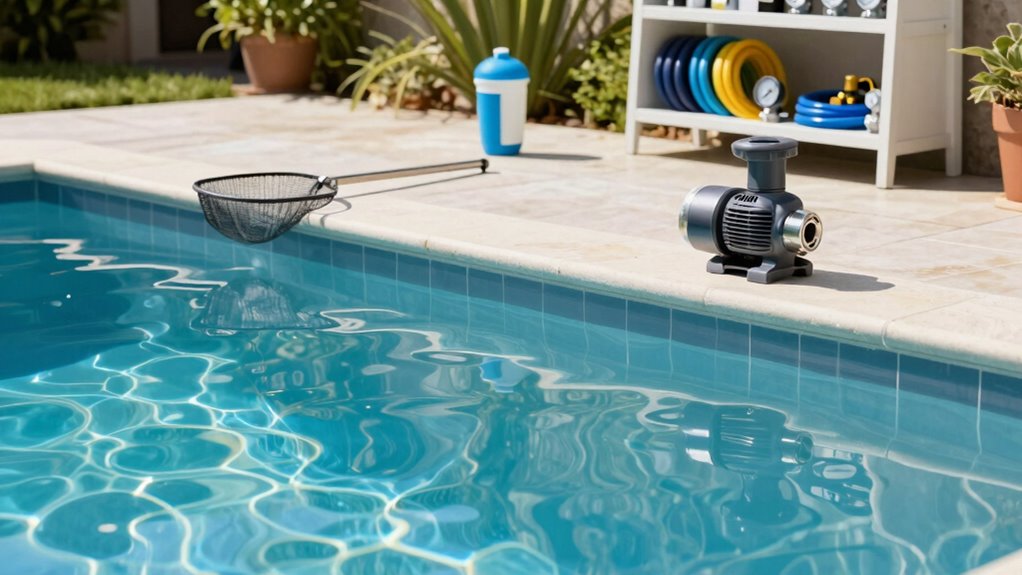
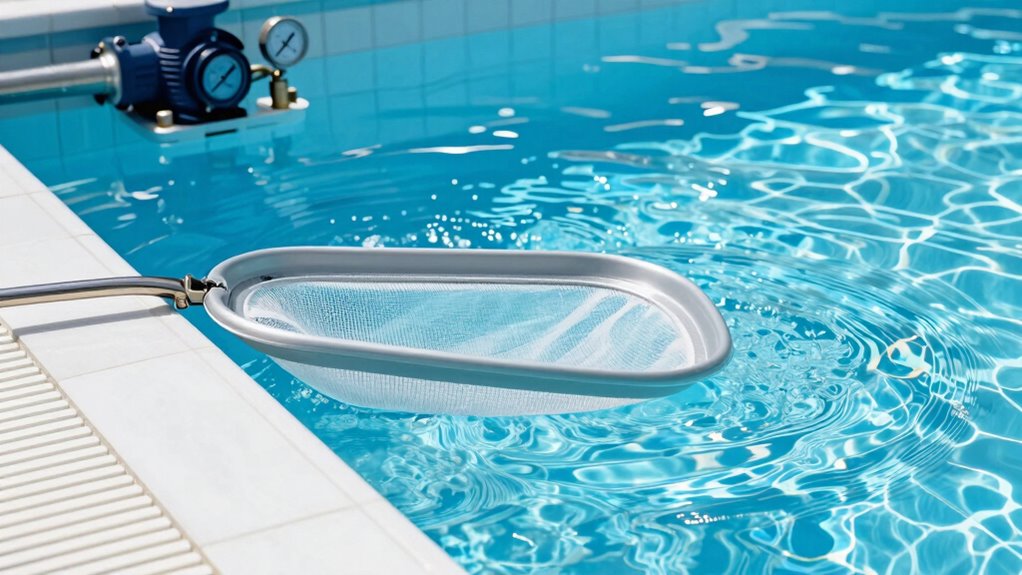
Ever wonder what all those pool-related terms mean? If you’re new to owning a pool, the industry jargon can feel overwhelming. But understanding key terms makes pool ownership easier and more enjoyable. Let’s start with pool maintenance. This involves keeping your pool clean, balanced, and functioning properly. Regularly skimming debris, brushing the walls, and vacuuming the bottom help keep dirt and algae at bay. But beyond surface cleaning, maintaining your pool’s water chemistry is essential. Water chemistry refers to the balance of chemicals in your pool, which guarantees safe, clear, and inviting water.
Understanding pool terms makes maintenance easier and keeps your water safe and clear.
When you hear about balancing your water, it means adjusting pH, alkalinity, and sanitizer levels. The pH level measures how acidic or alkaline the water is, ideally between 7.2 and 7.6. If it’s too low, the water becomes acidic, which can corrode equipment and irritate your skin. Too high, and the water might become cloudy or scale-forming. Alkalinity acts as a buffer, stabilizing pH fluctuations, so you want it within a proper range, typically 80-120 parts per million (ppm). Sanitizers like chlorine or bromine are essential to kill bacteria and prevent algae growth. Keeping these at recommended levels—chlorine around 1-3 ppm—is critical for safe swimming.
Understanding these terms helps you troubleshoot issues more confidently. For example, if your water turns cloudy, you might need to test and adjust the sanitizer or pH. Knowing what “shock treatment” means is also useful—it involves adding a large dose of chlorine to eliminate contaminants and algae, especially after heavy use or storms. “Algae bloom” describes the green or black growth that can appear if your water chemistry isn’t properly maintained, requiring specific treatments to clear up. Additionally, regular water testing is crucial to ensure all levels stay within the proper range. Proper chemical balance is vital for preventing common problems like algae growth and equipment corrosion. Maintaining consistent water chemistry is also important because fluctuations can lead to issues like scaling or staining.
A good rule of thumb is to keep an eye on your test results frequently, as early detection of imbalances helps prevent more serious issues later. Regular testing is the backbone of effective pool maintenance. Use test strips or a liquid test kit to check your water’s chemistry levels frequently. Adjust chemicals as needed, following manufacturer instructions, to keep everything in balance. Keeping your pool’s water chemistry stable not only guarantees safe swimming but also prolongs the life of your equipment and minimizes costly repairs. As you become more familiar with these terms, managing your pool becomes less intimidating. It’s all about routine checks and timely adjustments, turning what once seemed like complicated jargon into practical knowledge you can confidently apply.
Products Worth Considering

Dyson Car+Boat Cordless Handheld Vacuum

Ring Battery Doorbell and Chime (3rd Gen), Satin Nickel

Samsung 42-Inch S90H OLED 4K Smart TV Bundle
As an affiliate, we earn on qualifying purchases.
Frequently Asked Questions
How Often Should I Test My Pool Water Chemistry?
You should test your pool water chemistry at least twice a week during peak swimming season to keep everything balanced. Regular water testing helps you monitor pH, chlorine levels, and alkalinity, ensuring proper pool maintenance. If your pool is heavily used or after heavy rain, test more often to prevent issues. Consistent water testing helps maintain safe, clean water and reduces chemical costs over time.
What’s the Difference Between Chlorine and Bromine?
Chlorine and bromine are both pool sanitizers, but they work differently. Chlorine is more common and quickly kills bacteria, making water safe and clear, but can cause strong odors and irritate your skin. Bromine is gentler, lasts longer, and is less affected by pH swings. Both require water balancing to maintain proper sanitizer levels. You choose based on your preferences and pool conditions, ensuring your water stays clean and safe.
How Do I Prevent Algae Growth in My Pool?
Did you know that algae can grow in just 24 hours if conditions are right? To prevent algae growth, you need consistent pool maintenance, including proper chlorine levels and regular brushing. Keep the pH balanced between 7.2 and 7.6, and shock your pool weekly. Use algaecide as needed, and guarantee good circulation. These steps create an environment that’s less inviting for algae, keeping your pool clear and inviting.
What Are Common Signs of Equipment Failure?
If your pool equipment is failing, you’ll notice issues like reduced water flow, strange noises, or inconsistent filtration. To catch problems early, perform regular pump maintenance and check for leaks or strange sounds. Filter troubleshooting is also essential—clean or replace filters when dirty. These steps help prevent equipment failure, keep your pool running smoothly, and save you money on costly repairs down the line.
When Should I Drain and Refill My Pool?
You should drain and refill your pool when water chemistry becomes difficult to balance, typically every 3-5 years, or if you notice persistent cloudiness, algae, or foul odors despite regular maintenance. For pool safety and peak performance, follow proper maintenance tips like testing water regularly and cleaning filters. Draining helps remove accumulated contaminants, ensuring safe, clear water and protecting your equipment from damage caused by imbalanced or contaminated water.
Conclusion
Now that you’ve mastered this pool owner glossary, you’re armed with the language to confidently navigate your pool’s needs. Think of it as your personal toolkit, turning industry jargon into your secret weapon. With this knowledge in hand, you’ll breeze through maintenance and repairs, transforming your pool into a sparkling oasis. So take the plunge with confidence—every term you learn is a splash closer to pool ownership mastery!