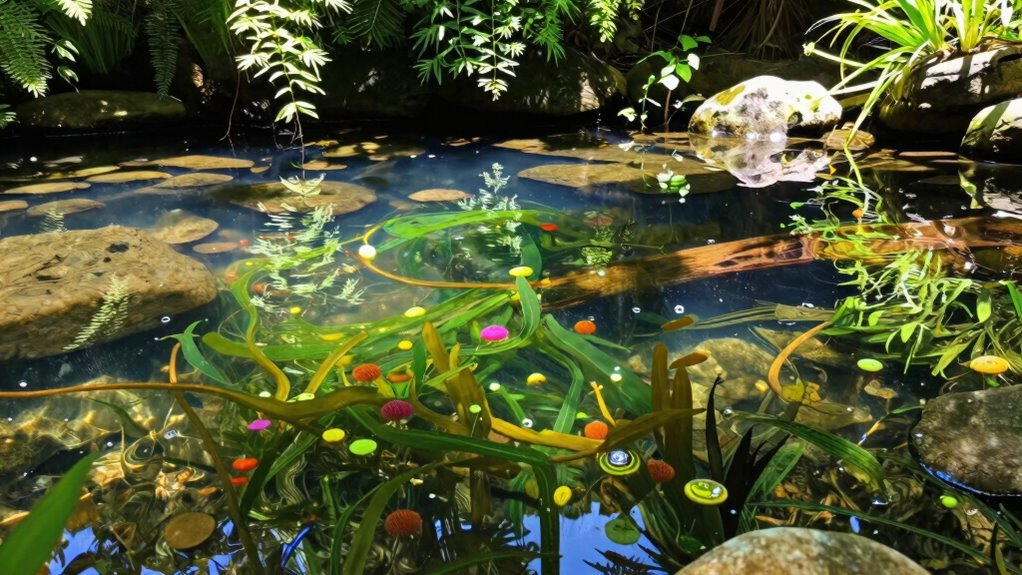

Natural swimming pools teach you that maintaining water clarity and safety relies on diverse microbial communities and ecological balance, rather than chemicals like chlorine. These pools showcase how microorganisms break down organic matter and prevent algae buildup through ecological filtration. Your awareness of how biodiversity fosters resilience and stability in these systems highlights the importance of environmental factors and interconnected ecosystems. If you want to understand how microscopic life influences ecological health, there’s more to discover ahead.

Get pool and patio gear delivered free with Prime
- Fast, free delivery on millions of items
- Prime Video, Amazon Music and more included
- Member-only deals all year
Key Takeaways
- Natural pools rely on diverse microbial communities for water purification, eliminating the need for chemicals like chlorine.
- High microbial diversity ensures water clarity, stability, and resistance to algae and bacteria buildup.
- Ecological balance depends on environmental factors such as nutrient levels, water flow, and surrounding vegetation.
- Interconnected microbial relationships foster resilience, maintaining a self-sustaining and healthy ecosystem.
- Studying natural pools highlights the importance of biodiversity and ecological balance for broader environmental health.
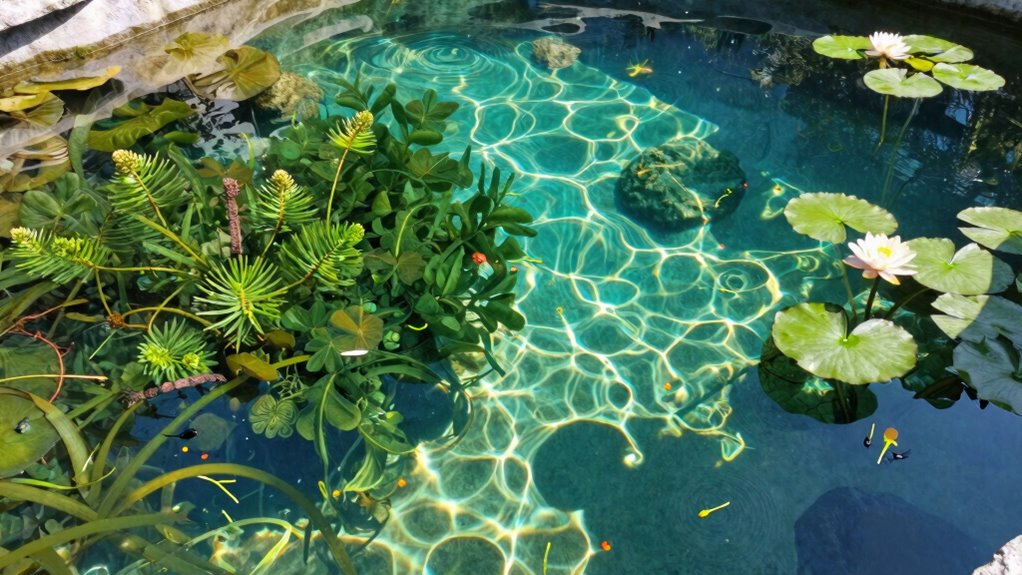
Natural swimming pools rely on complex microbiological processes to maintain clean and healthy water without chemicals. Instead of relying on chlorine or other disinfectants, these pools harness the power of ecological filtration, where a carefully balanced ecosystem keeps the water clear and safe. At the heart of this system is microbial diversity—an intricate community of bacteria, algae, and other microorganisms working together to break down organic matter and filter out contaminants. By understanding how these microbial communities operate, you gain insight into the importance of balance and diversity in natural systems.
Ecological filtration isn’t just about removing impurities; it’s about creating a living, breathing environment where microorganisms thrive and perform essential functions. You might notice that when the microbial diversity is high, the water remains consistently clean without chemical intervention. Different microbes specialize in breaking down various types of organic waste, and their combined efforts prevent the buildup of algae and bacteria that could otherwise cause water to become murky or foul. This diversity ensures resilience—if one microbial group diminishes, others can take over, maintaining the system’s stability. Recognizing the role of biodiversity**** is crucial in understanding how natural systems sustain themselves over time.
This natural approach to water purification teaches you that balance is key—not only in the pool but in broader ecological contexts. The microorganisms form a dynamic network that adapts to changes, such as increased organic load or temperature shifts. You see how maintaining diverse microbial populations fosters a robust filtration process, highlighting the critical role of biodiversity in ecological health. When you observe a well-maintained natural pool, it’s a symbol of the importance of nurturing microbial diversity, encouraging a self-sustaining environment that mimics natural ecosystems. Recognizing microbial interactions can deepen your understanding of ecological balance and resilience.
Furthermore, studying these pools reveals how interconnected everything truly is. The health of the microbial community depends on factors like nutrient levels, water flow, and plant life surrounding the pool. If any of these elements are out of balance, the entire system can falter. This interconnectedness emphasizes that microbiology isn’t just about individual microbes but about understanding relationships within a complex web of life. You learn that fostering a diverse microbial community isn’t just beneficial for the pool; it offers lessons about resilience, adaptation, and sustainability applicable to many ecological systems. Recognizing the interdependence of microorganisms highlights how crucial biodiversity is for ecological stability.
In essence, natural swimming pools serve as living laboratories where microbiology and ecological balance intersect. They show you that a healthy environment depends on fostering microbial diversity and ecological filtration. Recognizing the importance of microbial diversity can help you appreciate how biodiversity contributes to ecological resilience and sustainability. Additionally, these pools demonstrate that maintaining ecological balance is a continuous process that requires attention to various environmental factors. By observing these pools, you learn that harmony within microscopic communities leads to cleaner water and a more sustainable way to enjoy swimming—lessons that extend far beyond the pool’s edge into broader ecological understanding.
Products Worth Considering

Ring Alarm 5-Piece Kit

Philips Hue Essential Starter Kit with Bridge and 4 E26 Smart Bulbs

Arlo Pro Wireless Security Camera, 2K HDR, 6th Generation, 4-Camera Kit
As an affiliate, we earn on qualifying purchases.
Frequently Asked Questions
How Do Natural Pools Prevent Algae Without Chemicals?
Natural pools prevent algae without chemicals through eco-friendly filtration and maintaining biological balance. You help by designing the pool with a dedicated regeneration zone filled with plants and beneficial bacteria, which naturally filter and oxygenate the water. These organisms outcompete algae for nutrients, keeping the water clear. Regular maintenance and avoiding excess nutrients also support this balance, allowing your natural pool to stay clean and inviting without chemical additives.
What Specific Microorganisms Are Essential for Natural Pool Health?
In the delicate dance of eco-friendly filtration, you rely on a diverse cast of microorganisms, like beneficial bacteria and algae, to maintain balance. These microscopic allies break down organic waste and prevent unwanted growths, ensuring a pristine environment. Their microbial diversity creates a self-sustaining system, where each plays a essential role—helping your natural pool stay clear and healthy without harsh chemicals, embodying nature’s subtle harmony.
Can Natural Pools Eliminate All Bacteria Completely?
Natural pools can’t eliminate all bacteria completely, but their biofiltration systems and microbial diversity considerably reduce harmful microbes. These pools rely on beneficial microorganisms to keep water clean naturally, creating a balanced ecosystem. You should still practice good hygiene and regular maintenance, but you can trust that a well-designed natural pool maintains safety and clarity through the ongoing activity of diverse microbes working together to control bacteria effectively.
How Is Water Clarity Maintained Naturally in These Pools?
Water clarity in natural pools is like a crystal-clear mirror, maintained by a balanced ecosystem. You rely on natural water filtration systems, where beneficial bacteria break down organic matter, and plants help filter debris. Keeping mineral balance guarantees the water stays transparent and healthy. Regular maintenance of these natural processes allows the pool to stay clear without chemicals, showing how nature’s harmony keeps water pristine and inviting.
Are Natural Pools Suitable for People With Allergies?
Natural pools can be suitable for people with allergies, but it depends on individual triggers. Since they lack chemical disinfectants, you avoid common allergy triggers found in traditional pools, like chlorine. However, natural pools host various microorganisms that may cause immune responses in sensitive individuals. If you’re prone to allergies, consult with a healthcare professional before swimming. Testing the water and observing your body’s response can help determine if these pools are safe for you.
Conclusion
Just like a natural swimming pool finds its harmony through gentle balance, so too does microbiology remind us that life thrives in delicate, interconnected ways. When you embrace the subtle dance of microorganisms, you learn to trust the quiet strength of nature’s unseen team. It’s a reminder that in the small, often overlooked details, there’s a beautiful rhythm guiding everything toward a harmonious, healthy flow—if you’re willing to look a little closer.