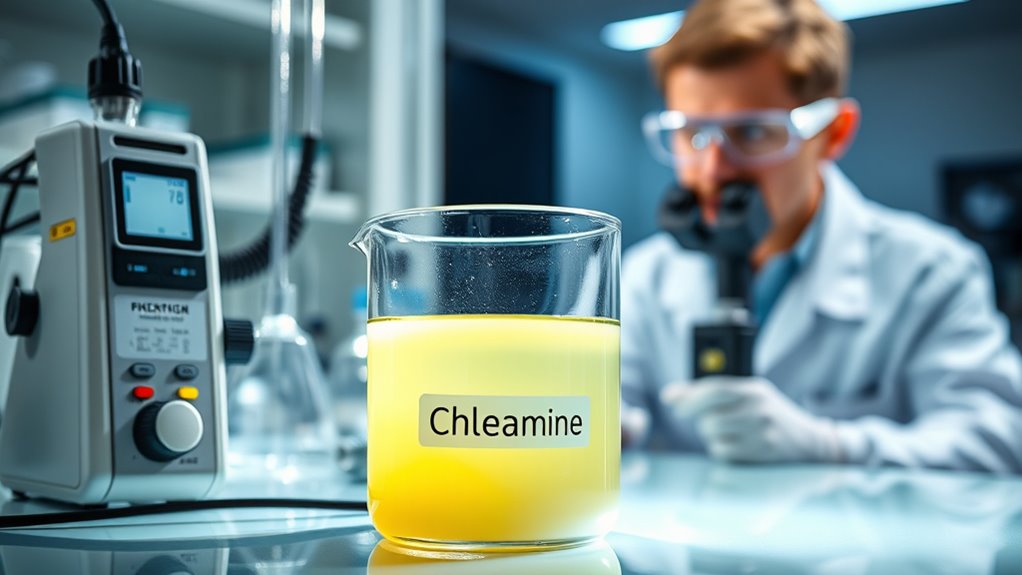

Chloramines form when chlorine reacts with ammonia in water, acting as a long-lasting disinfectant. While they help protect water against bacteria, they can also affect your health by causing slight taste and odor changes. Long-term exposure may lead to health risks and contribute to harmful byproduct formation. Managing chloramine levels is essential for safety, and understanding how they’re formed and their effects will help you stay informed about water quality and health considerations.
Key Takeaways
- Chloramines are formed when chlorine reacts with ammonia in water, used for disinfection to provide longer-lasting protection.
- They exist as monochloramine, dichloramine, and trichloramine, each with unique properties affecting water quality.
- Elevated chloramine levels can alter taste and odor and may produce disinfection byproducts with health implications.
- Long-term exposure to chloramines may pose health risks, including potential links to harmful byproducts.
- Using specialized water filters can reduce chloramine levels, helping protect sensitive populations from potential health effects.
Chloramines are chemical compounds formed when chlorine reacts with ammonia in water, a process commonly used to disinfect public water supplies. This method offers a longer-lasting disinfectant compared to free chlorine, helping to keep water safer as it travels through pipes. However, understanding how chloramine formation occurs is essential because it influences water quality and potential health effects. When chlorine and ammonia combine, they create monochloramine, dichloramine, and trichloramine, each with distinct properties. These compounds are often present in varying concentrations, depending on water treatment methods and conditions. Recognizing the dynamics of chloramine formation helps determine how much of these chemicals might be present in your tap water and whether they pose health risks.
From a health risk assessment perspective, chloramines are generally considered less reactive than free chlorine but can still have notable effects on human health over prolonged exposure. During water treatment, regulators aim to keep chloramine levels within safe limits set by agencies like the EPA, but elevated levels may cause issues. As you consume chloraminated water, you might notice a slight change in taste or odor, which is often a sign of chloramine presence. While these compounds are less likely to produce harmful disinfection byproducts than free chlorine, they’re not entirely free of concerns. Some studies suggest that chloramines may contribute to the formation of certain disinfection byproducts that could pose health risks, especially with long-term exposure. Additionally, advancements in water treatment technology, such as the integration of on-device AI capabilities, are helping improve monitoring and management of chloramine levels in water supplies.
If you’re concerned about health risks associated with chloramine exposure, conducting a thorough health risk assessment is essential. This involves reviewing local water quality reports and understanding the concentrations of chloramines in your tap water. In some cases, you might consider using water filters designed to remove chloramines, especially if you have sensitive groups like infants, pregnant women, or immunocompromised individuals. These filters often contain catalytic carbon or other specialized media capable of reducing chloramine levels effectively.
water filter for chloramine removal
As an affiliate, we earn on qualifying purchases.
As an affiliate, we earn on qualifying purchases.
Frequently Asked Questions
How Do Chloramines Compare to Chlorine in Water Treatment?
Chloramines are gentler than chlorine, offering more pH stability and longer-lasting disinfection efficacy in water treatment. You’ll find that chloramines don’t dissipate as quickly, providing sustained pathogen control, but they may be less potent at initial disinfection. While chlorine acts faster, it can cause pH fluctuations, whereas chloramines maintain more consistent pH levels. Your choice depends on balancing immediate disinfection needs with long-term water quality stability.
Are Chloramines More Stable Than Chlorine in Maintaining Water Quality?
Yes, chloramines are more stable than chlorine in maintaining water quality. Due to their water chemistry, chloramines provide longer-lasting disinfection stability, meaning they keep water safer over extended periods. You’ll notice that chloramines resist breakdown better than chlorine, which can dissipate quickly. This increased stability reduces the need for frequent re-chlorination, ensuring consistent water disinfection and quality for your household or community water systems.
Can Chloramines Cause Skin or Eye Irritation?
Imagine stepping into chloramine-treated water—its faint chemical scent tingles your nose. Yes, chloramines can cause skin allergies and eye redness, especially if your skin or eyes are sensitive. You might feel a burning sensation or notice irritation that lingers like a stubborn rash or red, itchy eyes. While generally safe, prolonged exposure can make your skin itchy or cause discomfort, so take precautions if you experience these symptoms.
What Are Long-Term Health Risks Associated With Chloramine Exposure?
Long-term exposure to chloramines can lead to chronic respiratory issues, like asthma or bronchitis, especially if you’re sensitive. It may also affect your immune system, making you more vulnerable to infections. You might notice persistent coughing, wheezing, or other respiratory symptoms. To protect yourself, make certain proper water treatment and ventilation, and consider using filters designed to remove chloramines from your drinking water.
How Can I Effectively Remove Chloramines From My Tap Water?
To effectively remove chloramines from your tap water, use a water filter with activated carbon. These filters are designed to absorb chloramines, making your water safer to drink. Guarantee you replace the filter regularly, as exhausted filters lose their effectiveness. For best results, consider a filter certified for chloramine removal, and follow the manufacturer’s instructions to maintain ideal performance and enjoy cleaner, healthier water every day.
As an affiliate, we earn on qualifying purchases.
Conclusion
Now that you understand chloramines, think of them as hidden guardians in your water—protective shields that can also pose risks. Like a double-edged sword, they keep harmful bacteria at bay but can quietly impact your health. Stay alert and informed, because knowledge is your best armor. By staying mindful, you can navigate the delicate balance of clean water and well-being, ensuring your health remains bright and resilient amidst unseen threats.
whole house water filter for chloramines
As an affiliate, we earn on qualifying purchases.
As an affiliate, we earn on qualifying purchases.
under sink water filter for chloramine
As an affiliate, we earn on qualifying purchases.
As an affiliate, we earn on qualifying purchases.