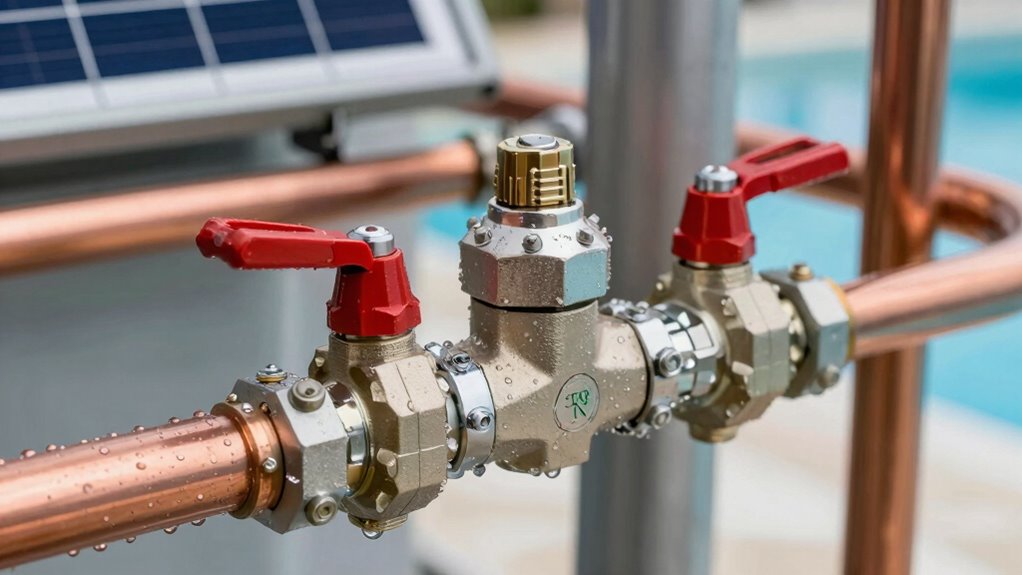
To optimize your solar pool heating, guarantee proper plumbing with bypass and check valves placed correctly near filters and collectors. Bypass valves help control water flow and prevent system strain when the heater isn’t in use, while check valves stop backflow and protect components. To prevent freezing, insulate pipes and use system circulation strategies before winter. Proper installation and maintenance keep your system efficient and durable—stay with us to learn more about keeping your setup in top shape.
Key Takeaways
- Proper placement of bypass and check valves ensures efficient flow control and prevents backflow damage in solar pool heating systems.
- Bypass valves allow water to circulate around or through solar collectors, optimizing heat transfer and system flexibility.
- Check valves prevent backflow, protecting the pump and solar components, and maintaining system reliability.
- Freeze prevention involves insulating pipes, using bypass valves during winter, and running the pump to maintain circulation.
- Regular maintenance and winterization, including draining and insulating, extend system lifespan and prevent freeze damage.

XtremepowerUS 3-Way Universal Bypass Kit 1.5" Divert Kit for Solar Pool Heater Panel Heating PVC Water Flow Spa Pool Set Above Ground Pool Manual Diverter Valve
- Corrosion-resistant stainless steel screws: Suitable for harsh environments
- Multi-purpose water control: For solar panels, heat pumps, salt systems
- 3-way diverter valve: Directs and balances water flow
As an affiliate, we earn on qualifying purchases.
As an affiliate, we earn on qualifying purchases.
What Do Bypass Valves Do, and Why Are They Important?
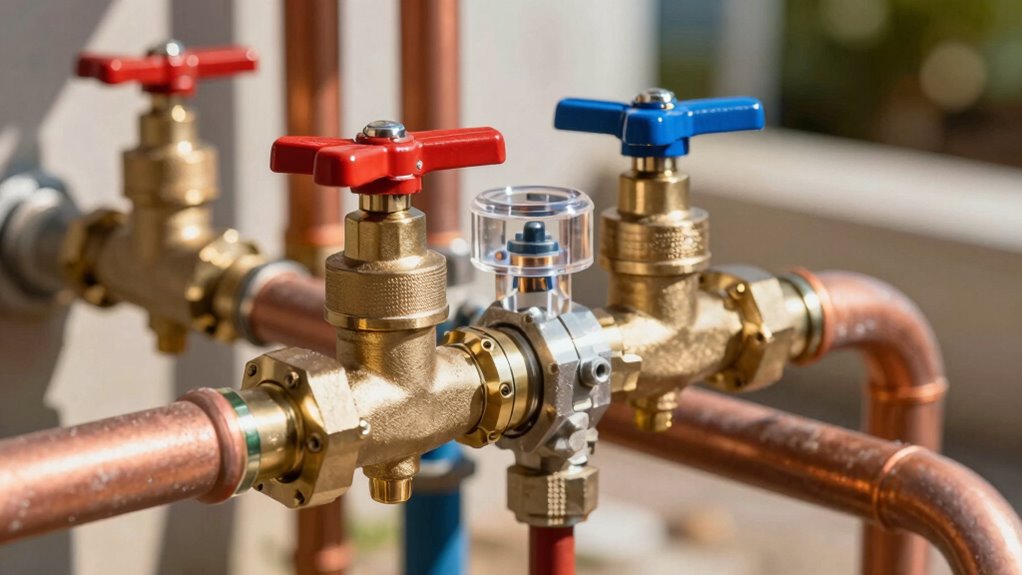
Have you ever wondered how your pool system manages flow when the solar heater isn’t in use? That’s where a solar valve, with its bypass purpose, comes into play. The solar valve directs water either through the solar heater or around it, depending on your needs. When the heater isn’t running, the bypass allows water to flow directly back into the pool, preventing unnecessary strain on the system. This control ensures your pool maintains proper circulation and temperature regulation. Proper filter sizing and flow also contribute to optimal system performance and longevity. Additionally, a well-designed bypass system helps protect the solar components from damage and wear, extending their lifespan and ensuring consistent operation. Utilizing flow regulation techniques further optimizes system efficiency and prevents damage caused by improper water pressure. Understanding system components is crucial for effective maintenance and troubleshooting, ensuring your pool remains in top condition. A comprehensive understanding of proper installation practices can further enhance the longevity and efficiency of your solar pool heating system.

ATIE Pool 7056 Check Valve Cover with Flapper Assembly For Zodiac Jandy Check Valve 7235, 7236, 7305, 7511, 7512. (Include: 7451 Flapper, 7302 Spring, 7304 Pin, 7236 Cover, and 1132 O-Ring) (2-Pack)
- Durable Stainless Steel Spring & Pin: Provides stronger spring tension
- Chlorine & Corrosion Resistant: Flapper and seal resist chlorine and corrosion
- Reinforced Cover Design: Anti-crack and sturdy construction
As an affiliate, we earn on qualifying purchases.
As an affiliate, we earn on qualifying purchases.
How Do Check Valves Protect Your Solar Pool System?
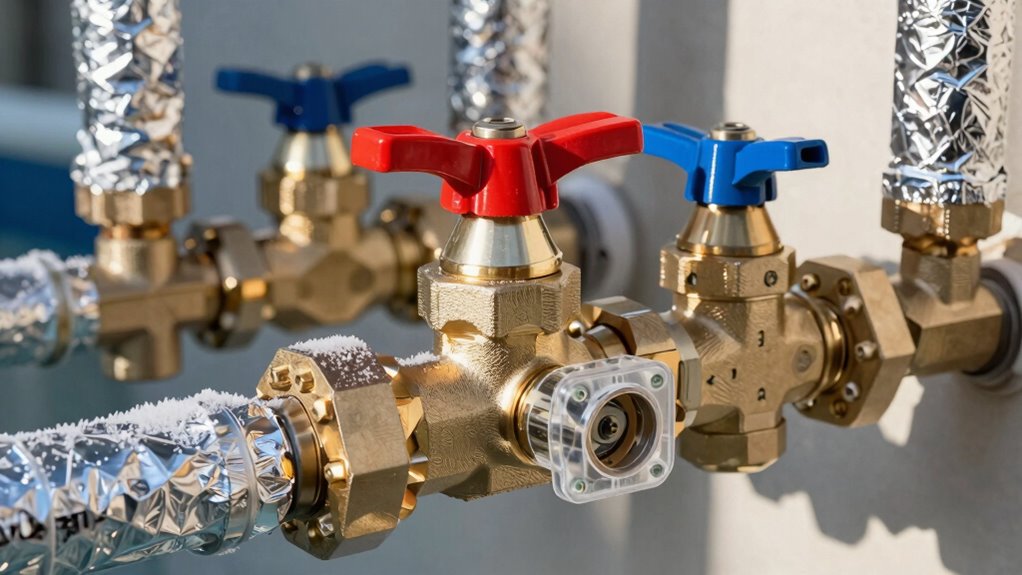
Check valves play a vital role in safeguarding your solar pool system by preventing backflow, which can cause damage or reduce efficiency. The check valve function is to allow water to flow in only one direction, stopping contaminated or heated water from reversing into your pump or solar collectors. This system protection guarantees that your pump doesn’t get damaged by backpressure or unwanted flow, which could lead to costly repairs. Proper installation and regular maintenance of flow control devices are crucial for optimal system operation. Additionally, selecting the appropriate type of check valve for your application can further enhance system reliability. Ensuring these components are compatible with your system’s pressure ratings is essential to prevent failures under varying operational conditions. Regular testing of system components ensures the check valves continue functioning correctly and maintain system integrity. Incorporating preventative maintenance routines can help identify potential issues early and extend the lifespan of your components.

Amylove 24 Pcs 3.3 Feet Foam Pipe Insulation Foam Tube Insulating Water Pipe Pool Swim Noodles Pre Slit Heat Preservation Pipes Covers for Tubing Outdoor Winter Freeze Protection(Black,1/2 Inch)
- Quantity Included: 24 foam tubes for insulation
- Tube Dimensions: 3.28 ft length, 1.5 inch diameter
- Material Quality: Made of durable PEP foam
As an affiliate, we earn on qualifying purchases.
As an affiliate, we earn on qualifying purchases.
How to Keep Your Pool From Freezing in Winter?

Wondering how to prevent your pool from freezing during winter? The key is proper winter insulation and effective pool cover strategies. Insulate pipes and equipment to protect against cold temps, and use a high-quality pool cover to minimize heat loss. Combining these approaches keeps your water warmer longer and prevents ice formation. To further safeguard your pool, consider using recycling pots/pans or eco-friendly disposal methods to reduce environmental impact and maintain sustainability.
Consider the table below for insights:
| Strategy | Benefits | Implementation Tips |
|---|---|---|
| Winter Insulation | Protects pipes & equipment | Use foam covers, pipe sleeves |
| Pool Cover Strategies | Reduces heat loss | Use solid covers, solar blankets |
| Regular Circulation | Prevents stagnation | Run your pump periodically |

Solar Pool Supply Universal Repair Kit for Solar Pool Heaters to Fix Leaky Solar Panel Pool Heaters in Minutes — Original Plugs, 0.25" Diameter
- Reliable Leak Repair: Fix solar pool heater leaks easily
- Original Plug Kit: Includes 20 plugs for 0.188" riser tubes
- Simple DIY Repair: Step-by-step instructions included
As an affiliate, we earn on qualifying purchases.
As an affiliate, we earn on qualifying purchases.
Installing and Maintaining Your Plumbing Components: Tips and Best Practices

Proper valve installation is essential to guarantee your system operates smoothly and prevents leaks. Make sure to follow best practices to avoid common mistakes that could cause damage or inefficiency. Additionally, taking steps to prevent freezing damage will keep your plumbing reliable year-round. Incorporating environmental impact and energy efficiency considerations can also enhance the sustainability of your solar pool heating system. Regularly inspecting and maintaining your plumbing components can further ensure optimal performance and longevity. Implementing preventative maintenance routines helps identify issues early and extends the lifespan of your plumbing system. Being aware of Frühwarnzeichen Für Brustkrebs Entdecken can also inform maintenance schedules by highlighting the importance of early detection in overall system health.
Proper Valve Installation Techniques
When installing valves in your solar pool heating system, it’s essential to guarantee they are positioned correctly to prevent leaks and facilitate smooth operation. Proper placement ensures easy access for maintenance, accurate valve calibration, and effective system control. Always check that valves are aligned with the flow direction indicated on the body. Use pipe insulation around valve connections to prevent heat loss and protect against freezing. To ensure peak performance, consider implementing proper valve installation techniques that adhere to manufacturer specifications and industry standards. Secure valves tightly to avoid leaks, maintain proper alignment with piping, and regularly test and calibrate valves for accurate flow control. Additionally, selecting appropriate valve types designed for pool heating systems can enhance durability and performance. Incorporating system design considerations can further optimize your plumbing setup and extend the lifespan of your equipment. Incorporating proper installation practices can also help prevent common issues like corrosion and wear, ensuring long-term reliability of your system.
Preventing Freezing Damage
Freezing can cause serious damage to your solar pool heating system if you don’t take proper precautions. To prevent this, make sure your solar panel and piping are well protected during cold weather. Installing piping insulation around all exposed pipes minimizes heat loss and reduces the risk of freezing. Consider draining the system or using a freeze protection strategy if you expect prolonged cold temperatures. You might also install a drain valve at low points in the plumbing to help remove standing water. Regularly inspect your piping insulation and replace any worn or damaged sections. By keeping your system insulated and maintaining proper drainage, you can avoid costly repairs and keep your solar pool heating system functioning efficiently through winter.
Troubleshooting Common Plumbing Problems in Solar Pool Systems
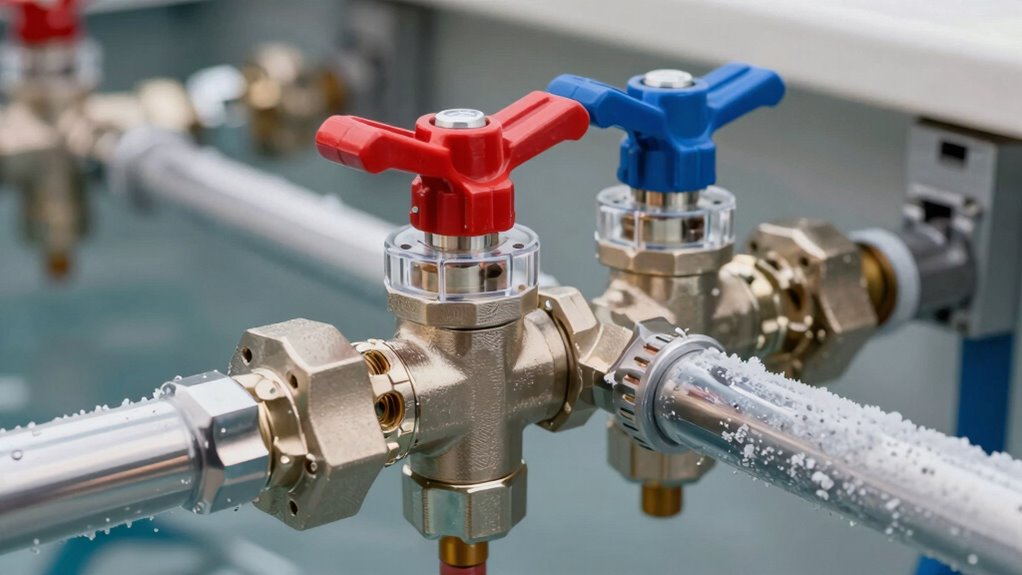
Even small plumbing issues can considerably impact the efficiency of your solar pool heating system. Leaks, clogged filters, or miscalibrated valves reduce flow and heat transfer. To troubleshoot, start by inspecting your filter maintenance schedule; dirty filters hinder circulation. Check valve calibration to ensure proper flow direction and pressure. Common problems include uneven heating, low flow, or noisy operation. Addressing these issues promptly keeps your system running smoothly. Remember:
- Regularly clean and replace filters
- Confirm valves are correctly calibrated
- Inspect for leaks or blocked pipes
How to Maximize Efficiency in Your Solar Pool Heating System
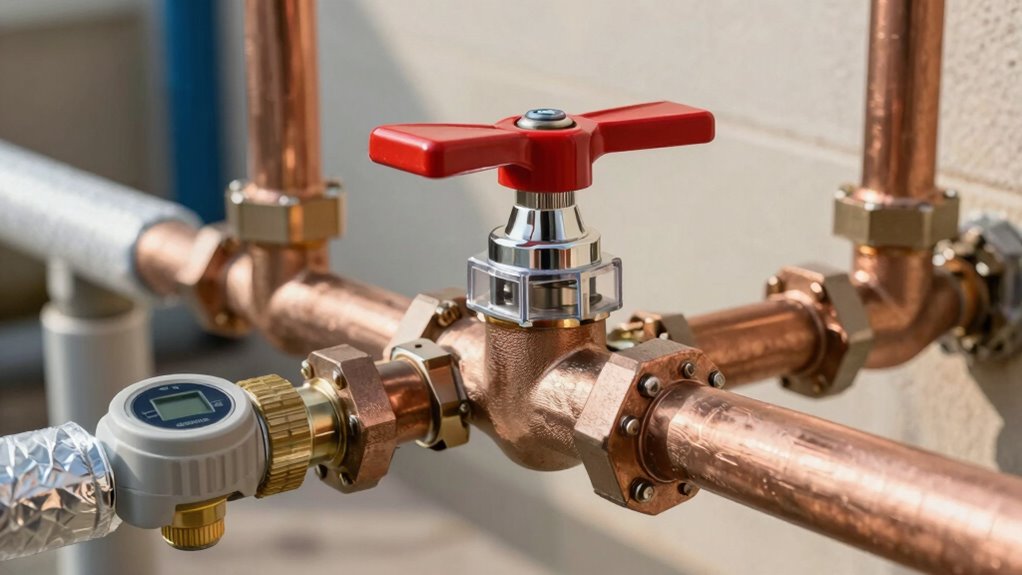
To get the most out of your solar pool heating system, you need to focus on proper valve placement, which guarantees efficient flow and heat transfer. Regular system checks help catch issues early and keep everything running smoothly, while freeze prevention measures protect your system during cold weather. By paying attention to these key points, you can maximize your system’s performance and extend its lifespan.
Proper Valve Placement
Have you considered how proper valve placement can substantially boost your solar pool heating system’s efficiency? Correct valve placement is essential for ideal system layout, allowing you to control flow effectively. Proper placement ensures you can isolate sections for maintenance or adjust flow depending on weather conditions. When positioning valves, keep these points in mind:
- Place bypass valves near the filter and solar collectors for easy control
- Ensure check valves are installed correctly to prevent backflow
- Position control valves where you can easily access them for adjustments
This strategic valve placement helps maximize heat transfer, reduces energy loss, and simplifies system management. A well-thought-out system layout with correctly placed valves guarantees your solar pool heating system operates at peak efficiency.
Regular System Checks
Regular system checks are essential to keep your solar pool heating system running at maximum efficiency. Regularly inspect your setup to ensure valves and check valves are functioning properly, preventing leaks or flow issues. Keep an eye on chlorine levels, as proper chemical balance helps maintain water quality and protects system components from corrosion. Additionally, consistent pool cleaning removes debris that can clog filters or reduce efficiency. Check for any signs of wear or damage, and ensure your bypass valves are correctly positioned. Maintaining clean filters and balanced chlorine levels minimizes strain on the system and prolongs its lifespan. By staying proactive with these checks, you optimize energy use and keep your pool warm and inviting throughout the season.
Freeze Prevention Measures
When temperatures drop, taking proactive freeze prevention measures is essential to protect your solar pool heating system from damage and maintain its efficiency. One key step is to drain or winterize your solar panel system, especially if you live in a climate with freezing temperatures. Using a pool cover can also help insulate the water and reduce heat loss, making it easier to keep the system warm. Additionally, consider installing bypass valves to prevent water from circulating through the solar panel when freezing conditions are imminent. To maximize protection, you should:
- Drain excess water from the solar panel and plumbing
- Use a pool cover to insulate and retain heat
- Install bypass valves to prevent freezing in the system
Frequently Asked Questions
Can Bypass Valves Be Automated for Seasonal Adjustments?
Yes, bypass valves can be automated for seasonal adjustments using automatic valve control systems. You can install motorized or electromechanical valves that respond to temperature sensors or seasonal timers. These systems automatically open or close the bypass valves depending on the time of year or weather conditions, ensuring ideal operation. This automation simplifies seasonal adjustments, improves efficiency, and reduces manual intervention, keeping your pool system running smoothly year-round.
What Are Signs of a Failing Check Valve in Your System?
When it comes to check valve failure, look out for signs like water leaks around the valve or inconsistent water flow. These issues indicate the valve isn’t sealing properly, which can cause system leaks and reduce efficiency. If you notice these signs, it’s time to take action before small problems turn into big headaches. Don’t ignore the warning signs, or you’ll end up paying the piper down the line.
How Often Should You Inspect for Ice Blockages in Winter?
You should inspect for ice blockages during winter weather at least once a week. Keep an eye out for signs of ice formation around valves and plumbing, especially during cold snaps. Regular inspections help prevent damage from ice buildup, which can cause leaks or system failure. If you notice ice, take immediate action by draining or insulating affected areas to protect your system and make certain it runs smoothly all winter.
Are There Specific Materials Recommended for Freeze Protection?
Think of your system as a gentle guardian during winter’s chill. For effective freeze protection, opt for materials like CPVC, PEX, or copper, which handle cold temperatures well. These materials resist cracking and guarantee smooth operation, especially when paired with proper insulation. Choosing the right material recommendations helps you prevent costly damage, providing peace of mind and ensuring your solar pool heating system remains resilient through the cold months.
How Do You Prioritize Maintenance Tasks for Solar Plumbing Components?
You should prioritize maintenance tasks by first checking system pressure management to guarantee your solar plumbing operates efficiently. Next, verify valve calibration to prevent leaks or blockages. Regularly inspect bypass and check valves for wear, and address issues promptly. Maintaining proper pressure and calibrated valves minimizes freeze risks and optimizes system performance. Schedule these tasks seasonally, especially before winter, to keep your solar pool heating system running smoothly year-round.
Conclusion
Properly installing and maintaining your solar pool heating plumbing can boost efficiency and prevent costly damage. Did you know that a well-maintained solar system can save you up to 50% on heating costs? By understanding bypass valves, check valves, and freeze prevention strategies, you’ll keep your pool warm and ready year-round. Stay proactive with troubleshooting and regular upkeep—your pool will thank you with crystal-clear, comfortably heated water all season long.