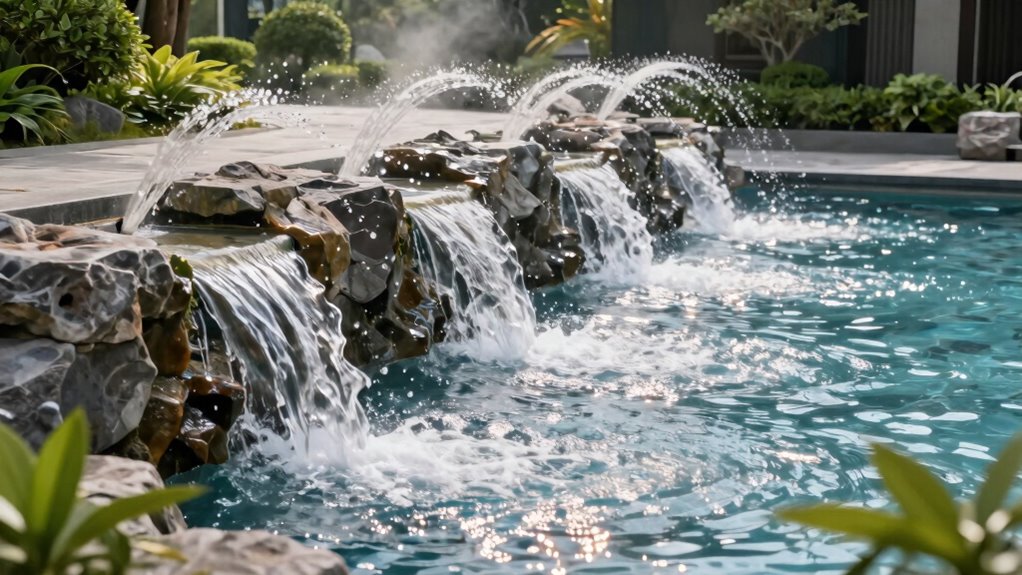

Waterfalls, deck jets, and spas can cause flow balance problems by drawing too much water in certain areas, leaving others starved of sufficient flow. This imbalance can lead to uneven streams, pressure fluctuations, and pump strain, reducing overall system efficiency. If one feature dominates, it disrupts smooth circulation and causes some parts to stagnate. Managing these issues requires understanding how to balance flow. Keep exploring, and you’ll discover how to restore harmony to your water system.

Get pool and patio gear delivered free with Prime
- Fast, free delivery on millions of items
- Prime Video, Amazon Music and more included
- Member-only deals all year
Key Takeaways
- Waterfalls often draw excessive water, reducing flow to other features like jets and spas.
- Improperly balanced flow causes uneven water streams and pressure imbalances across features.
- Overly high flow to waterfalls can deplete water available for deck jets and spas, affecting performance.
- Insufficient flow to features leads to poor visual appeal and stagnation issues.
- Maintaining proper flow balance prevents equipment strain and ensures consistent, aesthetic water movement.
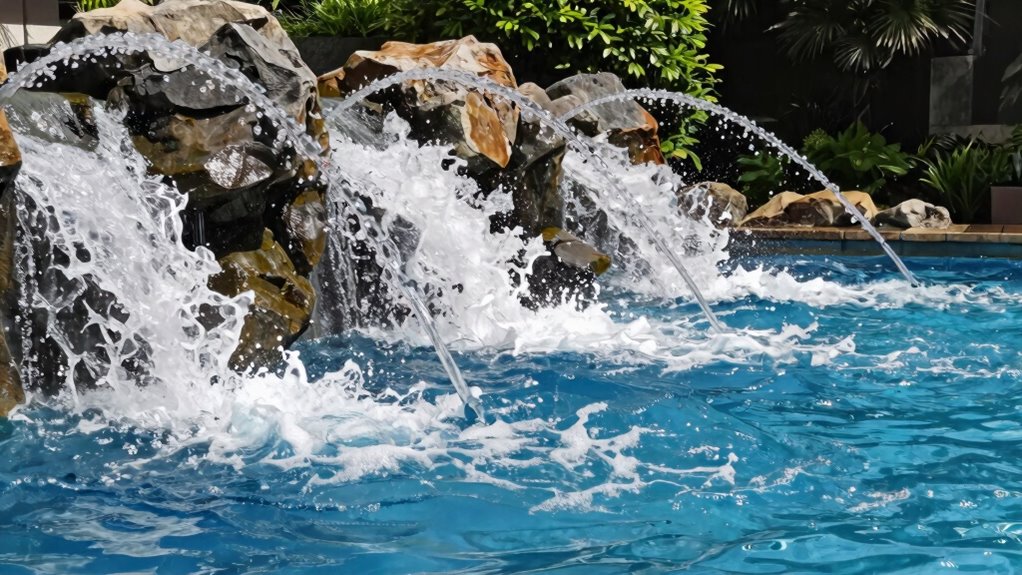
Have you ever wondered how to efficiently manage the flow of resources in complex systems? When it comes to water features like waterfalls, deck jets, and spas, maintaining a balanced flow can be surprisingly challenging. These elements rely heavily on water circulation, which involves moving water smoothly and consistently through the system. If water flow isn’t properly managed, you risk wasting energy, causing equipment wear, and creating an uneven visual or functional experience. The key to solving these issues often lies in optimizing pump efficiency and understanding how water moves through each component.
Water circulation is the backbone of any water feature, and when waterfalls or jets disrupt the flow, it can lead to uneven distribution and pressure imbalances. For example, a waterfall drawing too much water can reduce flow to other features or strain the pump. Conversely, insufficient flow can result in stagnant water, algae buildup, or poor aesthetic appeal. To prevent this, you need a clear understanding of how water moves from the pump through pipes, jets, and out into the feature. Ensuring proper water circulation involves not just choosing the right-sized pump but also maintaining it well, so it operates at peak pump efficiency. Proper water flow management enhances system performance and minimizes the need for costly repairs.
Proper water circulation prevents pressure issues and keeps your water feature balanced and visually appealing.
Pump efficiency plays a *vital* role here. An inefficient pump consumes more energy and struggles to maintain steady flow, especially when multiple water features are interconnected. If your pump is underpowered, it won’t generate enough pressure to sustain waterfalls or deck jets, causing inconsistent water streams and increased strain on the system. Over time, this inefficiency can lead to higher energy bills and more frequent equipment failures. On the other hand, a pump that’s too powerful can cause excessive water flow, leading to splashing, noise, and unnecessary wear. Striking the right balance involves selecting a pump with the correct capacity for your system and ensuring it’s properly calibrated.
Adjustments like installing flow regulators or valves can help fine-tune the water flow, enabling you to direct water precisely where you want it while protecting your pump from overexertion. Regular maintenance, such as cleaning filters and inspecting hoses, keeps water circulation smooth, preventing blockages that compromise pump efficiency. Additionally, understanding water flow dynamics can help you troubleshoot and optimize your system more effectively. Properly managing pump capacity and flow regulation can significantly improve system performance and longevity. When everything works in harmony—proper pump sizing, good water circulation, and routine upkeep—you’ll enjoy a balanced, visually appealing water feature with minimal energy costs and extended equipment life.
In essence, the flow balance problem isn’t just about aesthetics; it’s about creating a sustainable, efficient system that’s easy to manage. By focusing on water circulation and pump efficiency, you can troubleshoot issues early and maintain a harmonious water feature that enhances your space without constant hassle. Properly managing water flow is a crucial aspect of achieving this balance, ensuring your water features remain both beautiful and functional for years to come.
waterfall flow regulator for pools
As an affiliate, we earn on qualifying purchases.
As an affiliate, we earn on qualifying purchases.
Frequently Asked Questions
How Do Waterfalls Impact Overall Pool Water Circulation?
Waterfalls can considerably impact your pool’s water circulation by causing flow disruption. As water cascades down, it can create turbulence, making it harder for your pool’s pump and filter system to evenly circulate water. This may lead to dead spots or stagnation areas where debris collects. To maintain ideal flow, you might need to adjust your waterfall’s flow rate or add additional jets, ensuring the entire pool stays clean and properly circulated.
Can Deck Jets Be Adjusted to Reduce Flow Imbalance?
Yes, deck jet adjustments can help reduce flow imbalance. Think of it like tuning a musical instrument—you fine-tune the flow rates to create harmony. By adjusting the flow rate of each deck jet, you can direct water more evenly, improving circulation. These flow imbalance solutions guarantee the water moves smoothly throughout your pool, preventing issues caused by uneven flow and enhancing overall clarity and comfort.
What Are the Signs of a Flow Balance Problem?
You might notice uneven water levels or fluctuating pressure in your pool, indicating a flow balance problem. A chemical imbalance can worsen this, causing cloudy water or algae growth. Regular filter maintenance helps keep water flow steady, preventing issues. If you see inconsistent spray patterns from waterfalls or jets or your spa’s water isn’t circulating properly, these are signs you need to check your flow balance and address potential problems promptly.
How Often Should Flow Balance Be Checked in Spas?
Think of your spa’s flow balance as a delicate dance that needs regular checking. You should test your spa’s flow weekly to catch any signs of chemical imbalance early. Also, perform filter maintenance every 1-3 months to keep water flowing smoothly. Regular checks help prevent issues caused by waterfalls, deck jets, and spas that can disrupt flow, ensuring your water stays clean, balanced, and inviting.
Are There Specific Pool Designs That Minimize Flow Issues?
You can minimize flow issues by choosing smooth, non-porous pool materials like plaster or vinyl that encourage even water circulation. Opt for designs with strategically placed inlets and outlets to balance flow more effectively. Additionally, incorporating adjustable lighting options helps you monitor water movement visually, ensuring proper circulation. These features work together to reduce flow problems, making maintenance easier and enhancing your overall swimming experience.
deck jet water flow control valve
As an affiliate, we earn on qualifying purchases.
As an affiliate, we earn on qualifying purchases.
Conclusion
To keep your water features flowing smoothly, you must master the flow balance problem—like a tightrope walker balancing on a thin wire. Waterfalls, deck jets, and spas each tug on your system differently, risking chaos if not managed carefully. By understanding and adjusting your flow, you’ll prevent overflows and dry spots, creating a harmonious aquatic symphony. Remember, a well-balanced system is the rhythm that keeps your backyard oasis alive and vibrant.
As an affiliate, we earn on qualifying purchases.
As an affiliate, we earn on qualifying purchases.
Fall Picks
fall essentials
As an affiliate, we earn on qualifying purchases.