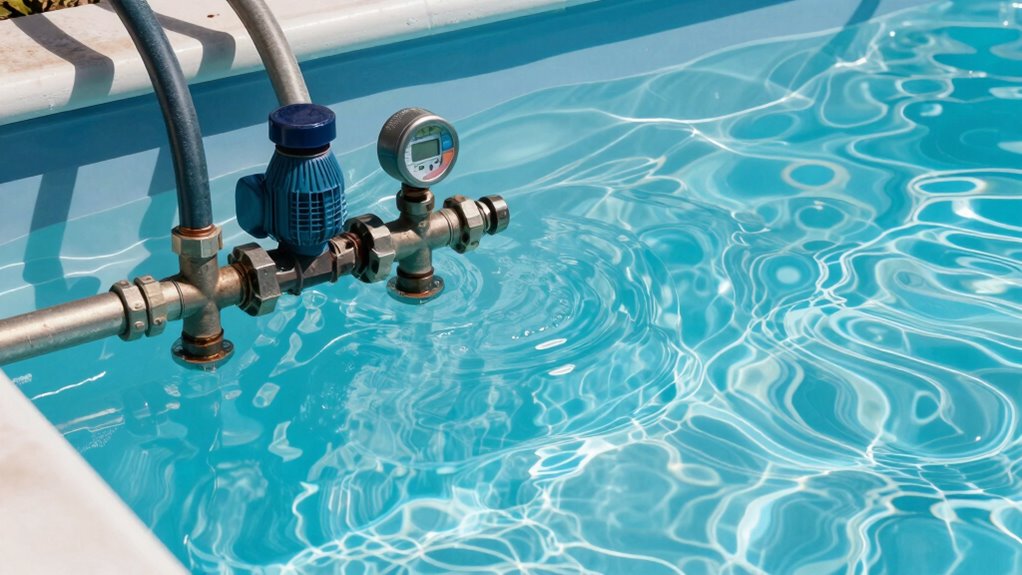

If your pool flow feels weak, hidden head loss might be the cause. It’s the resistance water faces in pipes and fittings, reducing pressure and flow. To identify it, measure pipe length and diameter, then use formulas like Darcy-Weisbach or Hazen-Williams. Factors like pipe material, fittings, and debris can increase head loss. Keeping an eye on system details helps you spot and fix issues early—continue to discover how to calculate and manage head loss effectively.
Key Takeaways
- Measure pipe length, diameter, and fittings to evaluate potential resistance causing head loss.
- Use formulas like Darcy-Weisbach or Hazen-Williams to estimate pressure drops in the system.
- Consider pipe material, age, roughness, and obstructions, as these increase friction and head loss.
- Install pressure gauges or manometers to monitor pressure differences and identify hidden flow restrictions.
- Regular inspections and maintenance help detect buildup or damage that contribute to unrecognized head loss.

AetralYB Pool Filter Pressure Gauge – 304 Stainless Steel Case, IP67 Waterproof, 0-60 PSI, for Swimming Pool Pump, Spa & Aquarium Filter System, Clean Filter Indicator, 2" Dial, 1/4" NPT Bottom Mount
- Designed for Pool & Spa Systems: Compatible with various filters and pumps
- High Accuracy Monitoring: ±2% calibration for reliable readings
- Easy-to-Read Dial: 2-inch dial with bold markings
As an affiliate, we earn on qualifying purchases.
As an affiliate, we earn on qualifying purchases.
How Do I Recognize Signs of Excess Head Loss in My Pool?
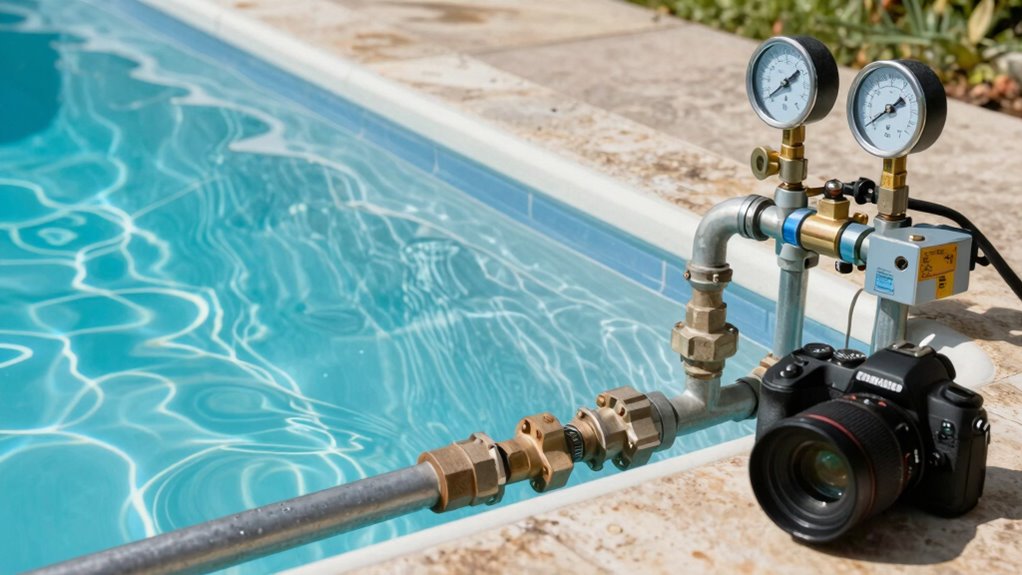
If your pool’s circulation seems weaker than usual, it’s a strong sign that you might be experiencing excess head loss. Poor flow often results in inadequate skimming and uneven water movement. Start by checking that your pool is properly cleaned; debris or algae buildup can restrict flow and increase head loss. Also, verify your chemical balance—imbalanced pH or high algae levels can cause deposits that clog filters and pipes. Consistent pool cleaning prevents debris from accumulating and helps maintain smooth circulation, while proper chemical levels keep equipment functioning efficiently. Additionally, monitoring your system’s pressure levels can help identify early signs of head loss before more serious issues develop. If you notice slower water movement despite regular cleaning and balanced chemicals, it’s a clear sign that head loss is affecting your system. Addressing these issues early can restore proper flow and prevent further damage.
As an affiliate, we earn on qualifying purchases.
What Is Head Loss, and Why Does It Cause Weak Pool Flow?
Have you ever wondered why your pool’s flow weakens despite regular cleaning? The answer often lies in head loss, which reduces pump efficiency and limits filter flow. Head loss is the resistance water encounters as it moves through pipes, fittings, and equipment. When this resistance increases, your pump has to work harder to maintain flow, but it can’t overcome the added pressure. As a result, water flow drops, leading to weak circulation and poor filtration. This decline impacts water clarity and overall pool health. Understanding head loss helps you identify why your pump struggles and how to improve flow. Addressing head loss ensures your pump operates efficiently, maintaining strong filter flow and a clean, healthy pool. Recognizing flow restrictions caused by head loss allows you to optimize your pool system and prevent ongoing circulation issues. Additionally, monitoring pipe size and system layout can help reduce unnecessary head loss, improving overall performance.

2 Pcs Pool PVC Tube Fitting Barbed Hose Fittings Adapter
- Durable PVC Material: Ensures longevity and practical use
- Multi-Application Design: Suitable for various plumbing needs
- Multiple Size Options: Available in 3/4", 1-1/2", and 2"
As an affiliate, we earn on qualifying purchases.
As an affiliate, we earn on qualifying purchases.
How Does Head Loss Affect Water Flow and Pressure in Your Pool?
When head loss increases in your pool’s piping system, it directly diminishes the pressure that pushes water through the filter and equipment. This decrease in pressure hampers water flow, making your pool less effective at circulation. As a result, the pump has to work harder, which can lower its efficiency and increase energy costs. Smaller pipe diameters create more resistance, amplifying head loss and further reducing flow. Conversely, larger pipes reduce resistance, helping maintain better pressure and flow rates. When head loss is high, you might notice weaker water flow, longer filtration times, and reduced skimmer performance. Managing head loss by considering pipe diameter and system design helps preserve pump efficiency and ensures your pool stays clean, clear, and properly circulated. Proper system design and understanding of flow dynamics are essential for optimal pool operation. Additionally, selecting appropriately sized pipes and fittings based on flow rate calculations can significantly minimize head loss and improve overall system performance. Regular maintenance and inspection of fittings and pipes also help prevent unexpected increases in head loss, keeping your pool system running smoothly. Understanding pressure loss in your piping system can help you troubleshoot issues more effectively and optimize your pool’s circulation, especially by analyzing various pipe resistance factors.

Blue-White Flowmeter for 2 in. PVC Pipe, Horizontal Installation
- Availability: Sold on Amazon
As an affiliate, we earn on qualifying purchases.
As an affiliate, we earn on qualifying purchases.
How to Calculate Head Loss in Your Pool System
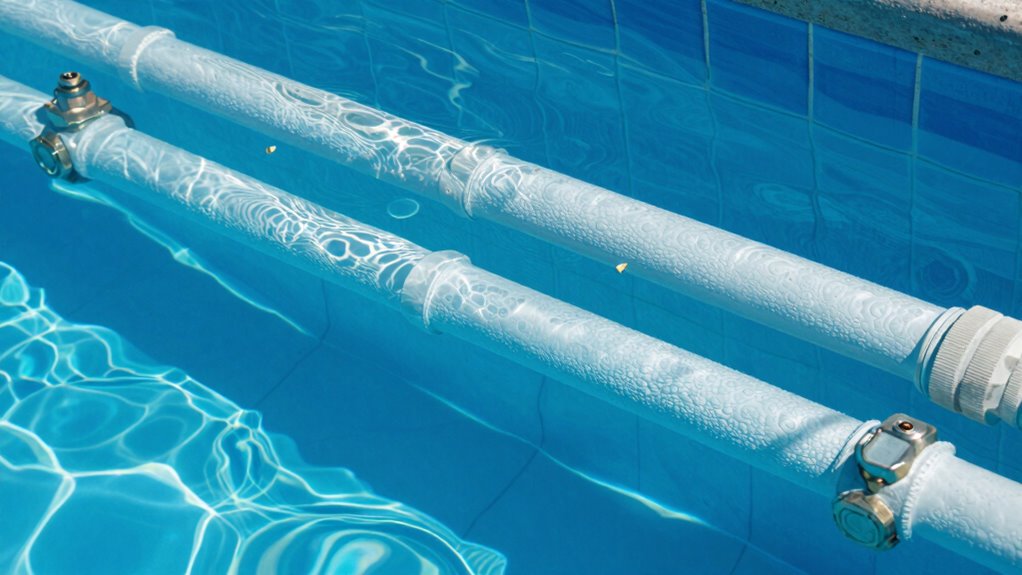
Calculating head loss in your pool system is essential for maintaining proper water flow and pressure. To do this, you need to understand how pipe friction affects your flow rate. First, measure the length and diameter of your pipes, then determine the flow rate based on your pump’s specifications. Use the Darcy-Weisbach or Hazen-Williams equations to estimate head loss caused by pipe friction. These formulas account for pipe material, age, and roughness, which influence friction levels. By calculating head loss, you can identify if your system is losing pressure due to excessive pipe friction, which reduces flow rate. Accurate calculations help you make informed decisions about system adjustments, ensuring your pool operates efficiently with *ideal* water circulation. Additionally, considering outdoor gear options can help optimize pool maintenance and cleaning processes, especially when selecting equipment that minimizes friction losses. Understanding pipe roughness can further refine your head loss calculations, leading to more precise system management. Regularly inspecting pipe conditions and material deterioration can also prevent unexpected pressure drops, saving time and resources. Being aware of pipe age can help you anticipate when replacement might be necessary to maintain optimal flow.
What Factors Contribute to Increased Head Loss in Your Pool?
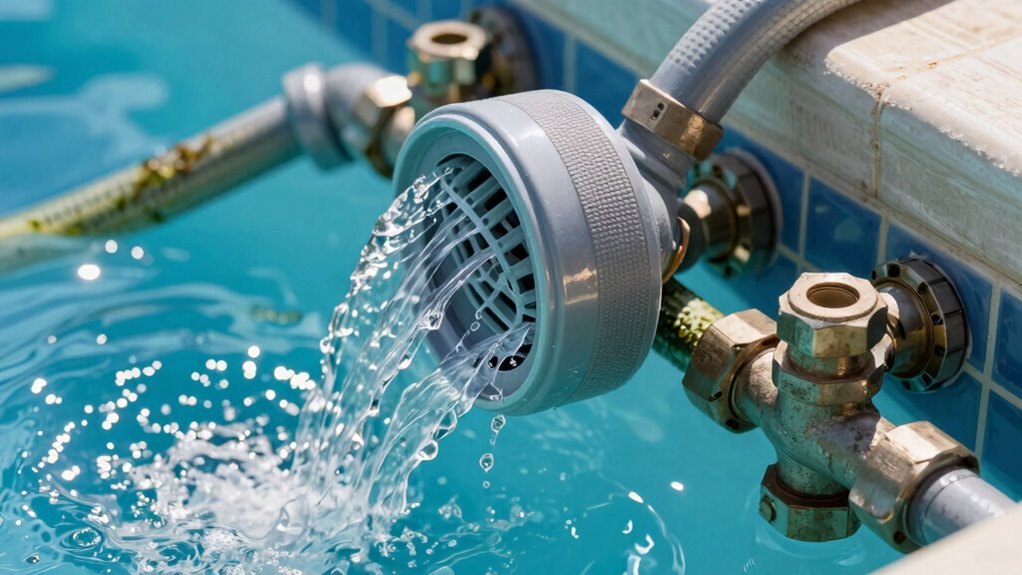
Several factors can cause head loss to increase in your pool system, making it harder for water to circulate effectively. One major factor is pipe material; rougher or narrower pipes, like certain types of plastic or corroded metal, create more friction and resistance. Additionally, the filter type plays a role—some filters impose higher pressure drops due to their design or clogging over time. A dirty or inefficient filter adds to head loss because it restricts water flow. Other elements, such as sharp bends, fittings, or obstructions in the plumbing, also contribute to increased resistance. Recognizing these factors helps you identify where your system might be losing efficiency, so you can address issues and improve overall water circulation in your pool.
How to Measure Head Loss Easily in Your Pool System
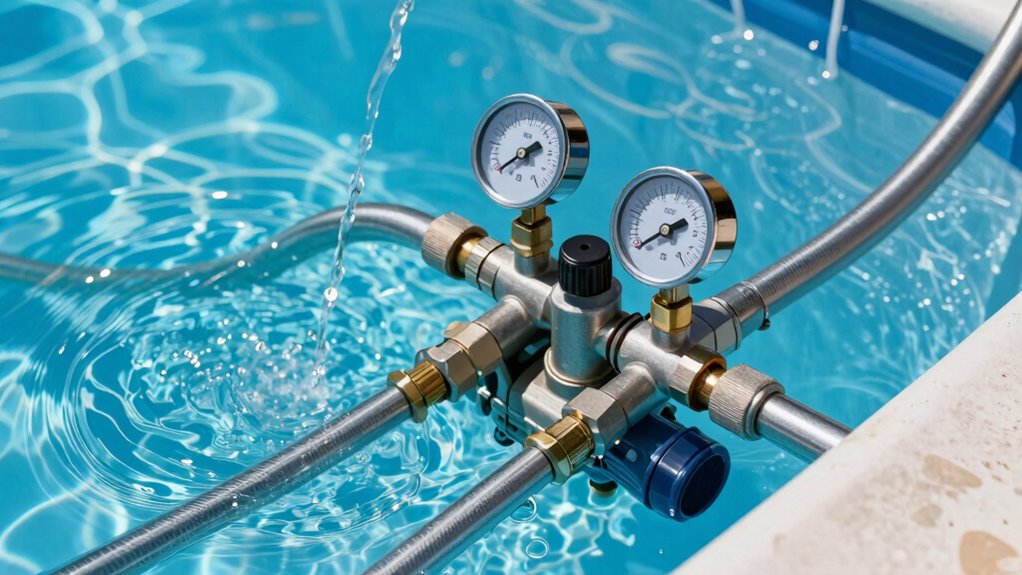
Measuring head loss in your pool system is straightforward with a few simple tools and steps. First, gather a manometer or pressure gauge to measure pressure differences. Turn off your pump, then record the pressure before and after the pump at different points. The pressure difference indicates head loss. Keep in mind, pipe material affects flow; smoother pipes like PVC reduce head loss compared to rougher materials. To compare, here’s a quick overview: early detection awareness. Understanding pipe material effects can help you optimize your system’s efficiency and prevent potential issues. Regularly monitoring pressure can also assist in system maintenance, helping you identify incipient problems early before they lead to major repairs. Being aware of flow rate changes can further improve your troubleshooting process.
How to Reduce Head Loss and Improve Your Pool’s Circulation
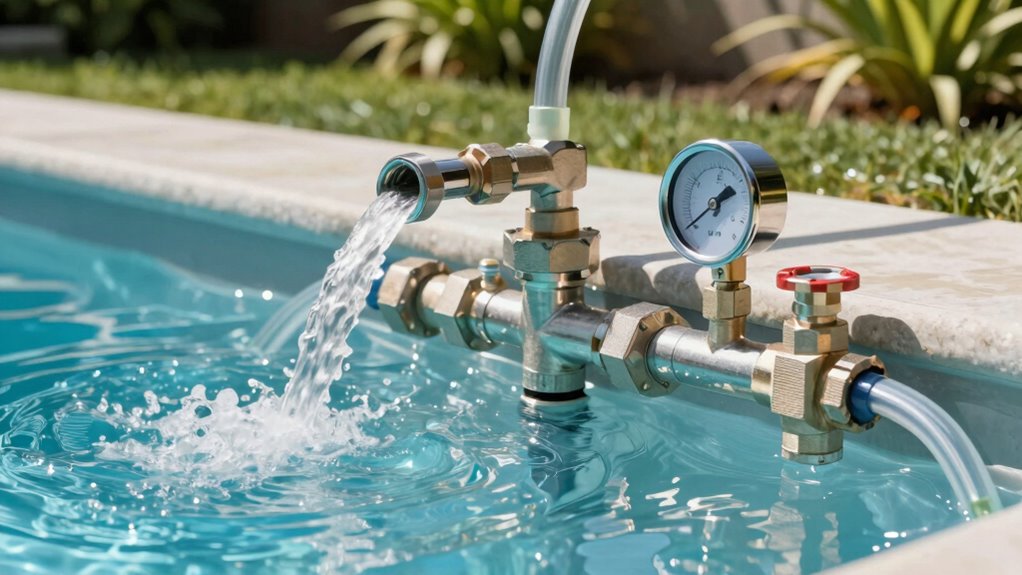
To improve your pool’s circulation, start by minimizing pipe bends, which reduce flow resistance. Make sure you’re using the proper pipe size to handle your system’s demands efficiently. Also, regularly maintaining your system keeps everything running smoothly and prevents unnecessary head loss. Additionally, incorporating digital frames or interactive murals can serve as a creative reminder to perform routine system checks and maintenance.
Minimize Pipe Bends
Minimizing pipe bends is one of the most effective ways to reduce head loss and improve your pool’s circulation. Every bend increases resistance, especially if your pipe material causes higher friction. Straight pipes with smooth curves help maintain ideal flow velocity, preventing unnecessary pressure drops. To improve circulation, choose durable pipe materials like PVC that resist buildup and minimize turbulence. Avoid sharp bends and instead use gentle curves to reduce turbulence and flow resistance. Keep pipe runs as direct as possible to cut down on the number of bends. This simple change can considerably decrease head loss, ensuring your pump works more efficiently and your pool stays evenly circulated. Focus on smooth, gradual bends and quality pipe materials for the best results.
Use Proper Pipe Size
Choosing the right pipe size is essential for reducing head loss and guaranteeing your pool’s circulation stays efficient. If the pipe diameter is too small, it restricts flow rate, causing increased resistance and pressure loss. Larger pipes reduce friction, allowing water to move smoothly with less energy. When selecting pipe size, consider your pool’s flow rate needs; oversized pipes won’t improve performance and can be costlier. Conversely, undersized pipes will cause head loss and weak circulation. Use flow rate calculations to determine the most suitable pipe diameter that balances efficiency and cost. Proper sizing ensures your pump doesn’t work harder than necessary, improves circulation, and minimizes head loss, keeping your pool clean and well-maintained.
Regular System Maintenance
Regular system maintenance is key to reducing head loss and keeping your pool’s circulation running smoothly. When you regularly clean your filter, debris and dirt don’t clog the system, which helps maintain ideal flow. Proper chemical balancing prevents scale buildup and corrosion that can restrict pipes and fittings. Additionally, inspecting equipment for leaks or damage ensures everything operates efficiently. Regularly testing and adjusting the water chemistry keeps the system in top shape, preventing unnecessary strain on your pump. By staying proactive with these tasks, you minimize flow restrictions and improve circulation.
- Clean your filter regularly to prevent blockages
- Maintain proper chemical balance to avoid deposits
- Check for leaks or damaged parts
- Schedule routine inspections and servicing
When Should You Call a Professional About Head Loss Problems?
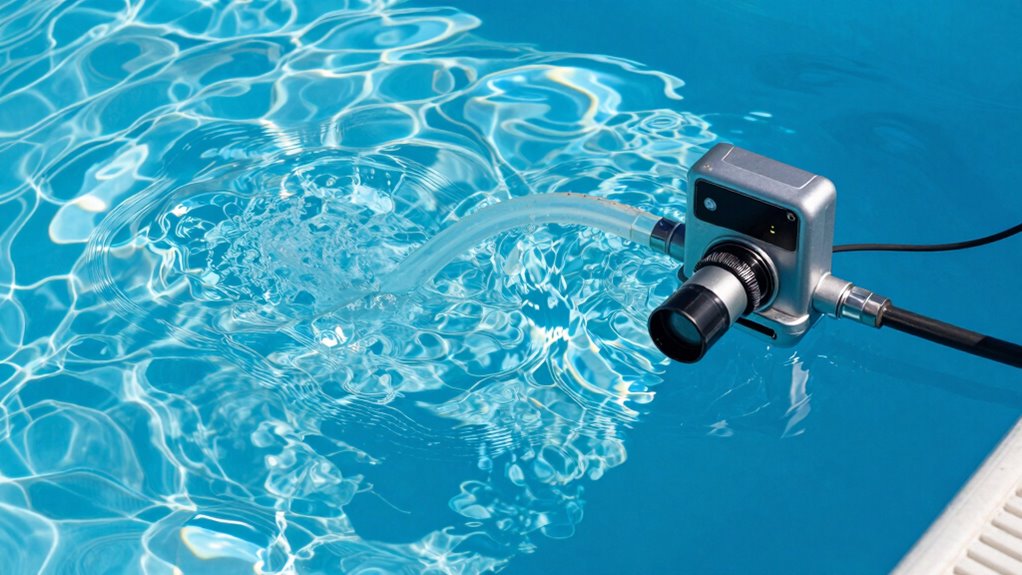
If your pool still has poor circulation despite your efforts, it’s time to call a professional. Complex system issues or persistent performance problems can be difficult to diagnose on your own. A specialist can identify hidden head loss causes and recommend effective solutions.
Persistent Performance Issues
When your pool isn’t circulating properly despite regular maintenance, it’s a clear sign that something may be wrong with the flow system. Persistent performance issues can stem from various causes, including imbalanced pool chemistry or skimmer issues. If you notice poor water clarity, uneven circulation, or frequent pump cycling, it’s time to contemplate professional help. These problems often indicate hidden head loss or blockages that you can’t easily fix yourself.
You should call a professional if:
- You’ve checked and adjusted pool chemistry but flow remains weak
- Skimmer baskets are clean, yet circulation issues persist
- You experience consistent pressure drops on the filter gauge
- The pump struggles to maintain flow despite troubleshooting efforts
Complex System Diagnoses
Persistent performance issues often signal deeper problems within your pool’s flow system. If you notice your pump isn’t running efficiently or your flow remains weak despite simple fixes, it’s time to consider professional help. A decline in pump efficiency can be caused by hidden issues like internal wear or motor problems that aren’t easy to diagnose on your own. Additionally, filter clogging can greatly increase head loss, reducing flow and straining your system. If cleaning the filter and checking for obvious blockages don’t restore proper flow, a professional diagnosis becomes necessary. Experts can perform detailed system assessments, identify complex issues, and ensure your pump and filters operate at their best. Knowing when to call in help saves you time, money, and prevents further damage.
Common Head Loss Troubleshooting Tips for Pool Circulation Problems
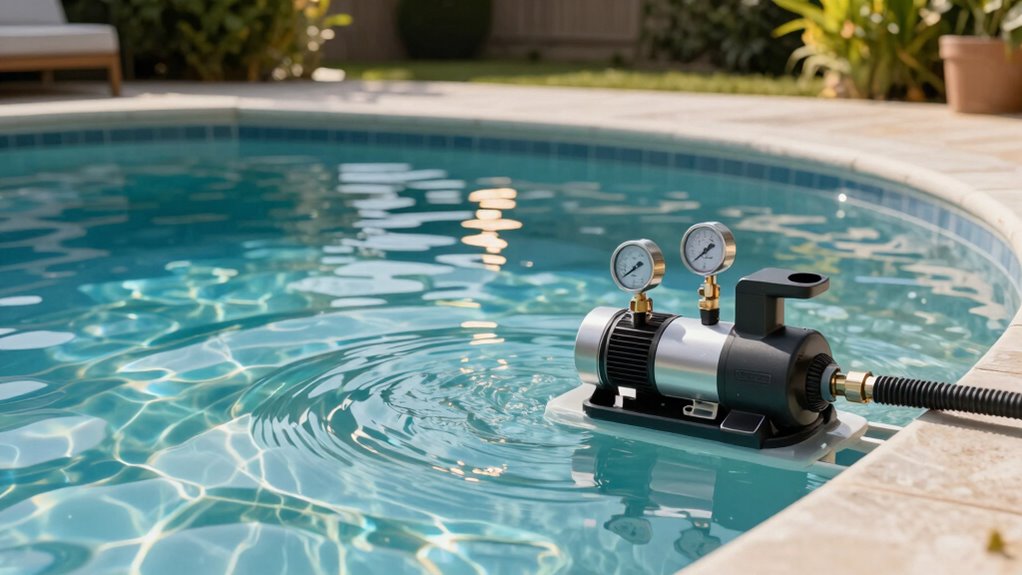
Troubleshooting head loss issues in your pool’s circulation system often involves checking common problem areas that can impede flow. Start by evaluating your pump efficiency; a less efficient pump may struggle to circulate water properly. Next, inspect your filter for clogging, as debris buildup increases head loss and reduces flow. Ensure that all valves are fully open and correctly positioned to avoid unnecessary restrictions. Lastly, examine hoses and fittings for kinks or leaks that can cause pressure drops. Regular maintenance, including cleaning or replacing filters and verifying pump performance, can considerably improve flow. Addressing these issues promptly helps prevent long-term damage and keeps your pool’s circulation system running smoothly.
Frequently Asked Questions
Can Small Debris Significantly Impact Head Loss in My Pool System?
Yes, small debris can substantially impact head loss in your pool system. Debris accumulation clogs filters, reducing filtration efficiency and increasing resistance in the flow. This buildup causes the pump to work harder, leading to higher head loss and weaker water flow. Regularly cleaning your filters and removing debris helps maintain ideal filtration efficiency and prevents unnecessary pressure loss, ensuring your pool stays clean and your system functions smoothly.
How Often Should I Check for Head Loss Issues?
You should check for head loss issues regularly, ideally once a month, to maintain ideal pool system efficiency. During pool maintenance, inspect filters, skimmers, and pump performance for signs of reduced flow. Frequent checks help catch debris buildup or blockages early, preventing system strain. Keeping up with routine inspections ensures your pool runs smoothly, conserves energy, and extends equipment lifespan. Consistent monitoring is key to effective pool maintenance.
Does Pipe Material Affect Head Loss Levels?
Yes, pipe material affects head loss levels because different materials have varying pipe durability and flow resistance. Smooth pipes like PVC offer less resistance, maintaining better flow, while rougher materials like metal or composite pipes increase flow resistance, leading to higher head loss. Choosing the right pipe material guarantees ideal flow and minimizes pressure drops, keeping your pool system running efficiently and preventing weak flow issues.
Are There Specific Signs Indicating Pump Damage From Head Loss?
If your pump shows signs of reduced flow or strange noises, it might be damaged by head loss. You should perform a pump inspection to check for signs of wear or corrosion, especially in the impeller and seals. Also, look for pipe corrosion, which can increase head loss and strain your pump. Addressing these issues early prevents further damage and keeps your pool flow strong.
What Are the Best Tools for Measuring Head Loss Accurately?
Imagine you’re a modern-day Galileo, testing your pool’s flow measurement tools. The best tools for measuring head loss accurately are reliable pressure gauges and flow meters. Use pressure gauges at strategic points to monitor pressure drops, and combine this data with flow measurement devices to calculate head loss precisely. These tools help you identify issues early and make certain your pool’s circulation stays strong without guesswork.
Conclusion
Understanding how to identify and calculate head loss can dramatically improve your pool’s circulation. Did you know that improper flow can increase energy costs by up to 50%? By keeping an eye on signs of excess head loss and regularly maintaining your system, you’ll ensure your pool stays crystal clear and well-circulated. Don’t forget, a little preventative care now can save you costly repairs later—so stay proactive and enjoy a perfectly flowing pool all season long.