
Most pool owners miss early signs of high chlorine demand until water becomes cloudy or murky, signaling contaminants aren’t being neutralized effectively. You might notice a strange chemical smell or chloramines, which indicate incomplete reactions. Algae growth and poor circulation also hint at insufficient chlorine levels. Regularly testing your water and observing these subtle clues can prevent costly problems later. If you keep an eye out, you’ll discover more ways to maintain clear, healthy water before it’s too late.
Key Takeaways
- Sudden water cloudiness often indicates chlorine isn’t neutralizing contaminants effectively.
- Unusual chemical odors, especially chloramines, signal incomplete reactions and high chlorine demand.
- Declining chlorine levels despite regular dosing suggest increased organic matter or algae growth.
- Persistent algae despite chlorination shows inadequate reaction or circulation issues.
- Poor water circulation and filtration reduce chlorine’s effectiveness, leading to hidden contamination buildup.

Many pool owners overlook the subtle signs of chlorine demand, but recognizing these clues is crucial for maintaining safe and clean water. Chlorine demand is fundamentally the amount of chlorine your pool needs to keep bacteria, algae, and other contaminants in check. When your pool experiences a high chlorine demand, it’s often a sign that something’s off, and if you don’t catch it early, your pool’s water quality can quickly deteriorate. The key to avoiding costly problems is paying close attention to the subtle cues that indicate your pool’s chlorine levels aren’t meeting the demand.
Recognizing subtle signs of chlorine demand is essential for maintaining a safe, clean, and inviting pool.
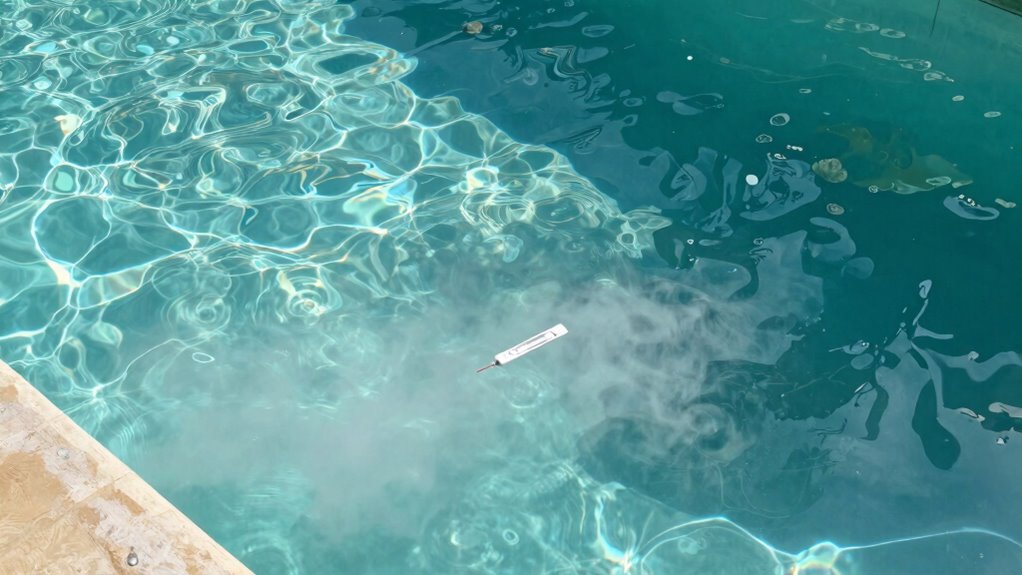
One of the most common signs is a sudden change in water clarity. If your water looks cloudy or murky, it could be a sign that your chlorine isn’t neutralizing contaminants effectively. This cloudiness often results from ongoing chemical reactions in the water, where bacteria and organic matter break down and produce byproducts that the chlorine can’t keep up with. When this happens, your pool maintenance routine needs to adapt. Regular testing becomes essential; if you notice your chlorine levels dropping faster than usual, it’s a clear indication that your pool requires more chlorine to handle the increased demand. Recognizing the importance of chlorine demand helps you respond before water quality issues become severe. Understanding the chemical reactions involved in chlorination can further improve your ability to maintain proper water balance. Additionally, understanding water chemistry as a whole can help prevent issues caused by imbalanced pH and alkalinity that influence chlorine effectiveness.
Another clue is the presence of an unusual or strong chemical smell. Many pool owners mistake this odor for a sign of excessive chlorine, but in reality, it often signals the opposite: chlorine isn’t sufficiently reacting with contaminants. When the chemical reactions in your pool aren’t complete, chloramines form, which produce that unmistakable “chlorine” smell. If you detect this, it’s time to shock your pool with a higher dose of chlorine, ensuring those chemical reactions proceed efficiently and break down organic matter. Ignoring these signs can lead to skin and eye irritation, as well as a breeding ground for bacteria. Proper circulation and filtration play a vital role in enhancing chlorine effectiveness and preventing poor water quality.
Lastly, if you notice your pool water is developing algae or other organic growth despite regular chlorination, it’s a sign your chlorination efforts aren’t enough. Algae thrive when chemical reactions are incomplete, and the pool’s sanitizer isn’t reaching all areas. This often indicates your pool needs an immediate boost in chlorine levels, combined with proper circulation and filtration. Overlooking these subtle cues can result in more complicated water issues down the line, making pool maintenance more difficult and costly. Recognizing these signs early helps you adjust your chemical treatments promptly, keeping your pool safe, clear, and inviting.
As an affiliate, we earn on qualifying purchases.
Frequently Asked Questions
How Quickly Can Chlorine Demand Issues Affect Water Quality?
Chlorine demand issues can impact water quality within hours, especially during chemical reactions triggered by contaminants or pH fluctuations. You might notice the chlorine’s effectiveness drops quickly, leading to unsafe water. As pH levels shift, chlorine reacts more rapidly, reducing its disinfectant power. To prevent this, monitor water chemistry regularly and address pH fluctuations promptly, ensuring your water remains safe and properly disinfected before problems escalate.
Are There Specific Signs Indicating a Sudden Increase in Chlorine Demand?
Imagine your pool whispering secrets—sudden fog or cloudiness signals a spike in chlorine demand. You’ll notice your pool’s chemical balance shifting unexpectedly, with a rapid drop in free chlorine levels despite regular maintenance. Watch for algae growth or persistent odors, as these signs indicate your water’s struggling to keep up. Staying vigilant helps you catch these clues early, ensuring your pool remains safe, clean, and inviting.
Can Chlorine Demand Problems Occur in Well-Maintained Pools?
Yes, chlorine demand problems can occur even in well-maintained pools. If your pool equipment isn’t functioning properly or if water chemistry isn’t balanced, you might notice the chlorine level dropping unexpectedly. This indicates higher chlorine demand, often caused by organic contaminants or algae growth. Regularly check your pool’s water chemistry and equipment to catch issues early, ensuring your chlorine stays effective and your pool remains safe and clean.
What Safety Measures Should Be Taken During Chlorine Demand Testing?
During chlorine demand testing, prioritize chemical safety by wearing gloves, goggles, and a mask to protect yourself from fumes and splashes. Keep the area well-ventilated to avoid inhaling harmful vapors. While the test is essential for water quality, don’t overlook personal protection—incorrect handling can lead to skin irritation or respiratory issues. Staying cautious guarantees accurate results and keeps you safe from chemical hazards.
How Often Should Chlorine Demand Be Tested in Water Systems?
You should test chlorine demand regularly, ideally weekly or biweekly, to maintain proper chemical balance and water pH levels. Consistent testing helps you detect changes in chlorine levels early and guarantees effective disinfection. By monitoring these factors frequently, you prevent chloramine buildup and protect water quality. Adjust testing frequency based on usage, weather, or system changes, always prioritizing maintaining ideal chemical balance for safe, clean water.
As an affiliate, we earn on qualifying purchases.
Conclusion
Don’t ignore the subtle signs of chlorine demand—you might think it’s just a small issue, but it can turn your entire pool into a nightmare faster than you can say “algae bloom.” Paying attention to these clues keeps your water sparkling and safe, saving you from costly repairs and endless frustration. Remember, catching these signs early isn’t just smart—it’s your secret weapon against a pool disaster that could swallow your summer fun whole. Stay vigilant, and enjoy crystal-clear waters!
As an affiliate, we earn on qualifying purchases.
As an affiliate, we earn on qualifying purchases.