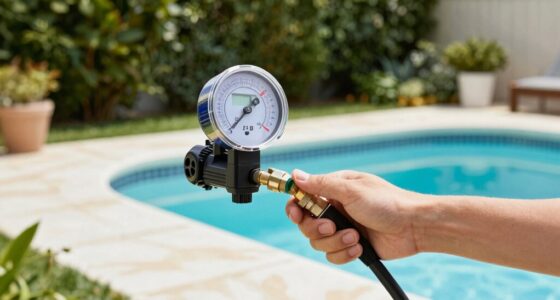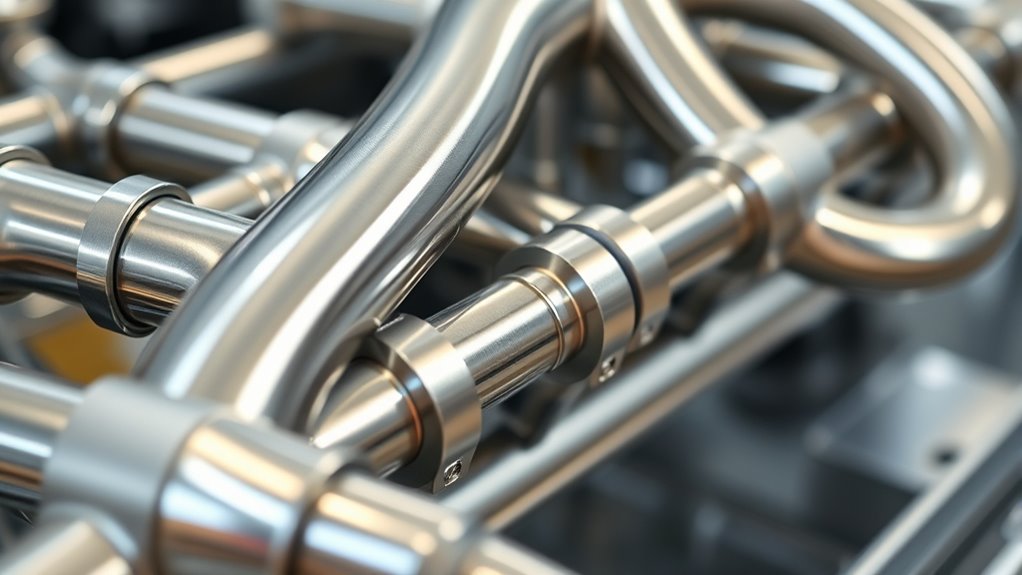

To guarantee even distribution to multiple returns, you should use properly designed manifolds and headers with balanced port sizes and layouts. Incorporate flow control devices like balancing valves or restrictors to adjust flow rates as needed. Keep pipe diameters consistent and avoid sharp turns that cause pressure drops. Regularly check system pressure and flow to fine-tune performance. Continuing further can reveal expert tips to optimize your system’s balance and efficiency.
Key Takeaways
- Properly spaced outlets and calibrated internal pathways ensure balanced flow across multiple return lines.
- Adjustable or balancing valves allow fine-tuning flow rates without system shutdowns.
- Consistent pipe diameters and lengths minimize pressure drops and promote even distribution.
- Modular manifold designs enable customization and easy addition or removal of return lines.
- Regular monitoring and maintenance help identify and correct flow imbalances promptly.

Viega 50243 1/2-Inch PureFlow Zero Lead Poly Alloy PEX Crimp Manabloc With 24 Ports – 15 Cold 9 Hot
- Corrosion-resistant construction: Proven quality and non-corroding
- Quiet operation: Reduces flow noise
- Chlorine resistant: Excellent chlorine resistance
As an affiliate, we earn on qualifying purchases.
As an affiliate, we earn on qualifying purchases.
Understanding the Role of Manifolds and Headers in Plumbing Systems
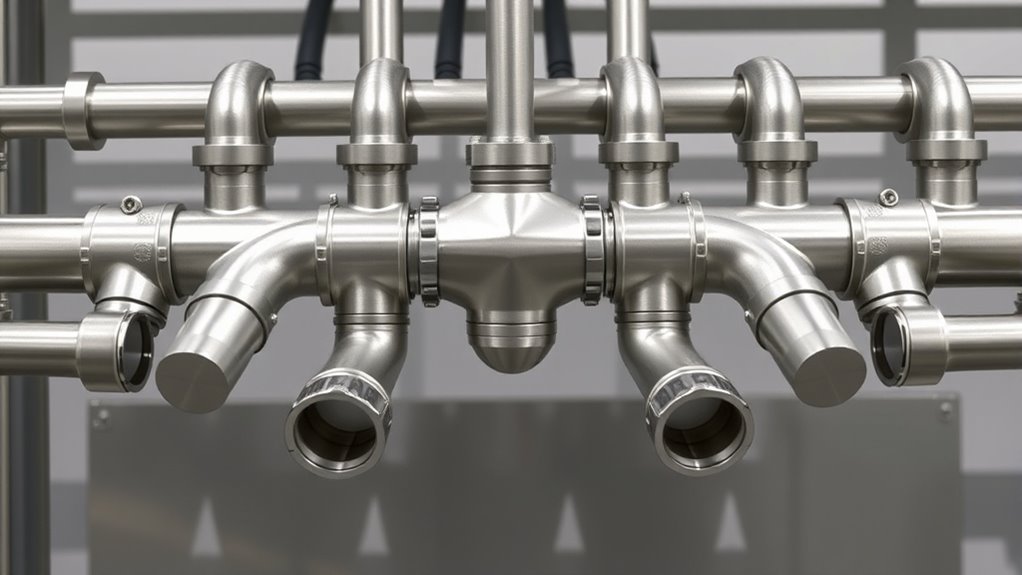
Have you ever wondered how plumbing systems efficiently distribute water to multiple fixtures? It all comes down to manifolds and headers. These components act as central hubs, connecting main water lines to various branch lines that serve sinks, showers, and appliances. Manifolds typically have multiple outlets, allowing you to control water flow to each fixture individually. Headers, on the other hand, are used to collect water from multiple lines into a single pipe, ensuring smooth flow. By organizing your plumbing this way, you minimize pressure loss, reduce clutter, and simplify maintenance. Without manifolds and headers, you’ll face uneven water distribution and complicated repairs. Their role is essential for creating a balanced, reliable, and efficient plumbing system in any building.
Wintap Shower Faucet Set with Pressure Balance Valve, Black
- Pressure Balance Valve: Ensures consistent water temperature
- Modern Design: Sleek, minimalist bathroom upgrade
- Rainfall Shower Head: Provides full-body, relaxing water flow
As an affiliate, we earn on qualifying purchases.
As an affiliate, we earn on qualifying purchases.
How Manifolds Distribute Flow to Multiple Returns
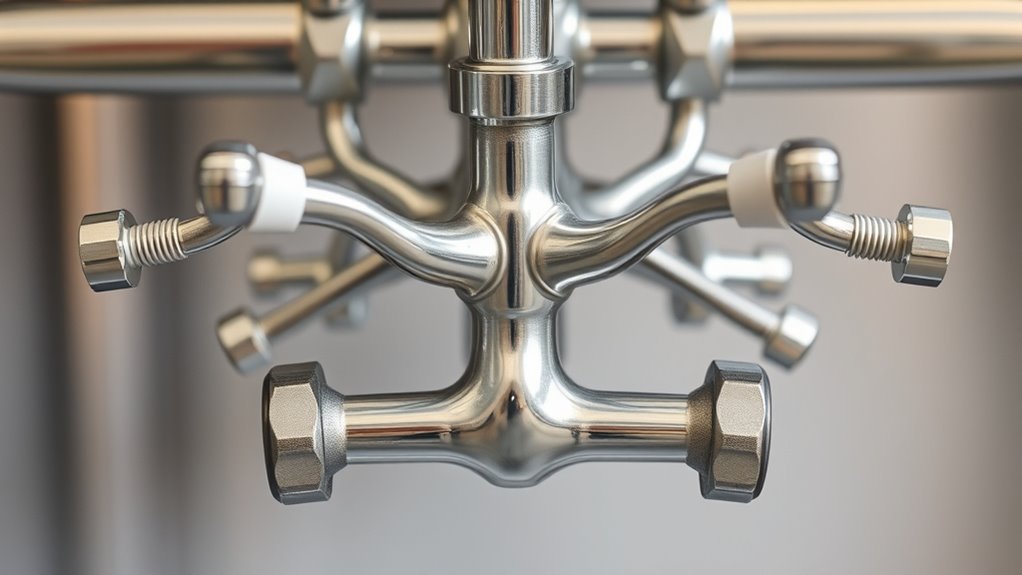
Manifolds guarantee that flow is evenly split among multiple returns, preventing system imbalance. You can choose customizable configurations to suit your specific setup, making installation flexible. By distributing flow accurately, manifolds help maintain consistent performance across all outlets. Proper refrigerant flow management is essential to ensure system efficiency and longevity.
Equal Flow Distribution
Ever wondered how manifolds guarantee each return line gets the right amount of flow? It all comes down to design and internal balancing. Manifolds use evenly spaced outlets and precisely calibrated internal pathways to assure flow divides equally. When your system runs, pressure differences across the manifold are minimized, promoting uniform distribution. Some manifolds incorporate adjustable valves or balancing valves on each outlet, giving you control to fine-tune flow as needed. This consistent flow prevents hotspots and ensures each loop receives the necessary amount of water or coolant. By maintaining equal flow, manifolds optimize system efficiency, reduce energy consumption, and extend component lifespan. Proper design and installation are key to achieving this balance, ensuring your system operates smoothly and reliably. Understanding flow balancing techniques is essential for optimizing manifold performance and ensuring system reliability.
Customizable Configurations Available
To efficiently distribute flow to multiple return lines, manifolds offer customizable configurations that can be tailored to your system’s specific needs. You can choose from various options to optimize performance and ease installation. For example:
- Multiple ports arranged in different layouts to fit your space.
- Adjustable flow valves for precise control of each branch.
- Different materials like brass, stainless steel, or plastic based on durability needs.
- Modular designs that allow adding or removing outlets as your system evolves.
- Selecting a raw food diet compatible manifold can ensure safe and efficient distribution in specialized settings.
These options give you flexibility, ensuring the manifold fits your setup perfectly. Whether you need a compact solution or a more complex distribution network, customizable configurations help you achieve balanced flow and efficient operation tailored to your system’s unique requirements.
Reduces System Imbalance
When properly designed, manifolds play a crucial role in minimizing system imbalance by evenly distributing flow across multiple return lines. This even distribution prevents any single line from becoming overwhelmed, which can lead to pressure drops and inefficiency. By balancing flow, manifolds ensure each zone returns the correct amount of fluid, maintaining system stability. This reduces strain on pumps and other components, extending their lifespan. Properly balanced flow also improves overall system performance, providing consistent temperature control and energy efficiency. You’ll notice fewer fluctuations and less noise, as the system operates smoothly. When flow is evenly distributed, you prevent hotspots and uneven wear, making your setup more reliable and easier to maintain. In short, manifolds help keep your system balanced and performing at its best. Additionally, understanding the importance of pressure management can further optimize system efficiency and longevity.
VIVOSUN Garden Hose Splitter 4 Way, Heavy Duty Water Hose Connector 3/4", Water Hose Manifold, Faucet Adapter with Comfortable Rubberized Grip for Drip Irrigation, Lawns
- Multipurpose 4-Way Splitter: Converts 1 spigot into 4 water sources
- Durable Zinc Alloy Construction: Rustproof, leak-resistant, withstands high pressure
- Comfortable Rubberized Grip: Ergonomic, non-slip, weather-resistant handle
As an affiliate, we earn on qualifying purchases.
As an affiliate, we earn on qualifying purchases.
The Function of Headers in Hydronic Heating Systems
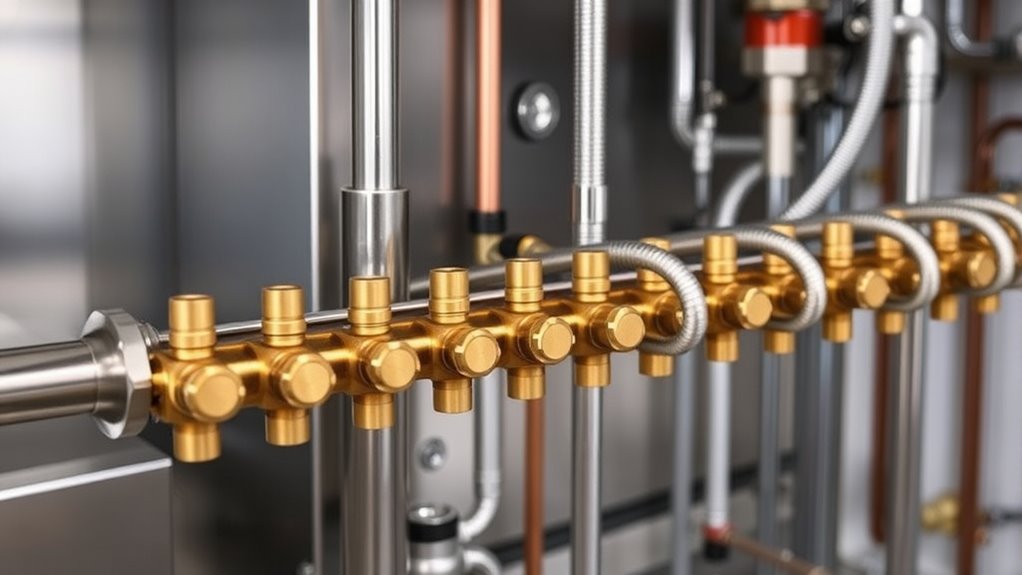
Headers play a vital role in hydronic heating systems by ensuring even flow distribution across zones. They also make system design simpler and more organized, saving you time and effort. Plus, headers provide easy access for maintenance, helping you keep everything running smoothly. Using appropriate manifold configurations can further optimize system performance and balance flow effectively.
Equalizing Flow Distribution
Have you ever wondered how hydronic heating systems guarantee each radiator receives the right amount of flow? Headers play a vital role in equalizing flow distribution. They ensure that heated water splits evenly, preventing some radiators from being over- or under-heated. By balancing the flow, headers maintain consistent comfort and system efficiency. Imagine a header acting like a traffic controller, directing flow smoothly:
- Dividing water evenly to multiple loops
- Reducing pressure drops across branches
- Preventing flow imbalances caused by pipe length or resistance
- Maintaining steady pressure and temperature at each radiator
This balanced distribution keeps your system running efficiently and guarantees uniform heat delivery throughout your space. Properly designed headers are essential for achieving even, reliable heating performance.
Cookies can also be used to enhance user experience by tracking interactions and optimizing system performance.
Simplifying System Design
By consolidating multiple supply and return lines into a single, organized point, headers simplify the overall design of hydronic heating systems. They reduce the clutter of numerous pipes, making installation cleaner and easier to manage. With a centralized manifold, you gain a clearer overview of the system, which helps in troubleshooting and future modifications. Headers also streamline the routing of pipes, decreasing the chance of errors or leaks. Additionally, they allow for better control of flow rates and temperature distribution across different zones. This organized approach minimizes the complexity of the piping layout, saving time during setup and maintenance. Overall, headers make your hydronic system more straightforward, efficient, and easier to understand, ensuring smoother operation and easier scalability. Implementing flow control devices along with headers can further optimize system performance and energy efficiency.
Facilitating Maintenance Access
Organizing multiple supply and return lines into a single manifold makes ongoing maintenance much more manageable. When you need to access or troubleshoot specific zones, a well-designed header simplifies the process. It allows you to isolate sections quickly without shutting down the entire system. Imagine these features:
- Easy removal of individual zone valves for repairs
- Clear labeling that guides you directly to problem areas
- Accessible ports for pressure testing or flushing
- Compact layout that avoids tangled piping and clutter
- Recognizing recurring patterns in system components can help in diagnosing issues more efficiently, especially when understanding the angel numbers that may appear during maintenance routines.
With headers, you can conduct routine inspections, bleed air, or replace components efficiently. This setup minimizes downtime and reduces frustration, making system upkeep straightforward. Proper headers are essential for smooth, quick maintenance, ensuring your system stays reliable and easy to service over time.

Yakamoz Refrigerant Charging Valve Set,2Pcs R22 R410 Solid Brass HVAC Valve
- Refrigerant Compatibility: Suitable for R22 and R410 systems
- Durable Brass Construction: Made from high-quality solid brass
- Leak-Free Connections: Ensures secure refrigerant charging
As an affiliate, we earn on qualifying purchases.
As an affiliate, we earn on qualifying purchases.
Techniques for Achieving Even Flow Distribution
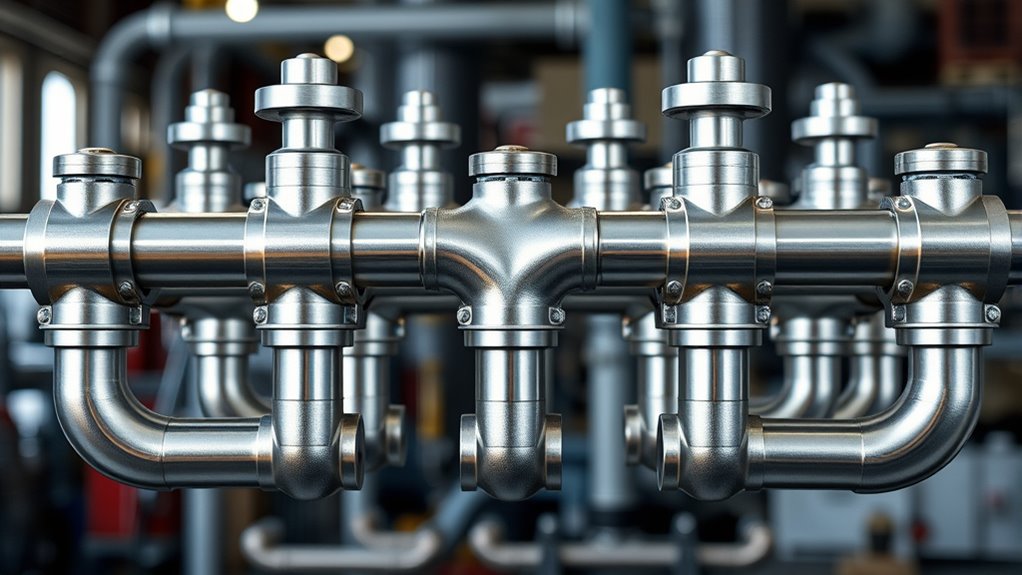
Achieving an even flow distribution across manifolds and headers is essential for ideal system performance. To do this, start by designing headers with balanced pipe diameters and lengths. Use flow restrictors or balancing valves to fine-tune flow rates at each branch, preventing some paths from dominating others. Incorporate proper spacing between headers and ensure they are positioned to minimize pressure drops. Installing adjustable valves allows for ongoing fine-tuning without system shutdowns. Additionally, maintaining consistent pipe materials and avoiding sudden diameter changes helps sustain even flow. Regularly monitor flow rates and pressure differences, making adjustments as needed. Using passive voice detection tools can assist in identifying passive constructions that may weaken clarity. These techniques collectively guarantee each branch receives an appropriate flow, optimizing system efficiency and preventing issues caused by uneven distribution.
Common Challenges and Solutions in Multi-Return Systems
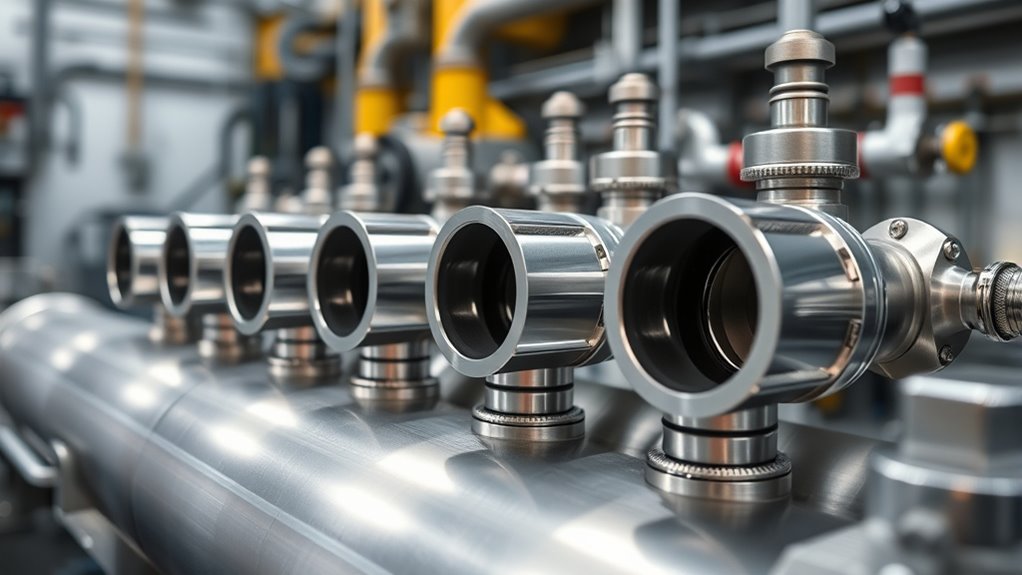
Multi-return systems often face challenges like uneven flow distribution, pressure imbalances, and difficulty in balancing individual branch demands. These issues can cause inefficiencies and inconsistent performance. To address them, consider these solutions:
- Use flow restrictors to fine-tune flow rates in each branch.
- Install balancing valves to equalize pressure across outlets.
- Ensure proper pipe sizing to prevent bottlenecks and pressure drops.
- Regularly monitor system pressure and flow to identify and correct imbalances early.
- Conduct comprehensive risk assessments to identify potential vulnerabilities in the system’s operation and security.
Best Practices for Installing and Maintaining Manifolds and Headers
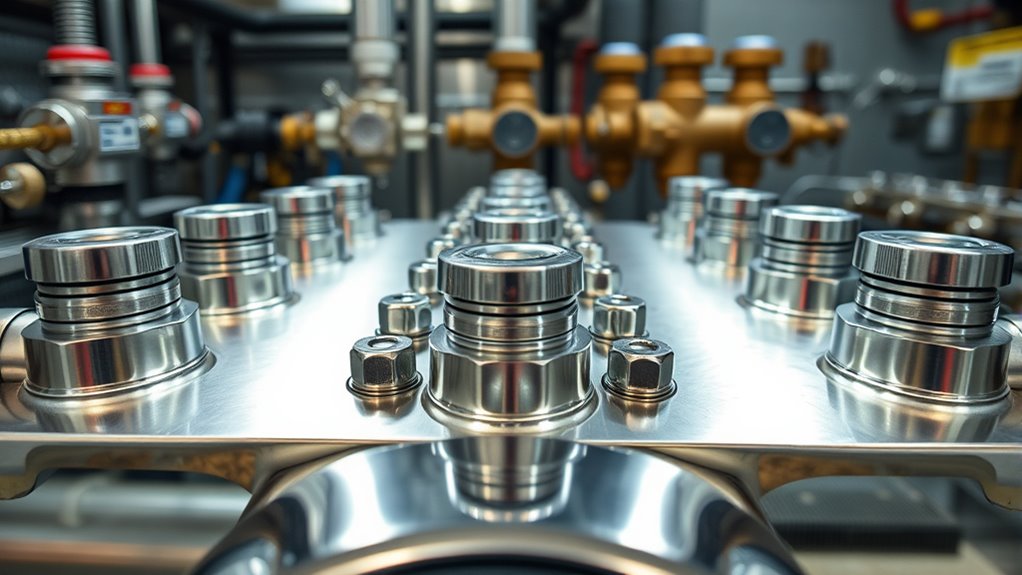
Proper installation and maintenance of manifolds and headers are essential to guarantee system efficiency and longevity. Start by ensuring all connections are tight and free of leaks, using appropriate fittings and sealants. Mount headers securely to prevent movement or vibration that could cause damage over time. Make sure the flow direction matches the system design to ensure even distribution. Regularly inspect for corrosion, buildup, or wear, and clean or replace parts as needed. Keep the system pressure within recommended limits to avoid stress on components. Use high-quality materials suited to your specific application. Document maintenance routines and replace worn parts proactively. Proper installation and consistent upkeep help prevent failures, improve performance, and extend the lifespan of your manifold and header system.
Frequently Asked Questions
How Do Manifold Materials Affect System Durability?
Your manifold material plays a vital role in system durability. If you choose high-quality, corrosion-resistant materials like stainless steel or brass, you’ll enjoy longer-lasting performance and fewer maintenance issues. Cheaper or less durable materials may corrode or crack over time, leading to leaks or system failures. By selecting the right material, you guarantee your system remains reliable and efficient, reducing downtime and costly repairs in the long run.
Can Manifold Design Impact Energy Efficiency?
A well-designed manifold acts like a conductor guiding a symphony, ensuring smooth, balanced flow that boosts your system’s energy efficiency. When the design minimizes pressure drops and optimizes flow paths, you’ll notice less energy wasted on pumping and more on actual heating or cooling. Smart design choices—such as proper sizing and layout—make your system run more efficiently, saving you money and reducing environmental impact.
Are There Specific Regulations for Manifold Installation?
Yes, there are specific regulations you need to follow when installing manifolds. You should check local building codes, plumbing standards, and manufacturer instructions to guarantee compliance. These regulations typically cover materials, installation methods, and safety requirements. It’s essential you obtain any necessary permits and inspections. By adhering to these rules, you ensure your installation is safe, efficient, and legally compliant, preventing potential issues or penalties down the line.
How Do Temperature Variances Influence Header Performance?
Temperature variances can turn your header into a rollercoaster, affecting flow and efficiency. When temperatures fluctuate, metals expand and contract, causing uneven distribution and potential pressure drops. You might notice hotspots or inconsistent return flow, which can strain your system. To keep everything running smoothly, guarantee proper insulation and use materials designed for temperature changes. This proactive approach helps maintain performance and prevents costly breakdowns, keeping your system stable and reliable.
What Are the Signs of a Failing Manifold or Header?
You’ll notice uneven heating or cooling, which indicates a failing manifold or header. Other signs include strange noises like banging or knocking, leaks around joints, or a drop in system pressure. You might also see inconsistent flow rates or some zones not responding properly. If you observe these issues, it’s a sign you should get your manifold or header inspected and repaired promptly to prevent further damage.
Conclusion
By understanding how manifolds and headers work together, you can achieve a balanced flow across your system. It’s almost like they’re designed to complement each other, ensuring even distribution without extra effort. When you follow best practices for installation and maintenance, you’ll notice fewer issues and smoother operation. Sometimes, the tiniest adjustments make all the difference—proving that proper setup truly is the key to reliable, efficient plumbing.