
To winterize your pool equipment and plumbing, start by turning off power and disconnecting your pump, draining all water, and storing it in a dry place. Inspect and close valves, then blow out lines or add pool antifreeze to prevent freezing damage. Protect seals and gaskets, and store equipment away from the elements. Proper preparation reduces risks and extends your pool’s lifespan, and if you continue, you’ll discover essential tips for a thorough winterization process.
Key Takeaways
- Turn off power and drain all water from the pump, valves, and plumbing lines to prevent freezing damage.
- Inspect and replace damaged valves, seals, and gaskets, then apply lubricant for smooth operation in spring.
- Blow out plumbing lines with compressed air or add pool-specific antifreeze to prevent water expansion during freezing.
- Store pump and equipment in a dry, protected area and cover them to shield from weather elements.
- Ensure backup power options are in place to protect pool systems during winter outages.
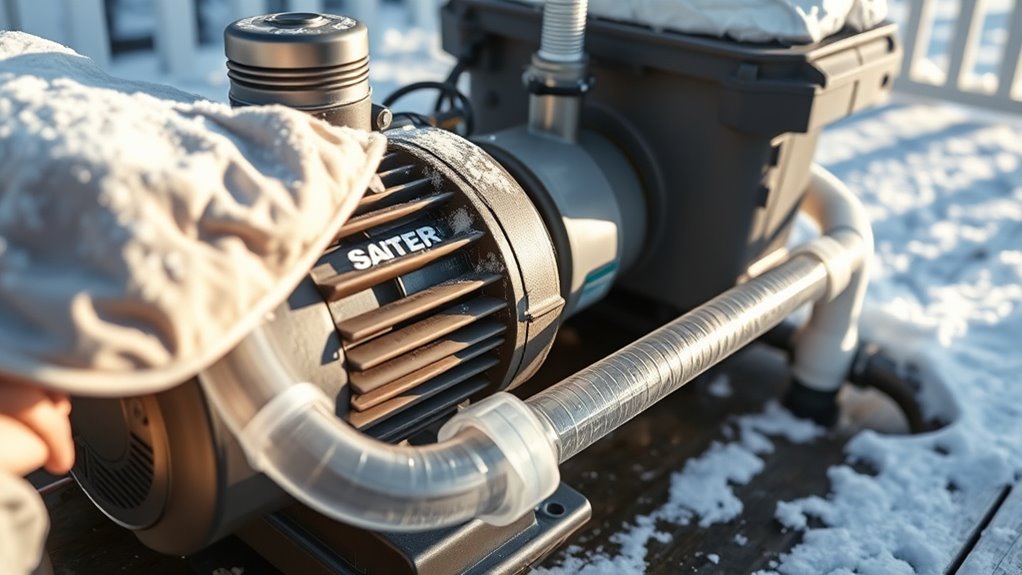
As winter approaches, it is essential to properly winterize your pool equipment to prevent damage from freezing temperatures. One of the first steps is to focus on pump maintenance. Your pool pump is a critical component, and if water remains inside it during freezing weather, it could crack or break. To avoid this, start by turning off the power and disconnecting the pump. Next, drain all water from the pump by opening the drain plugs and removing the pump basket. Use a wet/dry vacuum to suck out any residual water in the pump housing and impeller. Once dry, store the pump in a dry, protected area, such as a garage or storage shed, to keep it safe from the elements during winter months. Properly winterizing your equipment also involves understanding backup power options in case of outages, ensuring your pool system remains protected even during power disruptions.
Winterize your pool pump by draining water and storing it in a dry, protected area.
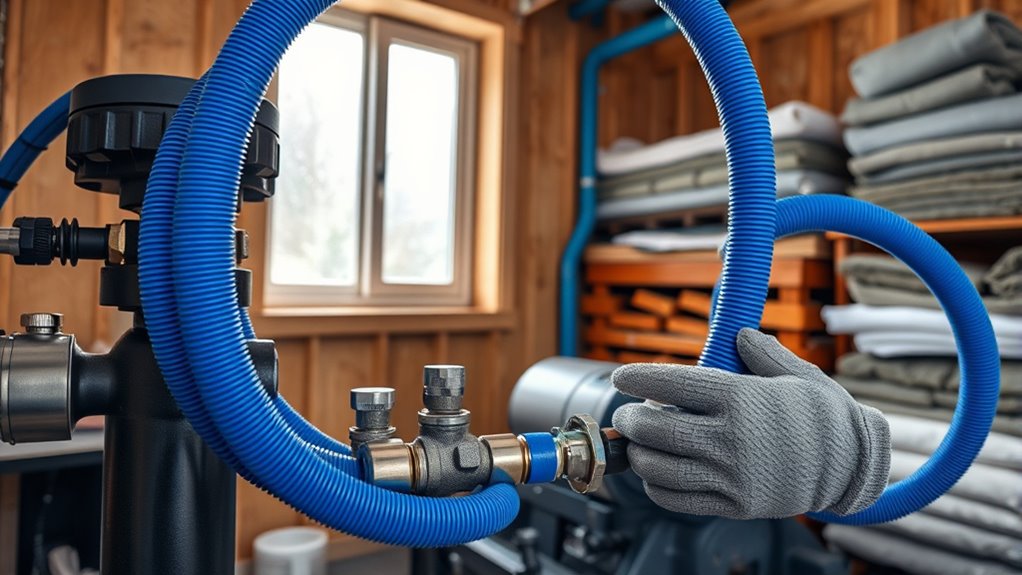
In addition to pump maintenance, you need to inspect and prepare your valves. Valves control water flow through your plumbing system, and if they’re not in good shape, they can cause leaks or freeze and crack. Begin by turning off the pool’s filtration system and closing all valves that connect to the pool’s plumbing. Carefully inspect each valve for cracks, leaks, or corrosion. Replace any damaged or worn-out valves before winter sets in. For valves that are in good condition, consider applying a silicone-based lubricant to guarantee they move smoothly when you reopen the system in the spring. Also, check the valve seals and gaskets; if they’re brittle or damaged, replacing them will help prevent leaks and maintain proper functioning.
While inspecting and maintaining your pump and valves, it’s also wise to clear out any residual water from the plumbing lines. You can do this by blowing out the lines with compressed air or using a pool-specific antifreeze to prevent any remaining water from freezing. Properly sealing and draining your equipment guarantees that no water is left behind to expand and cause damage during cold snaps.
Taking these steps now will save you from costly repairs in the spring. Regular pump maintenance and thorough valve inspection are key to winterizing your pool effectively. When you disconnect and store your equipment properly, you’ll guarantee everything remains in good shape until you’re ready to reopen your pool next season. Remember, a little effort in the fall can save you significant time and money later on, keeping your pool in top condition year after year.
As an affiliate, we earn on qualifying purchases.
Frequently Asked Questions
When Is the Best Time to Winterize My Pool Equipment?
You should winterize your pool equipment before the temperatures drop consistently below 50°F, typically in late fall. Before pool cover installation, verify your pool’s chemical balance is maintained to prevent algae growth and staining. Drain and disconnect equipment, then cover your pool securely. Doing this early helps protect your investment and makes opening your pool easier next season, avoiding costly repairs or damage caused by freezing water.
Can I Winterize My Pool Equipment Myself or Hire a Professional?
Sure, you can definitely winterize your pool equipment yourself—think of it as a fun DIY project! Just follow some expert DIY tips to prevent costly mistakes. But if you’d rather skip the hassle or guarantee everything’s done perfectly, professional services are worth considering. They bring experience and peace of mind, making sure your pool survives winter in top shape. Either way, you’re in good hands!
What Are the Signs of Equipment Damage During Winter?
During winter, look for signs of equipment damage, like unusual noises or leaks. Conduct a thorough equipment inspection for cracks or corrosion, and perform leak detection to spot hidden issues. If you notice water dripping or pooling around your pump or filters, it’s a sign of potential damage. Address these problems early to prevent costly repairs come spring, and consider consulting a professional if you’re unsure about what you find.
How Long Does the Winterizing Process Typically Take?
Preparing your pool typically takes about a few hours to a full day, depending on pool size and complexity. You’ll start by securing the pool cover, then carefully apply antifreeze to safeguard your plumbing. With diligent draining and detailed disinfection, you guarantee your pool’s safety. Dedicate time to each step, and you’ll confidently complete winterization, knowing your pool is protected from harsh winter hazards.
Are There Specific Products Recommended for Winterizing Pool Equipment?
Yes, you should use specific products for winterizing pool equipment. Select an appropriate pool cover to protect your pool and consider antifreeze solutions designed for pools to prevent pipe freezing. These products help guard against damage during the cold months. Make certain you follow manufacturer instructions for proper application, and store any leftover supplies in a dry, safe place for future winters. Proper products make winterizing more effective and easier.
As an affiliate, we earn on qualifying purchases.
Conclusion
As you finish winterizing your pool equipment and plumbing, you might find it’s almost like you’re preparing your backyard for a long, peaceful rest—just like nature does every year. Sometimes, the smallest steps, like draining a filter or sealing a valve, can unexpectedly save you time and money come spring. So, as you put away your tools, remember: a little winter effort now can make your pool ready to sparkle again when the sun returns.
As an affiliate, we earn on qualifying purchases.
As an affiliate, we earn on qualifying purchases.