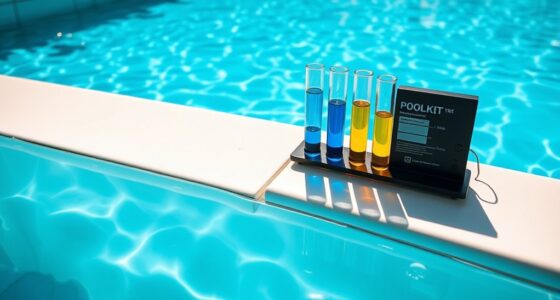
Clear water looks safe, but it can hide harmful contaminants behind its transparency, so it’s not always safe to drink. Visual cues don’t reliably show health risks from bacteria, heavy metals, or chemicals. To truly guarantee safety, you need proper purification methods and reliable detection of pollutants. Regular testing confirms whether water is free from dangers. Curious about how to tell the difference and protect yourself better? Keep exploring to uncover the full truth.
Key Takeaways
- Clear water appears transparent but may still contain harmful contaminants invisible to the naked eye.
- Truly safe water has been properly tested and confirmed free of bacteria, viruses, and chemical pollutants.
- Visual clarity does not guarantee water safety; contamination can be hidden behind transparency.
- Effective purification removes impurities, but testing is necessary to verify safety.
- Combining purification with contaminant detection provides a comprehensive assessment of water safety.
Have you ever looked at a glass of water and assumed it’s safe simply because it’s clear? It’s a common mistake. Just because water appears transparent and clean doesn’t mean it’s free from harmful substances. The truth is, contaminants can hide behind that clarity, making water unsafe to drink even when it looks perfectly pure. This is where water purification and contaminant detection come into play. They’re indispensable tools in ensuring that water isn’t just clear but truly safe.
Water purification isn’t just about making water look appealing; it’s about removing impurities and harmful substances that can cause health issues. Modern purification methods, like filtration, chlorination, and UV treatment, work to eliminate bacteria, viruses, heavy metals, and chemicals. However, these methods aren’t foolproof on their own. That’s why contaminant detection is critical. It helps identify what’s actually present in the water, so you know whether your purification process is effective or if additional treatment is necessary. Contaminant detection can also reveal emerging pollutants that traditional methods might miss, highlighting the importance of advanced testing. Regular testing ensures that testing accuracy remains high and that water safety measures are effective.
Water purification removes impurities, but contaminant detection confirms safety and effectiveness of treatment processes.
Contaminant detection involves testing water for a range of pollutants, from biological agents to chemical residues. Advanced testing kits and laboratory analysis can uncover the presence of bacteria such as E. coli, heavy metals like lead, or pesticides that might not be immediately visible or detectable by taste or smell. When you rely solely on visual cues, you’re fundamentally guessing whether your water is safe. Proper contaminant detection gives you concrete evidence, enabling you to make informed decisions about whether your water needs further purification. Incorporating comprehensive testing methods can provide a more complete understanding of water quality and potential risks.
If you’re concerned about water safety, understanding the importance of both purification and detection is crucial. You might invest in a good water purifier, but without regular contaminant detection, you won’t know if your system is working effectively. Contaminants can bypass filters, especially if they’re damaged or outdated. Regular testing, hence, becomes an indispensable part of maintaining safe drinking water. It’s about proactive protection rather than reactive measures.
Ultimately, safe water isn’t just about appearance. It’s about ensuring every drop you consume is free from hidden dangers. By combining water purification techniques with rigorous contaminant detection, you get a more accurate picture of your water’s safety. This way, you’re not just drinking clear water, but water that truly supports your health. So, next time you pour a glass, remember that safety goes beyond what’s visible—trust the science behind purification and detection to keep you safe. Additionally, advanced testing methods can provide more detailed insights into your water quality than simple visual inspection.
water testing kit for contaminants
As an affiliate, we earn on qualifying purchases.
As an affiliate, we earn on qualifying purchases.
Frequently Asked Questions
How Can I Test Water Safety at Home Effectively?
You can test water safety at home effectively by performing DIY testing with chemical indicators. Start by purchasing testing kits that include strips or drops designed to detect contaminants like chlorine, lead, or bacteria. Follow the instructions carefully, dip the strips into your water sample, and compare the color change to the provided chart. This simple method helps identify potential risks, but for thorough safety, consider sending samples to a professional lab.
What Are Common Contaminants Not Visible in Clear Water?
Invisible pollutants can be lurking in your clear water like shadows in the dark. Common contaminants you can’t see include microbial hazards, bacteria, viruses, and chemical pollutants, which pose serious health risks. These invisible threats can cause illnesses even if your water looks clean. To stay safe, consider testing for microbial hazards regularly, using home test kits, or relying on certified labs to identify these hidden dangers that hide beneath the surface.
Does Bottled Water Always Mean It’s Safe to Drink?
Bottled water doesn’t always mean it’s safe to drink. Water filtration processes vary, and some bottled waters may contain contaminants or bacteria if not properly regulated. Many people have misconceptions, thinking bottled water is automatically purer than tap water. Always check the label and consider the source. Relying solely on bottled water without understanding its filtration process can give you a false sense of security, so stay informed.
How Does Water Treatment Vary Across Different Regions?
Water treatment varies across regions mainly because of differing regional water standards and treatment infrastructure. In some areas, strict regulations ensure rigorous purification, while others might have limited infrastructure, affecting water safety. You should check local water quality reports to understand what treatment methods are used and whether additional filtration or boiling is necessary. This helps guarantee you’re drinking truly safe water, regardless of regional differences in treatment practices.
What Are Long-Term Health Effects of Drinking Unsafe Water?
Drinking unsafe water poses serious health risks, including chronic illnesses like gastrointestinal infections, neurological disorders, and kidney damage. Over time, exposure to contaminants such as heavy metals or bacteria can weaken your immune system and increase cancer risk. You might not notice immediate effects, but long-term consumption can lead to persistent health problems, impacting your quality of life. Ensuring safe water helps prevent these severe health consequences.
As an affiliate, we earn on qualifying purchases.
Conclusion
Remember, clear water might look inviting, but it’s not always your safest choice—think of it as an uninvited guest hiding behind a pretty mask. Truly safe water, on the other hand, is like a trustworthy friend you can rely on, free from hidden dangers. Don’t let appearances deceive you; always prioritize safety over superficial sparkle. After all, when it comes to your health, isn’t it better to see the truth clearly than to be fooled by surface shine?
As an affiliate, we earn on qualifying purchases.
bacteria and virus water test strips
As an affiliate, we earn on qualifying purchases.
As an affiliate, we earn on qualifying purchases.