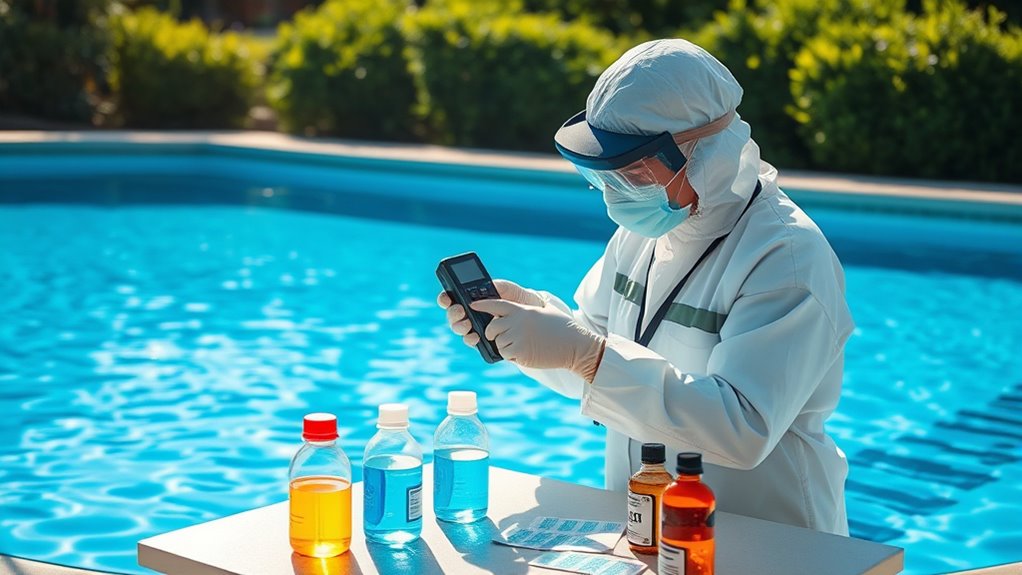

To manage chlorine demand, you need to identify causes like organic buildup from leaves, oils, and debris, which consume chlorine quickly. Regularly skim, brush, and clean your pool to remove debris and prevent organic matter from decaying. Run your filter daily and shock the water after storms or heavy use to break down contaminants. Using stabilizers like cyanuric acid helps protect chlorine from sunlight. Keep an eye on environmental factors; if you continue exploring, you’ll discover more effective strategies to keep your pool sanitized.
Key Takeaways
- Organic debris like leaves and oils increase chlorine demand, leading to quicker sanitizer depletion.
- Regular skimming, brushing, and filtration help remove organic buildup and reduce chlorine consumption.
- Environmental factors such as sunlight and high temperatures accelerate organic decay, raising chlorine needs.
- Shock treatments and stabilizers like cyanuric acid restore chlorine levels and protect against UV degradation.
- Proper circulation and chemical balance minimize dead zones, controlling organic growth and maintaining optimal chlorine levels.
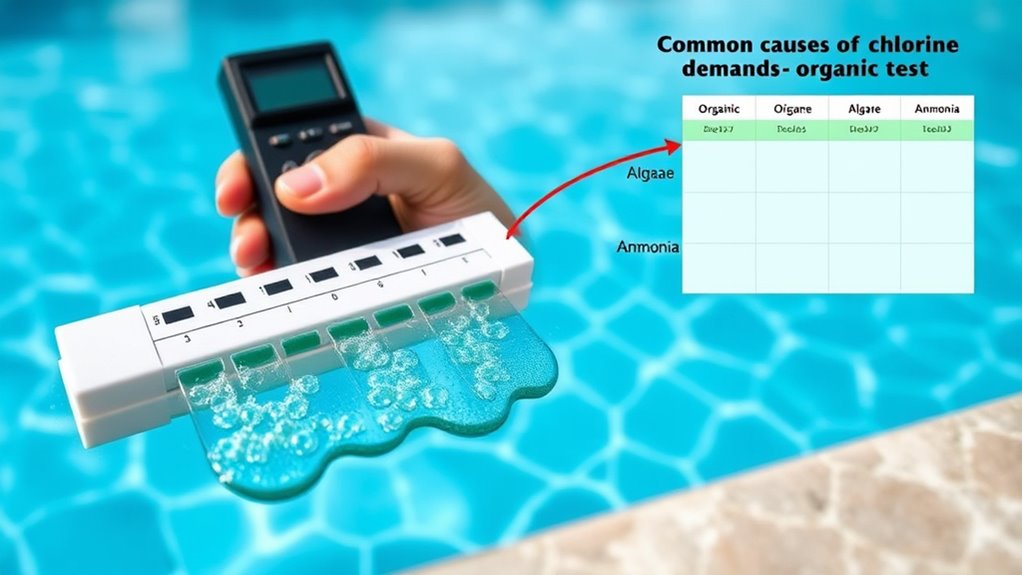
Have you ever wondered why your pool takes longer to sanitize than expected? One common culprit is the imbalance in chlorine levels, which can considerably slow down the sanitization process. When the chlorine level isn’t properly balanced, it struggles to effectively kill bacteria, algae, and other contaminants. This imbalance often occurs because the chlorine demand has increased due to various factors, making it harder for your sanitizer to do its job. To address this, you need to understand what causes these fluctuations and how to manage them.
Balancing chlorine levels is essential because it ensures you have enough sanitizer in the water without overdoing it, which can lead to other issues like skin irritation or equipment damage. When chlorine levels are too low, organic materials such as leaves, dirt, and body oils consume the available chlorine quickly, increasing the chlorine demand. Conversely, if chlorine levels are too high, it can be uncomfortable and potentially damaging over time. Regular testing with a reliable kit helps you monitor these levels and maintain the appropriate balance. By doing so, you prevent organic buildup, which is a major factor that increases chlorine demand. Organic substances act as a food source for bacteria and algae, prompting your pool to require more chlorine to keep these microorganisms at bay.
Maintaining proper chlorine levels prevents organic buildup and keeps your pool safe and clear.
Preventing organic buildup starts with good pool maintenance habits. Skim the surface frequently to remove leaves, insects, and debris that can decay and lead to organic matter in the water. Also, brushing the walls and floor helps dislodge algae and dirt that have settled, making it easier for the chlorine to do its job. Running the filter system daily ensures proper circulation, which helps distribute chlorine evenly and prevents dead zones where organic buildup might develop. Shock treatments can also be beneficial, especially after heavy use or a storm, as they temporarily raise chlorine levels to break down organic contaminants quickly.
In addition to routine maintenance, understanding your pool’s environment can help reduce chlorine demand. For instance, high temperatures and direct sunlight accelerate organic decay and increase the rate at which chlorine is consumed. Using stabilizers like cyanuric acid can help protect chlorine from UV degradation, keeping it effective longer and reducing the need for frequent adjustments. Ultimately, managing chlorine demand involves a combination of balancing chlorine levels, preventing organic buildup, and maintaining good circulation and filtration practices. By staying proactive and attentive to your pool’s needs, you’ll find that sanitization becomes more efficient, water stays clearer, and your pool remains safe and inviting for everyone.

Poolmaster 22260 5-Way Swimming Pool or Spa Water Chemistry Test Kit with Case, Essential Collection
- Water Chemistry Testing: Tests Chlorine, Bromine, pH, Alkalinity, Acid Demand
- Clear-View Test Block: Includes transparent round test block with color chips
- Solution Set Included: Contains 1oz solutions for tests #1-#3, 0.5oz for #4-#5
As an affiliate, we earn on qualifying purchases.
As an affiliate, we earn on qualifying purchases.
Frequently Asked Questions
How Does Temperature Influence Chlorine Demand?
Temperature effects markedly influence chlorine demand because higher temperatures speed up chemical reactions. When the water gets warmer, bacteria, algae, and organic matter become more active, increasing chlorine consumption. You’ll notice that in hotter water, chlorine reacts faster with contaminants, so you may need to add more chlorine to maintain proper disinfectant levels. Managing temperature is vital, as it directly impacts how quickly chlorine is used up during disinfection.
Can Adding Stabilizers Reduce Chlorine Demand?
Adding stabilizers can help reduce chlorine demand by providing chlorine stabilization, which safeguards chlorine from degradation caused by sunlight and heat. This demand reduction technique helps maintain a consistent chlorine level, especially in outdoor pools. However, it’s important to use stabilizers properly, as overuse can lead to other issues like algae growth. Combining stabilizers with proper water chemistry management ensures effective demand control and healthier pool conditions.
What Are the Signs of High Chlorine Demand in Water?
If you notice your chlorine levels dropping quickly or struggle to maintain proper sanitation, you’re likely experiencing high chlorine demand. Watch for rapid chlorine consumption, cloudy or contaminated water, and persistent odors despite treatment. High chlorine demand often indicates water contamination or organic matter consuming chlorine. Recognizing these signs helps you take action to address contamination issues, ensuring your water stays safe and properly sanitized.
How Often Should Chlorine Levels Be Tested?
Think of chlorine testing as your water’s health check-up—do it at least twice a week during peak usage. You should also perform water analysis after heavy rainfall, algae blooms, or if water appears cloudy or has a strong odor. Regular testing guarantees your chlorine levels stay balanced, preventing bacteria growth or over-chlorination. Stay vigilant, and your water remains clean and safe, just like a well-armed knight in shining armor.
Are There Natural Methods to Lower Chlorine Demand?
Yes, you can lower chlorine demand naturally by enhancing biological filtration, which helps break down organic compounds causing demand. Adding natural additives like beneficial bacteria or bio-activators promotes this process. Regularly maintaining your filtration system and removing excess organic debris also reduces chlorine demand. These methods support a healthier environment, minimize chemical use, and keep your water balanced without relying on synthetic solutions.
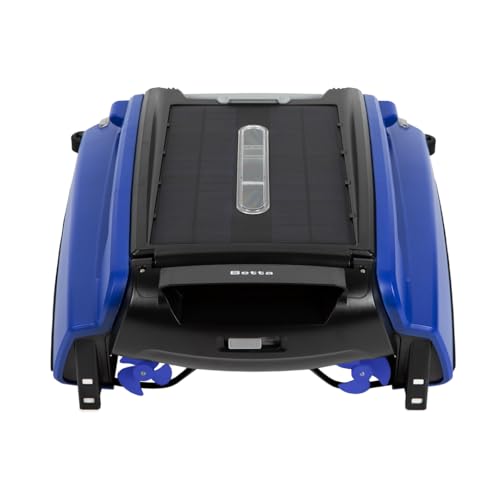
Betta SE Solar Powered Automatic Robotic Pool Surface Skimmer Cleaner with 24/7 Continuous Cleaning Battery Power and Re-Engineered Twin Salt Chlorine Tolerant Motors (Blue)
- Power Source: Solar powered for automatic cleaning
- Cleaning Capacity: Removes leaves, dust, pollen, pet hair
- Design Technology: Aqua Dynamics for continuous cleaning
As an affiliate, we earn on qualifying purchases.
As an affiliate, we earn on qualifying purchases.
Conclusion
Just as a skilled captain steers through unpredictable waters, managing your chlorine demand requires awareness and proactive measures. By understanding the causes and implementing effective solutions, you guarantee your water remains safe and balanced—like a well-charted voyage. Remember, neglecting these factors can turn calm seas into turbulent waters. Stay vigilant, adapt, and you’ll master the art of maintaining pristine water quality, guiding your system smoothly through any challenge ahead.

HTH 52036R, Pool Care Shock Advanced, 6 Pack
- Fast-Dissolving 4-in-1 Formula: Kills bacteria, algae, reduces odor
- Effective Weekly Pool Treatment: Solves 90% water issues in 24 hours
- Cal Hypo Formula: Sanitizes without cyanuric acid
As an affiliate, we earn on qualifying purchases.
As an affiliate, we earn on qualifying purchases.

Pool Mate 7-Pounds Premium Pool Stabilizer and Conditioner
- Pool Stabilizer with Cyanuric Acid: Concentrated formula for pools
- Reduces Chlorine Loss: Helps chlorine last longer
- Ideal Cyanuric Acid Level: Recommended 40-100 ppm
As an affiliate, we earn on qualifying purchases.
As an affiliate, we earn on qualifying purchases.