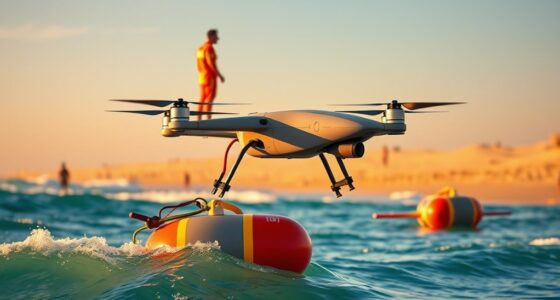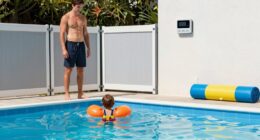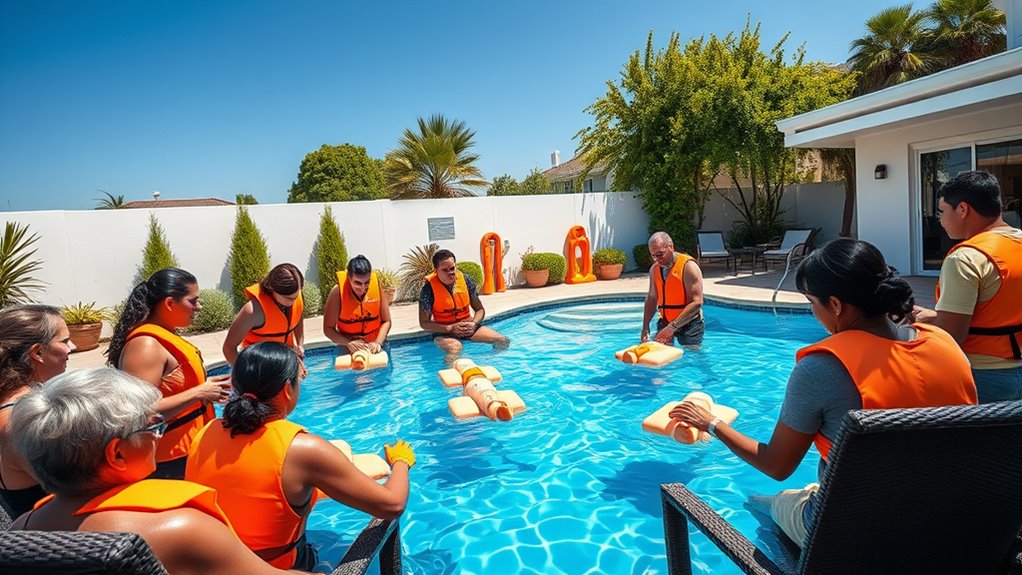

As a pool owner, emergency response training is crucial to handle accidents, injuries, or drownings confidently and swiftly. It equips you with essential skills like CPR, first aid, and rescue techniques, helping you stay calm during emergencies. Properly maintained safety equipment and clear protocols further enhance safety. Regular practice keeps your skills sharp, ensuring you’re prepared for any situation. Keep learning about safety measures to protect your loved ones and guests effectively—there’s more to discover that can make a difference.
Key Takeaways
- Enroll in certified CPR and first aid courses tailored for pool emergencies to build immediate response skills.
- Learn to identify pool hazards and implement safety protocols to prevent emergencies before they occur.
- Keep safety equipment like life rings, reaching poles, and AED devices accessible and regularly maintained.
- Develop and rehearse emergency action plans for scenarios such as drowning or injuries to ensure quick, organized responses.
- Stay updated with ongoing training and promote safety awareness among family and visitors to enhance overall pool safety.
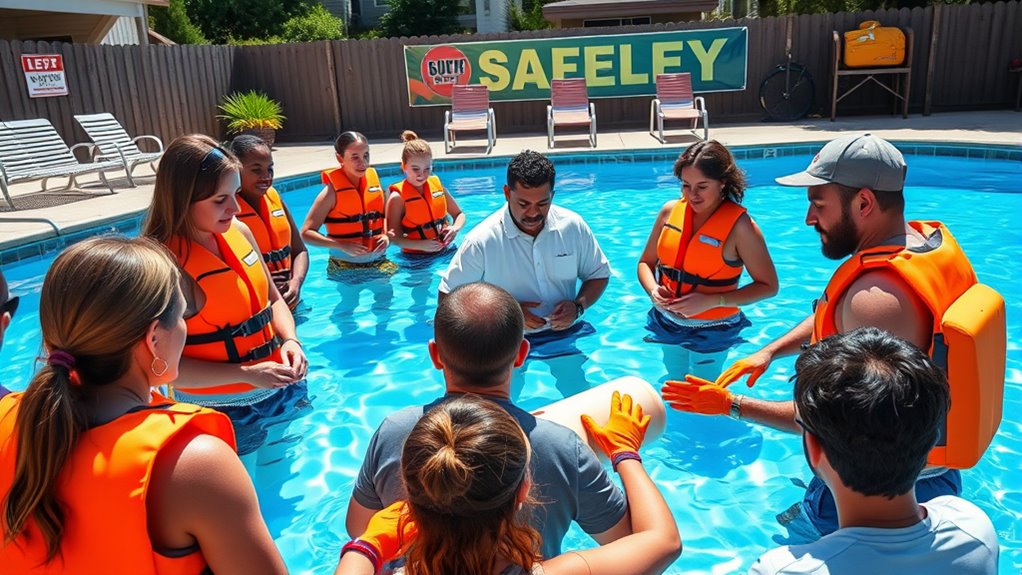
Having emergency response skills is essential for pool owners to guarantee safety in unexpected situations. When accidents happen around your pool, quick and effective action can make all the difference. One way to guarantee you’re prepared is by obtaining a lifeguard certification, which teaches critical skills like rescue techniques, CPR, and first aid. Even if you’re not planning to work as a professional lifeguard, the training you receive can be invaluable in emergencies. It equips you with the confidence and competence needed to handle a variety of situations, from a swimmer struggling to breathe to a sudden injury. Additionally, having proper pool safety equipment on hand is crucial. Items such as life rings, reaching poles, and AED devices should be readily accessible, and knowing how to use them correctly can greatly improve rescue outcomes. Regularly inspecting and maintaining this equipment ensures it’s functional when you need it most.
Your certification training also emphasizes the importance of proactive safety measures. For example, understanding how to set up and use pool safety equipment properly can prevent accidents before they occur. It includes knowing how to recognize potential hazards, such as slippery surfaces or inadequate fencing, and taking steps to eliminate them. By integrating safety protocols into your routine, you create a safer environment for everyone, especially children and inexperienced swimmers. Lifeguard certification courses often cover emergency action plans, which help you stay organized and calm during crises. Having a clear plan in place, combined with the right safety gear, allows you to respond swiftly and effectively, minimizing injuries and potentially saving lives.
Moreover, being trained and certified sends a strong message to family, friends, and visitors that safety is a priority. It encourages everyone to follow safety rules and be prepared to assist if needed. You’ll also gain confidence in your ability to handle unexpected events, reducing panic and confusion during emergencies. Remember, accidents don’t always happen during daylight hours or when supervision is active, so being prepared around the clock is essential. Staying current with your certification and regularly practicing rescue techniques helps maintain your skills over time, ensuring you’re always ready to act. Incorporating knowledge of essential oils for first aid can also provide comfort and support during minor incidents, promoting a calm environment.
pool emergency response training courses
As an affiliate, we earn on qualifying purchases.
As an affiliate, we earn on qualifying purchases.
Frequently Asked Questions
How Often Should Pool Owners Update Their Emergency Response Training?
You should update your pool safety and response protocols at least once every year. Regular refreshers ensure you’re prepared for emergencies, keeping your skills sharp and knowledge current. Changes in safety guidelines or new equipment make periodic training essential. Staying up-to-date helps you respond quickly and effectively, minimizing risks. Make it a habit to review and practice your emergency response training annually to keep your pool safe for everyone.
Are There Online Courses Available for Emergency Response Training?
Think of online courses as your lifeline in a storm; they’re accessible whenever you need them. Yes, you can find online certification programs that cover emergency response training for pool owners. These courses often include virtual simulations, helping you practice real-life scenarios safely from home. With a few clicks, you can sharpen your skills, stay prepared, and respond confidently when it matters most.
What Equipment Should Every Pool Owner Have on Hand for Emergencies?
You should always have essential pool safety gear nearby, like life vests, a reaching pole, and a rescue hook. Keep an emergency preparedness kit stocked with first aid supplies, a waterproof phone, and CPR instructions. These items help you respond quickly in emergencies, ensuring safety for everyone. Regularly check and update your gear, and practice safety drills to stay prepared for any unexpected situations around your pool.
How Can Pool Owners Coordinate With Local Emergency Services?
Think of your safety network as a lifeline woven through community partnerships. You can coordinate with local emergency services by establishing clear communication channels, sharing your emergency plan, and participating in community-led emergency drills. Keep contact info handy, attend local safety meetings, and build relationships with first responders. This proactive approach guarantees that when trouble strikes, your safety team knows exactly how to spring into action, turning chaos into coordinated calm.
What Are Common Mistakes to Avoid During a Pool Emergency?
During a pool emergency, avoid common mistakes like neglecting rescue techniques and safety protocols. Don’t panic or try risky moves that could worsen the situation. Always call for help first, then follow proper rescue procedures, such as reaching with a pole or using a floatation device. Remember, staying calm and adhering to safety protocols helps protect both the victim and yourself, ensuring a more effective rescue.

Aquatic Technology Pool First Aid Kit (25 Person)
This kit is equipped to serve 10 – 25 people
As an affiliate, we earn on qualifying purchases.
As an affiliate, we earn on qualifying purchases.
Conclusion
By brushing up on basic skills and being prepared, you’ll boost your confidence and keep everyone safe. Remember, quick responses can quell crises and prevent tragedy. Practice your pool’s emergency protocols regularly, so you’re always ready to react swiftly. Stay vigilant, stay vigilant, stay vigilant—your vigilance vanquishes vulnerabilities. With proper preparation, you’ll protect your pool, your loved ones, and your peace of mind. Be bold, be prepared, and make safety your top priority!

Altovexis 4-15ft Telescopic Pool Rescue Hook with Pole Fiberglass Telescoping Ring Emergency Life-Saving Rescue Equipment Pool Safety Hook for Swimming, Boat
High-Quality Materials: The heavy-duty pool safety pole is made of sturdy fiberglass, with a rope loop composed of…
As an affiliate, we earn on qualifying purchases.
As an affiliate, we earn on qualifying purchases.

AED Automatic External Defibrillator Portable Emergency Device Suitable for Home Use in Gyms, Subways, and Companies
WARNING-LIQUIDS:Do not submerge or spill liquids on the machine. Do not operate the unit if it may have…
As an affiliate, we earn on qualifying purchases.
As an affiliate, we earn on qualifying purchases.