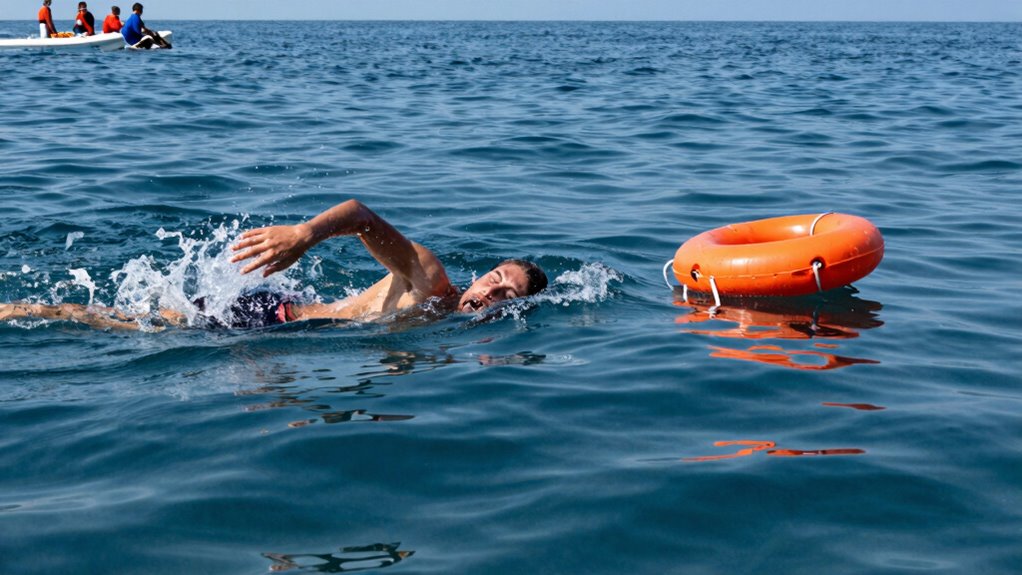

To spot water distress early, watch for silent struggles like minimal movement or treading water with little progress. Look for signs such as a person remaining vertical without swimming, tilting their head back, or making exhausted, irregular movements. Notice if they seem fatigued, gasping silently, or having trouble keeping their head above water. Recognizing these subtle signs quickly can prevent accidents, and if you keep observing, you’ll discover more ways to act effectively.

Get pool and patio gear delivered free with Prime
- Fast, free delivery on millions of items
- Prime Video, Amazon Music and more included
- Member-only deals all year
Key Takeaways
- Look for victims who remain vertical and show minimal, exhausted movements instead of actively swimming.
- Watch for silent, gasping, or irregular breathing patterns indicating early distress.
- Observe if someone appears fatigued or is making little progress while treading water.
- Notice if a person’s head is tilted back with water at mouth level, signaling difficulty staying afloat.
- Recognize subtle signs like minimal movement or fatigue, which often precede full-blown emergencies.

Water distress can often be subtle, but recognizing the signs early can prevent serious issues. When you’re near water, staying alert to these signals is essential for water safety. The first step is understanding that distress isn’t always obvious; victims might not call for help or wave their arms wildly. Instead, they may exhibit quiet struggles, such as treading water with little progress, appearing fatigued, or making exhausted, irregular movements. These are signs that someone is in trouble but hasn’t yet called for help. Your immediate response can make a difference, so it’s important to stay vigilant. Recognizing these early warning signs is crucial for timely intervention.
Knowing how to spot distress helps you act swiftly and effectively. Watch for a person who is vertical in the water but not swimming, with their head tilted back, mouth at water level, or struggling to keep afloat. They may also be silent, gasping for air, or making minimal movements. If someone appears to be in trouble, don’t wait for them to call out; assume they need help. Quick recognition and understanding of water safety principles allow you to mobilize rescue equipment promptly and prioritize water safety. Additionally, understanding the importance of water chemistry can help prevent health issues that might impair a person’s ability to respond in emergencies. Recognizing the signs of fatigue can also be vital, as exhaustion can quickly lead to drowning if not addressed. Being aware of the physical signs of distress can help you identify trouble before it escalates into a crisis. In situations like these, having access to rescue equipment—like reaching poles, life rings, or throw ropes—can be essential. These tools enable you to assist without putting yourself in danger.
Your role in water safety extends beyond spotting distress to knowing how to respond effectively. Once you identify someone in trouble, use rescue equipment properly to minimize risk. For example, throw a ring or rope to them, ensuring you maintain a safe distance to avoid getting pulled under. Avoid entering the water unless you’re trained in rescue techniques, as this can escalate the situation. Instead, remain calm and guide them to the equipment, encouraging them to grab hold. Your awareness and quick action can prevent the situation from escalating into a full-blown emergency.
As an affiliate, we earn on qualifying purchases.
Frequently Asked Questions
Can Water Distress Occur Silently Without Visible Signs?
Water distress can indeed occur silently without visible signs. Silent signs and hidden indicators, like a person struggling beneath the surface or making small, frantic movements, might go unnoticed. You should stay alert for subtle changes in a swimmer’s behavior, such as irregular breathing or difficulty staying afloat. Recognizing these hidden indicators early helps prevent emergencies, so always keep an eye out for any unusual activity, even if it seems minor.
How Long Does It Typically Take for Water Distress to Become Dangerous?
Water distress can become dangerous within minutes, especially if water temperature is low or underwater currents are strong. Cold water can impair your body’s ability to stay afloat, while currents can pull you away from safety quickly. You might not notice signs immediately, so stay alert and act fast. Recognizing early signs of distress allows you to respond before the situation escalates, reducing the risk of a drowning emergency.
Are Certain Weather Conditions More Likely to Cause Water Distress?
Storm impacts and weather patterns definitely increase the likelihood of water distress. Calm days hide dangers, but turbulent weather brings rough seas, strong currents, and reduced visibility, all of which can quickly exhaust swimmers or boaters. You should be especially cautious during storms or heavy rains, as these conditions weaken water safety, making distress more probable. Always check weather forecasts, and avoid water activities during severe weather to stay safe.
What Equipment Can Help Detect Water Distress Early?
You can use water sensors and life jackets equipped with distress signals to detect water trouble early. Water sensors monitor for signs like sudden drops in temperature or unusual movements, alerting you promptly. Life jackets with built-in alarms activate if a swimmer struggles or if someone goes underwater unexpectedly. Combining these tools guarantees you catch distress signals early, providing you with essential time to react before an emergency escalates.
How Can I Differentiate Between Normal Water Movement and Distress Signals?
You can differentiate normal water movement from distress signals by observing underwater currents and surface disturbances. Normal currents tend to be steady and consistent, while distress signals often show abrupt, irregular movements. Look for sudden splashing, erratic swimming patterns, or unusual surface ripples that don’t match typical water flow. If you notice these signs, it’s a clear indication someone might be in trouble and needs help immediately.
As an affiliate, we earn on qualifying purchases.
Conclusion
By staying alert to signs of water distress, you become a vigilant protector rather than a bystander. Just as a calm surface can hide turbulent currents beneath, early warnings often appear subtle—yet missing them can turn a small problem into a life-threatening emergency. Remember, in water safety, the smallest signs can signal the biggest danger. Stay attentive, act quickly, and always prioritize prevention over reaction. Your awareness could be the difference between a rescue and a tragedy.
rescue pole for water emergencies
As an affiliate, we earn on qualifying purchases.
As an affiliate, we earn on qualifying purchases.
As an affiliate, we earn on qualifying purchases.
Fall Picks
fall essentials
As an affiliate, we earn on qualifying purchases.