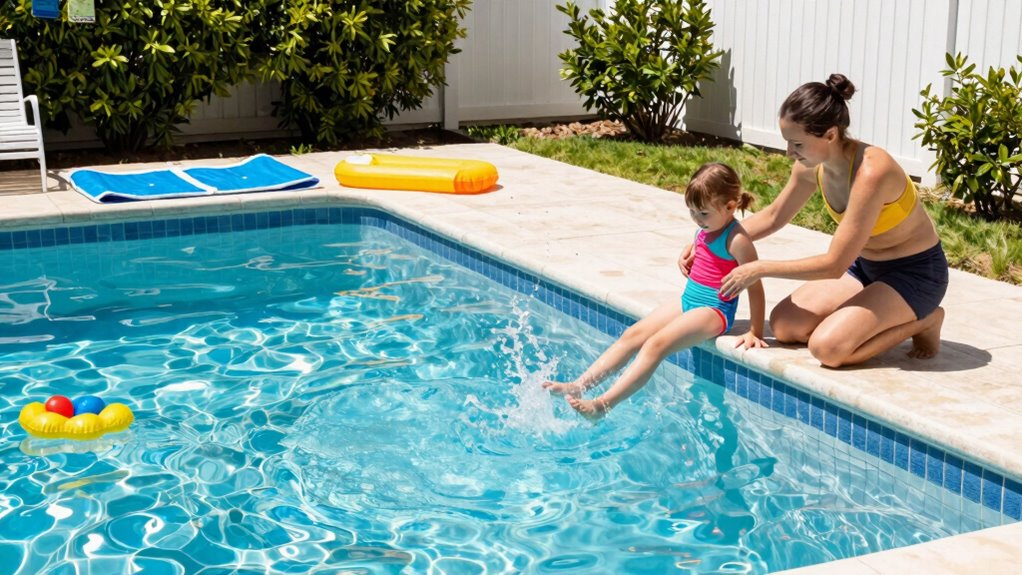

Before kids jump into the pool, you should teach them to respect safety boundaries and understand pool rules. Explain that pool toys are for fun but not safety devices, and they must stay within designated areas with an adult nearby. Teach them to listen to lifeguards, never run or plunge into shallow water, and use safety equipment like life jackets when needed. Consistent rules keep everyone safe—and if you continue, you’ll find more tips to guarantee their fun stays accident-free.

Get pool and patio gear delivered free with Prime
- Fast, free delivery on millions of items
- Prime Video, Amazon Music and more included
- Member-only deals all year
Key Takeaways
- Establish clear boundaries and ensure children understand where they can and cannot go around the pool.
- Teach kids to respect lifeguards and follow their safety instructions at all times.
- Explain basic pool safety rules, including no diving in shallow water and avoiding running around the pool area.
- Encourage staying within designated zones and using appropriate safety devices like life jackets if unsure of swimming abilities.
- Practice emergency procedures and ensure children know how to signal for help and seek adult assistance.
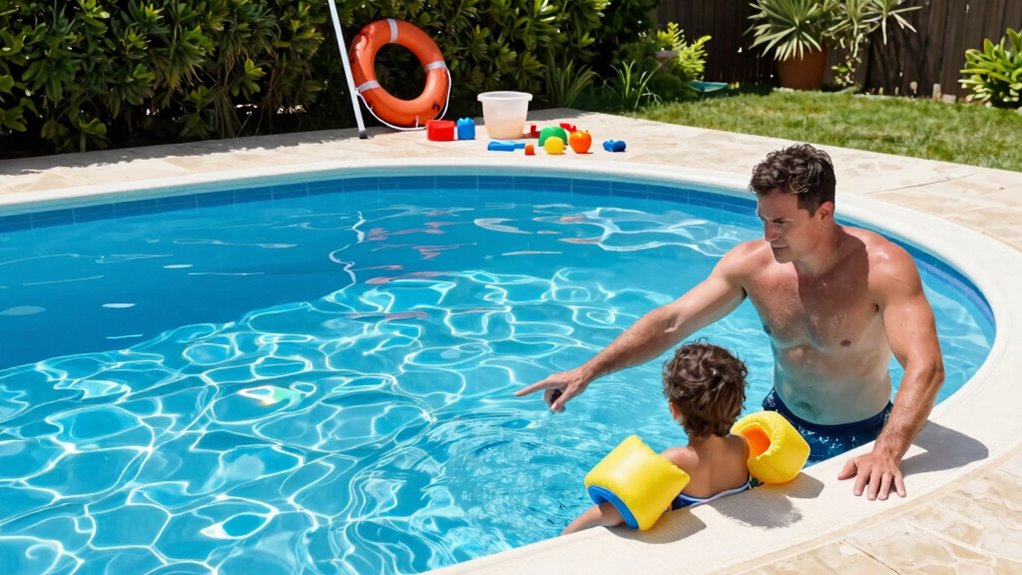
Have you ever wondered how to keep your kids safe around the pool? Teaching them about pool safety is vital before they even splash in. One of the first things you should do is set clear boundaries about where they can and can’t go. Kids often love pool toys, but these can sometimes become hazards if misused. Explain that pool toys are meant for fun, but they shouldn’t be used to reach for objects or as flotation devices unless specifically designed for safety. Remind your children that pool toys aren’t life-saving tools, and they should always stay within your sight when playing with them.
Understanding the roles of a lifeguard is also essential. Even if you’re supervising, it’s important your kids recognize that a lifeguard’s job is to watch over everyone and respond quickly in emergencies. Teach your kids to respect the lifeguard’s authority and to listen if they’re told to stay within certain areas or to stop unsafe behavior. Reinforce that lifeguards are trained professionals who can help in emergencies, but they’re not babysitters. Kids should learn to follow safety rules and to never assume that someone else will rescue them if they get in trouble.
Lifeguards are trained professionals, not babysitters—respect their authority and follow safety instructions at all times.
You should also instruct your children on basic pool safety rules, like never diving in shallow water, not running around the pool area, and always swimming with a buddy. Explain that even strong swimmers can get tired or caught in a current, so they should never assume they’re invincible. Make sure they understand how to signal for help if they’re in distress, like waving their arms or calling out loudly.
Another vital lesson is the importance of staying within designated swimming zones and never venturing into deep water alone. Encourage them to ask for your help or an adult’s assistance if they’re unsure about something. You can also teach them about the importance of wearing life jackets or floatation devices if they’re not confident swimmers, especially near the pool’s edge or in deep water. Additionally, teaching kids about biodiversity and the importance of respecting natural environments can foster a broader awareness of safety and environmental responsibility, even around pools. Knowing how to recognize hazards within and around the pool area can significantly reduce accidents and injuries. Furthermore, practicing safety drills with your kids can help them respond calmly and correctly in emergency situations, boosting their confidence.
Teaching kids the proper use of safety equipment can help prevent accidents and build their confidence in unfamiliar situations.
Finally, emphasizing that understanding and respecting safety equipment is essential for their protection and can make them more confident swimmers. Reinforce that always having an adult present when they’re in or around the pool is non-negotiable. No exceptions. Reinforce that safety is everyone’s responsibility, and their awareness and obedience can prevent accidents. By setting these clear expectations and teaching your kids about pool toys, lifeguard roles, and safety rules, you help guarantee they’ll have fun while staying safe. Your proactive approach encourages responsible behavior, giving everyone peace of mind during pool days.
kids pool safety floatation devices
As an affiliate, we earn on qualifying purchases.
As an affiliate, we earn on qualifying purchases.
Frequently Asked Questions
How Early Should Kids Learn to Swim?
Kids should start learning to swim as early as age 1 or 2, focusing on water comfort and basic swimming techniques. Early exposure helps them feel confident and safe around water. You should introduce simple skills like floating and blowing bubbles, gradually building their swimming techniques. The goal is to make them comfortable and confident, ensuring they develop essential water safety skills before they even try more advanced swimming.
What Safety Gear Is Essential for Young Swimmers?
You need essential swim gear for young swimmers, including a well-fitting life jacket, goggles to protect their eyes, and a swim cap to keep hair away from their face. These items enhance pool safety by preventing accidents and ensuring clear vision. Always supervise children when they’re in or near water, and make sure their gear fits properly to keep them secure and confident in the pool.
How to Handle Pool Emergencies With Kids?
In a pool emergency, stay calm and act swiftly. Use pool rescue techniques to assist your kids without putting yourself at risk, and always call for professional help immediately. Practice emergency preparedness regularly, so your kids know what to do and how to respond. Keep safety gear nearby, and teach them how to signal for help. Your quick, confident actions can make all the difference in keeping everyone safe.
When Should Kids Be Left Unsupervised Near the Pool?
Kids should never be left unsupervised near the pool, regardless of their age or swimming skills. Your parental responsibilities include implementing supervision strategies, like constant eye contact and staying within arm’s reach, especially for younger children. Always remain alert and attentive, as distractions can happen. Remember, active supervision is essential for safety; never assume someone else is watching. Your vigilance helps prevent accidents and keeps kids safe around the water.
How to Teach Kids About Pool Depth and Hazards?
Think of pool depth and hazards as a map your kids need to navigate safely. You teach them to recognize shallow and deep ends, pointing out warning signs and hazards like drains or slippery surfaces. Incorporate lessons from lifeguard training, emphasizing awareness and caution. Keep up with pool maintenance to guarantee safety features are functioning. By actively teaching them, you help your kids become confident swimmers who respect the water’s power.
As an affiliate, we earn on qualifying purchases.
Conclusion
Teaching your kids pool safety before they immerse themselves is essential. Remember, drowning is a leading cause of accidental death in children under five, often happening silently. By setting clear rules, supervising constantly, and teaching them to swim, you reduce risks considerably. Nearly 60% of childhood drownings happen in home pools, highlighting the importance of proactive safety measures. With these lessons, you guarantee your kids enjoy pool time responsibly and safely, creating happy memories without unnecessary danger.
As an affiliate, we earn on qualifying purchases.
pool safety sign and boundary markers
As an affiliate, we earn on qualifying purchases.
As an affiliate, we earn on qualifying purchases.
Fall Picks
fall essentials
As an affiliate, we earn on qualifying purchases.