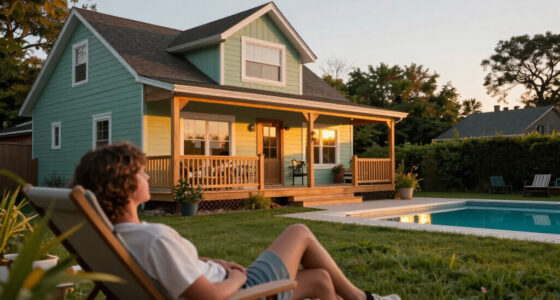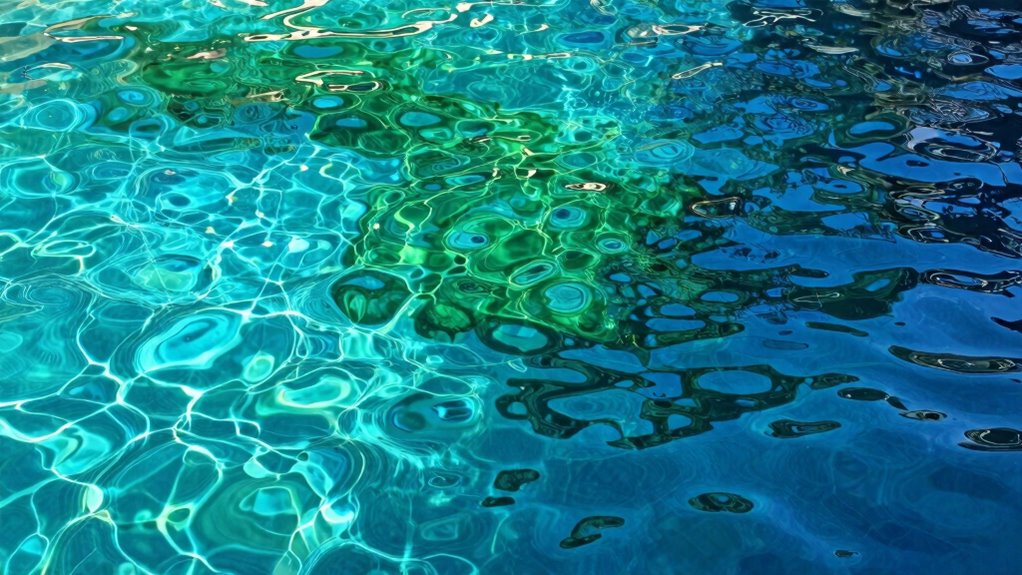
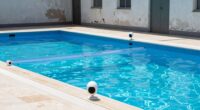
Choosing darker pool surface colors like deep blue or black can make your water feel warmer and create a calm, luxurious vibe. Lighter shades such as white or pastel blue reflect sunlight, helping your pool stay cooler and fostering a cheerful, energetic atmosphere. Surface material also plays a role in how color affects temperature and mood, so selecting the right combination can enhance your pool experience. Keep exploring to discover how your choices influence both comfort and ambiance.
Get ready for Prime Big Deal Days — try Prime free
Exclusive member deals on October 6–7, plus fast free delivery. Cancel anytime.
As an affiliate, we earn on qualifying purchases.
Key Takeaways
- Dark-colored surfaces (deep blue, black) absorb more sunlight, making water feel warmer and creating a calm, luxurious atmosphere.
- Light-colored surfaces (white, pale blue, pastels) reflect sunlight, keeping water cooler and evoking a bright, energetic mood.
- Glossy finishes reflect more light, reducing heat absorption, while matte surfaces absorb more, influencing perceived temperature.
- Surface color influences the overall ambiance, with darker hues fostering relaxation and lighter shades promoting vibrancy.
- Climate and sunlight exposure should guide color choices to optimize water temperature and desired mood.
Have you ever wondered how the color of your pool’s surface can influence its water temperature? It’s more than just aesthetics; it’s about how the surface color interacts with light and heat absorption. The choices you make can affect not only how warm your pool feels but also the mood it creates. Color psychology plays a significant role here—different hues evoke distinct feelings, from relaxation to energy. When selecting your pool surface, consider how these colors will influence your experience.
Pool surface color impacts water temperature and mood through light and heat absorption, shaping relaxation or energy.
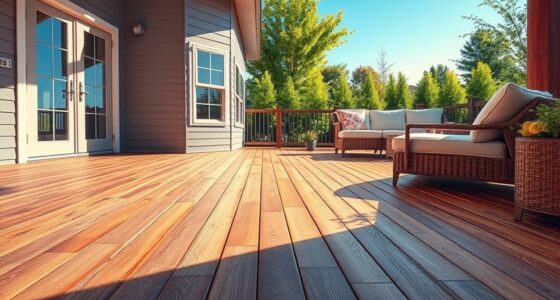
Dark-colored surfaces, such as deep blues or blacks, tend to absorb more sunlight. This means your pool can heat up faster and reach higher temperatures, especially on sunny days. If you’re looking to maximize heat retention, a dark surface material might be your best bet. But remember, the absorption isn’t just about heat; it also impacts the overall mood. Darker hues often evoke a sense of calm, sophistication, and mystery. They can make your pool area appear more intimate and luxurious, encouraging relaxation rather than activity.
On the other hand, lighter-colored surfaces like white, pale blue, or pastel shades reflect more sunlight, which helps keep the water cooler. If you prefer a invigorating, cool feeling when you dip in, lighter shades are ideal. They also lend a clean, bright, and cheerful atmosphere to your pool area, promoting a sense of openness and energy. Light surfaces can make your space feel more inviting and vibrant, perfect for daytime lounging or lively gatherings. Additionally, surface color can influence how much heat your pool absorbs, helping you manage temperature more effectively based on your climate. Selecting the right surface material is essential, as different materials can either amplify or diminish these color effects.
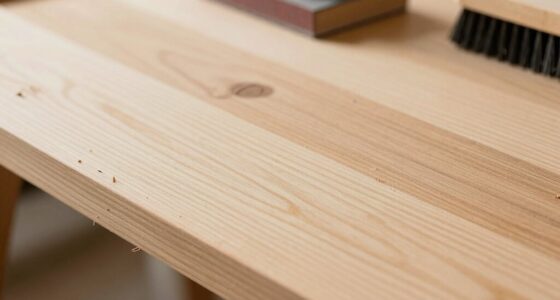
Surface material also influences how colors affect water temperature and mood. Materials like plaster, tiles, or acrylic come in various shades and have different heat absorption properties. For instance, glossy tiles reflect more light, potentially reducing heat absorption compared to matte finishes, which tend to absorb more heat. Choosing a surface material with the right color and finish allows you to fine-tune how your pool interacts with sunlight, offering control over both temperature and ambiance. Additionally, understanding heat absorption properties can help you select the most suitable surface for your climate and preferences.
Ultimately, your choice should align with your lifestyle and aesthetic goals. If you want a warm, relaxing retreat, dark colors combined with heat-absorbing surface materials work well. For a cool, lively vibe, lighter shades and reflective surfaces are better. By understanding how color psychology and surface material influence not only the perceived water temperature but also the mood of your space, you can craft a pool that’s perfectly tailored to your preferences.
As an affiliate, we earn on qualifying purchases.
Frequently Asked Questions
How Do Pool Surface Colors Affect Water Evaporation Rates?
Pool surface colors influence water evaporation rates through surface reflectivity and color absorption. Lighter colors with high reflectivity bounce sunlight away, reducing heat absorption and evaporation. Darker colors absorb more sunlight, increasing surface temperature and boosting evaporation rates. So, if you choose a darker pool surface, expect faster evaporation, especially on sunny days. Conversely, lighter surfaces help keep water cooler and evaporation lower, making your pool more energy-efficient.
Can Surface Color Influence Algae Growth in Pools?
Sure, surface color can influence algae growth, acting like a magnet for certain wavelengths of light. Darker hues, like navy or black, absorb more sunlight, potentially warming the water and encouraging algae, while lighter shades reflect sunlight, making pools less inviting for algae. You should consider pool aesthetics and color psychology when choosing a surface color, as these factors impact not only mood but also the pool’s susceptibility to algae.
Do Specific Colors Reduce the Need for Chemical Treatments?
Certain pool surface colors can help reduce the need for chemical treatments by minimizing algae growth and maintaining clearer water. Light-colored surfaces reflect more sunlight, which can inhibit algae development, leading to improved chemical reduction and enhanced maintenance efficiency. By choosing the right color, you make pool upkeep easier, saving time and chemicals. This simple switch can substantially improve your pool’s overall health and reduce ongoing maintenance costs.
How Does Lighting Interact With Surface Color to Change Mood?
Lighting effects profoundly influence how surface colors impact mood. When you combine soft, warm lighting with light-colored surfaces, it creates a calming, inviting atmosphere perfect for relaxation. Bright, colorful lighting enhances playful or energetic moods, especially with bold surface colors. You can customize your pool’s ambiance by adjusting lighting, which amplifies surface color effects and enhances mood, making your pool a perfect space for both tranquility and lively gatherings.
Are There Eco-Friendly Options for Colored Pool Surfaces?
You’ll find eco-friendly options like eco-friendly dyes and sustainable surfacing that make your pool both beautiful and sustainable. Imagine vibrant blues or calming greens created with natural, non-toxic pigments that don’t harm the environment. These eco-conscious choices reduce chemical use and prioritize durability. By choosing sustainable surfacing, you help protect ecosystems while enjoying a stunning, colorful pool that aligns with your love for nature.
As an affiliate, we earn on qualifying purchases.
Conclusion
Remember, first impressions matter, and the color of your pool surface can set the tone for your entire experience. Lighter shades might make your water feel warmer and more inviting, while darker hues can create a cooler, more calming atmosphere. By choosing the right color, you can influence both the temperature perception and mood of your poolside sanctuary. As the saying goes, “You are what you feel,” so pick a shade that makes every swim a delightful escape.
As an affiliate, we earn on qualifying purchases.
As an affiliate, we earn on qualifying purchases.
NFL season / tailgating Picks
team gear
As an affiliate, we earn on qualifying purchases.