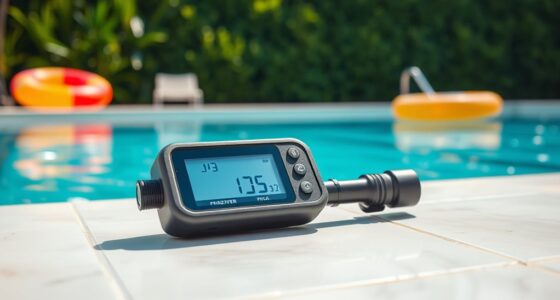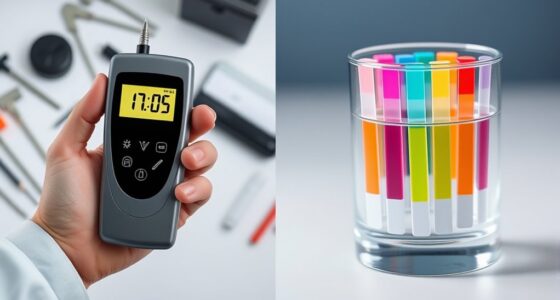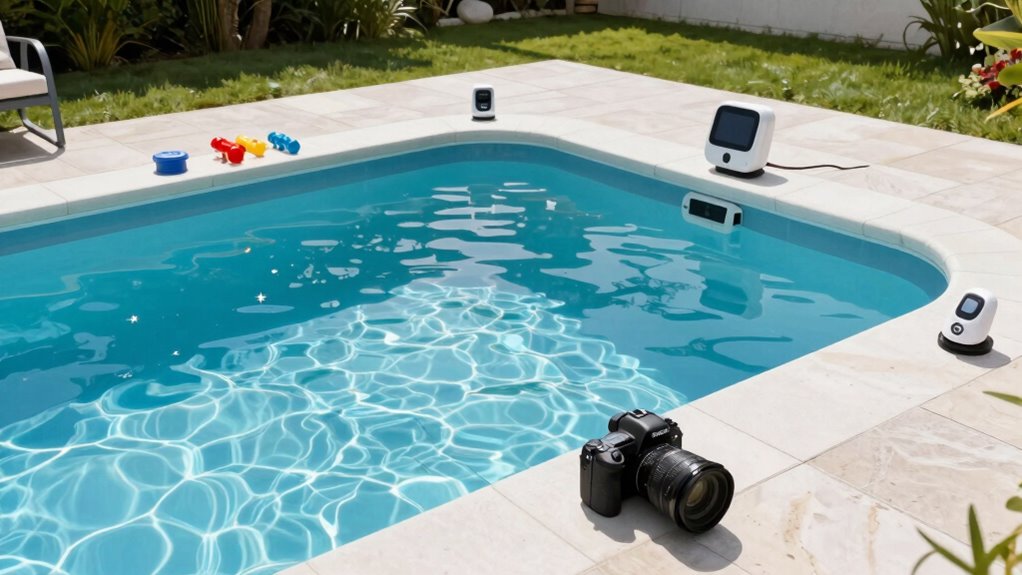

Before problems start, smart pool owners establish baseline numbers for water chemistry like pH, chlorine, alkalinity, and calcium hardness. They also record equipment conditions such as filter performance, pump operation hours, and signs of wear or leaks. Tracking these details helps you detect issues early, maintain safe and clear water, and prevent costly repairs. Staying on top of these baseline numbers sets the stage for smooth pool management—if you want to find out more, keep going.

Get pool and patio gear delivered free with Prime
- Fast, free delivery on millions of items
- Prime Video, Amazon Music and more included
- Member-only deals all year
Key Takeaways
- Record initial chemical levels (pH, chlorine, alkalinity, calcium hardness) to detect future deviations.
- Document equipment conditions, including operating hours, wear, leaks, and noise for early issue detection.
- Establish baseline filter performance and maintenance schedules to identify declines early.
- Track chemical dosing routines and filter cleanings to maintain optimal water quality.
- Maintain detailed records of all readings and equipment status to facilitate troubleshooting and proactive management.
Before problems with your smart pool system arise, it’s crucial to record your baseline numbers. These initial readings serve as your reference point, helping you spot issues early and maintain ideal water quality. When you establish your baseline, focus on key indicators like chemical balance and equipment maintenance. Accurate chemical balance ensures your pool water remains safe, clear, and comfortable. To do this, test your pH, chlorine levels, alkalinity, and calcium hardness regularly. Record these numbers meticulously, noting any fluctuations. If your pH is consistently too high or low, it can lead to scaling or corrosion, damaging your pool and equipment. Similarly, maintaining proper chlorine levels prevents algae growth and bacteria buildup, keeping your water healthy and safe for swimmers.
Alongside chemical readings, pay close attention to your equipment maintenance baseline. Regularly inspect your pool’s filtration system, pumps, and sanitization devices. Record their operating hours, any unusual noises, leaks, or signs of wear. Establishing a maintenance routine based on these baseline observations helps prevent unexpected failures. Well-maintained equipment reduces the likelihood of costly repairs or system breakdowns, especially when your smart pool system detects anomalies early. Keeping track of filter cleanings, pump performance, and chemical dosing schedules ensures your system runs smoothly. Additionally, understanding system diagnostics can help you interpret your smart pool alerts more accurately. Consistently monitoring these aspects allows you to prevent potential issues before they become costly repairs.
By having a clear set of baseline numbers, you create a detailed snapshot of your pool’s health. This snapshot allows you to compare future readings and quickly identify deviations. For example, if your chemical levels drift outside recommended ranges, you can take corrective action before issues escalate. Similarly, if your equipment starts showing signs of strain compared to baseline performance, you’ll know it’s time for maintenance or repairs. Recording these details consistently empowers you to troubleshoot more effectively, saving time and money in the long run. Moreover, establishing a proper testing routine ensures these measurements remain accurate and reliable over time.
Establishing and monitoring your baseline numbers isn’t just about reacting to problems; it’s about proactive management. The more diligent you are in tracking chemical balance and equipment maintenance, the better your chances of preventing costly repairs and ensuring your pool remains pristine. With your smart pool system, you get real-time alerts, but those alerts are most valuable when you understand what’s normal for your setup. By starting with accurate baseline records, you lay the foundation for a preventative approach and a trouble-free, enjoyable swimming experience.
As an affiliate, we earn on qualifying purchases.
Frequently Asked Questions
How Often Should I Update My Baseline Pool Measurements?
You should update your baseline pool measurements weekly, especially if you notice changes in pool chemical levels or water temperature. Regular updates help you catch issues early and maintain ideal water quality. Keep track of fluctuations in chemical balance and temperature shifts, adjusting your treatments accordingly. Consistent monitoring ensures your pool stays safe, clean, and inviting, preventing problems before they escalate.
What Tools Are Best for Recording Baseline Pool Data?
You need the best tools to keep your pool in perfect shape, and that means high-quality digital sensors or smart pool monitors. These devices excel at recording pool chemical balance and water temperature tracking, providing real-time, accurate data. Forget guessing—use reliable tools that track every essential detail automatically, ensuring your pool stays pristine. With these tools, you’ll catch issues early and keep your pool sparkling without constant manual checks.
Can Baseline Numbers Predict Future Pool Problems?
Yes, your baseline numbers can help predict future pool problems. By tracking pool chemical levels and conducting regular equipment inspections, you spot early signs of issues like algae growth or equipment wear. If chemical imbalances or equipment anomalies deviate from your baseline, it signals potential problems ahead. Consistently monitoring these factors allows you to address issues proactively, keeping your pool safe, clean, and functioning smoothly.
How Do Seasonal Changes Affect Baseline Readings?
A stitch in time saves nine, and understanding seasonal changes helps you do just that. You’ll see how temperature fluctuations and shifts in chemical balance impact your pool’s baseline readings. Water temperature can cause chemical levels to vary, making it essential to adjust your readings accordingly. By tracking these seasonal effects, you catch potential issues early, keeping your pool sparkling and balanced all year round.
Should I Record Baseline Data After Pool Maintenance?
Yes, you should record baseline data after pool maintenance. This helps you track how new pool chemicals and changes in water temperature impact your water quality. By doing so, you establish a fresh reference point to monitor future fluctuations. Regularly updating your baseline guarantees you’re aware of any imbalances early, allowing you to make timely adjustments and maintain a safe, clean pool.
As an affiliate, we earn on qualifying purchases.
Conclusion
So, you think recording your baseline numbers is just a tedious chore? Ironically, it’s the one thing that could save you from endless headaches down the line. Before problems start, take a few minutes to note your pool’s normal readings. When issues strike, those records become your best allies. Skipping this step? Well, that’s like ignoring a warning sign and then wondering why your pool’s a mess. Stay vigilant—your future self will thank you.
As an affiliate, we earn on qualifying purchases.
As an affiliate, we earn on qualifying purchases.
Halloween Picks
halloween
As an affiliate, we earn on qualifying purchases.