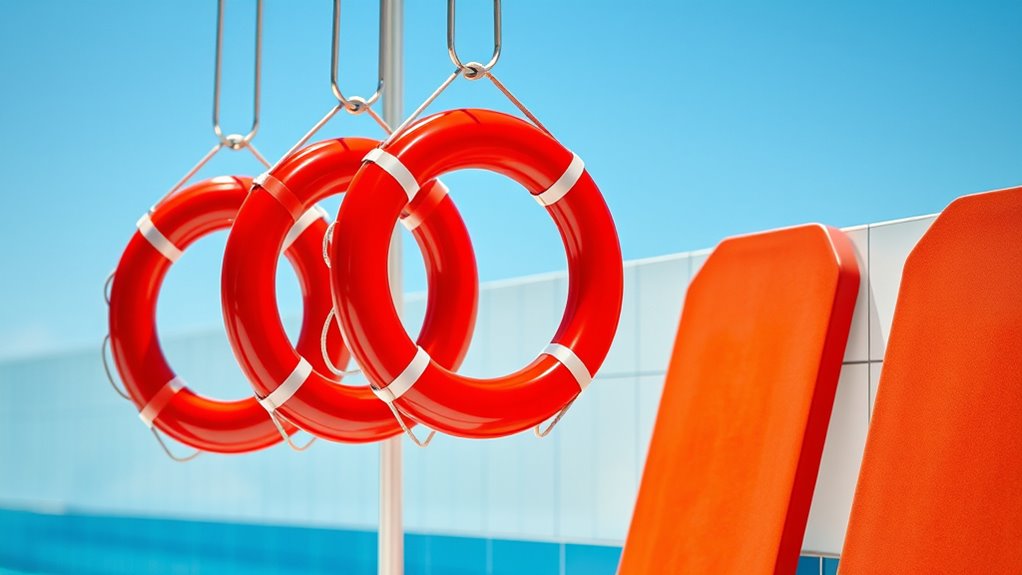

To guarantee safety during emergencies, lifesaving rings, poles, and backboards must meet minimum standards. Your lifesaving rings should be about 24 inches in diameter, brightly colored, and equipped with a strong rope. Rescue poles need to be sturdy, extendable, and resistant to corrosion. Backboards must be rigid, lightweight, with secure straps for immobilization. Regular inspection and proper maintenance are essential for reliability. Continue exploring to discover how to meet and maintain these vital standards effectively.
Key Takeaways
- Lifesaving rings should be at least 24 inches in diameter, brightly colored, with a 1.5-meter rope, and regularly inspected for wear.
- Rescue poles must extend at least 3 meters, be corrosion-resistant, lightweight, and have slip-resistant handles for safety.
- Backboards need to be rigid, lightweight, with secure straps and immobilization devices, stored accessibly and inspected regularly.
- All equipment must be stored in clearly marked, unobstructed areas for rapid deployment during emergencies.
- Regular staff training and maintenance ensure proper use, prolong equipment lifespan, and guarantee readiness.
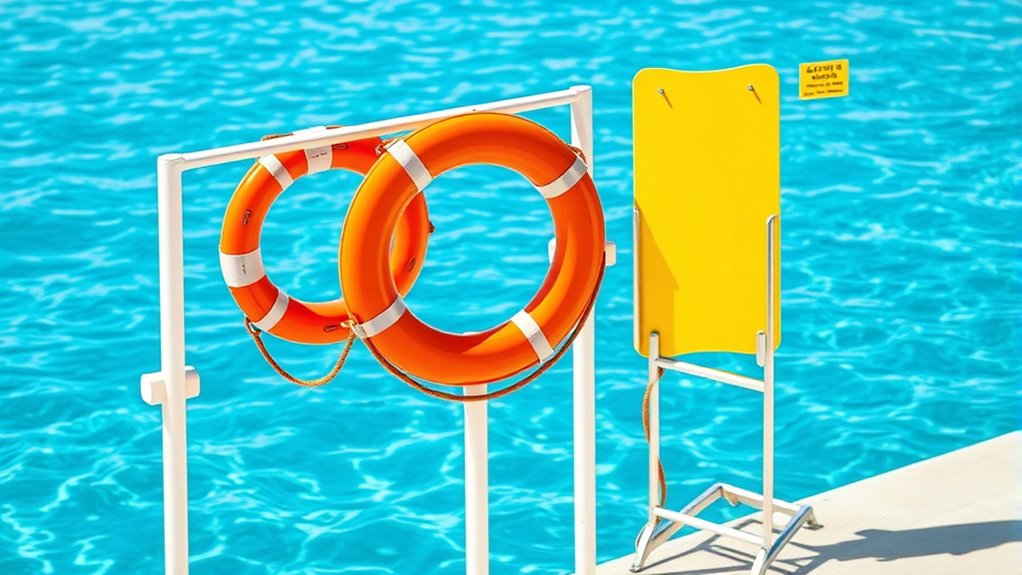
Ensuring safety at aquatic facilities requires strict adherence to minimum standards for lifesaving equipment. As someone responsible for maintaining a safe environment, you must understand the importance of having the right lifesaving tools readily available and properly maintained. Lifesaving rings, poles, and backboards are essential components that can make the difference between a successful rescue and a tragedy. These devices are designed to assist in rescuing individuals in distress quickly and efficiently, but only if they meet established safety standards and are used correctly.
Maintaining lifesaving equipment standards ensures quick, effective rescues and a safer aquatic environment.
Lifesaving rings are typically made from durable, buoyant materials like foam or rubber, guaranteeing they float reliably in water. The minimum standards specify that they should be of a certain size—usually around 24 inches in diameter—to be easily handled and thrown accurately. They must be brightly colored, often red or orange, to enhance visibility from a distance and in poor lighting conditions. The rings should also have a secure, strong rope attached, generally at least 1.5 meters long, so rescuers can pull the victim to safety without risking losing grip. It’s essential to regularly inspect these rings for any signs of wear, tears, or deterioration, replacing them immediately if compromised. Proper storage is equally important; they should be positioned in clearly marked, easily accessible locations near the water’s edge, with no obstructions that could delay deployment during an emergency.
Rescue poles or reaching poles are another indispensable piece of lifesaving equipment. These poles must be sturdy, lightweight, and extendable to reach victims from a safe distance. The minimum standards dictate that rescue poles should be at least 3 meters long but capable of extending further, depending on the facility’s size. The pole’s material should be resistant to corrosion, especially in saltwater environments, and equipped with a grip or handle that prevents slipping when wet. Like lifesaving rings, rescue poles require regular inspection for cracks, corrosion, or damage to guarantee they function properly when needed. Proper training on how to deploy and use rescue poles is essential, as improper use can cause harm or fail to save lives. Additionally, understanding appropriate maintenance practices ensures these tools remain effective over time.
Backboards, used for immobilizing injured individuals, must meet strict standards for safety and durability. They need to be rigid, lightweight, and capable of supporting the weight of an adult. The minimum requirements specify that backboards should have secure straps and head immobilization devices to prevent further injury during transport. They must be stored in readily accessible locations, with staff trained in their correct application. Regular inspection is indispensable to identify cracks, warping, or broken straps that could compromise their effectiveness. Ensuring all lifesaving equipment is compliant with the standards, well-maintained, and properly used is your responsibility, and it substantially enhances the safety of everyone at your aquatic facility.

Pool Buoy Safety Boat Throw Ring Life with Water Floating Lifesaving Rope and Reflective Tape Orange 14"/22"
- Durable, Tear-Resistant Material: High-density polyethylene with polyurethane foam
- Extreme Weather Resistance: Suitable for all ships and docks
- Enhanced Safety Rope: Water floating lifesaving rope included
As an affiliate, we earn on qualifying purchases.
As an affiliate, we earn on qualifying purchases.
Frequently Asked Questions
How Often Should Lifesaving Equipment Be Inspected?
You should inspect lifesaving equipment daily before opening the facility or starting your shift. Regular inspections guarantee the equipment is in good condition, accessible, and ready for use in emergencies. Look for signs of damage, wear, or deterioration, and replace or repair any faulty items immediately. Keeping to a strict inspection schedule helps maintain safety standards, ensuring that lifesaving devices are always reliable when needed most.
Are There Different Standards for Indoor and Outdoor Use?
Yes, there are different standards for indoor and outdoor use. Studies show outdoor environments face 30% more wear and tear due to weather. You should guarantee equipment is rated for its specific setting to maintain safety. Outdoor gear needs corrosion-resistant features, while indoor equipment should meet standards for humidity and temperature. Always check manufacturer guidelines to ensure compliance and safety, so your rescue tools work effectively when needed most.
What Training Is Required to Properly Use Lifesaving Equipment?
You need to complete certified training that covers proper techniques for using lifesaving equipment. This includes hands-on practice in scenarios like rescuing a swimmer, deploying rings, and using backboards correctly. The training emphasizes safety protocols, communication, and maintenance of the equipment. By participating in these courses, you guarantee you’re prepared to respond effectively, minimizing risks and maximizing rescue success when emergencies happen.
How Should Equipment Be Stored for Quick Access?
Did you know that quick access to lifesaving equipment can reduce response time by up to 30%? You should store equipment in clearly marked, easily reachable locations near the water or high-traffic areas. Keep it organized, regularly check for damage, and make certain it’s free from clutter. Use designated storage containers if possible, and train staff to retrieve the equipment swiftly during emergencies. Proper storage saves precious seconds when every second counts.
What Maintenance Is Necessary to Ensure Equipment Safety?
You should regularly inspect your lifesaving equipment for signs of wear, damage, or corrosion. Clean it with appropriate solutions and guarantee all parts are functioning properly. Replace any damaged or expired items immediately. Keep records of inspections and maintenance schedules. Test equipment periodically to confirm it operates correctly when needed. Proper storage in a dry, accessible location helps prevent deterioration and ensures quick, reliable access during emergencies.

3M DBI-SALA Rescue Pole 8900299, Black, Compact, Lightweight Aluminum Construction Built for Fast and Efficient Rescue
- Purpose: Assisted rescue of fallen workers
- Material: Lightweight aluminum construction
- Design: Compact and portable
As an affiliate, we earn on qualifying purchases.
As an affiliate, we earn on qualifying purchases.
Conclusion
By ensuring you have the right lifesaving rings, poles, and backboards, you create a safety net that can catch someone falling into danger. Picture yourself standing at the water’s edge, knowing each piece of equipment is ready—bright rings shining in the sun, sturdy poles standing tall, and backboards prepared for swift rescue. When moments matter most, these standards become your shield, turning potential chaos into calm, life-saving certainty.

EMS XTRM Spine Board Stretcher Backboard for Patient – EMT Backboard Immobilization Portable Patient Transport Rescue Lightweight PE Plastics Ambulance Stretcher Gurney, Orange
- Efficient Patient Handling: Streamlines transfer and immobilization
- Safety-Centric Design: Smooth surface, x-ray translucent for safety
- Durable and Lightweight: Supports up to 700 lbs, easy to clean
As an affiliate, we earn on qualifying purchases.
As an affiliate, we earn on qualifying purchases.

Nautilus LifeLine Marine Rescue GPS nexGen
- Distress Alert for Emergencies: Notifies in emergencies and non-emergencies
- Global Compatibility: Works worldwide with some regional variations
- High GPS Accuracy: Position accurate to 1 meter
As an affiliate, we earn on qualifying purchases.
As an affiliate, we earn on qualifying purchases.