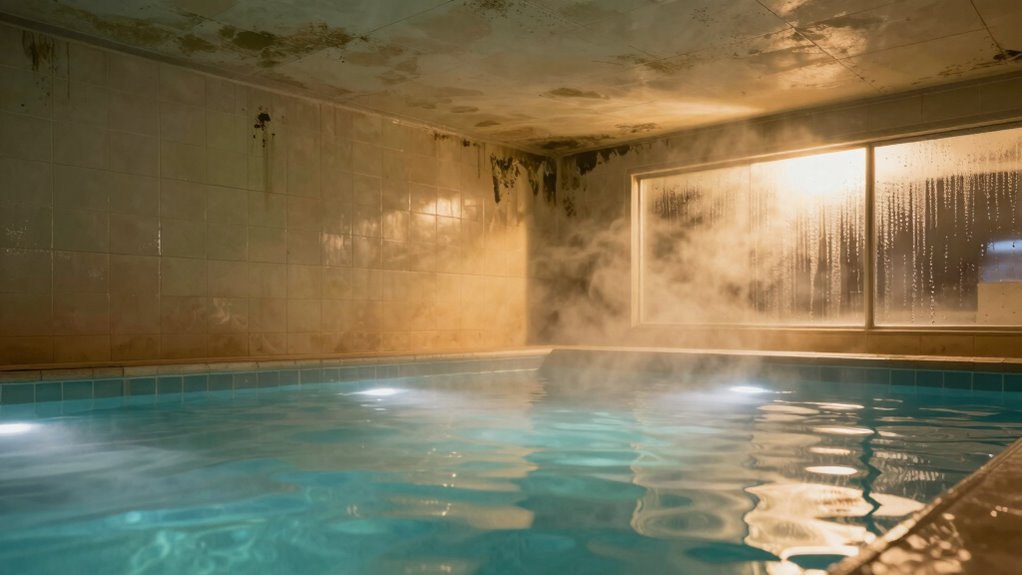
If you have an indoor pool, warm water and high humidity can turn into a mold nightmare. Warm, moist air combined with poor ventilation creates the perfect environment for mold to grow unnoticed on surfaces and behind fixtures. Stagnant water and uneven chemical distribution also promote mold development. To prevent this, controlling temperature and humidity levels, ensuring proper ventilation, and using quality equipment are essential. Keep going to find out how to keep your pool mold-free and safe.
Prime for Young Adults — start your free trial
Fast free delivery, streaming and member deals for eligible 18–24 year olds.
As an affiliate, we earn on qualifying purchases.
Key Takeaways
- Warm water increases indoor humidity, creating a moist environment conducive to mold growth.
- Heated surfaces cause condensation, leading to damp areas where mold spores can thrive.
- Elevated humidity levels from warm water reduce airflow and ventilation, trapping moisture indoors.
- Consistent warm water raises surface temperatures, attracting mold spores for colonization.
- Poor ventilation combined with high humidity from heated pools intensifies mold development risks.
As an affiliate, we earn on qualifying purchases.
Why Indoor Pools Are Prone to Mold
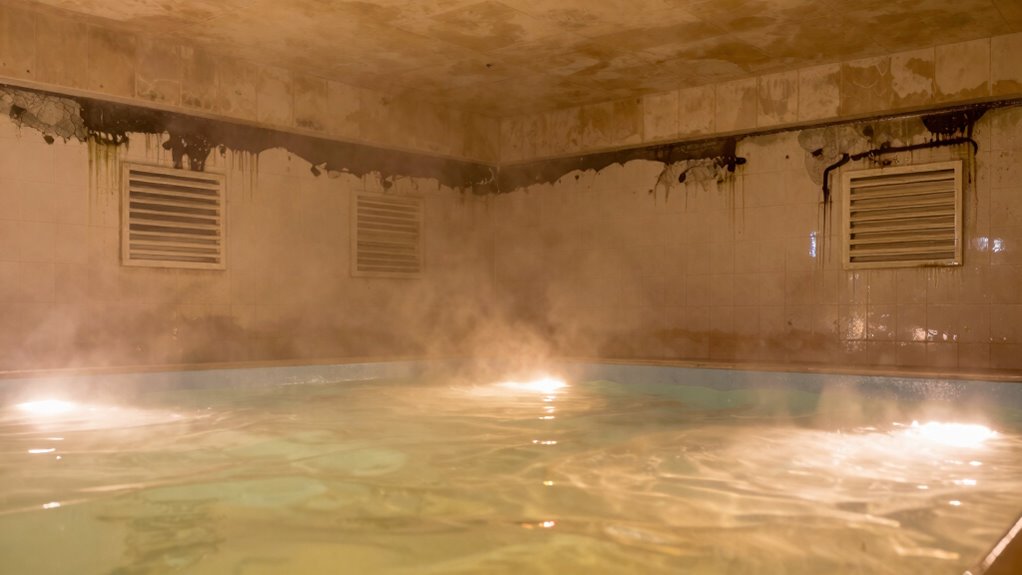
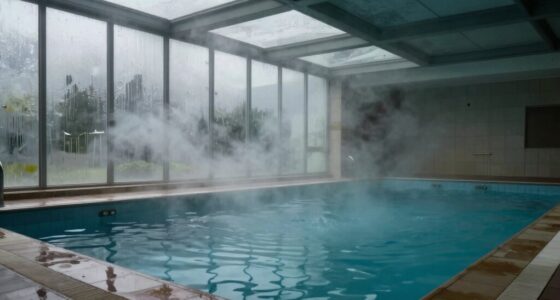
Indoor pools are especially prone to mold growth because the combination of warm, moist air and limited ventilation creates the perfect environment for mold spores to thrive. If you don’t maintain proper water circulation, stagnant water can become a breeding ground for mold. Using the right pool chemicals helps control organic matter and bacteria, reducing mold’s chances to grow. Without adequate circulation, chlorinated water can’t evenly distribute disinfectants, allowing mold spores to settle and multiply on surfaces. Additionally, chemical balance plays a crucial role in maintaining a healthy pool environment, as imbalances can contribute to mold development. Poorly balanced chemicals and low water movement create ideal conditions for mold to flourish, especially on walls, tiles, and around the waterline. Maintaining proper water circulation is essential for preventing mold buildup because it ensures even chemical distribution and prevents stagnation. Implementing proper ventilation can further reduce humidity levels and inhibit mold growth, especially in enclosed indoor pool areas. Regular maintenance, including proper chemical application and ensuring consistent water flow, is essential to prevent mold from taking hold in your indoor pool. Ensuring proper humidity control can significantly reduce the risk of mold thriving in indoor pool environments.
As an affiliate, we earn on qualifying purchases.
How Warm Water and Humidity Encourage Mold Growth
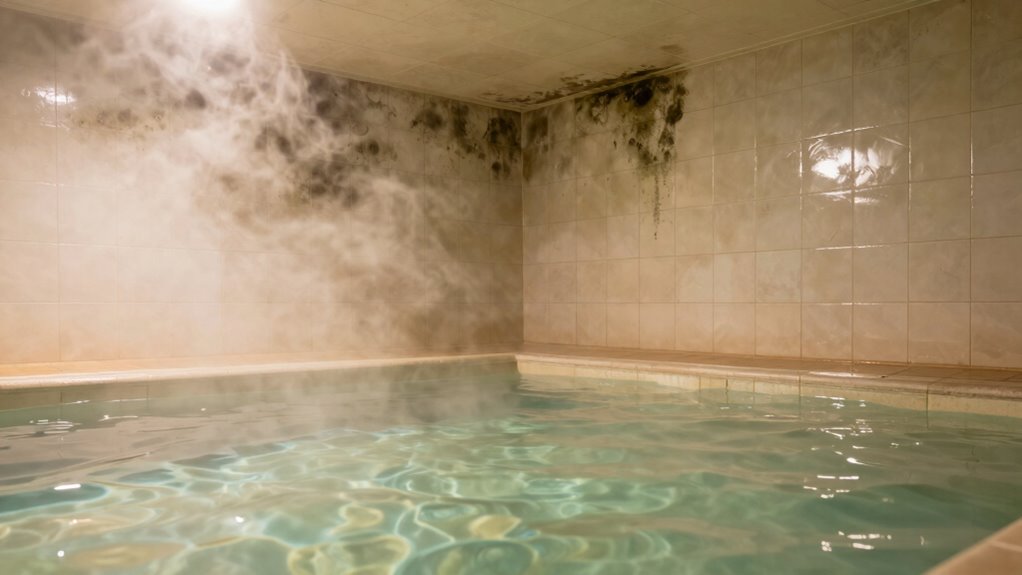
When your indoor pool produces high moisture levels, it creates the perfect environment for mold to thrive. Warm surfaces attract mold spores, especially when ventilation isn’t enough to remove excess humidity. Poor airflow allows moisture to linger, increasing the risk of mold growth around your pool area. Implementing effective home soundproofing strategies can also improve ventilation and reduce humidity buildup. Additionally, using smart yard care devices like automated dehumidifiers can help maintain optimal moisture levels indoors. Proper indoor environment management is essential for preventing mold development, especially in humid conditions. Ensuring proper DIY tools are used safely during installation can also prevent issues that contribute to excess moisture and mold growth. Recognizing early signs of mold can prevent costly repairs and safeguard your health.
Elevated Moisture Levels
Warm water from your indoor pool increases humidity levels, creating an environment where mold can thrive. Elevated moisture makes the air humid, promoting condensation build-up on walls, ceilings, and fixtures. This constant presence of humid air fosters mold spores to settle and grow. To better understand this, consider:
- The persistent humidity raises surface moisture, providing ideal conditions for mold colonies.
- Condensation build-up on cooler surfaces traps moisture, encouraging mold development.
- Increased humidity hampers drying, prolonging dampness and mold risk.
- Stagnant humid air limits airflow, reducing evaporation and maintaining a moist environment.
- Proper ventilation and humidity control are essential to prevent mold growth and protect indoor air quality.
- Implementing humidity management strategies can significantly reduce the likelihood of mold proliferation in indoor pool areas.
- Indoor humidity levels directly impact the extent and speed of mold formation, emphasizing the importance of moisture regulation.
- Regular monitoring of air quality sensors can help detect rising humidity before mold becomes a problem.
Together, these factors create a perfect storm for mold proliferation, making it essential to control indoor humidity levels when heating your pool.
Warm Surface Temptations
As warm water surfaces radiate heat, they create inviting spots for mold to settle and grow. When thermal regulation isn’t properly managed, these surfaces remain consistently warm, fostering an ideal environment for mold spores. Surface cooling, which occurs when water or air temperature drops slightly, can cause condensation, further increasing moisture levels. This condensation provides the damp conditions mold loves, especially on tiles, pool edges, and surrounding walls. You might notice that areas near heated surfaces feel damp or sticky, making them prime real estate for mold development. By understanding how warm surfaces tempt mold, you can take steps to control temperature fluctuations and minimize surface cooling, reducing the risk of mold taking hold in your indoor pool space. Proper ventilation can help dissipate excess moisture and prevent mold growth in these environments. Additionally, maintaining consistent temperature control is essential to prevent fluctuations that encourage condensation and mold proliferation. Implementing humidity regulation strategies can further decrease mold risks by keeping moisture levels in check. In addition, selecting appropriate air quality considerations can aid in creating an environment less conducive to mold growth.
Poor Ventilation Effects
Poor ventilation allows heat and moisture from your indoor pool to linger, creating an ideal environment for mold growth. Without proper air circulation, humidity levels rise, and moisture becomes trapped in corners and behind fixtures. Effective moisture control relies on good ventilation to prevent mold spores from settling and spreading. Additionally, inadequate cabling and installation of ventilation systems can lead to cabling failures that compromise airflow and humidity regulation. Consider these factors: 1. Insufficient air exchange leads to stagnant, humid air that promotes mold development. 2. Poor air circulation prevents moisture from dissipating, increasing surface dampness. 3. Lack of ventilation reduces the removal of airborne mold spores, elevating health risks. 4. Enhanced moisture control and proper ventilation are essential to inhibit mold growth and maintain a healthy indoor environment.
automatic pool chemical dispenser
As an affiliate, we earn on qualifying purchases.
As an affiliate, we earn on qualifying purchases.
Detecting Signs of Mold in Your Indoor Pool Area
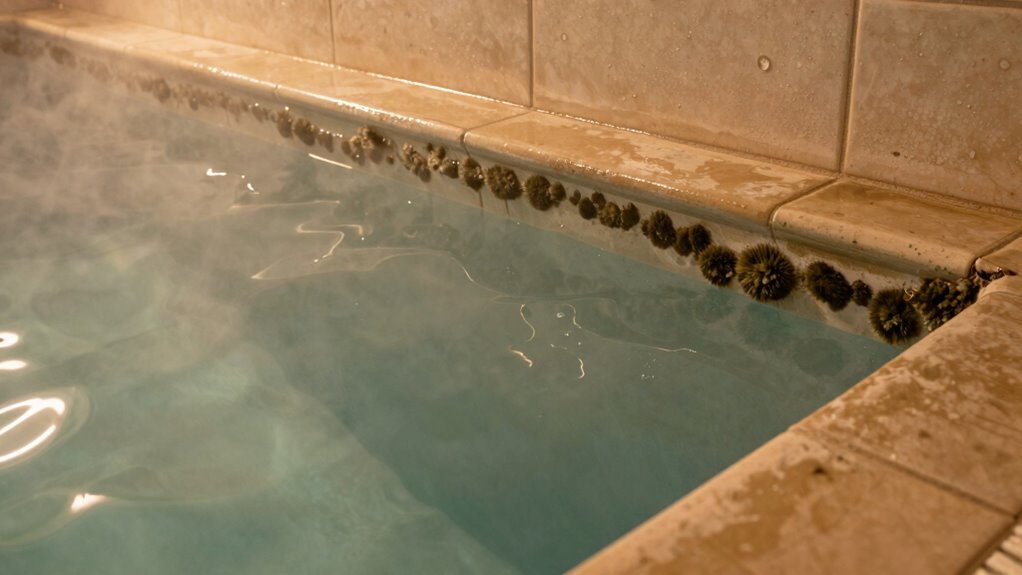
You should regularly check for signs of mold around your indoor pool area. Look for visible mold growth, persistent musty odors, and damp spots on walls or ceilings. Catching these early helps prevent health issues and costly repairs.
Visible Mold Growth
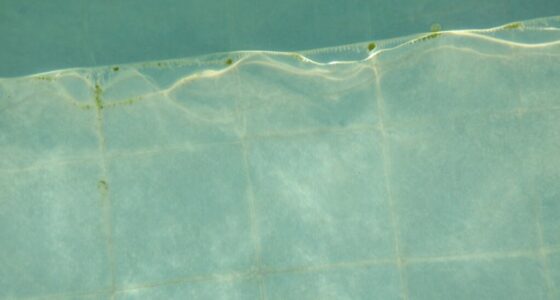
Visible mold growth is one of the most straightforward signs that your indoor pool area may have humidity or ventilation issues. When mold appears, you might notice often overlooked clues like algae blooms or declining water clarity, which signal underlying moisture problems. To identify mold, look for:
- Discolored patches on walls, ceilings, or around the pool’s perimeter.
- Black, green, or brown spots that resemble fuzzy or slimy textures.
- Visible mold colonies growing in hidden corners or ventilation ducts.
- A persistent musty odor that won’t dissipate, often accompanying mold presence.
Pay attention to changes in water clarity, as murky water can indicate algae blooms fostering mold growth. Spotting these signs early helps prevent mold from spreading and escalating into a costly problem.
Persistent Musty Odors
A persistent musty odor is often one of the earliest and most noticeable signs that mold may be lurking in your indoor pool area. This smell indicates poor air quality caused by mold spores releasing into the air. If you notice a constant, damp scent even after cleaning, it’s time to evaluate your cleaning routines. Inadequate or infrequent cleaning can allow mold to develop unnoticed behind walls or under surfaces, contributing to the odor. Improving your cleaning routines, especially focusing on humid zones and ventilation, helps reduce mold spores and freshen the air. Addressing odors early prevents mold from spreading further, protecting your health and maintaining a pleasant pool environment. Regular cleaning and proper ventilation are essential for controlling musty smells and preserving air quality.
Damp Wall Surfaces
Damp wall surfaces around your indoor pool are a common sign that mold may be taking hold. Elevated wall moisture can indicate persistent issues with moisture insulation or inadequate ventilation, allowing mold spores to thrive. To detect early mold growth, look for:
- Visible water stains or discoloration on the walls
- Peeling or bubbling paint and wallpaper
- A musty odor that lingers despite cleaning
- Mold patches or black spots on wall surfaces
Addressing wall moisture is essential; it often signals underlying problems with insulation or humidity control. Regularly inspect these damp areas, as unchecked wall moisture can lead to mold spreading, damaging your walls and compromising indoor air quality. Prompt detection helps prevent costly repairs and health risks.
As an affiliate, we earn on qualifying purchases.
Tips to Control Pool Temperature and Humidity
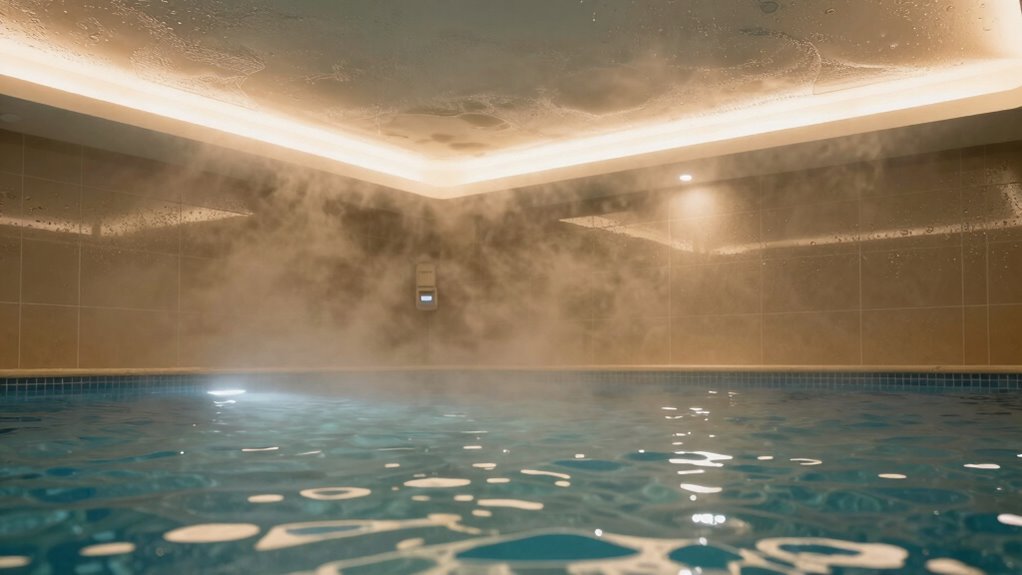
Controlling the temperature and humidity of your indoor pool is essential for comfort and safety. To do this effectively, focus on maintaining proper pool insulation, which prevents heat loss and reduces humidity buildup. Regularly check and adjust the chemical balance to avoid excessive evaporation that can increase moisture levels. Using a reliable thermostat helps keep water at a consistent, comfortable temperature. Additionally, monitor ambient humidity and temperature with a hygrometer and thermometer. Here’s a quick guide:
| Tip | Why it helps | How to implement |
|---|---|---|
| Improve pool insulation | Reduces heat loss and moisture | Add insulation around pool |
| Maintain chemical balance | Limits evaporation and mold | Regular testing and adjustment |
| Use a thermostat | Keeps water at desired temp | Set and monitor temperature |
| Control ambient humidity | Prevents mold growth | Use dehumidifiers and ventilation |
How Ventilation and Dehumidifiers Prevent Mold
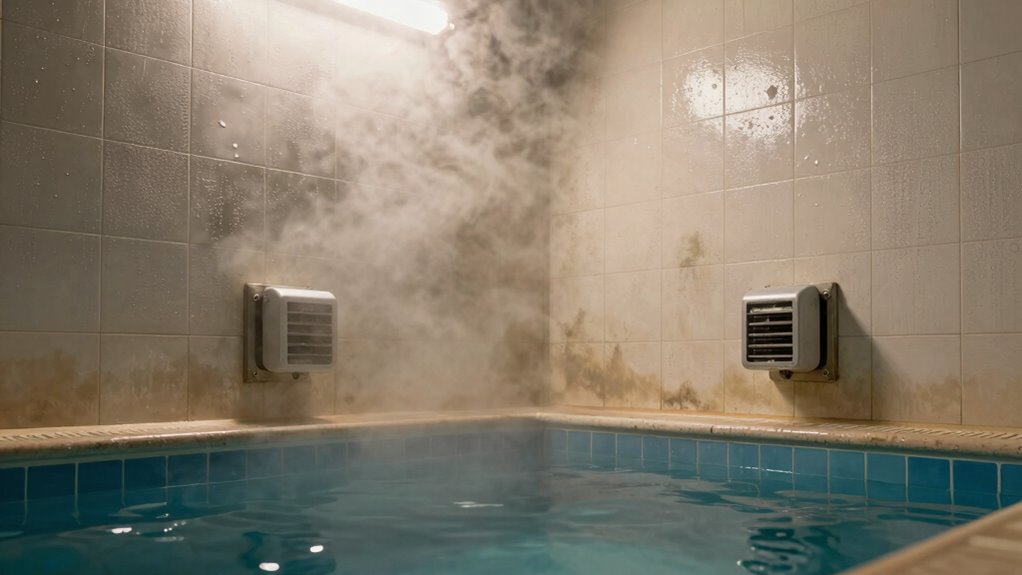
Proper ventilation and dehumidifiers are essential tools for preventing mold growth in your indoor pool area. They improve air circulation, reducing moisture buildup that fosters mold. Air filtration systems remove airborne spores and contaminants, keeping the environment healthier. To maximize their effectiveness, consider these key steps:
- Ensure continuous air circulation with properly placed vents and fans.
- Use high-quality dehumidifiers to maintain ideal humidity levels between 50-60%.
- Regularly clean and replace air filters to improve air filtration efficiency.
- Seal leaks and insulation gaps to prevent excess moisture infiltration.
Together, these measures help control humidity and remove mold spores from the air, creating a safer, mold-free environment around your indoor pool.
Choosing Equipment to Keep Your Indoor Pool Mold-Free

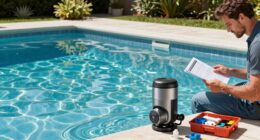
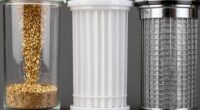
Selecting the right equipment is essential for maintaining a mold-free indoor pool environment. To prevent mold growth, invest in effective water filtration systems that remove debris and contaminants, reducing nutrient buildup that mold thrives on. UV sanitation is also crucial; installing UV sterilizers can kill bacteria and mold spores directly in the water, ensuring safer, cleaner water. Combine these with proper circulation to prevent stagnant areas where mold can develop. Regular maintenance of your filtration and UV systems is vital to keep them functioning optimally. By choosing high-quality filtration and UV sanitation equipment, you actively reduce mold risk and promote a healthier indoor pool space. This proactive approach helps you enjoy your pool without worrying about mold problems.
Frequently Asked Questions
How Often Should I Inspect My Indoor Pool Area for Mold?
You should inspect your indoor pool area weekly for mold. Regular checks help you spot issues early, especially if you maintain proper ventilation strategies and monitor moisture levels consistently. Look for visible mold, musty odors, or condensation buildup. By staying vigilant and addressing any humidity or ventilation problems promptly, you prevent mold from spreading and keep your pool area safe and healthy for everyone.
Can Mold in an Indoor Pool Affect Air Quality?
Mold in your indoor pool can seriously harm your air quality, spreading airborne spores that fill the room like an invisible fog. This mold proliferation not only causes musty odors but also triggers allergies and respiratory issues. You might not see it, but it’s there, lurking in hidden corners. Regular inspections and proper ventilation are vital to prevent mold from becoming a silent, yet dangerous, threat to your breathing space.
Are There Specific Cleaning Products That Prevent Mold Growth?
Yes, you can prevent mold growth with the right cleaning products. Use mold resistant cleaners and eco friendly disinfectants regularly to keep surfaces dry and inhibit mold spores. These products help maintain a healthy environment by reducing mold buildup, especially in humid indoor pool areas. Make sure to follow the manufacturer’s instructions for best results, and combine cleaning with proper ventilation to keep mold at bay.
What Are the Health Risks Associated With Indoor Mold Exposure?
Exposure to indoor mold can lead to mold-related illnesses, which may cause respiratory issues like coughing, wheezing, and asthma attacks. If you’re sensitive or have allergies, mold exposure can worsen your respiratory health, leading to persistent symptoms. Prolonged exposure increases the risk of infections and other health problems. It’s essential to control humidity and clean regularly to minimize mold growth and protect your respiratory health from these potential dangers.
How Does Seasonal Weather Change Impact Indoor Pool Mold Risks?
Seasonal moisture and temperature fluctuations greatly influence your indoor pool’s mold risk. When seasons change, increased humidity from seasonal moisture can create a damp environment, promoting mold growth. Temperature fluctuations can cause condensation on surfaces, further fueling mold development. You should regularly monitor humidity levels, guarantee proper ventilation, and maintain consistent temperature control to minimize mold risks during seasonal transitions, keeping your indoor pool safe and mold-free.
Conclusion
So, go ahead, keep that pool warm and cozy—who needs mold, right? Just ignore the musty smell and the slick, greenish patches; it’s all part of the charm. Remember, a little mold never hurt anyone… until it does. Stay vigilant, control your humidity, and give your indoor paradise the maintenance it deserves. Otherwise, you’ll be swimming in more than just water—welcome to the mold nightmare!
Fall yard work Picks
leaf blowers
As an affiliate, we earn on qualifying purchases.