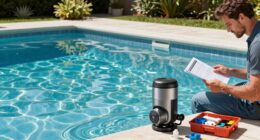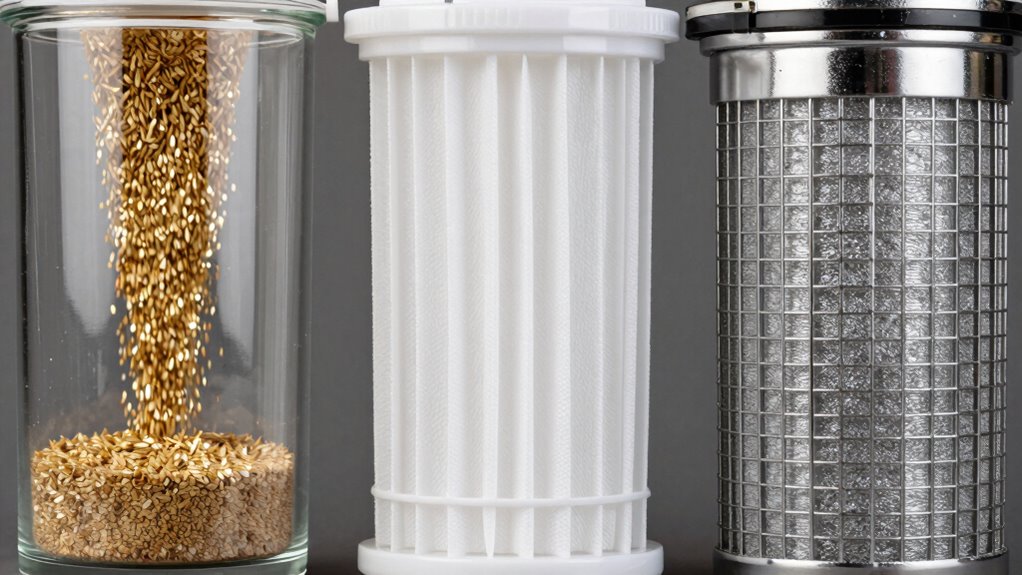

When choosing between sand, cartridge, and DE filters, consider your budget, maintenance preferences, and water quality needs. Sand filters are affordable and low-maintenance but don’t trap fine particles well. Cartridges are easy to clean and offer better clarity, while DE filters provide the highest filtration efficiency for crystal-clear water but require more upkeep. To make the best choice for your pool, understanding their differences will guide you toward the right option. Keep exploring to see which filter suits your pool perfectly.
Prime for Young Adults — start your free trial
Fast free delivery, streaming and member deals for eligible 18–24 year olds.
As an affiliate, we earn on qualifying purchases.
Key Takeaways
- Sand filters are cost-effective and low-maintenance, suitable for larger pools but less effective at capturing fine particles.
- Cartridge filters offer easy cleaning, good filtration (5-10 microns), and are ideal for smaller pools or casual use.
- DE filters provide the highest filtration efficiency (1-3 microns) for crystal-clear water but require more diligent maintenance.
- Long-term costs favor sand filters due to less frequent media replacement, while cartridge filters are cheaper to maintain.
- Choose based on budget, water quality needs, pool size, and maintenance effort preferences.
As an affiliate, we earn on qualifying purchases.
Pool Filter Types Explained: Sand, Cartridge, and DE
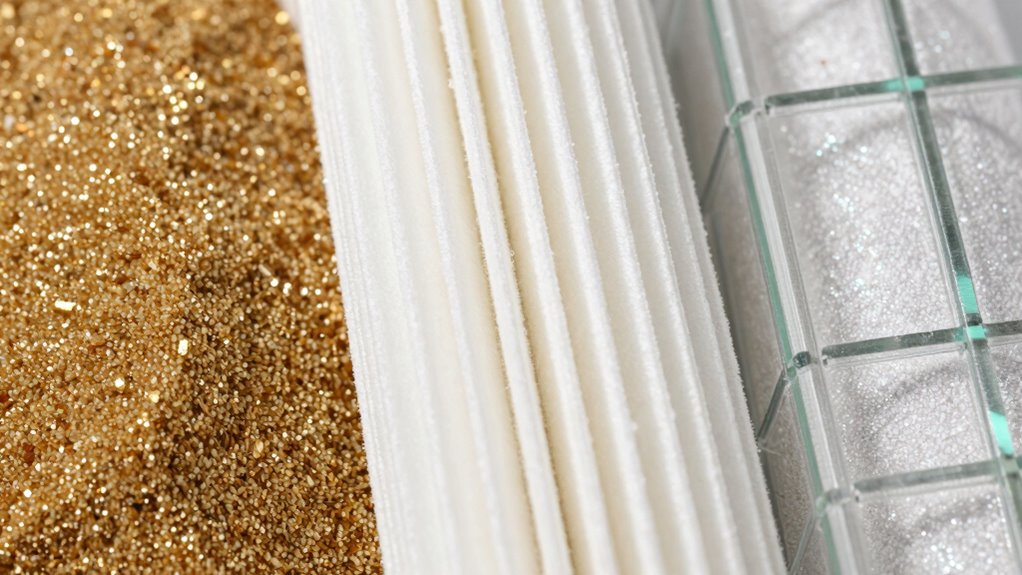
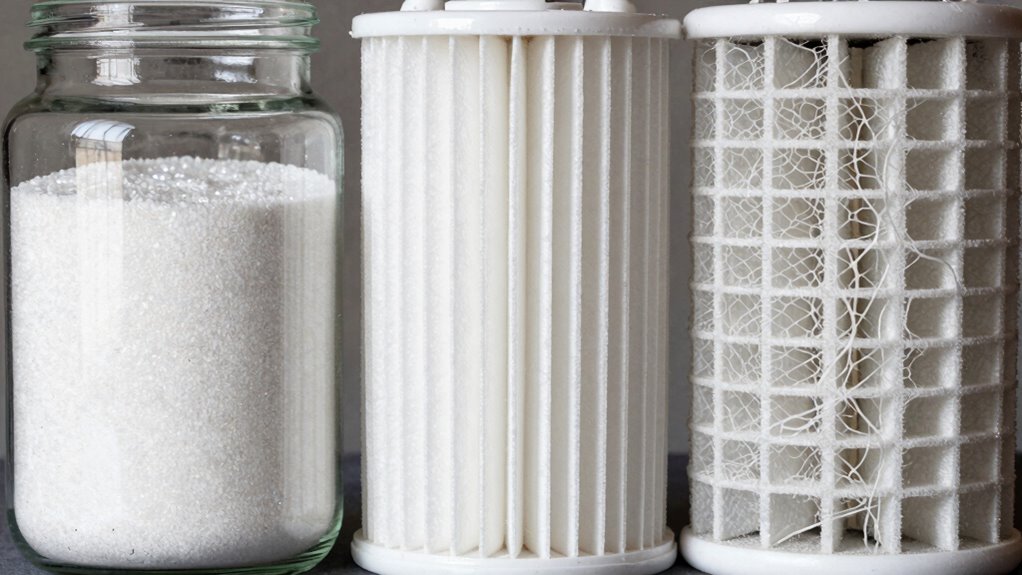
When it comes to keeping your pool clean, understanding the different filter types is essential. The filter media comparison helps you decide among sand, cartridge, and DE filters based on their cleaning efficiency and ease of maintenance. Sand filters are popular for their affordability and low maintenance, but they may require more frequent backwashing. Cartridge filters offer better filtration quality and are easier to clean, usually by rinsing the cartridges. DE filters provide the highest level of filtration, trapping tiny particles, but demand more diligent maintenance, including regular filter media replacement. Your choice depends on your pool size, budget, and how much time you’re willing to spend on upkeep. Knowing these maintenance considerations helps you select the best filter type for your pool’s needs.
easy-to-clean cartridge pool filter
As an affiliate, we earn on qualifying purchases.
As an affiliate, we earn on qualifying purchases.
How Do Pool Filters Work? A Simple Breakdown
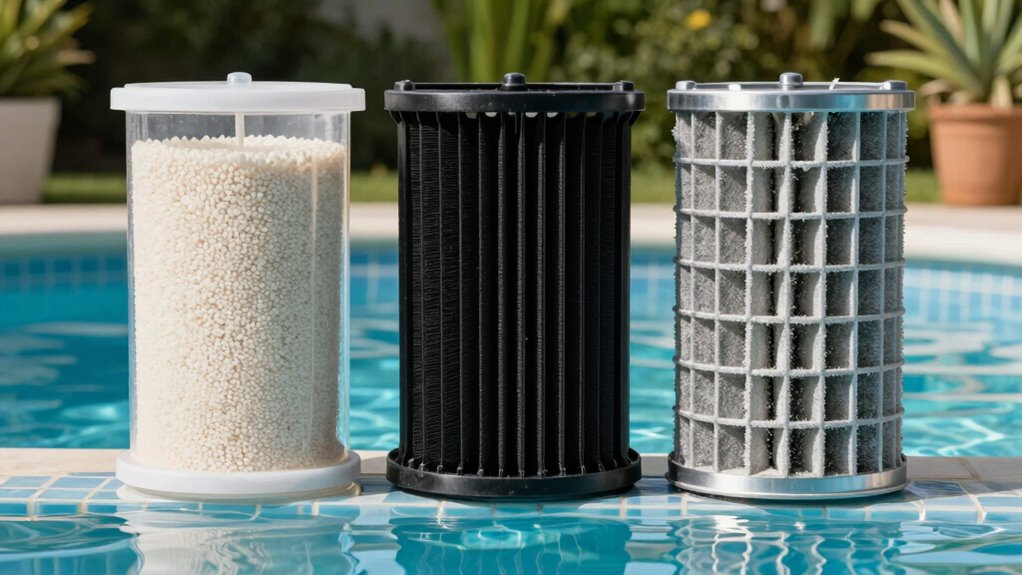
Pool filters work by trapping dirt and debris as water passes through them, keeping your pool clean. The mechanics involve water flowing through filter media, which captures particles based on size. Understanding how well each filter removes particles helps you choose the best option for crystal-clear water. Proper installation and maintenance are essential to ensure optimal filter performance and longevity. Additionally, selecting the right filter type depends on your specific needs and the filter media used in each system. Regularly checking and maintaining your filter can help prevent clogs and improve overall efficiency. By understanding the filtering process, you can make informed decisions that align with your pool’s needs and your commitment to maintaining a healthy, inviting swimming environment.
Filtration Process Mechanics
Understanding how pool filters work starts with recognizing that they trap dirt and debris as water passes through them. The filtration flow moves water from the pool, through the filter medium, and back into the pool. During this process, particles like dirt, algae, and other contaminants are captured on or within the filter material. The mechanics vary depending on the filter type: sand filters rely on the size of the sand grains to trap particles, while cartridge filters use pleated paper or fabric for finer particle capture. DE filters employ a fine diatomaceous earth layer that captures even the tiniest debris. Throughout the cycle, the filter medium continuously traps debris, maintaining clean water and ensuring ideal circulation. Proper flow and particle capture are essential for effective filtration. Filtration process mechanics also involve understanding how different media types influence overall efficiency and maintenance needs.
Particle Removal Efficiency
Particle removal efficiency determines how well your filter cleans the water and keeps debris out of the pool. A higher filtration efficiency means your filter can trap smaller particles, resulting in clearer water. Sand filters typically capture particles around 20-40 microns, offering decent but limited particle capture. Cartridge filters excel at trapping finer debris, often capturing particles as small as 5-10 microns, providing superior particle removal. DE filters lead in filtration efficiency, capturing particles as tiny as 1-3 microns, ensuring the clearest water possible. Your choice impacts how effectively your filter prevents dirt, algae, and other contaminants from circulating. Understanding this particle removal efficiency helps you select the right filter for your needs, balancing cleaning power with maintenance and cost considerations. Additionally, filter media durability can influence the long-term performance and cost-effectiveness of your filtration system. It’s important to consider filtration media longevity when evaluating your options to ensure sustained performance over time. Regularly inspecting and cleaning your filter can significantly improve filter performance, prolonging the life of your system and maintaining water clarity. To maximize your filter’s effectiveness, consider how regular maintenance can improve overall water clarity and system lifespan, as well as prolonging the life of the filter media itself.
As an affiliate, we earn on qualifying purchases.
Pros and Cons of Sand Pool Filters
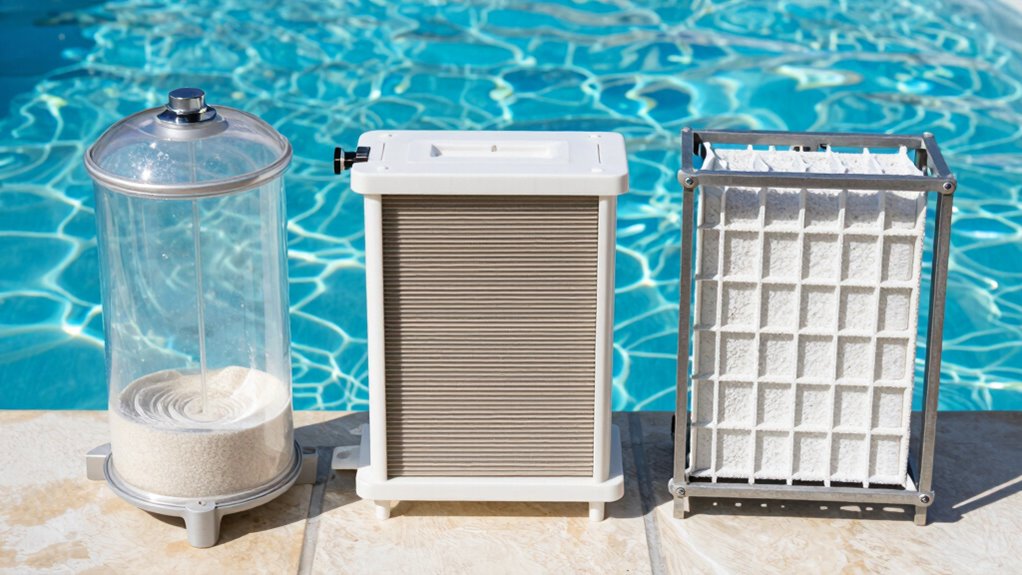
Sand pool filters are popular because they’re simple to operate and require minimal maintenance. They’re effective at providing good water clarity by trapping dirt and debris as water passes through the sand media. One major advantage is their long filter lifespan; with proper backwashing, you can typically enjoy years of reliable performance. Proper filter media maintenance is crucial for optimal performance and longevity. Regular maintenance helps ensure the filter continues to operate efficiently and extends its usable life. Additionally, understanding filter media effectiveness can help you determine the best filtration system for your pool needs. Since sand filters are less effective at capturing very fine particles, they may not produce crystal-clear water as quickly as other types, which can result in slightly cloudy water over time. They also require backwashing to clean the filter, which uses extra water and can interrupt pool use. Additionally, sand needs to be replaced every 5 to 7 years, adding to ongoing costs. Understanding the limitations of filtration is important when evaluating your options. Proper filter operation techniques, such as backwashing and regular sand replacement, are essential for maintaining efficiency and preventing issues.
pool filter media replacement kit
As an affiliate, we earn on qualifying purchases.
As an affiliate, we earn on qualifying purchases.
Cartridge Filters: Easy Maintenance and Clear Water
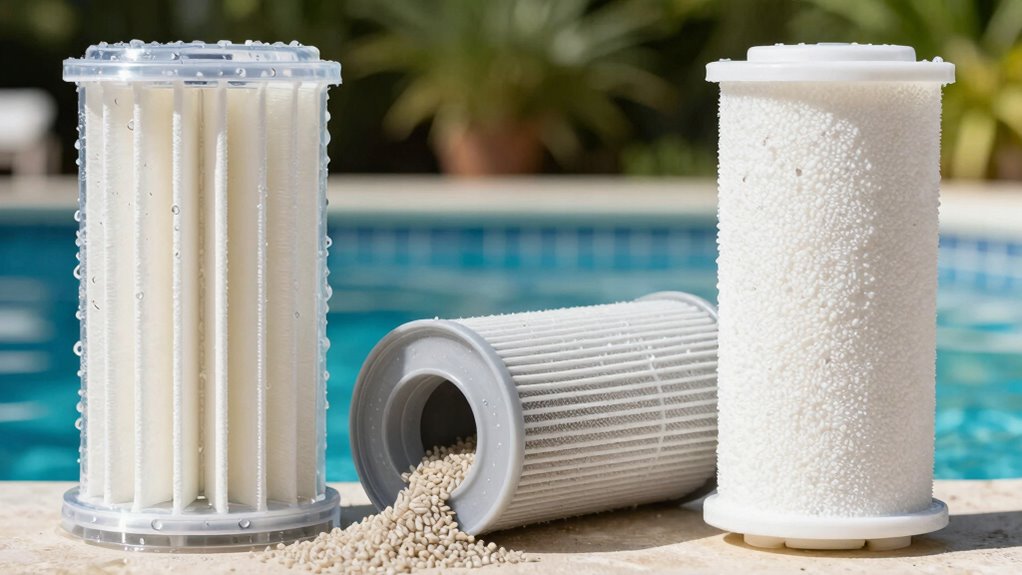
Cartridge filters make keeping your pool clean straightforward with their simple maintenance routine. You’ll spend less time on upkeep and more time enjoying clear, inviting water. Their easy-to-clean design guarantees your pool stays crystal clear with minimal effort. Additionally, they are often compatible with smart home integration for more convenient monitoring and control. For added convenience, many cartridge filters also feature automatic cleaning functions that reduce manual maintenance. As technological advancements continue, integration with IoT devices is becoming increasingly common, further simplifying pool management. Moreover, their cost-effectiveness makes them an attractive option for many pool owners.
Simple Maintenance Routine
Because they are designed for easy access and quick cleaning, cartridge filters make maintenance straightforward and hassle-free. You simply remove the cartridge, rinse it with a garden hose, and reinsert it—no complex procedures needed. This simplicity helps you maintain proper chemical balance and prevent algae growth, keeping your water clear and healthy. Regular cleaning, about once a month, ensures excellent performance without much effort.
| Step | Description |
|---|---|
| Remove the cartridge | Lift it out carefully from the filter housing. |
| Rinse thoroughly | Use a hose to wash away debris and dirt. |
| Check for wear | Inspect for tears or damage. |
| Reinsert | Place the clean cartridge back in. |
Crystal Clear Water
Regular maintenance of your cartridge filter guarantees your pool water stays sparkling clear. When you clean or replace the cartridge regularly, water circulation remains efficient, preventing debris buildup and algae growth. Proper water flow ensures that chemicals are evenly distributed, making chemical balancing easier and more effective. Clear water isn’t just about aesthetics; it’s a reflection of proper filtration and maintenance. Cartridge filters excel at trapping dirt and contaminants, which helps keep your water transparent and inviting. By maintaining your filter properly, you reduce the need for excessive chemical adjustments, saving you time and effort. Ultimately, consistent care ensures your pool remains crystal clear, inviting, and safe for swimming all season long.
DE Filters: For Crystal-Clear, High-Quality Filtration
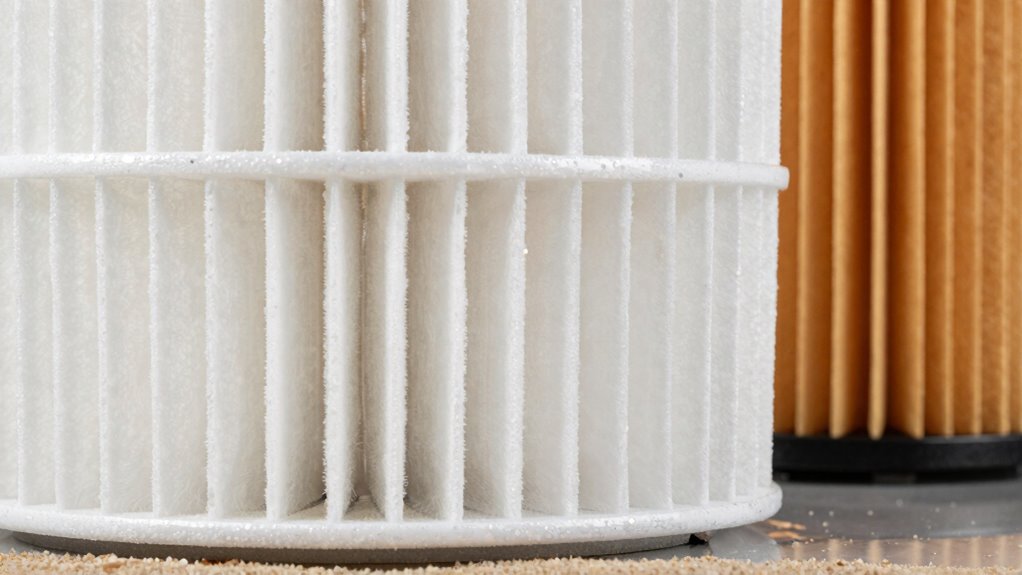
DE filters are renowned for delivering crystal-clear, high-quality filtration that keeps your pool water spotless. They use diatomaceous earth as filter media, trapping tiny particles for superior clarity. The water flow through DE filters is efficient, ensuring your pool stays clean with minimal effort. Their fine filter media captures debris that other filters might miss, resulting in water that sparkles.
| Water Flow | Filter Media |
|---|---|
| Efficient | Fine, microscopic particles |
| Consistent | Heavy-duty, reusable |
| Quick | High level of filtration |
Choosing DE filters means investing in clarity and purity. The combination of ideal water flow and superior filter media guarantees your pool water remains pristine and inviting.
Which Pool Filter Fits Your Budget and Lifestyle?
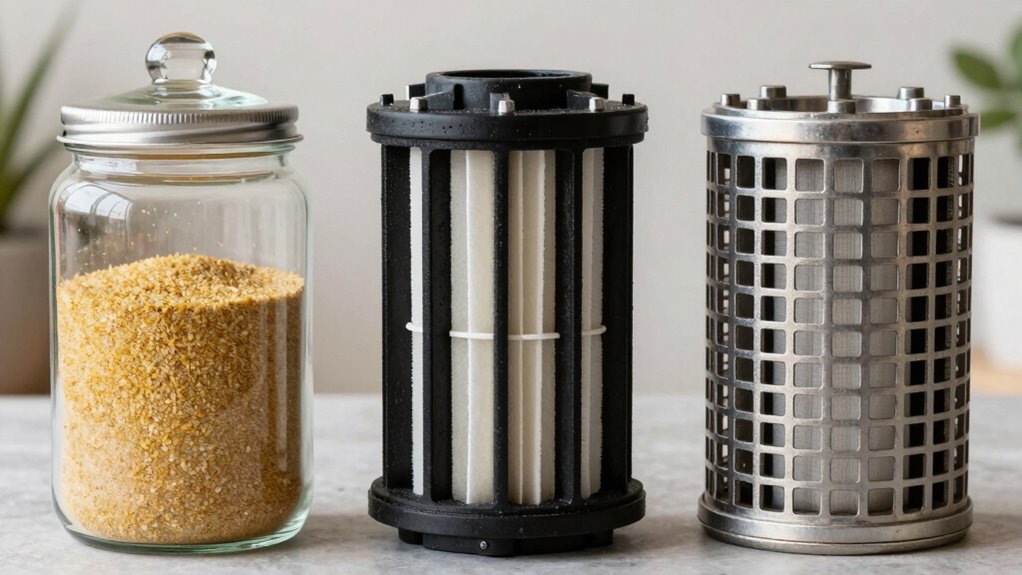
Choosing the right pool filter depends on your budget and how much effort you’re willing to invest in maintenance. If you’re looking for budget options, cartridge filters are often more affordable upfront and easier to maintain, making them great for casual pool owners. Sand filters tend to be more cost-effective over time but require less frequent cleaning, fitting a laid-back lifestyle. DE filters, while offering superior filtration, come with higher initial costs and more involved maintenance, suited for those who prioritize crystal-clear water and don’t mind extra upkeep. Consider your lifestyle considerations—how often you want to clean your filter and how much money you’re comfortable spending—so you can select a pool filter that aligns with both your financial situation and daily routine.
How to Choose the Right Pool Filter for Your Needs
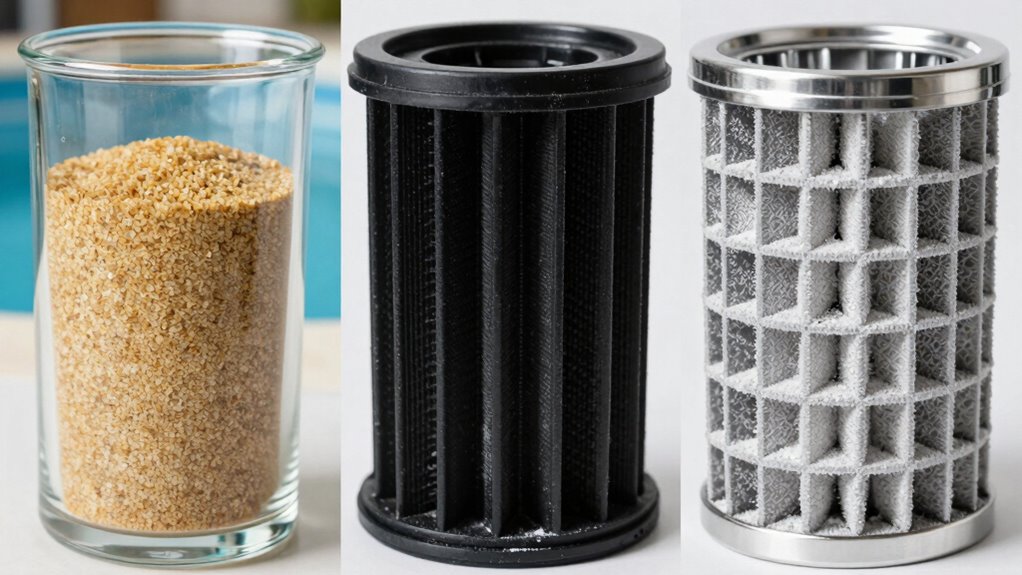
Selecting the right pool filter depends on understanding your specific needs and how you plan to use and maintain your pool. Start by considering your pool size; larger pools typically require more powerful filters like DE or larger sand filters to handle increased water volume. Water chemistry also plays a key role—if your water tends to be more prone to algae or mineral buildup, choosing a filter that offers better filtration and easier maintenance becomes essential. Cartridge filters are ideal for smaller pools or those with moderate water chemistry issues, as they are easy to clean. Sand filters are best for general use and larger pools, offering low maintenance, while DE filters provide superior clarity and filtration for demanding water conditions.
Troubleshooting Common Pool Filter Problems
Pool filter problems can disrupt your swimming routine and compromise water quality, but many issues are easy to diagnose and fix. If your filter isn’t working properly, start by checking for clogs or debris blocking flow. Low pressure might signal a dirty filter needing cleaning or replacement. Poor water clarity could be due to improper chemical balance, affecting filter efficiency. For persistent problems, consider filter repair or replacing worn parts. Regularly maintaining your pool’s chemical balance helps prevent buildup and prolongs filter life.
- Inspect and clean the filter regularly to prevent clogs
- Test and adjust chemical levels to ensure proper water chemistry
- Replace filter media when it’s worn or damaged for peak performance
Frequently Asked Questions
How Often Should I Replace or Clean My Pool Filter Media?
You should clean your pool filter media every 4 to 6 weeks, depending on usage and water quality. For sand filters, backwash when flow slows, typically every 3 to 5 years. Cartridge filters need cleaning when flow decreases, usually every 2 to 3 months. DE filters require a thorough cleaning and media replacement annually. Regular maintenance ensures peak filter lifespan and keeps your pool water clear and healthy.
Can I Upgrade My Pool Filter Type Without Draining the Pool?
You can upgrade your pool filter type without draining the pool, but it depends on your setup. Studies show that switching filters can improve efficiency by up to 30%, making your pool cleaner and saving costs in the long run. Just make sure your new filter fits your system and follow proper installation steps. Comparing costs, cartridge filters often cost less upfront but need more frequent cleaning than DE filters, which offer higher filter efficiency over time.
What Are the Environmental Impacts of Different Pool Filters?
You want to know the environmental impacts of different pool filters. Eco-friendly materials like cartridge filters often produce less waste and can be more sustainable. DE filters typically consume more energy due to higher filtration efficiency, increasing energy consumption. Sand filters are generally low-impact but may require more frequent replacement, affecting waste. Choosing a filter with eco-friendly materials and lower energy use helps reduce your pool’s environmental footprint.
Do Certain Filters Work Better With Specific Pool Sizes or Shapes?
You’ll find that certain filters suit specific pool sizes and shapes. For larger pools, DE filters excel because they handle more water and maintain clarity better. For irregular shapes, cartridge filters offer flexibility and easy cleaning. Sand filters work well with standard rectangular pools, providing reliable, low-maintenance filtration. By considering pool size considerations and pool shape compatibility, you select a filter that keeps your pool pristine and suits your setup perfectly.
How Does Filter Maintenance Affect Overall Pool Water Chemistry?
Filter maintenance directly impacts your pool water chemistry and overall water balance. When you neglect regular cleaning, filter chemistry can become compromised, allowing debris and contaminants to circulate and disrupt pH levels and sanitizer efficiency. This imbalance can lead to cloudy water, algae growth, or corrosion. Regularly cleaning and replacing your filter guarantees peak water flow, keeps water chemistry stable, and maintains a healthy, sparkling pool.
Conclusion
Choosing the right pool filter depends on your budget, maintenance preferences, and water clarity goals. Did you know that DE filters can trap particles as small as 3 microns, ensuring the clearest water? By understanding the strengths and limitations of sand, cartridge, and DE filters, you can make an informed decision that keeps your pool sparkling and your maintenance manageable. Ultimately, investing in the right filter enhances your swimming experience and prolongs your equipment’s lifespan.
NFL season / tailgating Picks
team gear
As an affiliate, we earn on qualifying purchases.