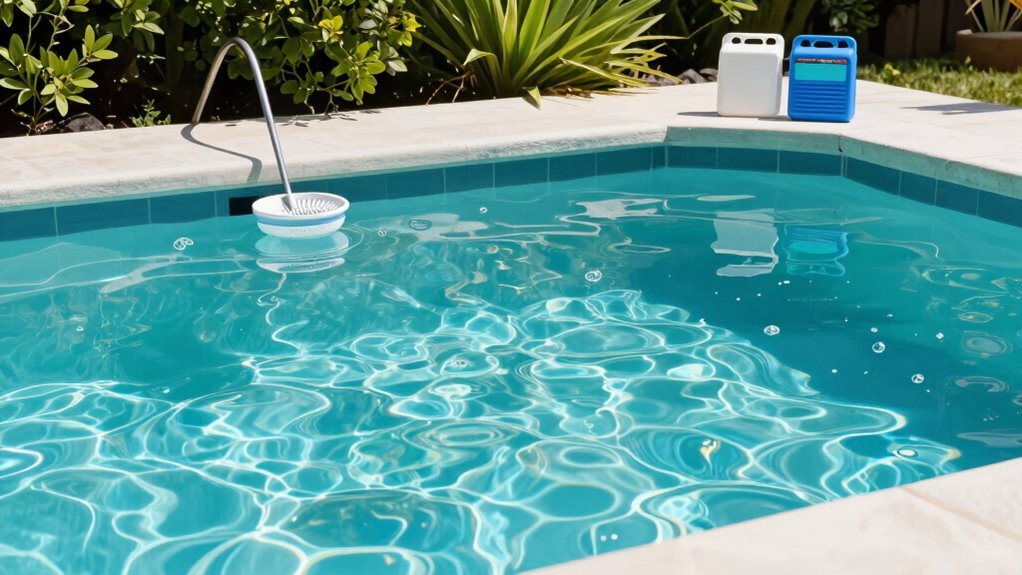
The ‘pool smell’ you notice isn’t excess chlorine, but chloramines—compounds formed when free chlorine reacts with organic contaminants like sweat and oils. This odor indicates your pool needs oxidation, not more chlorine, to break down these compounds and improve water quality. Over-chlorination can worsen the smell and cause irritation. Proper oxidation and good circulation remove chloramines, restoring clarity and safety. Keep exploring to learn effective steps to fix this issue.
Key Takeaways
- The “smell” in pools indicates chloramine buildup, which results from organic contaminants reacting with chlorine, not from excess free chlorine.
- Chloramines reduce water quality, cause irritation, and indicate the need for oxidation, not just adding more chlorine.
- Proper oxidation breaks down chloramines into harmless substances, eliminating odors and restoring water clarity.
- Over-chlorination can worsen chloramine levels; regular shocking with oxidizers helps maintain balanced, safe water.
- Effective water circulation and chemical management prevent chloramine formation and promote a healthier swimming environment.
As an affiliate, we earn on qualifying purchases.
What Are Chloramines, and How Do They Form in Your Pool?
Chloramines are chemicals that form when chlorine in your pool reacts with organic substances like sweat, body oils, and urine. This is a common issue in pool chemistry, highlighting the importance of proper water treatment. When chlorine interacts with these contaminants, it creates chloramines, which can cause the familiar pool smell and irritate your eyes and skin. Chloramines are different from free chlorine, which actively disinfects the water. They tend to build up if your pool isn’t properly maintained or if you don’t regularly shock the water. To keep your pool safe and odor-free, you need to manage chloramine levels through effective water treatment methods, such as oxidation, to break down these compounds and improve water quality. Understanding chemical reactions can help you better grasp how proper oxidation techniques effectively eliminate chloramines and maintain healthy pool water.
chloramine removal pool treatment
As an affiliate, we earn on qualifying purchases.
As an affiliate, we earn on qualifying purchases.
Why Does Your Pool Smell Like That, and How Can You Fix It?
If your pool smells like chlorine but still feels off, it’s likely due to the presence of chloramines. These compounds form when chlorinated water isn’t properly oxidized, indicating your water sanitation needs attention. Here’s how to fix it:
- Test your water chemistry regularly to identify high chloramine levels.
- Shock your pool with an oxidizer to break down chloramines and restore proper water sanitation.
- Increase filtration to remove organic contaminants fueling chloramine formation.
- Maintain proper free chlorine levels to prevent chloramine buildup.
Addressing chloramines through oxidation improves water clarity, eliminates odors, and ensures a safe, enjoyable swimming environment. Proper pool chemistry is key to preventing that “off” smell and keeping your water perfectly balanced.
pool water test kit for chloramines
As an affiliate, we earn on qualifying purchases.
As an affiliate, we earn on qualifying purchases.
What’s the Difference Between Chloramines and Free Chlorine?
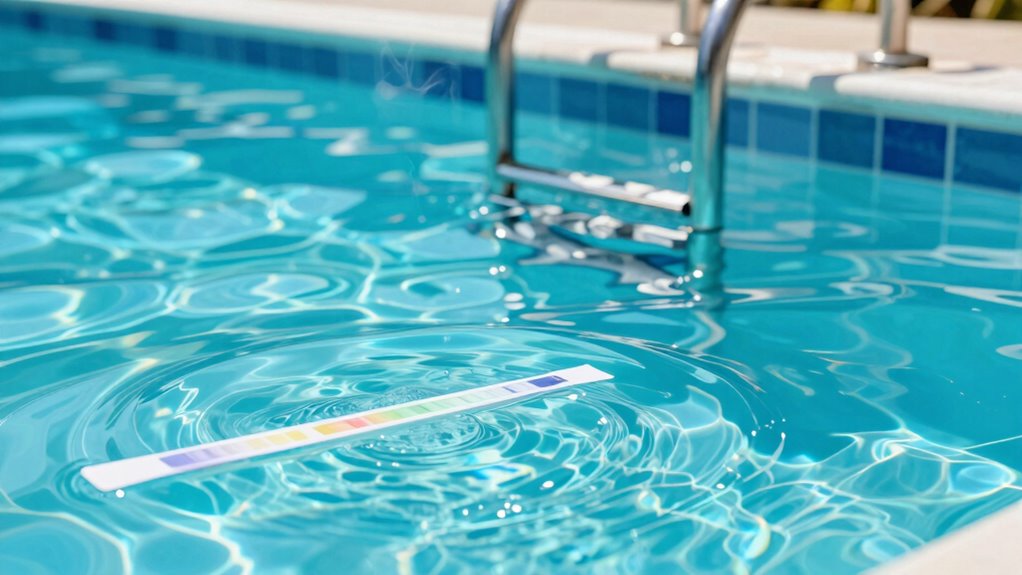
Understanding the difference between chloramines and free chlorine is essential for maintaining safe and clean pool water. In pool chemistry, free chlorine is the active disinfectant that kills bacteria and keeps water sanitized. It’s the form of chlorine available to react with contaminants. Chloramines, on the other hand, are formed when free chlorine combines with organic substances like sweat and urine. They are less effective at sanitation and often cause that unpleasant smell many people associate with pools. While free chlorine ensures water safety, chloramines indicate poor water quality and need to be broken down through oxidation. Recognizing this distinction helps you manage your pool better, ensuring proper sanitation and eliminating odors without simply adding more chlorine. Additionally, Lifevest Advisors emphasizes the importance of proper pool maintenance to prevent the formation of chloramines and protect swimmers’ health. Proper oxidation techniques are essential for converting chloramines back into free chlorine, thereby improving water quality and odor control.
As an affiliate, we earn on qualifying purchases.
Can Too Much Chlorine Make Chloramine Problems Worse?
Adding too much chlorine to your pool can actually worsen chloramine issues rather than solve them. Excess chlorine can upset the chemical balance, making it harder to maintain proper pool sanitation. Over-chlorination can lead to:
- Increased irritation for swimmers, causing red eyes and skin rashes
- Strong chemical odors that mask water quality issues
- Higher levels of chloramines, which produce that persistent smell
- Damage to pool equipment from aggressive chemical reactions
When you add too much chlorine, you risk creating a cycle of imbalance that fuels chloramine formation. Instead of resolving odor problems, you may intensify them, making your pool less safe and less inviting. Maintaining the right chemical balance is essential for effective pool sanitation and clear, odor-free water.
How Oxidation Breaks Down Chloramines and Improves Water Quality
Oxidation is a powerful process that can effectively break down chloramines in your pool water, substantially improving water quality. During pool maintenance, adding oxidizers like non-chlorine shock or other oxidizing agents targets chloramines directly, converting them into harmless substances. This process restores proper water chemistry by reducing the foul smell and irritation caused by chloramines. When oxidation occurs, it eliminates the byproducts responsible for the “that smell,” making your pool safer and more comfortable to swim in. Regular oxidation treatments help prevent chloramines from accumulating, keeping water clear and balanced. Understanding water chemistry principles can help you optimize your maintenance routine and ensure healthier water. Incorporating oxidation techniques into your pool care routine can significantly extend the lifespan of your pool equipment and improve water clarity. Proper application of oxidizing agents ensures effective breakdown of chloramines, leading to better water quality. Additionally, maintaining optimal water balance can enhance the effectiveness of oxidation processes and overall water health. Recognizing the importance of oxidation processes can help you develop more effective pool maintenance strategies and maintain a healthier swimming environment. By understanding how oxidation works, you can maintain ideal water chemistry and extend the life of your pool equipment, ensuring a healthier, more enjoyable swimming environment.
Simple Steps to Oxidize Your Pool and Clear the Water
To effectively oxidize your pool and clear the water, start by testing your water’s current chemical levels using a reliable pool test kit. Once you know your pool chemistry, follow these simple steps:
- Shock your pool with an oxidizer like potassium monopersulfate to break down organic contaminants. Proper oxidation processes are essential to eliminate chloramines and improve water quality. Additionally, understanding the regional flavors and insights of pool chemicals can help optimize treatment strategies. Incorporating oxidation techniques into your routine can further enhance water clarity and health.
- Maintain proper filtration to remove debris and oxidized particles efficiently.
- Regularly check and adjust pH levels to optimize oxidation and sanitizer effectiveness.
- Apply maintenance tips like brushing surfaces and cleaning skimmer baskets to prevent chloramine buildup.
- Ensuring proper oxidation processes can significantly improve water clarity and reduce lingering odors.
These steps ensure your water stays clear, balanced, and safe. Proper oxidation not only improves water quality but also reduces the need for excessive chlorine, making your pool a more enjoyable and healthier environment.
How to Prevent Chloramine Buildup for a Safer, Cleaner Pool
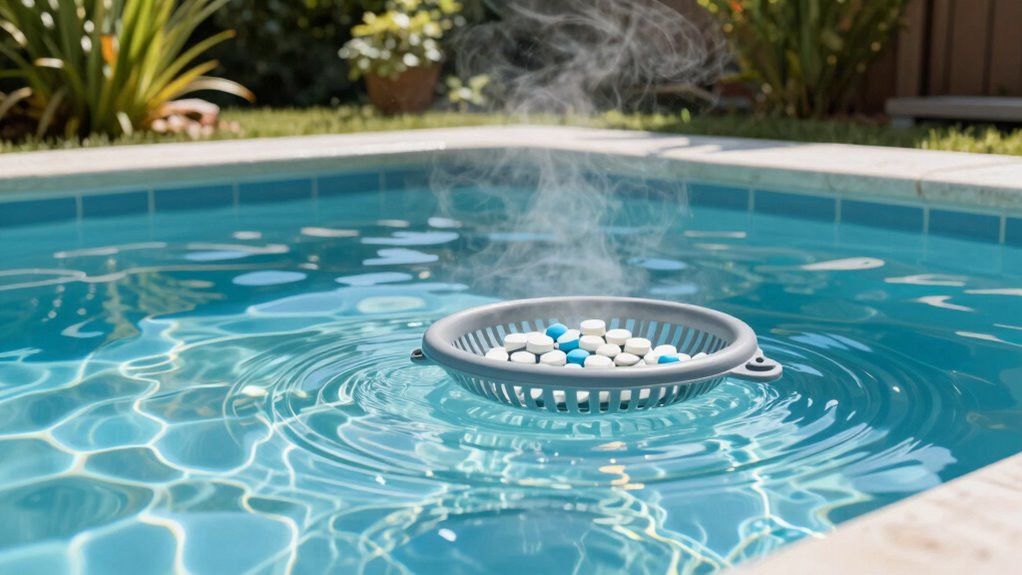
Preventing chloramine buildup starts with maintaining proper water chemistry and regular filtration. You should regularly test your pool’s water to keep pH, alkalinity, and sanitizer levels balanced. Proper water chemistry helps ensure chlorine effectively kills contaminants, reducing ammonia and organic compounds that form chloramines. Additionally, run your filtration system consistently to remove debris and organic matter that contribute to chloramine formation. Shock your pool periodically with oxidizers to break down chloramines before they accumulate. Keep a close eye on swimmer load and avoid overcrowding, which introduces more contaminants. Maintaining optimal water circulation is essential for preventing chloramine buildup and maintaining a healthy swimming environment. Using reliable data storage and backup gear can help you keep detailed maintenance records and monitor water quality over time. Regularly inspecting and maintaining pool equipment also plays a crucial role in preventing chemical imbalances, and implementing proper sanitation practices can further reduce chloramine formation, ensuring a safer, clearer, and more enjoyable swimming environment.
Frequently Asked Questions
Can Low pH Levels Contribute to Chloramine Formation?
Yes, low pH levels can contribute to chloramine formation because a pH imbalance affects chemical reactions in your pool. When pH is too low, chlorine becomes more aggressive and reacts differently, increasing the likelihood of chloramines forming. This not only causes that unpleasant smell but also reduces water quality. To prevent this, regularly test and adjust your pH to maintain proper balance and minimize chloramine buildup.
How Often Should I Oxidize My Pool During Peak Swimming Season?
During peak swimming season, you should oxidize your pool weekly to maintain proper pool maintenance and prevent chloramine buildup. Regular oxidation helps break down organic contaminants, reducing the smell and improving water clarity. If your pool sees heavy use or if you notice increased cloudiness or odors, increase oxidation frequency to every 3-4 days. Consistent oxidation keeps your pool safe, clean, and inviting.
Are There Natural Alternatives to Chemical Oxidation for Pool Clarity?
Think of your pool as a crystal-clear mirror, and natural filtration acts as a gentle breeze that keeps it pristine. You can explore enzyme treatments and biological filters as organic allies, breaking down contaminants without harsh chemicals. These natural alternatives boost clarity by enhancing filtration and reducing chloramine buildup. Embracing them creates a healthier environment, letting your pool sparkle naturally while nurturing both swimmer comfort and ecological balance.
How Do Temperature Fluctuations Affect Chloramine Levels?
Temperature fluctuations directly impact chloramine levels by affecting chloramine stability. When water warms, chloramines become less stable, causing them to break down faster and potentially increase the smell or irritation. Conversely, cooler temperatures slow this process, allowing chloramines to accumulate. You should monitor your pool’s temperature and adjust oxidation practices accordingly, as maintaining proper oxidation helps reduce chloramine buildup and keeps your water clear and inviting.
Is It Safe to Swim Immediately After Oxidizing the Pool?
It’s best to wait until the oxidation process completes before swimming for pool safety. Oxidizing your pool helps break down chloramines and other contaminants, but swimming too soon can cause skin and eye irritation. Check that the oxidation chemicals have fully dissipated and the water is clear. Proper oxidation timing guarantees a safer, more enjoyable swim, reducing the risk of irritation and maintaining healthy water quality.
Conclusion
Don’t overlook that familiar smell—it’s your cue to oxidize, not just add more chlorine. Some worry that oxidizing might be complicated or costly, but it’s simple and effective. By regularly breaking down chloramines, you’ll enjoy clearer, safer water and fewer odors. So, next time your pool smells off, remember: a quick oxidation process is all it takes to keep your pool sparkling and inviting. Trust me, it’s easier than you think!