
If you only use your heating system on weekends, a heat pump may actually save you more money and energy than a gas heater. Though gas offers quick warmth with lower upfront costs, heat pumps are more efficient over time, especially if you’re only running them intermittently. They consume less electricity and produce fewer emissions, making them a smarter choice for occasional use. To discover why this switch might surprise you, keep exploring the details below.

Get pool and patio gear delivered free — and shop member deals
- Fast, free delivery on millions of items
- Access to Prime Big Deal Days deals on October 6–7
- Prime Video, Amazon Music and more included
Key Takeaways
- Heat pumps often provide better energy efficiency and lower operating costs for weekend-only use despite higher initial installation costs.
- Gas heaters deliver quick, reliable warmth but may be less cost-effective if used infrequently.
- For eco-conscious users, heat pumps produce fewer emissions, making them a more environmentally friendly choice for weekend use.
- Cold climates may favor gas systems for consistent performance, while advanced cold climate heat pumps are improving in such regions.
- The decision depends on balancing upfront investment, climate conditions, and long-term savings rather than immediate convenience.
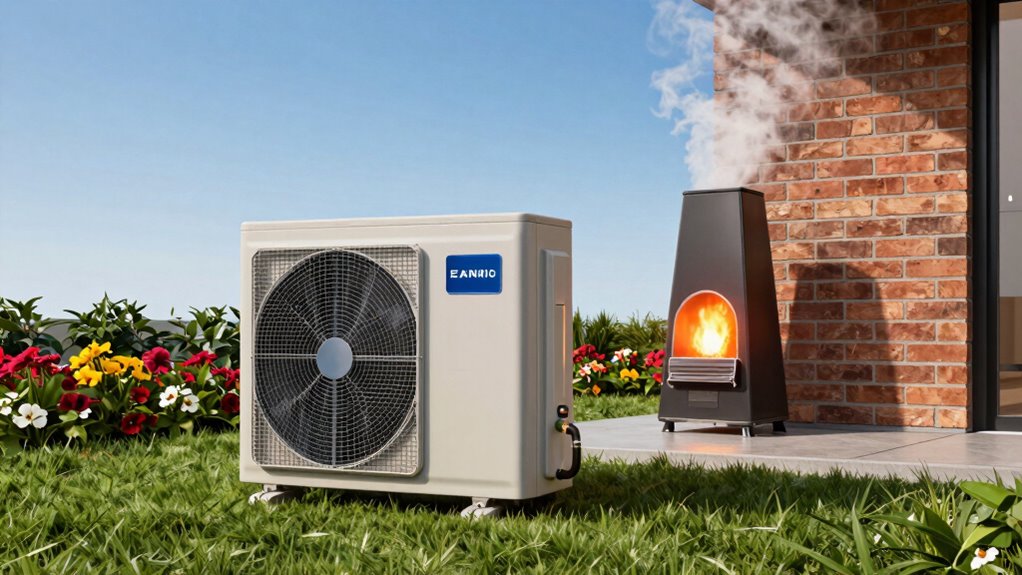
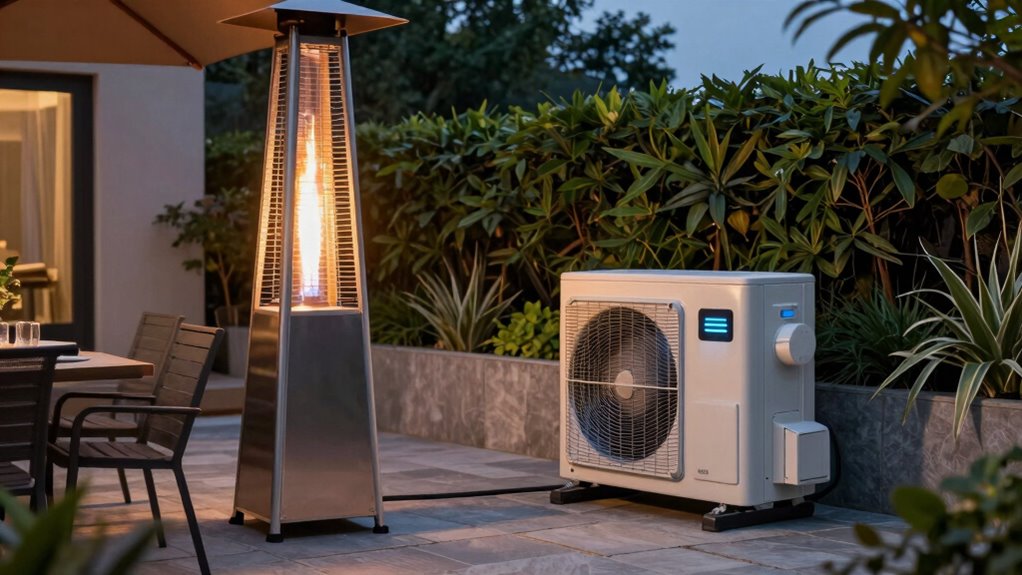
When choosing a heating system for weekend use, understanding the differences between gas and heat pump options is essential. On the surface, it might seem like a straightforward choice, but the reality is more nuanced. Your decision impacts not only how comfortable your space remains but also your energy efficiency and overall costs. Gas heaters are traditional, relying on combustion to generate heat quickly and effectively. They tend to have lower installation costs upfront, making them appealing if you’re looking for a budget-friendly option. However, gas systems can be less energy-efficient because burning fuel produces emissions and heat loss during combustion, which might lead to higher operational costs over time.
Heat pumps, on the other hand, are often viewed as more modern and environmentally friendly. They work by extracting heat from the outside air and transferring it indoors, which can be surprisingly efficient, especially in moderate climates. This efficiency translates directly into reduced energy consumption, meaning you get more warmth for less electricity. While the initial installation costs for heat pumps are generally higher than gas systems, they often pay off in the long run through lower energy bills. Plus, because heat pumps don’t burn fuel, they produce fewer emissions, making them a greener choice.
If you’re only using your heating system on weekends, energy efficiency becomes especially important. Heat pumps can operate effectively with less energy, so you might find that they save you money over time, despite the higher startup costs. Gas heaters, while cheaper to install initially, could cost more to run if you’re heating infrequently but intensely. Additionally, consider the climate of your location. In colder areas, gas heaters might provide more reliable, consistent warmth because heat pumps can struggle to perform efficiently in very low temperatures, unless you opt for advanced models designed for cold climates.
Installation costs are another key factor. Gas systems usually involve simpler, quicker setups, especially if your home is already equipped for gas service. Heat pumps require a more complex installation process, including outdoor units and possibly electrical upgrades, which can drive up initial expenses. But keep in mind that the ongoing costs and environmental impact may outweigh the upfront savings. If you’re only heating your space intermittently, the energy efficiency benefits of heat pumps could make them the smarter long-term choice, even if the initial investment is higher.
Ultimately, the best choice depends on your specific needs, climate, and budget. While gas might seem cheaper initially, heat pumps often offer better energy efficiency and lower operational costs, making them an appealing option for weekend use when you want a balance of comfort, cost savings, and environmental responsibility. Additionally, advances in cold climate heat pump technology are expanding their usability in colder regions, further enhancing their practicality. Considering the emissions produced by each system can also help you make a more environmentally conscious decision.
energy efficient heat pump for small homes
As an affiliate, we earn on qualifying purchases.
As an affiliate, we earn on qualifying purchases.
Frequently Asked Questions
How Does Maintenance Differ Between Gas and Heat Pump Systems?
You’ll find maintenance for gas systems involves regular inspections, cleaning, and occasional parts replacement to guarantee efficiency and safety. Heat pumps, on the other hand, require less maintenance—mainly filter changes and annual check-ups. Regarding efficiency comparison, heat pumps are generally more efficient and quieter, with lower noise levels. Gas systems may be noisier and need more frequent upkeep, making heat pumps a more convenient choice for weekend use.
Are There Environmental Impacts Associated With Each Heating Option?
Both gas and heat pump systems impact the environment, but heat pumps generally have a smaller carbon footprint since they use electricity, which can come from renewable sources. Gas systems emit greenhouse gases directly, contributing more to climate change. If you want a greener option, consider heat pumps paired with renewable energy, reducing your overall environmental impact while maintaining comfort during weekends.
Which System Is More Cost-Effective Over the Long Term?
Imagine saving hundreds annually—this is possible depending on your choice. A recent case shows a homeowner switching to a heat pump saved more long-term, thanks to its higher efficiency metrics and lower operating costs. Compared to gas, heat pumps often have a better cost comparison over time, especially with rising gas prices. You’ll want to factor in upfront costs versus ongoing savings to determine which system truly offers long-term value.
How Quickly Can Each System Heat up a Space?
A gas furnace heats up a space faster than a heat pump due to its higher temperature output, offering quick warmth during weekends. However, the efficiency comparison shows heat pumps work well in moderate climates and take longer to heat initially. Installation challenges for gas systems can delay quick heating, while heat pumps are easier to install but might need more time to reach desired temperatures.
Do Local Regulations Affect the Choice Between Gas and Heat Pumps?
Local restrictions and zoning laws can considerably influence your choice between a gas system and a heat pump. Some areas impose limits on gas appliance installations due to environmental concerns, pushing you toward heat pumps. Conversely, zoning laws might restrict outdoor units or specific system types. You need to check your local regulations first, as they could either facilitate or hinder your preferred heating option, shaping your decision.
As an affiliate, we earn on qualifying purchases.
Conclusion
So, when it comes to weekend heating, the choice between gas and a heat pump isn’t as clear-cut as you might think. Think of it like a dance—each has its own rhythm and moves. While gas might seem more straightforward, a heat pump offers efficiency and versatility. Ultimately, your decision depends on your priorities, but remember: the best choice is the one that keeps your weekends warm and worry-free, no matter the beat.
As an affiliate, we earn on qualifying purchases.
portable space heater for occasional use
As an affiliate, we earn on qualifying purchases.
As an affiliate, we earn on qualifying purchases.
Fall Picks
fall essentials
As an affiliate, we earn on qualifying purchases.