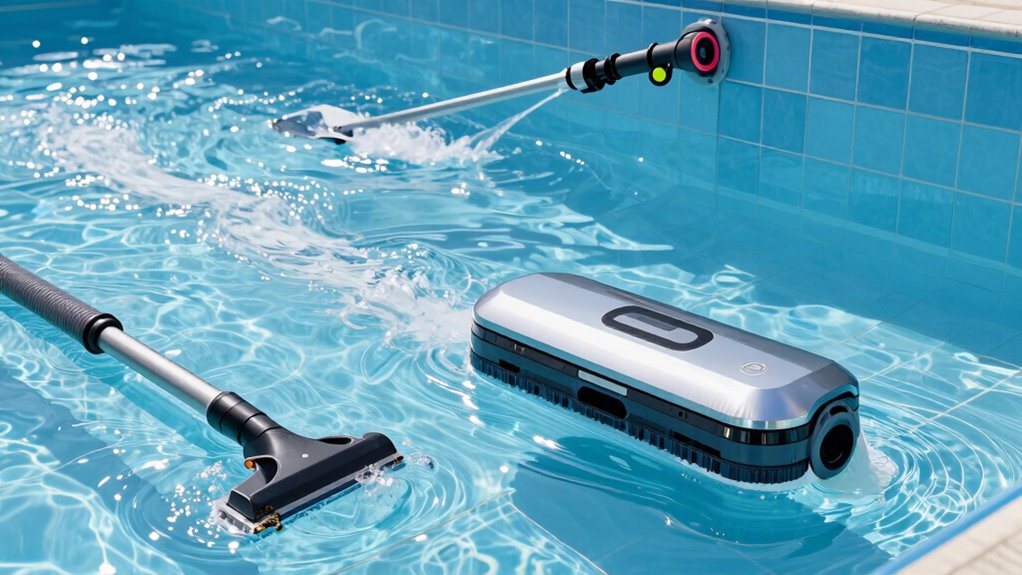
Suction, pressure, and robotic pool cleaners each offer unique advantages. Suction cleaners rely on your pool pump to move and gather debris, making them energy-efficient but limited in coverage. Pressure cleaners use extra water pressure to clean faster, handling larger debris more effectively. Robotic cleaners operate independently with their own power, providing thorough, walls-to-floor cleaning and programmable features. To discover which type fits your pool best and how they compare further, keep exploring the details.

Get pool and patio gear delivered free with Prime
- Fast, free delivery on millions of items
- Prime Video, Amazon Music and more included
- Member-only deals all year
Key Takeaways
- Suction cleaners rely on the pool’s skimmer or vacuum line, using the main pump for power, and mainly clean the pool floor.
- Pressure cleaners use water pressure from a booster or existing pump, covering larger areas quickly and handling bigger debris.
- Robotic cleaners are self-powered, operate independently, and feature advanced navigation for thorough cleaning of floors, walls, and steps.
- Robotic cleaners are more energy-efficient, programmable, and provide comprehensive coverage compared to suction and pressure models.
- Suction cleaners promote water circulation and are budget-friendly, while robotic cleaners offer superior cleaning with minimal manual effort.
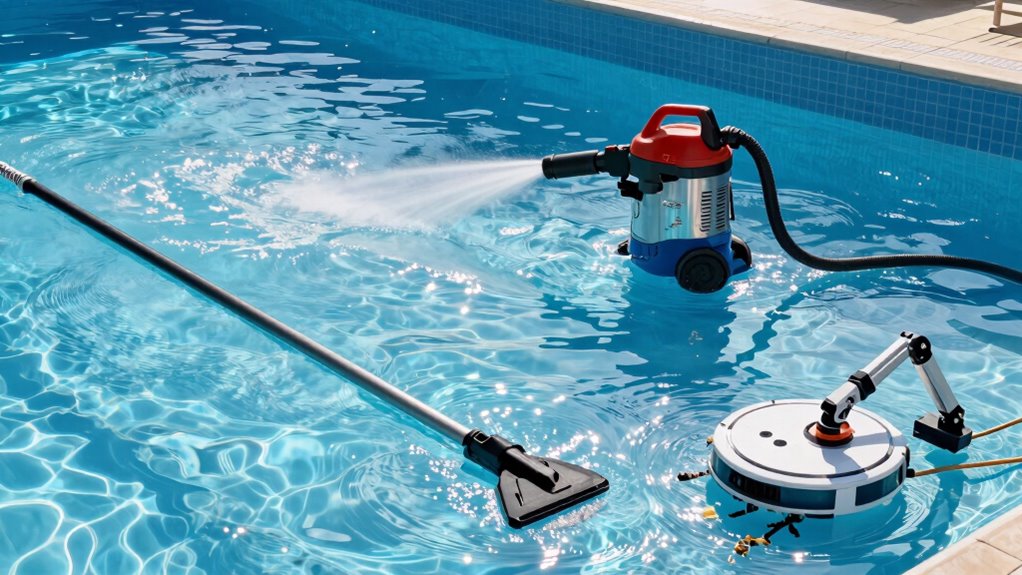
Suction pool cleaners are among the most common and straightforward options. They connect to your pool’s skimmer or dedicated vacuum line, using the suction power of your pool pump to operate. As they move across the pool floor, they collect debris into a bag or filter. Because they rely solely on your existing pump, they tend to be energy-efficient, consuming less power than other types. They also promote good water circulation, helping to distribute chemicals evenly and prevent stagnation. However, their movement can be somewhat limited, especially in larger pools or those with complex layouts, which may result in incomplete cleaning. Understanding the types of pool cleaners available can help you make an informed decision tailored to your specific pool size and shape.
Pressure pool cleaners, on the other hand, operate using water pressure generated by a dedicated booster pump or your pool’s existing pump. They attach to a return jet and move around the pool, often covering larger areas more quickly than suction models. Their active movement makes them more effective at cleaning larger debris, like leaves or twigs, which suction cleaners might struggle with. Because they depend on additional equipment, they might use a bit more energy, but their ability to clean thoroughly and efficiently can offset that. Plus, pressure cleaners tend to improve water circulation by pushing debris toward the skimmer, further aiding in maintaining a clean pool environment.
Robotic pool cleaners take the technology a step further with their advanced features. They are self-contained units with their own power supply and intelligent navigation systems. Many robotic cleaners can map the pool’s layout, ensuring exhaustive coverage of every inch, including walls and steps. They are highly energy-efficient since they don’t rely on your pool’s pump, reducing overall energy consumption. Their ability to operate independently means better water circulation because they often include scrubbing brushes and filters that improve debris removal and water flow. Additionally, robotic cleaners are typically programmable, allowing you to set cleaning schedules and customize their operation for maximum efficiency.
As an affiliate, we earn on qualifying purchases.
Frequently Asked Questions
Which Pool Cleaner Is Best for Large Debris?
For large debris, a pressure pool cleaner works best because it uses high-pressure water jets to dislodge and remove big debris like leaves and twigs effectively. Unlike suction cleaners, which may clog with larger debris, pressure cleaners are designed to handle these blockages easily. Robotic pool cleaners can also work well but may require specific models with powerful debris removal techniques. Choose based on your pool size and debris type.
How Much Maintenance Do Robotic Cleaners Require?
Robotic cleaners need maintenance about once a month, which keeps them running smoothly like a well-oiled machine. Their technological complexity means you’ll occasionally check filters, clean brushes, and update software if needed. While they’re pretty low-maintenance overall, staying consistent guarantees peak performance. Think of it as giving your pool’s high-tech helper a quick tune-up so it can tackle dirt and debris effortlessly, making pool cleaning almost hands-free.
Can Pressure Cleaners Clean Pool Walls Effectively?
Yes, pressure cleaners can clean pool walls effectively. They use powerful jets for pool wall scrubbing, reaching higher areas with ease. Their debris collection efficiency depends on how well the jets dislodge dirt and debris from surfaces. You’ll find pressure cleaners excellent at removing stubborn grime, especially on walls and steps. Just make certain the pressure is adjustable to prevent damage and optimize cleaning performance.
Are Suction Cleaners Suitable for All Pool Shapes?
Like a trusty steed, suction cleaners have their limits. They work well for simple pool shapes but may struggle with complex or intricate designs. When considering pool shape considerations, keep in mind suction cleaner limitations, especially around tight corners or steps. You might find robotic cleaners more versatile, but if your pool is straightforward, a suction cleaner could be a reliable, budget-friendly option.
What Is the Average Lifespan of Each Type?
Suction cleaners typically last around 8-10 years, thanks to durable cleaner motors and good pool filter longevity. Pressure cleaners tend to last 7-9 years, but their motor durability depends on regular maintenance. Robotic pool cleaners usually have a lifespan of 5-7 years, as their advanced electronics and motors can wear out faster. Regular upkeep helps extend each cleaner’s life and optimizes performance.
As an affiliate, we earn on qualifying purchases.
Conclusion
Choosing the right pool cleaner isn’t just about technology; it’s about understanding your pool’s soul. Suction, pressure, and robotic cleaners each have their own rhythm, their own dance. Remember, the perfect cleaner is the one that harmonizes with your pool’s unique heartbeat. So, ask yourself: which rhythm will you follow? Embrace the choice that turns your pool into a shimmering oasis, a mirror reflecting your care and commitment.
As an affiliate, we earn on qualifying purchases.
pool cleaner with wall and step coverage
As an affiliate, we earn on qualifying purchases.
As an affiliate, we earn on qualifying purchases.
Halloween Picks
halloween
As an affiliate, we earn on qualifying purchases.