If your CYA level exceeds 50 ppm, it quietly weakens your chlorine’s ability to disinfect, especially when it goes beyond 100 ppm. High CYA binds with chlorine, making it less active and reducing sanitizer effectiveness even if the water looks clear. This false sense of security can lead to poor sanitation and water quality issues. Knowing the right CYA level and how it impacts chlorine is essential—more details can help you keep your pool safer and clearer.
Key Takeaways
- CYA levels above 50 ppm start to significantly reduce chlorine’s disinfecting effectiveness.
- When CYA exceeds 100 ppm, chlorine becomes much less active, weakening sanitation.
- Elevated CYA binds chlorine, making it less available for killing pathogens.
- High CYA can create a false sense of security despite poor water sanitation.
- Regular testing and maintaining CYA between 30-50 ppm prevents hidden chlorine weakening.
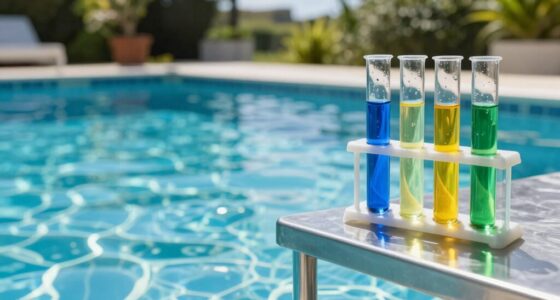
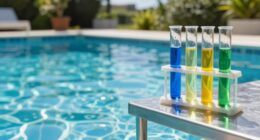
Cyanuric acid (CYA) is vital for protecting chlorine from sunlight, but when its levels get too high, it can actually weaken the very sanitizer you’re relying on. This phenomenon is known as the CYA impact on chlorine effectiveness. When you have excessive CYA, it causes chlorine saturation, meaning the chlorine molecules become less available to sanitize your pool properly. Instead of actively killing bacteria and algae, much of your chlorine binds with the CYA, rendering it less effective. This situation creates a false sense of security because your water appears clear, yet pathogens can still thrive. Monitoring CYA levels using accurate testing methods is crucial for maintaining proper pool chemistry. Understanding the balance between CYA and chlorine levels is key. As CYA levels increase, the amount of free chlorine—the active component that sanitizes—decreases. When you reach a high CYA level, typically above 50 parts per million (ppm), the chlorine’s ability to disinfect diminishes markedly. The CYA impact becomes more evident, especially if you don’t adjust your chlorine levels accordingly. You might think adding more chlorine will compensate, but this only leads to higher chlorine saturation without improving sanitation, because the excess chlorine continues to bind with the CYA instead of acting on germs. To prevent this, it’s important to regularly measure pool chemistry and adjust your chemical levels accordingly. Proper pool water management can help prevent the buildup of CYA and maintain optimal sanitation levels. Recognizing the importance of chemical balance in pool maintenance can help you avoid the pitfalls of high CYA levels. Monitoring your CYA levels is essential for maintaining pool health. If your CYA gets too high, it’s not just a matter of adding more chlorine; you need to reduce the CYA concentration to restore chlorine’s effectiveness. Usually, this involves draining some pool water and refilling with fresh water to lower the CYA to a safer range—ideally between 30 and 50 ppm. Regularly testing your water helps you catch these shifts early and avoid unnecessary chemical adjustments. Once CYA levels are controlled, you can then adjust your chlorine dosage to maintain proper sanitation without risking chlorine saturation. Keep in mind, the higher the CYA, the more chlorine you need to keep the water sanitized, but there’s a limit. When CYA surpasses 100 ppm, even regular chlorine additions become less effective, making it harder to keep your pool clean. Recognizing the signs of high CYA and understanding its impact can save you time and money in the long run.
Ultimately, understanding the CYA impact helps you prevent the silent weakening of your chlorine. It’s not just about maintaining proper chlorine levels but also about managing CYA to ensure your sanitizer can do its job. Too much CYA tricks you into thinking your pool is safe when, in reality, the CYA saturation is reducing chlorine’s ability to protect your water. Regular testing and adjusting are your best defenses against this issue, helping you keep your pool healthy, clear, and safe for swimming.

Taylor K-1005 DPD, 9-in-1 Pool Test Kit for Free & Total Chlorine, Bromine, pH, Base Demand, Alkalinity, Calcium Hardness, Cyanuric Acid | Made in The USA, 1 Count
Reliable Results In Seconds – Everything you need to test your pool or spa is conveniently packaged in…
As an affiliate, we earn on qualifying purchases.
As an affiliate, we earn on qualifying purchases.
Frequently Asked Questions
What Is the Ideal CYA Level for Pools?
The ideal CYA level for pools is between 30 to 50 ppm. Maintaining this range helps you balance water chemistry effectively and prevents CYA reduction issues that weaken your chlorine’s effectiveness. If CYA gets too high, your chlorine becomes less active, making it harder to disinfect. Regular testing and adjusting CYA levels guarantee your water stays balanced and safe, allowing your chlorine to work efficiently without unnecessary strain.
How Often Should I Test My CYA Levels?
You should test your CYA levels weekly to maintain proper chemical balancing in your pool. Regular testing helps you catch any fluctuations early, ensuring your chlorine remains effective. During pool maintenance, use a reliable test kit to check CYA and adjust as needed. Keeping your CYA within the ideal range prevents chlorine from weakening, which keeps your pool safe, clear, and properly sanitized.
Can High CYA Cause Skin Irritation?
High CYA levels can be like a sneaky fog, hiding the chlorine’s power and causing chemical interactions that make your skin feel irritated. If your skin is sensitive, elevated CYA might turn your pool experience uncomfortable, leading to redness or itchiness. It’s like your skin’s warning signal, telling you that too much CYA is disrupting the balance. Keep CYA levels in check to keep your skin happy and your pool safe.
Does CYA Break Down Over Time?
CYA stability is relatively high, meaning it doesn’t break down easily over time. However, CYA absorption can occur when it reacts with sunlight, pool chemicals, or contaminants, which gradually reduces its level. You’ll notice CYA levels declining slowly if the pool isn’t properly maintained. Regular testing helps you monitor CYA, ensuring your chlorine stays effective. So, while CYA doesn’t break down quickly, it can diminish through absorption processes.
How Quickly Does CYA Impact Chlorine Effectiveness?
CYA formation acts like an invisible hand, quietly diminishing chlorine stability, and it can impact effectiveness within days to weeks depending on your pool’s conditions. As CYA levels rise, chlorine’s ability to disinfect weakens, so the effect is almost immediate in high CYA environments. Regular testing and balancing help you stay ahead, ensuring your chlorine works efficiently and keeps your pool safe.
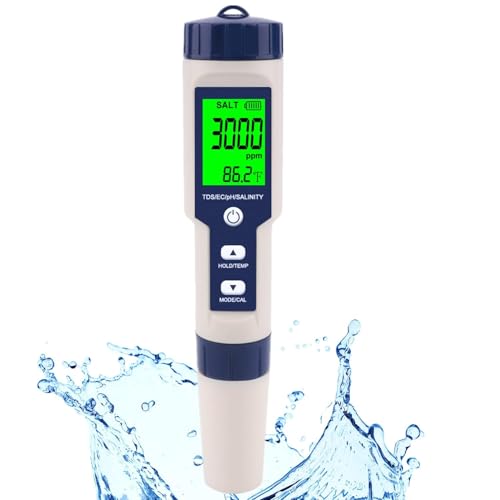
Pool Salt Tester & PH Meter, Hofun Digital Salinity Meter and PH Tester for Aquarium and Pool Saltwater Water, 5 in 1 Salinity PH Temp EC and TDS Meter, Aquarium Swimming Pool Hot Tub, High Accuracy
Wide Usage PH Meter : Hofun ph meter is an essential tool to improve your life quality. This…
As an affiliate, we earn on qualifying purchases.
As an affiliate, we earn on qualifying purchases.
Conclusion
As you carefully monitor your CYA levels, it’s like watching a gentle fog roll in, quietly veiling your pool’s clarity. Just as the sun’s rays peek through, a subtle increase in CYA can unexpectedly weaken your chlorine’s power, leaving your pool vulnerable. Staying vigilant guarantees you catch that moment before it slips away, much like catching the first light of dawn before it’s swallowed by the horizon’s embrace. Keep an eye on your levels, and your pool will shine bright all season long.
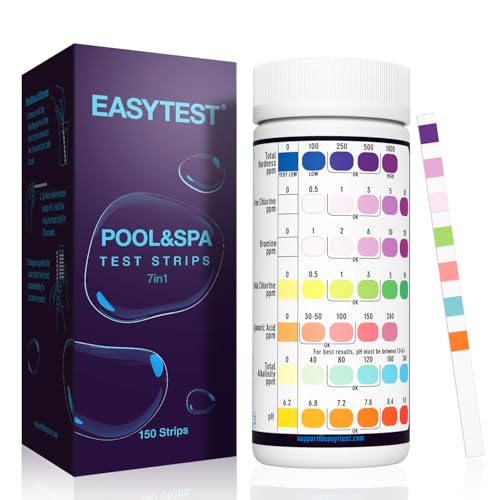
EASYTEST 7-Way Pool Test Strips, 150 Strips Water Chemical Testing for Hot tub and Spa, Accurate Test Bromine, Total Alkalinity, pH, Free Chlorine, Total Hardness, Cyanuric Acid, and Total Chlorine
AFFORDABLE 150 STRIPS: This water chemical testing kit contains 150 test strips. Enough balanced for your swimming pool,…
As an affiliate, we earn on qualifying purchases.
As an affiliate, we earn on qualifying purchases.

ARM & Hammer Clear Balance, One Step Alkalinity & pH Maintenance Tablets for Swimming Pools & Spa, Long-Lasting Water Balancer, 24 Count
CRYSTAL CLEAR WATER MADE EASY: This box of ARM & HAMMER Clear Balance contains 24 tablets; your pool’s…
As an affiliate, we earn on qualifying purchases.
As an affiliate, we earn on qualifying purchases.