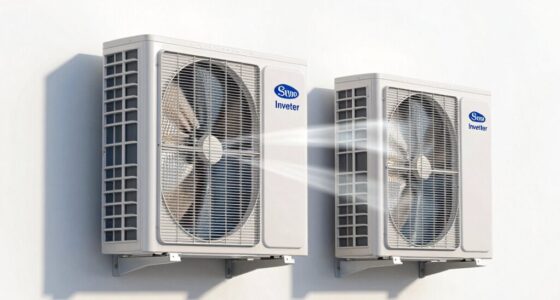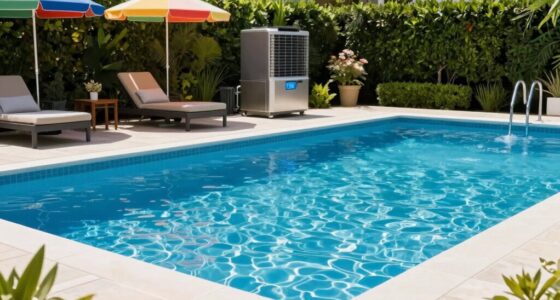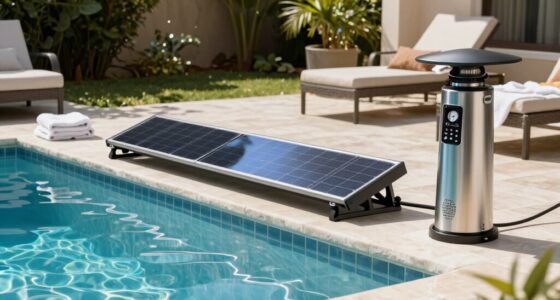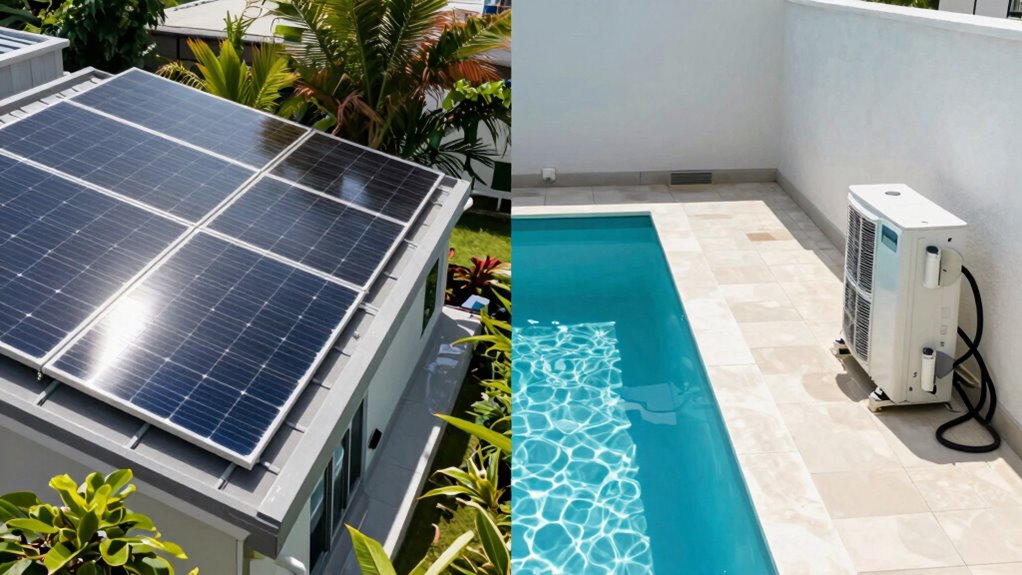
Over time, solar thermal systems tend to perform better than electric pool heaters, thanks to their higher efficiency, durability, and lower ongoing costs. While electric systems are simpler and cheaper to install initially, they often have higher energy expenses and require more maintenance over the years. Solar thermal setups benefit from advances in technology, making them more cost-effective long-term. If you want to understand why solar thermal is increasingly a smarter investment, keep exploring these differences.
Key Takeaways
- Solar thermal systems generally maintain higher efficiency and performance over time with proper maintenance.
- Electric pool heaters often have lower initial costs but higher long-term operational expenses due to energy consumption.
- Solar thermal systems tend to be more durable and require less maintenance over their lifespan.
- Environmental benefits of solar thermal grow over time, reducing carbon footprint compared to electric systems.
- Advances in solar collector technology improve the long-term performance and cost-effectiveness of solar thermal systems.
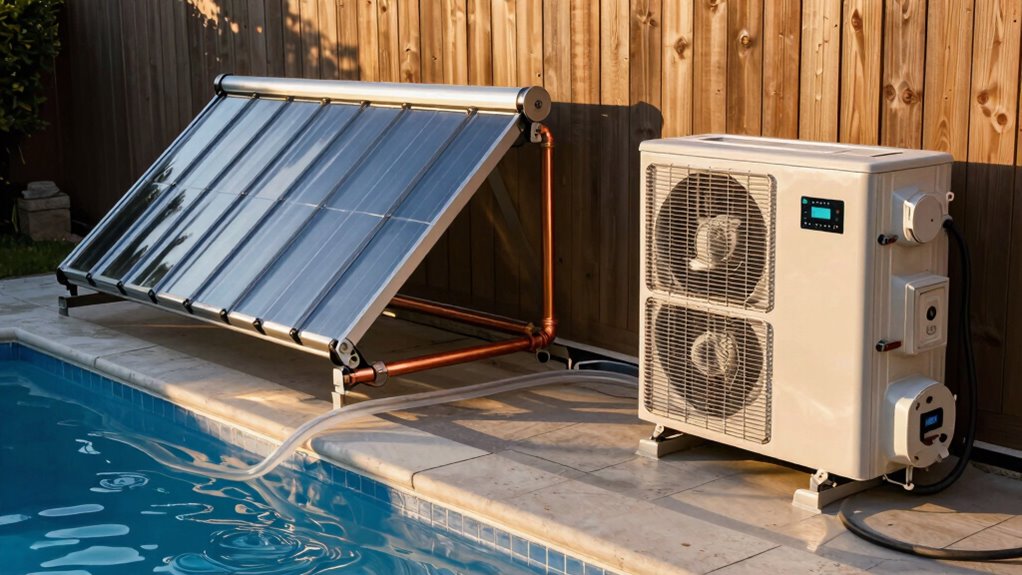
When deciding how to heat your pool, understanding the differences between solar thermal and electric systems is essential. Over time, these systems can evolve in terms of performance, cost-effectiveness, and maintenance, so knowing what to expect can help you make an informed choice. Solar thermal systems harness the sun’s energy through collectors, which warm the water directly. They’re generally considered highly energy-efficient because they use renewable energy sources, reducing your reliance on grid power. This reliance on renewable energy can also reduce your carbon footprint, making solar thermal a more environmentally friendly choice. This means your ongoing operational costs stay relatively low, especially once the system is installed. Additionally, solar thermal systems tend to have fewer moving parts, which can contribute to their longer-lasting durability. Over the years, advances in solar collector technology continue to improve their efficiency and lifespan, making them an increasingly attractive option. As these technologies develop, they can also become more cost-effective, further enhancing their appeal for long-term use.
Electric pool heaters, on the other hand, convert electricity into heat, which makes them simple to install and operate. Their energy efficiency might not be as high as solar thermal systems, especially in colder climates where they need to work harder to maintain the desired temperature. Over time, electric heaters tend to have lower installation costs because they require minimal setup—just a connection to your electrical system. But, because electricity can be more expensive than solar energy, your operating costs can add up, especially if you use the heater frequently or for extended periods. As the years go by, electric systems might require more maintenance or replacement parts, like heating elements, which can increase their overall costs. Both systems can experience efficiency declines over time, but solar thermal systems usually maintain their performance better, provided they’re properly maintained. The performance of solar thermal systems is also influenced by geographic location and climate, which can impact their efficiency over the years. Overall, if you’re looking for a system that offers sustained energy efficiency and lower long-term costs, solar thermal is likely to serve you better over time. Electric systems, while more affordable initially, might cost more in the long run due to higher energy consumption and maintenance needs. Understanding these differences helps you choose a pool heating solution that aligns with your budget, energy goals, and how long you want the system to last.

Intex 28685E 47 Inch x 47 Inch Solar Pool Water Heater Mat for 8,000 Gallon Above Ground Swimming Pool with Hose Attachment and Adaptors, Black
- Solar Heating Technology: Increases pool temperature by 5-9°F
- Large Sun Absorption Surface: 11 sq ft for efficient heating
- Easy to Use and Compatible: Works with filter pumps up to 1/3 HP
As an affiliate, we earn on qualifying purchases.
As an affiliate, we earn on qualifying purchases.
Frequently Asked Questions
How Does Maintenance Differ Between Solar Thermal and Electric Pool Heaters?
You’ll find that maintenance differs between solar thermal and electric pool heaters. Solar thermal systems generally require less frequent maintenance because they have fewer moving parts, promoting longer equipment longevity. You’ll need to inspect and clean the solar collectors periodically, but maintenance frequency is lower overall. Electric heaters, on the other hand, may need more regular checks and repairs of electrical components, making maintenance more frequent to guarantee peak performance and longevity.
Are There Environmental Benefits Unique to Each Heating Option?
Imagine your pool as a mirror reflecting the sun’s gift; solar thermal harnesses renewable energy, reducing your carbon footprint and nurturing a healthier planet. Electric heaters, powered by electricity, can also lower emissions if sourced from renewable grids. Both options help you cut down environmental impact, but solar thermal’s direct sunlight use offers a more significant environmental benefit, turning your pool into a symbol of eco-friendly living.
What Are the Initial Installation Costs for Solar Thermal Versus Electric Systems?
When comparing initial installation costs, solar thermal systems typically have a higher upfront price due to equipment and installation challenges, especially with roof orientation or shading issues. Electric systems tend to be more affordable initially, with simpler setup processes. Your cost comparison depends on factors like system size, location, and local incentives. Keep in mind, solar thermal may save more long-term, but installation challenges can influence your immediate expenses.
How Do Weather Conditions Affect the Efficiency of Each Heating Method?
Weather impact profoundly influences efficiency variations in both heating methods. On sunny days, solar thermal systems operate at peak, harnessing ample sunlight to heat your pool effectively. However, cloudy or rainy weather reduces their efficiency, causing temperature drops. Electric systems are less affected by weather, providing consistent heating regardless of conditions, but they may cost more to operate during colder months. So, weather conditions can shift your pool’s comfort and energy costs over time.
Can Both Systems Be Used Simultaneously for Better Efficiency?
Yes, you can run both systems simultaneously for better efficiency. A hybrid system allows you to maximize energy use by switching between solar thermal and electric heating based on weather and pool temperature needs. This setup maximizes energy efficiency and reduces costs, especially during cloudy days or colder months. By combining both, you guarantee consistent warmth while leveraging the strengths of each system for ideal energy management.

AQUASTRONG Swimming Pool Heat Pump,Pool Heater for Above Ground and Inground Pool, Heating and Cooling Pool Heater, for 9000 Gallons
- Dual-Mode Heating and Cooling: Maintains water from 47–104℉ for year-round use
- Fast Heating with App Control: Delivers 35,000 BTU quickly, remote control via app
- Energy Efficient Inverter Technology: Provides 15.8 COP with 70% energy savings
As an affiliate, we earn on qualifying purchases.
As an affiliate, we earn on qualifying purchases.
Conclusion
As you weigh solar thermal against electric pool heating, remember that each choice has its own evolving story. Will solar’s eco-friendly promise hold firm as technology advances? Or will electric options surprise you with new efficiencies? The future of pool heating is full of possibilities, and only time will reveal which method truly stands the test. Stay tuned—your perfect pool season might be closer than you think, just waiting to be uncovered.

Highest Performing Design – DIY Solar Pool Heater Kit – 15-20 Year Life Expectancy (4-4×10 / 1.5" I.D. Header)
- High-Heat Performance: Captures more heat with advanced technology
- Efficient Water Flow: Molded manifold ensures optimal flow
- Durable Construction: Built to last 15-20 years in harsh conditions
As an affiliate, we earn on qualifying purchases.
As an affiliate, we earn on qualifying purchases.

Spa Components Replacement 5.5kW Spa Heater, 15in x 2in, 240V, B24055R Compatible with Sundance / B24055Q
- Heater Type: FloThru Spa Heater
- Compatibility: Sundance and Spa Builders
- Dimensions: 15 inches x 2 inches
As an affiliate, we earn on qualifying purchases.
As an affiliate, we earn on qualifying purchases.