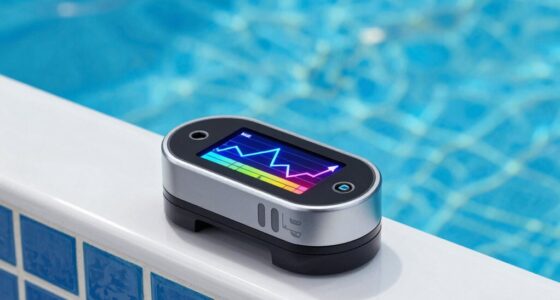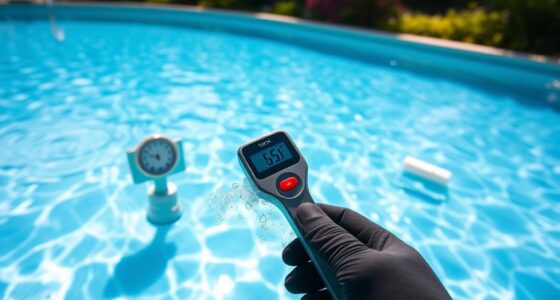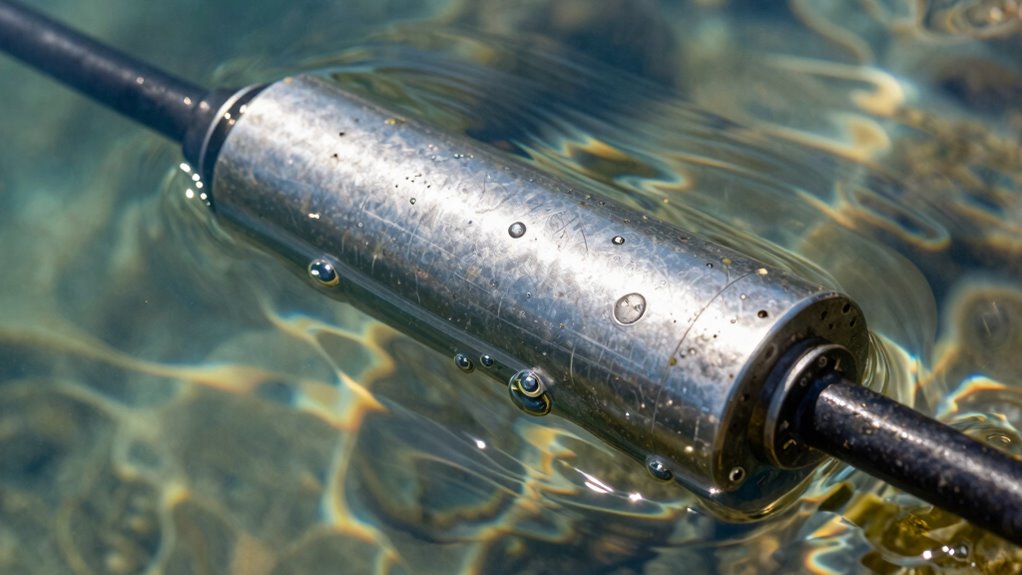

ORP levels give you a quick idea of how reactive or disinfected your water is, helping you understand its overall oxidation potential and pathogen-killing ability. However, they won’t tell you specific chemical contaminants, pollutant levels, or toxins present. A high ORP might mean effective disinfection, but it doesn’t guarantee safety from all impurities. To get a full picture, you need to take into account other water quality indicators—if you want to know more, keep exploring.

Get pool and patio gear delivered free with Prime
- Fast, free delivery on millions of items
- Prime Video, Amazon Music and more included
- Member-only deals all year
Key Takeaways
- ORP indicates the water’s reactivity and oxidizing potential but does not specify specific contaminants or their concentrations.
- A high ORP suggests strong oxidizing conditions, but doesn’t guarantee water safety from all toxins or pathogens.
- ORP readings are influenced by factors like pH, temperature, and chemical presence, requiring contextual interpretation.
- Low ORP does not automatically mean water is unsafe; it may reflect organic matter or reducing agents.
- ORP cannot identify or quantify specific pollutants; it serves as a broad indicator rather than a detailed diagnostic tool.
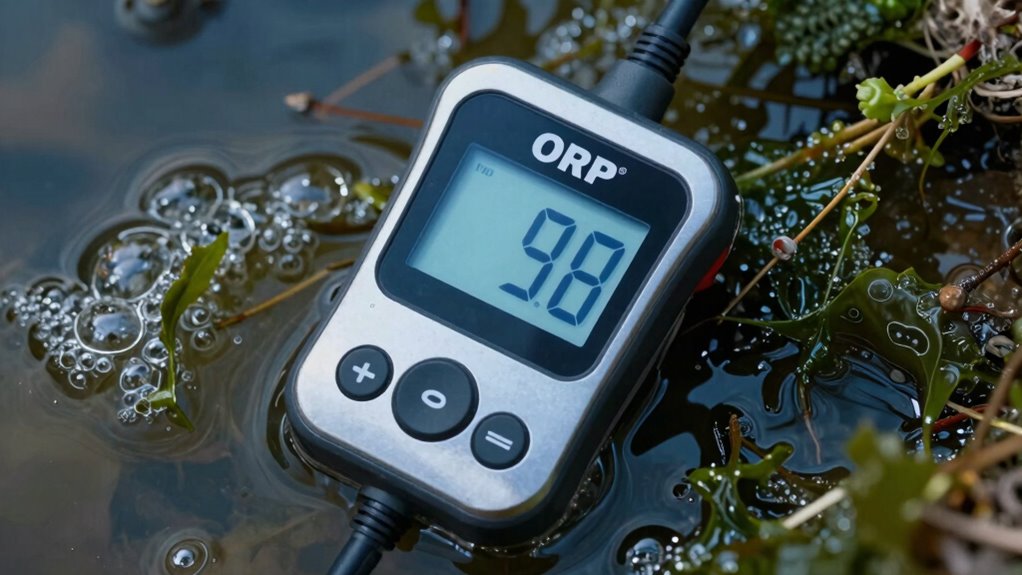
What ORP can tell you is how reactive or stable a solution might be, especially in applications like water treatment or swimming pools. A high ORP value suggests the water is strongly oxidizing, which usually means it’s effective at killing bacteria and other pathogens. Conversely, a low ORP indicates reducing conditions, which could mean the water isn’t disinfecting properly or might be prone to corrosion. But don’t assume that a high ORP always guarantees safety—other factors like contaminants or chemical imbalances can influence water quality without changing ORP noticeably. Additionally, ORP doesn’t specify the specific chemical composition or concentrations of pollutants, making it a broad indicator rather than a diagnostic tool for particular toxins or impurities. For example, water could have a high ORP due to the presence of chlorine, but that doesn’t mean other harmful substances aren’t lurking beneath the surface. Similarly, a low ORP doesn’t automatically mean the water is unsafe; it might just reflect the presence of certain reducing agents or organic matter. Recognizing these measurement limitations is crucial when assessing overall water safety, especially in outdoor or wilderness environments. Understanding the reactivity of substances involved can help interpret ORP readings more accurately and avoid misjudging water quality based solely on ORP levels. Being aware of contextual factors such as pH and temperature can further refine how you interpret ORP results and ensure more accurate water assessments. Recognizing these measurement limitations helps prevent misinterpretations of water quality based solely on ORP readings.
As an affiliate, we earn on qualifying purchases.
Frequently Asked Questions
Can ORP Levels Predict Water Safety for Drinking?
ORP levels alone can’t reliably predict water safety for drinking. While ORP measures the water’s oxidation-reduction potential, it doesn’t directly indicate contaminants or pathogens. You should also check water pH and chlorine levels, as these influence disinfection effectiveness. Maintaining proper chlorine levels and balanced pH ensures safe, clean water. Relying solely on ORP can be misleading; always perform thorough testing for thorough water safety.
Is ORP Affected by Water Temperature?
You might notice that water temperature fluctuations can influence ORP readings, but temperature itself doesn’t directly affect the ORP value. Instead, it impacts calibration accuracy, causing potential inconsistencies. When testing, you often coincidentally observe that as water warms or cools, your readings can drift if you haven’t properly calibrated your sensor for temperature changes. So, keep calibration in check to make certain of reliable ORP measurements regardless of temperature shifts.
How Often Should ORP Be Tested in Water?
You should test ORP in water at least once a week to guarantee ideal chlorine effectiveness and water quality. Regular testing helps you monitor water pH levels, which influence ORP readings. If pH shifts too high or low, it affects chlorine’s ability to sanitize effectively. Keeping a consistent testing schedule allows you to adjust chemicals promptly, maintaining safe, clear water and preventing issues like algae or bacteria growth.
Does High ORP Indicate Harmful Bacteria Presence?
A high ORP doesn’t necessarily mean harmful bacteria are present; it mainly indicates good water quality with oxidative potential. While elevated ORP levels can suggest fewer bacteria, they don’t directly measure bacterial growth. To accurately assess bacterial contamination, you need specific tests. Relying solely on ORP can be misleading, so always combine it with other water quality checks to guarantee safe water.
Can ORP Readings Vary Between Different Meters?
You’ll find that ORP readings can vary between different meters, so don’t assume one is perfect. Think of it as comparing apples and oranges; calibration plays a big part. To keep readings consistent, regularly calibrate your meter and follow manufacturer instructions. This way, your measurements stay reliable and comparable over time, helping you make better decisions about water quality without getting caught in a web of conflicting data.
As an affiliate, we earn on qualifying purchases.
Conclusion
In understanding ORP, you learn its value, you respect its limits, and you recognize its purpose. You use ORP to gauge oxidation, but you don’t rely solely on it for a complete picture. You interpret its readings carefully, but you don’t ignore other factors. You trust what it can tell you, while staying aware of what it can’t. You stay informed, stay cautious, and stay adaptable—because ORP is just one piece of the puzzle.
As an affiliate, we earn on qualifying purchases.
As an affiliate, we earn on qualifying purchases.
Fall Picks
fall essentials
As an affiliate, we earn on qualifying purchases.