A calcium hardness calculator helps you maintain proper calcium levels in your pool or spa, preventing scale buildup and ensuring clear water. By regularly testing and adjusting calcium levels between 200–400 ppm, you keep your equipment protected and your water balanced. If calcium gets too high, scaling can damage filters and heaters; if too low, water becomes corrosive. Keep your system running smoothly and discover more tips to optimize water quality.
Key Takeaways
- A calcium hardness calculator helps monitor calcium levels to prevent scaling by maintaining proper water balance.
- Regular testing with the calculator identifies deviations, enabling timely adjustments to avoid calcium deposits.
- Keeping calcium levels within 200–400 ppm reduces the risk of scale buildup on surfaces and equipment.
- The calculator guides the addition of calcium chloride or dilution to correct high or low calcium levels.
- Using a calcium hardness calculator supports proactive water management, ensuring clear, scale-free pool and spa water.
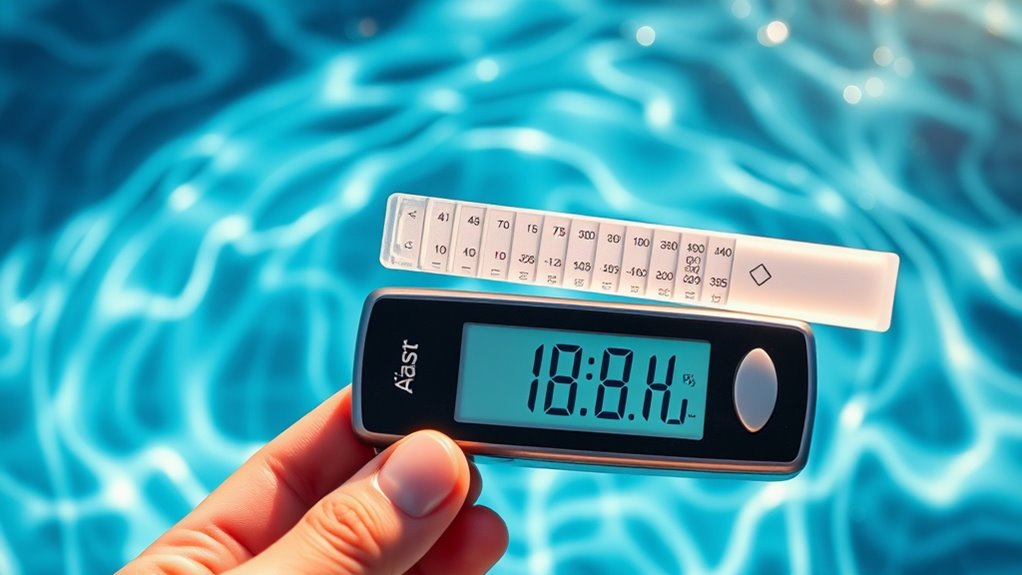
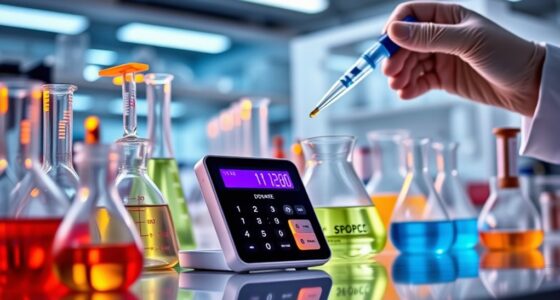
A calcium hardness calculator helps you determine the amount of dissolved calcium in your water, which is essential for maintaining a healthy and balanced swimming pool or spa. When you accurately measure calcium levels, you’re taking a crucial step toward ensuring optimal water quality. Proper calcium levels help prevent issues like water becoming cloudy, corroding equipment, or forming unsightly deposits. One of the most common problems caused by improper calcium balance is scaling, which occurs when calcium precipitates out of the water and deposits on surfaces. Scaling not only diminishes water clarity but can also damage filters, heaters, and other vital equipment, leading to costly repairs and downtime.
A calcium hardness calculator helps maintain water quality and prevent scaling in pools and spas.
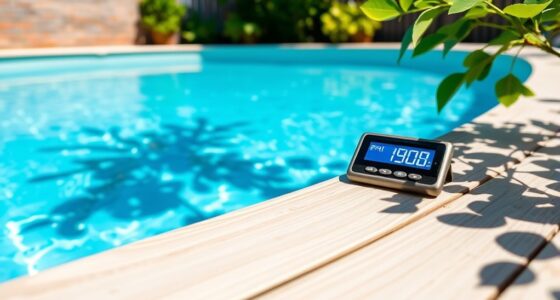
Using a calcium hardness calculator allows you to keep calcium levels within the recommended range—usually between 200 and 400 ppm for pools. Staying within this range is key to scaling prevention because it minimizes the risk of calcium deposits forming on your pool’s surfaces and equipment. If your calcium hardness is too low, your water can become corrosive, damaging metal parts and leading to leaks or equipment failure. Conversely, if calcium levels are too high, the excess calcium can lead to scale buildup, which hampers circulation and reduces equipment efficiency. By regularly testing and adjusting calcium levels with the help of a calculator, you maintain a delicate balance that promotes water quality and prevents scaling.
Monitoring calcium levels with a calculator isn’t a one-time task; it’s an ongoing process that helps you catch issues early before they escalate into costly repairs. When you notice calcium levels creeping above the recommended range, you can take corrective steps, such as diluting the water or adding chemicals designed to control calcium hardness. Conversely, if calcium is too low, you can add calcium chloride to bring it back into the ideal range. These adjustments, guided by accurate measurements, help you maintain water that’s not only safe to swim in but also easy to maintain, reducing the need for frequent cleaning and chemical treatments.
Additionally, understanding the role of automation in water chemistry management can further simplify maintaining proper calcium levels, reducing manual testing and adjustments.
In the end, a calcium hardness calculator is an essential tool for keeping your water quality high and preventing scaling. It empowers you to manage calcium levels proactively, ensuring your pool or spa remains clear, inviting, and in top condition. Proper calcium balance minimizes maintenance efforts, extends the lifespan of your equipment, and guarantees a better swimming experience. By consistently monitoring and adjusting calcium hardness, you’re taking control of your water chemistry, keeping scaling at bay, and enjoying the peace of mind that comes with well-maintained water.

Varify Water Hardness Test Kit – Water Testing Kit for Home, Drinking, Well, Spa, Swimming Pool, Softener, Dishwasher & More – Hard Water Test Strips for Calcium, Magnesium etc (0-425 pmm, 150 Strips)
PROTECT YOUR HOME AND WELLNESS: Understand the impact of hard water on your home and health. Hard water…
As an affiliate, we earn on qualifying purchases.
As an affiliate, we earn on qualifying purchases.
Frequently Asked Questions
How Often Should I Test My Pool’s Calcium Hardness Levels?
You should test your pool’s calcium hardness levels at least once a month during regular pool maintenance. Regular water testing helps you catch any imbalances early and prevents scaling issues. If you notice cloudy water or scale buildup, test more frequently. Maintaining proper calcium hardness ensures your pool water stays balanced, protects your equipment, and keeps your pool looking crystal clear. Stay proactive with water testing for ideal pool health.
What Are the Signs of High Calcium Hardness in My Water?
If your water shows signs of calcium buildup, you’ll notice cloudy water, rough surfaces, or white spots on your pool tiles. These signs also affect water clarity, making it hazy or dull. You might see film or deposits forming on surfaces or feel a gritty texture. Keep an eye out for these indicators to catch high calcium hardness early, ensuring your pool stays clean, clear, and properly balanced.
Can Calcium Hardness Levels Affect Other Pool Chemical Balances?
Yes, high calcium hardness levels can affect your water chemistry by causing mineral buildup, which impacts the effectiveness of pool chemicals. When calcium levels are too high, it can lead to cloudy water, scaling on surfaces, and difficulty maintaining proper pH and alkalinity. You should regularly test and adjust calcium hardness to keep water balanced, preventing mineral buildup and ensuring your pool chemicals work effectively.
How Do Temperature Changes Influence Calcium Scale Formation?
Temperature fluctuations directly influence calcium scale formation by increasing mineral precipitation. As water heats up, calcium and other minerals become less soluble, leading to scale buildup on pool surfaces and equipment. When temperatures drop, scale formation slows down, but rapid changes can cause mineral deposits to loosen or form unevenly. To prevent this, maintain consistent water temperatures and monitor calcium hardness levels, especially during seasonal shifts.
Are There Environmentally Friendly Methods to Reduce Calcium Hardness?
Yes, you can use eco-friendly solutions like natural water treatment methods to reduce calcium hardness. These include adding organic materials such as peat or using plant-based filtration systems that naturally bind calcium ions. These methods are environmentally friendly, cost-effective, and safe for your household and the environment. By opting for natural water treatment, you help prevent scaling without relying on harsh chemicals, promoting a healthier water system and eco-conscious living.
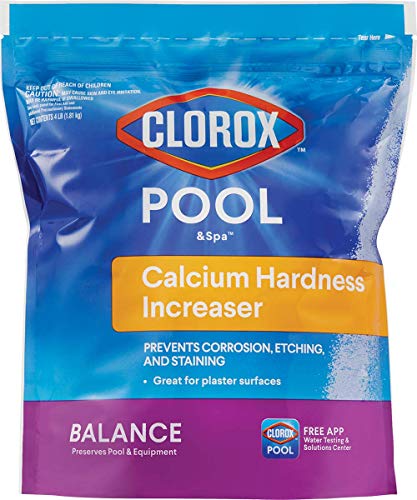
Clorox® Pool&Spa™ Swimming Pool Calcium Hardness Increaser, Prevents Corrosion, Etching and Staining, 4LB (Pack of 1)
Prevents Corrosion, Etching, and Staining: With Clorox Pool&Spa Swimming Pool Calcium Hardness Increaser, you can safeguard your pool…
As an affiliate, we earn on qualifying purchases.
As an affiliate, we earn on qualifying purchases.
Conclusion
By understanding calcium hardness, you prevent scaling, protect your equipment, and guarantee water quality. By monitoring levels, adjusting treatments, and maintaining balance, you create a safer environment. By staying proactive, you avoid costly repairs, reduce maintenance time, and extend equipment lifespan. Remember, controlling calcium hardness isn’t just about numbers; it’s about safeguarding your system, improving performance, and achieving peace of mind. Take control today, and let your water work for you, not against you.

Aqua Joe Pool & Spa Calcium Chloride Pellets, 50 lb Bag – Calcium Hardness Increaser for Above & In-Ground Pools + Fast-Acting Ice Melt, CCPL50
Raises calcium hardness levels to help prevent corrosion, surface etching, staining, and cloudy water in pools and spas
As an affiliate, we earn on qualifying purchases.
As an affiliate, we earn on qualifying purchases.

2025 All-New pH Meter for Water – High Accuracy Digital pH Tester (0.01 Precision) with UL Certification and 3 pH Calibration Powders – Ideal for Home Water, Hydroponics, Aquariums, Pools, and More
Reliable Brand: At MEXYBE, we believe that knowledge is power, especially the water we consume. We are dedicated…
As an affiliate, we earn on qualifying purchases.
As an affiliate, we earn on qualifying purchases.