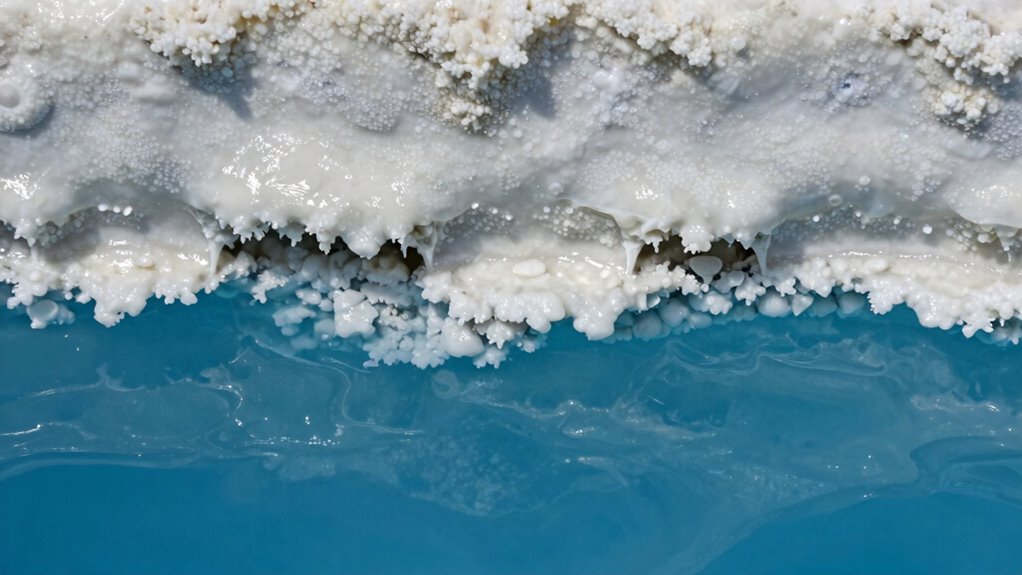

Maintaining the right calcium hardness level is key to preventing scale buildup and water damage in your pool. When calcium levels are too high, you’ll see white deposits and scaling on surfaces and equipment, while low levels can cause corrosion and cloudy water. The ideal range is typically 200-400 ppm. If you keep calcium balanced, your pool stays clear and safe. Want to find out how to measure and adjust calcium hardness properly? Keep going for expert pointers.
Key Takeaways
- Maintaining calcium hardness between 200-400 ppm prevents scale formation while ensuring water remains protected from corrosion.
- Excess calcium above 400 ppm leads to scaling and mineral buildup, compromising pool surfaces and equipment.
- Too little calcium below 200 ppm causes water to become corrosive, risking damage to pool surfaces and components.
- Regular testing and balancing of calcium levels help stay within the optimal range, avoiding the protected vs. scaled threshold.
- Using scale inhibitors and proper water chemistry management maintains the delicate balance between protection and scaling.
As an affiliate, we earn on qualifying purchases.
What Is Calcium Hardness and Why Does It Matter?
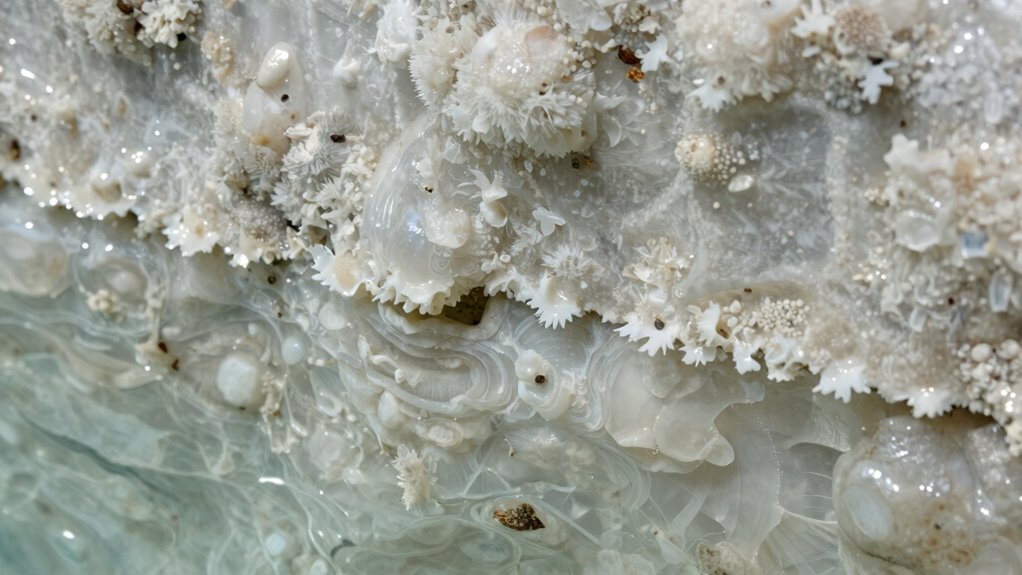
Calcium hardness refers to the amount of dissolved calcium ions in your water, which affects its overall mineral content. This level influences calcium saturation, meaning how much calcium your water can hold before it starts to cause problems. When calcium saturation is high, water becomes prone to scaling and mineral buildup, impacting pool equipment and surfaces. Proper water mineralization balances calcium levels, ensuring your pool stays clean and functions efficiently. Too little calcium can lead to corrosive water that damages equipment, while too much results in scale formation. Monitoring calcium hardness helps you maintain ideal calcium saturation, preventing issues related to improper water mineralization. Keeping the right calcium levels ensures your pool remains clear, safe, and properly protected. calcium saturation is a critical factor in managing water quality effectively. Additionally, understanding water mineralization helps prevent problems that could compromise the longevity of your pool equipment and surfaces. Maintaining optimal calcium levels also contributes to preventing scale buildup, which can be costly and difficult to remove once established. Proper management of calcium levels also supports the overall water chemistry balance, ensuring a healthier swimming environment. Regular testing of calcium hardness and adjusting levels as needed can also prevent corrosion and scaling, safeguarding your equipment and surfaces from damage.
As an affiliate, we earn on qualifying purchases.
How to Recognize If Your Pool Has Too Little or Too Much Calcium
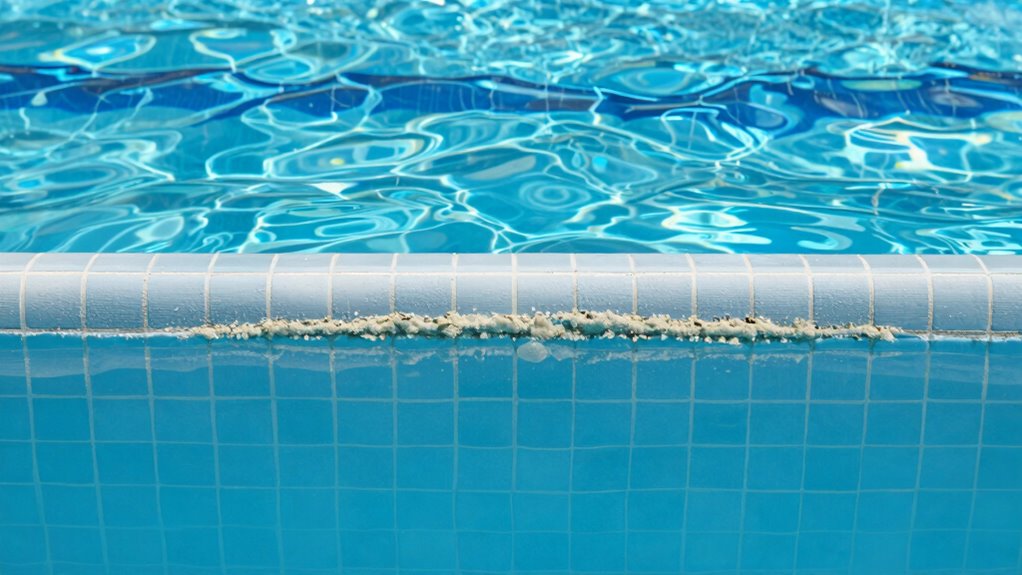
Monitoring your pool’s calcium levels is essential because both deficiencies and excesses can cause problems. Too little calcium can lead to poor water mineralization, resulting in rough or cloudy water and increased equipment wear. Signs of low calcium saturation include water that feels slimy or surfaces that develop etching or corrosion. On the other hand, too much calcium causes water to become overly mineralized, leading to scaling, cloudy water, and potential damage to pipes and equipment. You might notice white, chalky deposits on pool surfaces or equipment. Maintaining the correct calcium balance ensures ideal water mineralization, helping your pool stay clear and protected. Regular testing and adjusting calcium levels keep your pool in the safe zone between protected and scaled. Understanding dream symbolism related to clocks and time can offer insights into the natural cycles of balance and change, much like maintaining proper calcium levels in your pool. Additionally, consistent monitoring helps prevent scale buildup, which can be mitigated by proper water treatment techniques and water chemistry management to extend the lifespan of your pool’s components. Incorporating proper water testing procedures can further ensure your calcium levels remain within the optimal range. Recognizing the importance of balanced water chemistry can help you avoid costly repairs and maintain a sparkling, healthy pool.
As an affiliate, we earn on qualifying purchases.
How to Check Your Pool’s Calcium Levels
To keep your pool balanced, you’ll need to check your calcium levels regularly. There are different testing methods available, such as test strips and liquid test kits, each with their own advantages. Once you have your results, understanding what they mean helps you decide if you need to add calcium or take other corrective actions. Maintaining appropriate calcium levels also plays a role in supporting caregivers’ emotional well-being, as a well-maintained environment can reduce stress and promote peace of mind.
Testing Methods Overview
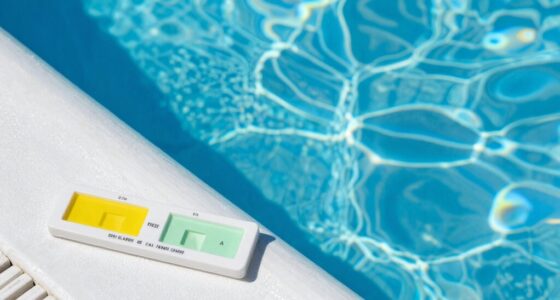
Testing your pool’s calcium levels is a straightforward process that guarantees your water remains balanced and prevents equipment damage. Proper testing helps you monitor calcium hardness and avoid issues like pH fluctuations and mineral deposits. You can use test strips for quick results or a drop-based test kit for greater accuracy. Both methods involve collecting a water sample and comparing the color change to a chart. Regular testing ensures you catch rising calcium levels early, maintaining ideal conditions. Here’s a quick comparison:
| Method | Accuracy | Ease of Use |
|---|---|---|
| Test Strips | Moderate | Very simple |
| Drop Test Kits | High | Slightly more involved |
| Digital Meters | Very high | Requires calibration |
Choose based on your precision needs and convenience.
Interpreting Calcium Results
Understanding your pool’s calcium levels is essential for maintaining water balance and preventing damage. To interpret calcium results, focus on calcium saturation and water mineralization. Check your test kit or lab report for calcium hardness, usually expressed in ppm (parts per million). If levels are too high, your water is over-saturated, risking scaling and cloudy water. If too low, your water may be corrosive, damaging surfaces and equipment. Look for these indicators:
- Calcium levels above 400 ppm suggest potential scaling.
- Levels below 200 ppm indicate corrosive water.
- Proper calcium saturation maintains water mineralization.
- Adjust calcium hardness with appropriate balancing agents as needed.
- Regular water testing ensures your calcium levels remain within optimal ranges.
- Maintaining balanced calcium levels is also important for preventing scale buildup and ensuring the longevity of your pool surfaces.
- Consistently monitoring calcium levels helps avoid damage to pool equipment, which can be costly and disruptive.
- Using electric water testing tools can improve accuracy and ease ongoing monitoring.
- Incorporating water chemistry knowledge can help you better understand and manage your pool’s calcium levels effectively.
As an affiliate, we earn on qualifying purchases.
How to Adjust Calcium Hardness in Your Pool
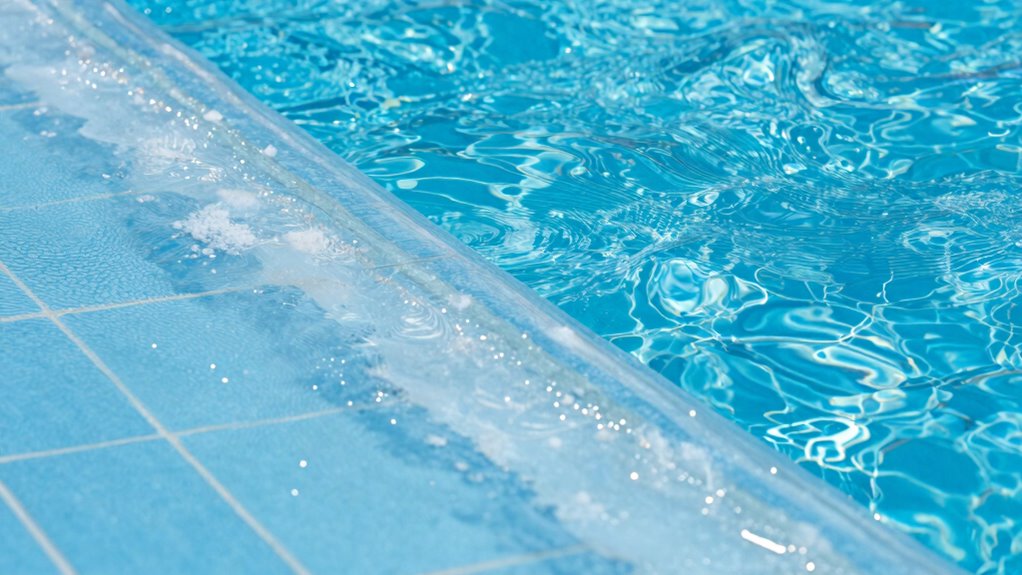
Adjusting the calcium hardness in your pool is essential for maintaining proper water balance and protecting your equipment. To increase calcium levels, perform calcium supplementation by adding calcium chloride, following the manufacturer’s instructions carefully. Spread the chemical evenly around the pool and run your pump to circulate it thoroughly. If calcium levels are too high, you’ll need to dilute the water by partially draining the pool and refilling with fresh water to lower hardness. Regular mineral balancing helps prevent scale buildup and equipment damage. Always test your water after adjustments to ensure calcium levels are within the ideal range of 200-400 ppm. Maintaining proper calcium hardness supports overall water quality and prolongs your pool’s lifespan. Additionally, understanding market trends can help you make informed decisions about water treatment products and approaches. Proper calcium management is also crucial for preventing scale formation that can impair equipment performance and increase maintenance costs. Monitoring your water chemistry regularly allows for timely adjustments and helps maintain optimal pool conditions.
Tips for Keeping Calcium Balanced and Preventing Scale
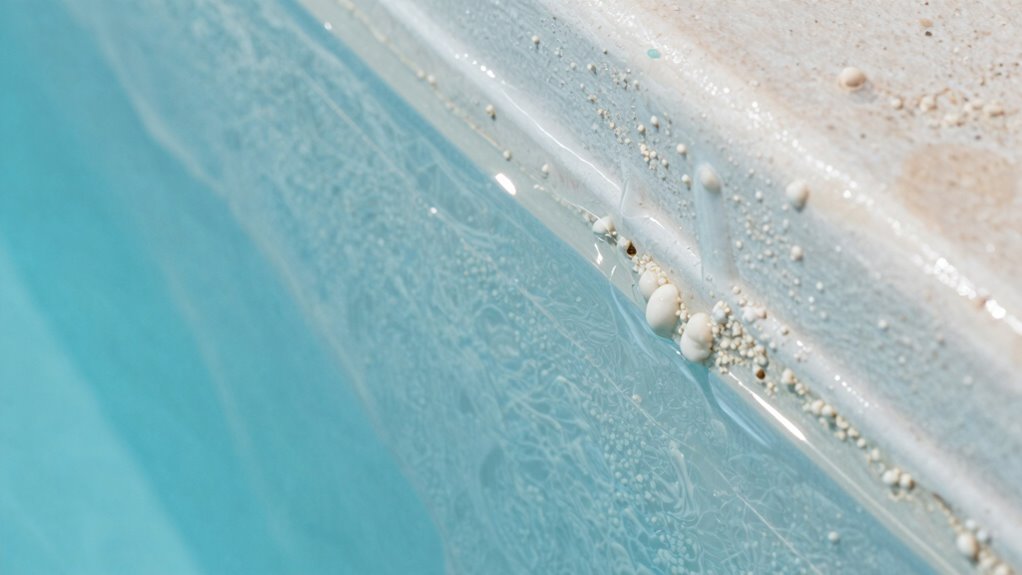
To keep your calcium levels balanced and prevent scale buildup, you should regularly test your pool water. Using scale inhibitors can also help protect your surfaces and equipment from mineral deposits. Staying consistent with these practices makes it easier to maintain a clear, healthy pool.
Regular Water Testing
Regular water testing is essential for maintaining balanced calcium levels and preventing scale buildup. By regularly checking your water, you can catch issues early and adjust accordingly. Focus on monitoring water pH to ensure it stays within the ideal range, which helps keep minerals in check. Maintaining proper mineral balance prevents excessive calcium from precipitating out and forming scale.
- Test water pH weekly to avoid fluctuations that can cause scale.
- Measure calcium hardness levels to keep them within recommended ranges.
- Check for other minerals that may affect water chemistry.
- Record results to track changes over time and act proactively.
Consistent testing helps you stay informed about your water’s chemistry, making it easier to keep calcium levels balanced and prevent stubborn scale formation.
Use of Scale Inhibitors
Using scale inhibitors is a practical way to keep calcium levels in check and prevent buildup on surfaces and equipment. These inhibitors work by interfering with crystal formation, reducing the risk of scale. They also help stabilize pH fluctuation, which can otherwise cause water clarity issues and promote scale formation. When properly used, scale inhibitors maintain water clarity by preventing mineral deposits that cloud the water or damage equipment. Consistent application of inhibitors ensures calcium remains in solution, avoiding the formation of harmful scale. Be sure to follow manufacturer instructions for dosage and timing. Regular testing helps confirm effectiveness, especially if pH fluctuates frequently. By using scale inhibitors correctly, you protect your system from scale buildup while keeping water clear and balanced.
Troubleshooting Common Calcium Hardness Problems
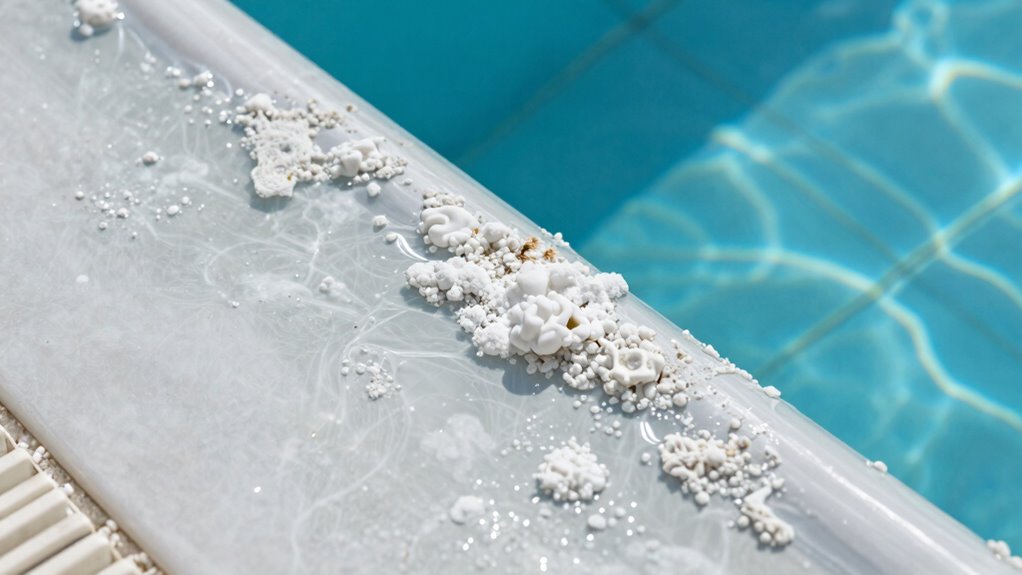
When calcium hardness levels are either too high or too low, they can cause noticeable problems in your pool. High calcium levels often lead to calcium scaling, which leaves deposits on surfaces and equipment. Low levels, on the other hand, can cause water corrosion, damaging pool components and promoting metal staining. To troubleshoot these issues:
- Test calcium hardness regularly to identify imbalances.
- Reduce high calcium levels with partial water replacement or dilution.
- Increase calcium hardness if water is too corrosive, using calcium chloride.
- Use pH and alkalinity adjustments to stabilize water chemistry and prevent scaling or corrosion.
Maintaining balanced calcium hardness prevents scaling and reduces the risk of water corrosion, keeping your pool clear, safe, and well-maintained. Proper troubleshooting ensures your pool stays in ideal condition.
Frequently Asked Questions
How Often Should I Test My Pool’s Calcium Hardness Levels?
You should test your pool’s calcium hardness levels at least once a month through calcium testing. Maintaining proper hardness balance prevents scaling and corrosion, ensuring your pool stays clear and healthy. During periods of heavy use or after adding chemicals, check levels more frequently. Regular testing helps you catch imbalances early, so you can adjust your water chemistry promptly and keep your pool in ideal condition.
What Are the Signs of Calcium Deficiency in a Pool?
Did you know that 75% of pool owners overlook calcium deficiency signs? If you notice your water appears cloudy, stains, or your pool equipment starts corroding faster, you might have calcium deficiency. Low calcium levels lead to pool corrosion and damage to plaster or vinyl surfaces. Keep an eye out for these signs, and test your calcium hardness regularly to prevent costly repairs and maintain your pool’s health.
Can High Calcium Hardness Damage My Pool Equipment?
High calcium hardness can damage your pool equipment by causing calcium saturation, which leads to scale buildup on filters, pumps, and heaters. This buildup can restrict water flow and reduce equipment efficiency. Over time, it may also contribute to equipment corrosion if the calcium deposits create uneven surfaces or cracks. Regularly testing and balancing your calcium levels helps prevent these issues and keeps your pool equipment functioning smoothly.
Does Water Temperature Affect Calcium Scale Formation?
Did you know that higher water temperatures considerably increase calcium precipitation? When water gets warmer, calcium scale formation accelerates because warmer water holds less dissolved calcium, leading to more scale buildup. So, yes, water temperature directly impacts calcium scale formation—hotter water promotes more calcium deposits. To prevent this, you should monitor your pool’s temperature and maintain proper water chemistry, especially in heated pools, to reduce scale buildup.
Are Certain Pool Types More Prone to Calcium Issues?
Certain pool types are more prone to calcium issues, especially those with high mineral content like natural mineral or saltwater pools. You should pay close attention to your pool’s mineral levels, as high mineral content can lead to scaling and cloudy water. Regular testing and balancing of calcium hardness help prevent buildup, ensuring your pool stays clear and properly maintained, regardless of its type.
Conclusion
Maintaining the right calcium hardness is like walking a tightrope—you need balance to avoid damaging your pool. Too little calcium can cause corrosion, while too much leads to unsightly scale. By regularly testing and adjusting your levels, you keep your pool crystal clear and inviting. Think of it as tuning a fine instrument; with a little care, you’ll enjoy a smooth, trouble-free swim season. Stay vigilant, and your pool will thank you for it.