
Borates in pools help stabilize your pH levels, preventing quick fluctuations and making water maintenance easier. They also act as a mild algae inhibitor, slowing algae growth and reducing the need for harsh chemicals. When added properly, borates enhance water clarity, shine, and surface protection. To keep your pool in top condition, it’s important to monitor borate levels regularly and follow safe application steps. Discover more about optimizing your pool water quality.
Key Takeaways
- Borates stabilize pH levels by acting as buffering agents, preventing rapid fluctuations in pool water chemistry.
- They create a protective film on surfaces, reducing evaporation and helping maintain consistent pH.
- Borates inhibit algae growth by creating less favorable environments and acting as a mild algistatic agent.
- Proper borate levels (50-80 ppm) support pH stability and enhance overall water clarity.
- Combined with sanitizers, borates improve algae resistance and reduce chemical demand for balanced pool water.

Pool Check Borate Test Strips for Pools & Spas – 50 Count | Made in USA | Professional-Grade Accuracy Used by Pool Pros
✔EASY TO USE: Single dip and read test strip procedure and optimized color chart make the product ideal…
As an affiliate, we earn on qualifying purchases.
As an affiliate, we earn on qualifying purchases.
What Are Borates and How Do They Function in Pool Water

Have you ever wondered what borates are and why they’re added to pool water? Borates are chemical compounds derived from boron, commonly found in minerals like borax. When added to your pool, they act as a stabilizer, helping to regulate the pH level and prevent sudden changes. Borates work by forming a thin, protective layer on the pool’s surface, which reduces evaporation and minimizes the impact of pH fluctuations. They also help inhibit algae growth by creating an environment less favorable for algae to thrive. Fundamentally, borates support your pool’s chemistry by maintaining stability and clarity. This not only makes water easier to manage but also enhances the overall quality of your swimming environment. Additionally, understanding the role of water chemistry is essential for maintaining a healthy and balanced pool.
pool pH stabilizer borates
As an affiliate, we earn on qualifying purchases.
As an affiliate, we earn on qualifying purchases.
The Role of Borates in Maintaining Ph Balance

Borates play a crucial role in maintaining the pH balance of your pool water by acting as a stabilizing agent. They help prevent rapid pH fluctuations caused by heavy use, weather changes, or chemical additions. By buffering the water, borates keep the pH level steady, reducing the need for frequent adjustments. This stability ensures your pool water remains comfortable for swimmers and protects your equipment from corrosion or scaling. When borates are present, the pH is less likely to drift into undesirable ranges, maintaining ideal conditions for sanitation and clarity. You’ll notice fewer pH swings, which simplifies pool maintenance and improves water quality. Incorporating borates creates a balanced environment, making it easier for you to enjoy clean, well-maintained pool water. Regular monitoring and adherence to safety standards ensure proper pool chemistry and user safety.

Clorox® Pool&Spa™ Swimming Pool Algaecide and Clarifier, Prevents and Treats Pool Algae, Clears Water, 128 Fl Oz (Pack of 1)
Pool Algae Treatment: Our Pool Algaecide and Clarifier is specially formulated to treat existing algae while providing long-lasting…
As an affiliate, we earn on qualifying purchases.
As an affiliate, we earn on qualifying purchases.
Benefits of Using Borates for Algae Prevention

Using borates in your pool helps prevent algae from taking hold, making maintenance easier and reducing the need for harsh chemicals. They also support better water balance, which keeps your pool clearer and more comfortable. Overall, borates offer a simple way to keep your pool cleaner and healthier. Implementing borates can also contribute to a more balanced lifestyle by reducing the time and effort spent on pool maintenance.
Algae Growth Inhibition
Because borates help maintain a stable pH level in pool water, they create an environment less favorable for algae growth. When pH stays consistent, algae struggle to thrive, reducing the chances of blooms forming. Borates also act as a mild algistatic agent, slowing down algae reproduction without killing existing algae outright. This means your pool stays clearer longer and requires fewer chemical treatments. Additionally, borates help inhibit algae’s ability to attach to surfaces, making it harder for colonies to establish. As a result, algae are less likely to take hold and spread. Using borates creates a hostile environment for algae, making it easier to keep your pool clean and clear without relying heavily on chlorine or other harsh chemicals. Incorporating sound healing science principles, some believe that maintaining a balanced environment can enhance overall pool health and clarity.
Enhanced Water Balance
Have you ever wondered how to keep your pool’s water balanced while preventing algae? Using borates can help achieve this by stabilizing your water’s pH levels. When you add borates, they act as a buffer, making it easier to maintain consistent pH and alkalinity. This stability reduces fluctuations that can cause irritation or encourage algae growth. Borates also promote a smoother water feel and clearer appearance. By improving water balance, you’ll spend less time adjusting chemicals and more time enjoying your pool. Plus, a well-balanced pool with borates resists algae better, reducing the need for harsh chemical treatments. Incorporating aesthetic wall organization can also help keep your pool area tidy and inviting. Overall, incorporating borates simplifies maintaining a healthy, inviting pool while preventing algae and ensuring your water stays balanced.

Clorox® Pool&Spa™ Swimming Pool Super Water Clarifier, Creates Crystal Clear Pool Water, 1 Quart (Pack of 1)
Super Water Clarifier: Clorox Pool&Spa Swimming Pool Super Water Clarifier is a concentrated solution that clears dull, hazy,…
As an affiliate, we earn on qualifying purchases.
As an affiliate, we earn on qualifying purchases.
How to Properly Add Borates to Your Pool

To add borates correctly, start by measuring your pool’s current borate levels to determine how much you need. Next, add borates safely, following the manufacturer’s instructions carefully. Additionally, consider understanding the importance of decoding slang to better interpret product instructions and safety warnings. Finally, keep an eye on your pH to make certain the water remains balanced and effective.
Measure Borate Levels
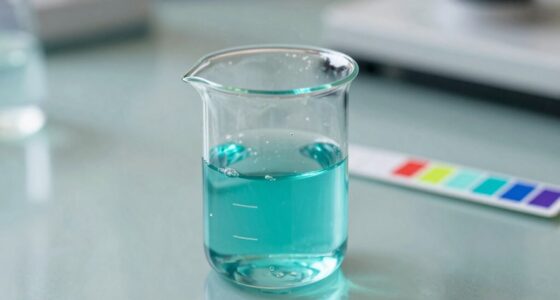
Wondering how to guarantee your borate levels are just right? The key is accurate testing. Use a reliable borate test kit or digital tester designed specifically for pools. First, collect a water sample from the deep end of your pool, away from skimmers and returns. Follow the instructions carefully, adding the reagent or using the digital device to get an exact reading. Borate levels should be between 50 and 80 ppm for ideal results. If your levels are too low, you’ll need to add more borates, but avoid overdoing it. Regular testing ensures your pool maintains the proper balance, helping you avoid algae growth and pH fluctuations. Keep a log of your readings for consistent pool health. Proper testing methods are essential for maintaining optimal borate levels and overall pool chemistry.
Add Borates Safely
Adding borates to your pool requires careful attention to safety and proper technique. Always wear protective gloves and goggles to prevent skin and eye irritation. Before adding borates, verify your pool’s pH is balanced, as this helps the borates dissolve evenly. Measure the correct amount of borate compound based on your pool’s volume, following manufacturer instructions carefully. Dissolve the borates in a bucket of water before pouring it slowly around the pool’s perimeter to avoid clumping. Stir gently to promote even distribution. Never add dry borates directly into the water without dissolving. Maintain steady, calm water circulation during and after addition. Proper handling minimizes risks and ensures the borates effectively improve your pool’s stability and algae resistance.
Maintain Proper Ph
How you add borates to your pool can directly impact your pH balance and overall water chemistry. To maintain proper pH levels, follow these steps:
- Test your water’s pH regularly using a reliable test kit.
- Add borates gradually, typically around 50 ppm, ensuring even distribution.
- Use a bucket of water to pre-dissolve the borate compound before pouring it into the pool.
- Run your pool’s pump for several hours after adding borates to ensure thorough mixing.
- Monitoring your water’s chemistry with accurate testing helps maintain optimal pH and water quality.
Keeping an eye on pH levels after adding borates helps prevent fluctuations. Adjust pH with acid or alkali as needed, but always re-test before making further changes. Proper application guarantees stable pH and excellent water quality.
Effects of Borates on Water Clarity and Shine

Borates substantially enhance water clarity and shine by forming a thin, protective film on the pool’s surface. This film reflects sunlight, giving your pool a brighter, more inviting appearance. It also helps prevent water discoloration caused by algae or mineral deposits. To illustrate, consider the benefits:
| Benefit | Effect | Result |
|---|---|---|
| Improved clarity | Fewer particles suspended in water | Crystal-clear water |
| Increased shine | Reflects sunlight more effectively | Sparkling surface |
| Algae resistance | Limits algae growth on surface | Less cloudiness |
| Surface protection | Shields against mineral buildup | Longer-lasting pool finish |
Additionally, tuning techniques can optimize the water chemistry balance, further supporting these positive effects.
Monitoring and Adjusting Borate Levels for Optimal Results

To guarantee you reap the full benefits of borates in your pool, it’s essential to regularly monitor and adjust their levels. Start by testing your water’s borate concentration with a reliable test kit, ideally weekly. Once you know the level, you can:
- Add boric acid or sodium tetraborate to increase borate levels if they’re too low.
- Use a partial water replacement to dilute borates if levels are too high.
- Maintain proper pH and alkalinity to maximize borate effectiveness.
- Keep an eye on other water chemistry parameters to prevent imbalances that could affect borate stability.
- Incorporate modern tech-driven testing methods to enhance accuracy and efficiency in water chemistry monitoring.
Consistent testing and adjustments ensure your pool stays in the ideal borate range, promoting algae resistance and water clarity. Regular monitoring is key to long-term pool health.
Common Myths and Misconceptions About Borates

Despite their many benefits, borates are often misunderstood, leading to misconceptions that can cause confusion or misuse. One common myth is that borates are highly toxic or dangerous at typical pool levels. In reality, when used correctly, borates are safe and help improve water clarity and algae resistance. Some believe borates will completely eliminate algae, but they primarily reduce algae growth rather than eradicate it entirely. Others think borates can harm pool equipment or swimmers; however, proper dosing ensures safety and equipment protection. Another misconception is that borates are a substitute for regular sanitizers, but they actually work alongside chlorine or bromine to enhance overall pool stability. Clearing up these myths helps you use borates effectively and safely.
Safety Considerations When Using Borates in Pools

When used properly, borates are a safe addition to your pool, but it’s important to follow recommended guidelines to prevent any risks. Here are key safety considerations:
- Maintain Proper Levels: Keep borate levels between 30-50 ppm to avoid over-concentration.
- Handle with Care: Wear gloves and eye protection when adding borates to prevent skin or eye irritation.
- Store Safely: Keep borates in a secure, dry place away from children and pets.
- Follow Manufacturer Instructions: Always adhere to dosage and application guidelines to guarantee safe use.
Comparing Borates to Other Pool Stabilizers and Algae Control Methods

Borates stand out among pool stabilizers and algae control methods because they not only help maintain water clarity but also reduce the need for frequent chemical adjustments. Unlike traditional stabilizers like cyanuric acid, borates regulate pH levels and inhibit algae growth simultaneously, offering a dual benefit. Chemical algaecides can be effective but often require repeated applications and may cause foaming or cloudy water. Chlorine alone can control algae but might lead to rapid pH fluctuations and increase chemical consumption. Borates provide a more balanced approach by stabilizing pH, reducing algae, and lessening chlorine demand. While they may involve a higher initial cost, their long-term benefits make them a smart choice for maintaining clear, healthy water with less ongoing effort.
Frequently Asked Questions
How Long Do Borates Last in Pool Water Before Needing Reapplication?
Borates generally last in your pool water for about six months before you should reapply them. Factors like water dilution, splash-out, backwashing, or rain can reduce their effectiveness sooner. To keep your pool balanced, regularly test the borate levels and add more as needed. Maintaining proper levels guarantees continued pH stability and algae resistance, so you get the best results from your borate treatment.
Are Borates Environmentally Safe for Surrounding Plants and Wildlife?
Think of borates as gentle guardians for your pool, and they’re generally safe for surrounding plants and wildlife when used properly. They don’t pose significant risks to the environment in typical pool maintenance levels. However, excessive use can harm delicate plants and aquatic life. So, it’s best to follow recommended dosages, keep the levels balanced, and avoid over-application to protect your garden’s ecosystem.
Can Borates Cause Staining or Damage to Pool Surfaces?
Borates generally won’t cause staining or damage to your pool surfaces if used correctly. However, over-application or high concentrations can lead to cloudy water or minor staining, especially on plaster or painted surfaces. To prevent this, follow manufacturer instructions carefully, maintain proper levels, and regularly monitor your pool’s chemistry. If you notice any discoloration, test your water and dilute the borates as needed to keep everything balanced.
What Is the Ideal Borate Concentration for Different Pool Types?
You should aim for a borate concentration of around 50-80 ppm in most pools. For vinyl and fiberglass pools, keep it closer to 50 ppm to prevent staining, while concrete or plaster pools can handle up to 80 ppm without issues. Regularly test your water and adjust accordingly, ensuring you’re maintaining ideal levels for algae resistance and pH stability without risking damage to your pool surfaces.
Do Borates Interfere With Pool Chemical Treatments Like Chlorine?
Think of borates as a helpful shield for your pool, not a barrier that blocks chemicals like chlorine. They actually work together, enhancing stability and reducing pH swings, so chlorine can do its job effectively. You won’t find borates interfering with your sanitizer’s power—instead, they support a balanced, cleaner pool. Just guarantee proper levels, and you’ll enjoy a harmonious mix of chemicals working together to keep your water pristine.
Conclusion
Think of borates as the silent guardians of your pool, a subtle shield that balances pH and wards off algae. When used correctly, they become the steady heartbeat beneath sparkling water, ensuring clarity and health. Like a trusted compass, borates guide your pool’s harmony, turning routine maintenance into a dance of balance. Embrace their quiet strength, and your pool will shine with the elegance of a well-tuned symphony beneath the sun.