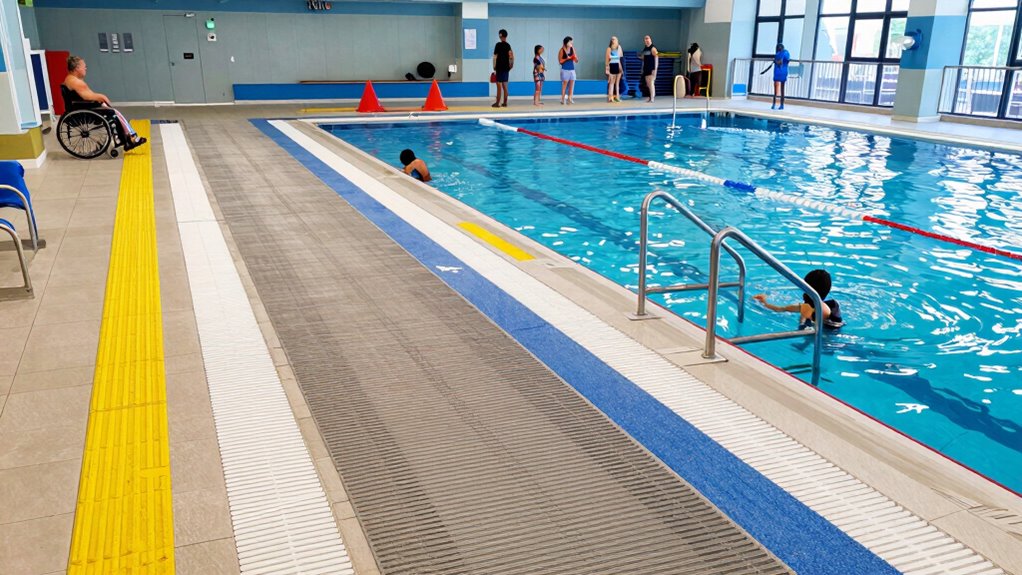

Accessibility in aquatic centers goes beyond just meeting basic standards. It’s about creating a welcoming space where everyone feels comfortable and included. You’ll see adaptive programs tailored to individual needs, sensory-friendly design elements, and clear signage to guide visitors. Trained staff help foster confidence and support. When these features come together, they build a truly inclusive environment that welcomes all guests. Keep exploring to discover more ideas for making your aquatic center truly accessible.
Open a free Amazon Business account
Business pricing, bulk buying and tax-exempt orders.
As an affiliate, we earn on qualifying purchases.
Key Takeaways
- Creating a welcoming environment tailored to diverse abilities, sensory needs, and physical challenges beyond basic standards.
- Incorporating ecological and universal design principles that enhance usability and promote environmental awareness.
- Implementing sensory-friendly features like calming zones and adjustable lighting to reduce overstimulation.
- Ensuring staff are well-trained in assisting various needs and providing clear, visual signage for navigation.
- Integrating all elements into a holistic approach that fosters community, inclusion, and joyful aquatic experiences.
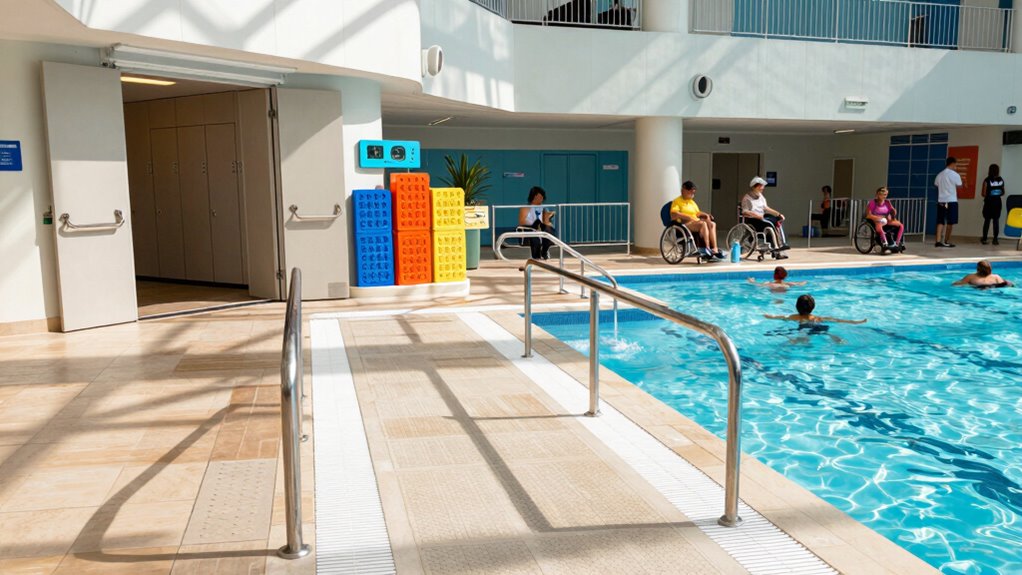
Have you ever considered how accessible aquatic centers truly are for everyone? Accessibility isn’t just about meeting minimum standards or passing inspections; it’s about creating an environment where every individual feels welcome, comfortable, and able to participate fully. When designing aquatic centers that go beyond basic compliance, you focus on the needs of diverse users, including those with disabilities, sensory sensitivities, or unique physical challenges. One way to achieve this is through adaptive swim programs. These programs tailor instruction and support to meet individual abilities, allowing people of all ages and skill levels to learn, enjoy, and benefit from water activities. They often include specialized equipment, trained instructors, and flexible class structures that accommodate varying needs, fostering confidence and independence in the water. Implementing adaptive swim programs signals your commitment to inclusivity, ensuring that no one is left behind because of their differences. Additionally, incorporating biodiversity principles into the design can enhance the natural environment of aquatic centers, promoting ecological awareness and sustainability. Recognizing the importance of universal design can help ensure that features are accessible and usable by everyone from the outset. Incorporating accessible design principles into the overall layout can further improve usability for all visitors. Beyond programming, sensory friendly design plays a pivotal role in making aquatic centers genuinely accessible. Standard facilities might overlook the sensory sensitivities of some users, especially those with autism spectrum disorder or sensory processing disorders. Creating a sensory friendly environment involves thoughtful choices like calming color schemes, quiet zones, adjustable lighting, and soundproofed areas. These features help reduce overstimulation and create a more inviting atmosphere for everyone. When you incorporate sensory friendly design, you’re not just ticking a box; you’re actively removing barriers that might keep people from enjoying the water. It’s about recognizing that accessibility is multifaceted and that comfort and sensory considerations are just as indispensable as physical ramps and accessible changing rooms. Incorporating inclusive environment strategies can further support diverse needs by fostering a sense of community and belonging for all visitors. Incorporating assistive technology can also enhance the experience for individuals with specific needs, making participation even more seamless.
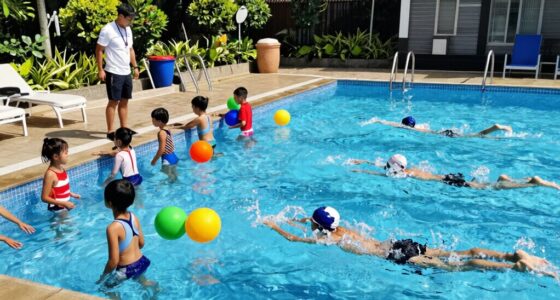
Adaptive swim programs promote inclusivity by customizing instruction and support for diverse abilities and needs.
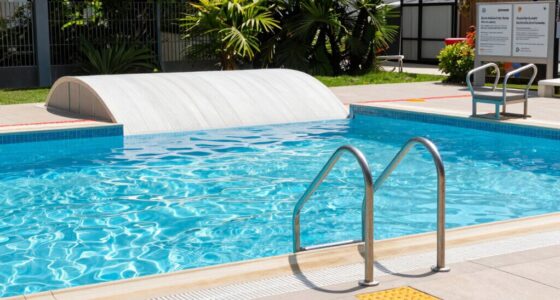
In addition to these features, true accessibility involves staff training, clear signage, and thoughtful layout planning. Your staff should be knowledgeable about different needs and approaches to assist users effectively. Signage should be easy to understand, with visuals and simple language, guiding visitors seamlessly through the facility. The layout of the space should prioritize ease of movement, with wide pathways, non-slip surfaces, and accessible entry points. When you integrate these elements with adaptive swim programs and sensory friendly design, you create a holistic environment that champions inclusivity.
Ultimately, accessibility in aquatic centers should be about more than compliance; it should embody a philosophy of inclusion. When you make these thoughtful modifications, you’re opening the water to everyone—regardless of ability, sensory sensitivity, or background—allowing all visitors to experience the joy, health benefits, and community that aquatic activities can provide.
adaptive swimming aids for disabilities
As an affiliate, we earn on qualifying purchases.
As an affiliate, we earn on qualifying purchases.
Frequently Asked Questions
How Do Aquatic Centers Train Staff on Accessibility Best Practices?
You train staff on accessibility best practices through thorough staff training programs that emphasize staff awareness of diverse needs. You organize regular workshops, practical demonstrations, and accessibility scenario role-plays to keep everyone informed and prepared. By fostering an environment where staff continuously learn and understand accessibility features, you ensure that they confidently assist all patrons, creating an inclusive, welcoming aquatic center that exceeds minimum compliance and genuinely supports everyone’s needs.
What Innovative Technologies Improve Accessibility in Aquatic Facilities?
You can improve accessibility by integrating innovative technologies like smart Assistive Equipment and Inclusive Design features. Automated lifts and adjustable pools make entry easier, while wearable devices and voice-activated systems enhance user experience. These technologies promote independence, safety, and inclusivity. By adopting such solutions, you create a welcoming environment that prioritizes diverse needs, ensuring everyone can enjoy aquatic activities comfortably and confidently.
How Are Sensory Sensitivities Accommodated in Aquatic Center Design?
You can accommodate sensory sensitivities by designing sensory-friendly environments and making environmental modifications. Use calming colors, soft lighting, and sound-absorbing materials to reduce overstimulation. Incorporate quiet zones and sensory-friendly equipment, like weighted blankets or noise-canceling headphones, to support comfort. These thoughtful adjustments create a welcoming space, ensuring individuals with sensory sensitivities feel safe and included while enjoying aquatic activities.
What Funding Options Are Available for Enhanced Accessibility Upgrades?
Funding sources and grant opportunities act as bridges to enhanced accessibility upgrades in aquatic centers. You can explore federal, state, and local grants dedicated to accessibility projects, along with private foundations focused on inclusivity. Additionally, partnerships with community organizations or sponsorships from local businesses can provide essential financial support. By actively pursuing these options, you turn the vision of a fully inclusive aquatic center into a tangible reality, ensuring everyone benefits from your commitment to accessibility.
How Is Feedback From Disabled Patrons Incorporated Into Facility Improvements?
You should actively seek feedback from disabled patrons through community engagement initiatives, such as surveys and focus groups. Incorporate their input into your facility improvements by applying inclusive design principles, ensuring that modifications truly meet their needs. Regularly update your amenities and services based on ongoing feedback, fostering an environment of continuous improvement and making your aquatic center more welcoming and accessible for everyone.
sensory-friendly aquatic center equipment
As an affiliate, we earn on qualifying purchases.
As an affiliate, we earn on qualifying purchases.
Conclusion
When you go beyond just ticking boxes, accessibility in aquatic centers becomes a welcoming tide, lifting everyone together. Imagine a place where barriers dissolve like ice in warm water, revealing a vibrant community flowing freely. By embracing more than the minimum, you create a safe harbor where all can plunge in with confidence. It’s not just compliance; it’s crafting a sanctuary where inclusion shines like sunlight on rippling water, inviting everyone to partake in the joy of swimming.
accessible pool signage and navigation aids
As an affiliate, we earn on qualifying purchases.
As an affiliate, we earn on qualifying purchases.
assistive technology for inclusive swimming
As an affiliate, we earn on qualifying purchases.
As an affiliate, we earn on qualifying purchases.
NFL season / tailgating Picks
team gear
As an affiliate, we earn on qualifying purchases.