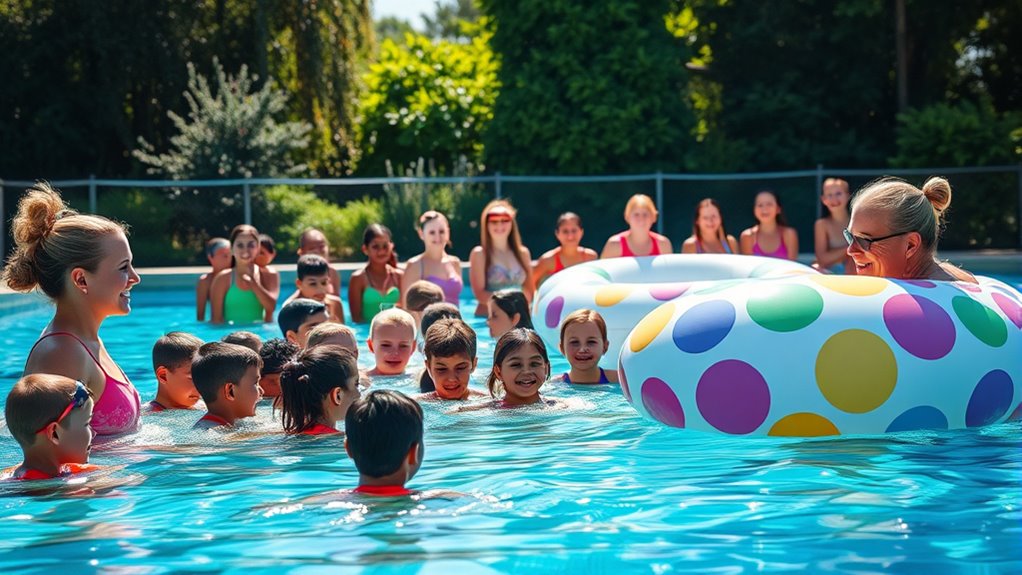
Community outreach and swimming education programs help you and your community stay safe around water. These initiatives promote water safety, teach rescue skills, and prevent drownings through workshops, demonstrations, and hands-on lessons. Collaborating with local pools, schools, and organizations, they focus on underserved areas to maximize impact. By participating, you’ll contribute to a safer environment where everyone understands water dangers and safety measures—discover more ways these programs can help you and your community stay safe.
Key Takeaways
- Community outreach promotes water safety awareness across diverse age groups, preventing water-related accidents and drownings.
- Swimming education programs include demonstrations, workshops, and hands-on lessons to teach essential water safety skills.
- Lifeguard training prepares community members for emergency response, rescue techniques, and enforcing water safety rules.
- Collaboration with local organizations and schools enhances program reach, especially in underserved areas, fostering a safety culture.
- Effective outreach reduces drowning rates, improves rescue response times, and encourages shared responsibility for water safety.
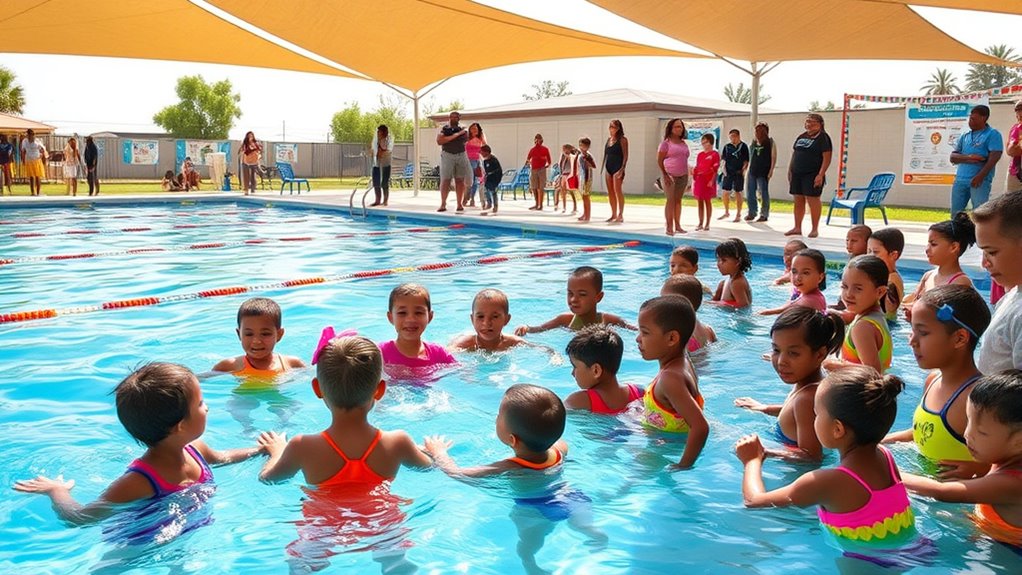
Community outreach and swimming education programs play a crucial role in promoting water safety and preventing accidents. When you participate in these initiatives, you become part of a larger effort to teach vital skills that can save lives. These programs are designed to reach diverse groups, from young children to adults, ensuring everyone understands how to stay safe around water. One of the key elements of effective water safety education is comprehensive lifeguard training, which equips individuals with the skills needed to respond quickly and confidently during emergencies. By promoting lifeguard training as part of community outreach, you help create a safer environment where more people are prepared to step in if someone is in danger.
You might not realize it, but community outreach efforts often include demonstrations, workshops, and hands-on lessons that make water safety concepts clear and memorable. These activities teach participants how to recognize dangerous situations, perform rescue techniques, and administer basic first aid. When you engage in these programs, you’re learning skills that can prevent drownings and other water-related accidents. Teaching children and adults alike about the importance of supervision, safe swimming practices, and respecting water environments helps instill responsible behavior. As a result, fewer accidents happen, and your community becomes a safer place for everyone to enjoy water activities.
Lifeguard training is a core component of many community outreach initiatives. It doesn’t just prepare individuals to become professional lifeguards; it also empowers everyday people to act confidently in emergencies. Whether you’re a parent, a coach, or a community volunteer, gaining lifeguard skills means you’re better equipped to respond swiftly if someone is struggling in the water. These training programs emphasize not only rescue techniques but also proactive safety measures, such as surveillance and enforcing rules that prevent accidents before they happen. When more community members are trained as lifeguards or water safety educators, the entire environment becomes safer because there’s always someone ready to help.
Furthermore, community outreach programs often work in collaboration with local pools, schools, and organizations to maximize their impact. You can get involved by volunteering, attending educational sessions, or even helping to organize events that promote water safety awareness. Your participation makes a difference, especially in underserved areas where access to formal training might be limited. By spreading knowledge and encouraging proactive safety measures, you contribute to a culture of responsibility around water activities. Promoting natural materials and environmentally friendly practices in these programs can also enhance community awareness of sustainability. Ultimately, these efforts help reduce drownings, improve rescue response times, and foster a community that values water safety as a shared priority.

Arena Unisex Adult Club Kit Swim Kickboard for Men and Women Swimming Training Aid Foam Boogie Board Pool Floats Exercise Equipment, Black/White
Super cool kickboard with stylish colors and designs made for ultimate comfort, safety, and style in the pool…
As an affiliate, we earn on qualifying purchases.
As an affiliate, we earn on qualifying purchases.
Frequently Asked Questions
How Are Program Locations Chosen for Community Outreach?
You choose program locations based on facility accessibility and partner collaborations. You prioritize sites that are easy to access for all community members, including those with mobility challenges. You also work with local partners, like schools or community centers, to identify venues that reach diverse populations. This ensures your outreach efforts are effective and inclusive, making it easier for everyone to participate and learn essential swimming skills securely.
What Age Groups Are Targeted in Swimming Education Programs?
Think of a young swimmer just beginning to dip their toes into the water; your swimming education program targets children aged 3 to 12, nurturing their safety skills from playful splashes to confident strokes. You develop a curriculum that acts as a safety net, ensuring child safety at every turn. By focusing on these age groups, you build a strong foundation for lifelong water enjoyment and awareness.
Are There Volunteer Opportunities Available for Community Outreach?
Yes, volunteer opportunities are available for community outreach. You can get involved through volunteer coordination efforts, helping organize outreach events that promote swimming safety and education. Your participation can make a real difference by engaging local residents, leading demonstrations, or assisting with event logistics. These opportunities allow you to contribute your time and skills, fostering stronger community connections and ensuring more people benefit from essential swimming programs.
How Is Program Success Measured and Evaluated?
You measure program success by analyzing its impact on the community and gathering participant feedback. You look at changes in swimming skills, safety awareness, and overall engagement to determine effectiveness. Participant feedback provides insights into what works and what needs improvement. By regularly evaluating these factors, you guarantee the program continues to meet community needs, making adjustments to maximize its positive impact and foster safer, more confident swimmers.
What Funding Sources Support These Outreach and Education Initiatives?
You can access funding through grant opportunities and sponsorship funding to support your outreach and education initiatives. Local government agencies, nonprofit organizations, and private foundations often provide grants specifically aimed at community programs. Additionally, sponsorships from businesses help cover costs and promote your efforts. By actively seeking these sources, you guarantee your programs receive the necessary financial support to expand and sustain your community impact.

Kemp USA 50-Inch Grip-It Mesh Lifeguard Rescue Tube with White Guard Logo Durable Throwable Flotation Device for Pool Safety Lifeguard Equipment Training Aid Professional Water Rescue
Protective Coating & Foam Support: This lifeguard rescue tube features a flexible, durable nylon mesh casing around the…
As an affiliate, we earn on qualifying purchases.
As an affiliate, we earn on qualifying purchases.
Conclusion
By getting involved in community outreach and swimming education programs, you can truly make a difference. These efforts help save lives, build confidence, and foster a safer environment for everyone. Remember, it’s better to be safe than sorry, so take action now. Your participation can turn the tide for many, proving that a little effort goes a long way. Together, we can create a community where everyone feels confident around water.
child swimming safety gear
As an affiliate, we earn on qualifying purchases.
As an affiliate, we earn on qualifying purchases.
water rescue demonstration models
As an affiliate, we earn on qualifying purchases.
As an affiliate, we earn on qualifying purchases.