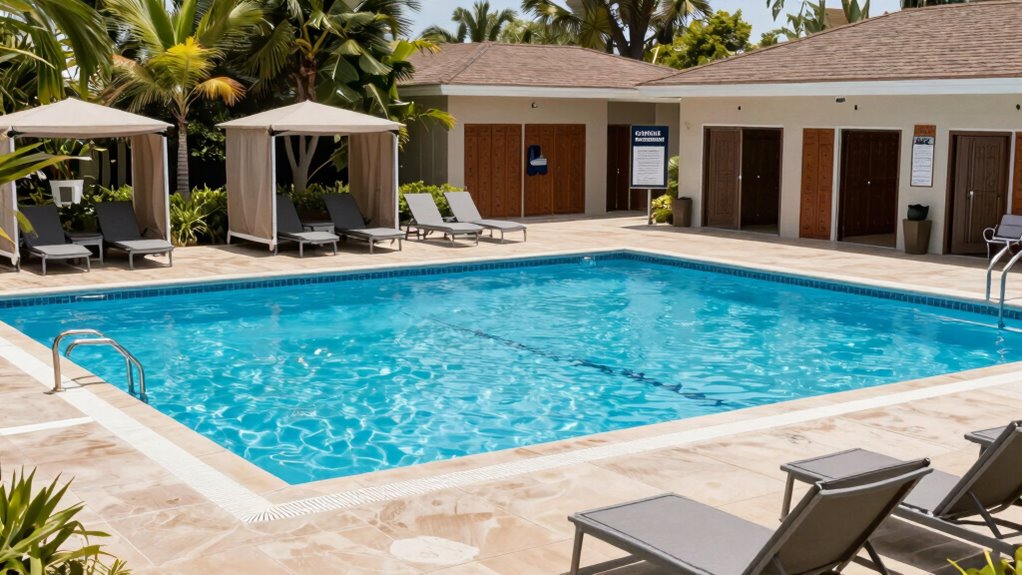

You can improve safety and operations at your semi-public pool by adopting safety protocols, emergency procedures, and staff training methods used in large aquatic facilities. Implement clear signage, hold regular safety drills, and guarantee staff are well-trained in emergency response. Use technology like surveillance cameras and communication systems to boost oversight. Establish safety officers or coordinators to create a culture of safety, just like in big centers. Keep exploring for more ideas to make your pool safer and more efficient.
Listen free for 30 days with Audible
Thousands of audiobooks and originals — cancel anytime.
As an affiliate, we earn on qualifying purchases.
Key Takeaways
- Implement clear safety signage, regular drills, and emergency procedures tailored for smaller pool environments.
- Provide staff with ongoing training on safety protocols, emergency response, and cross-training in essential roles.
- Utilize surveillance cameras and communication systems to enhance supervision without significantly increasing staffing.
- Designate safety officers or coordinators to oversee safety policies and promote a proactive safety culture.
- Regularly review and update safety protocols, incorporating lessons learned from large facilities for continuous improvement.
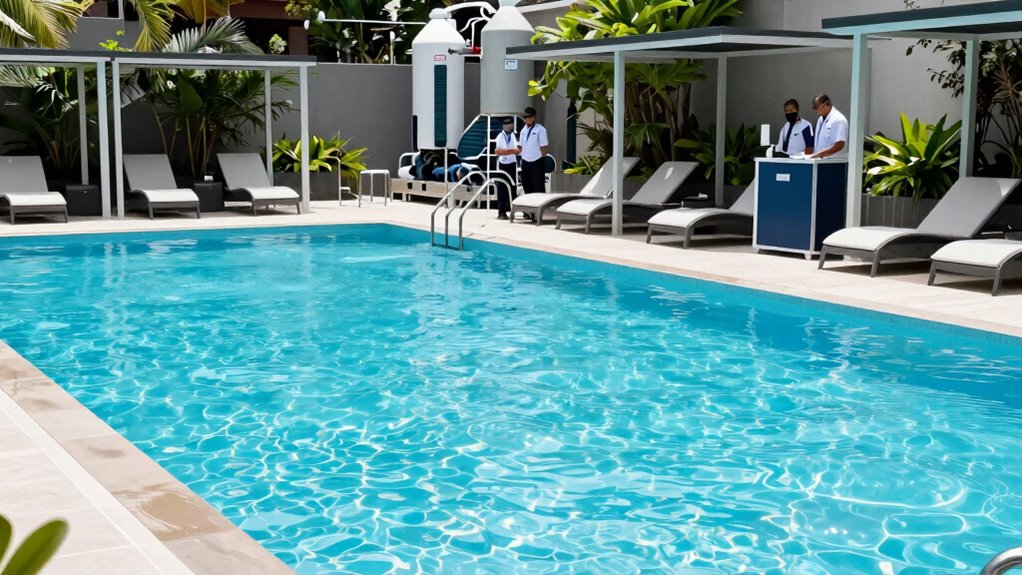
Semi-public pools are increasingly adopting best practices from large aquatic facilities to enhance safety, efficiency, and user experience. If you’re managing or designing a semi-public pool, understanding how big facilities operate can help you implement effective safety protocols and staffing strategies that keep everyone safe and satisfied. Large aquatic centers often have detailed safety protocols that could be adapted for smaller settings. These include clear signage, regular safety drills, and well-defined emergency procedures. By adopting such protocols, you guarantee that both staff and patrons know what to do in case of an emergency, reducing confusion and response times. Training staff thoroughly on these safety measures is vital; large facilities dedicate resources to ongoing training programs which can be scaled down but still remain effective for semi-public pools. Implementing regular safety audits, signage updates, and staff refresher courses can boost confidence and safety across your pool. Additionally, large facilities often utilize comprehensive safety management systems that can be tailored for smaller operations to streamline incident reporting and follow-up. Learning from these systems can help create a more proactive safety environment.
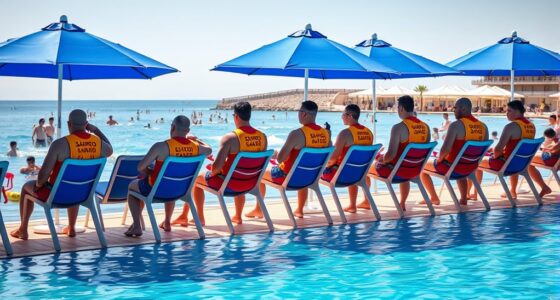
Staffing strategies are another area where large facilities excel and where semi-public pools can learn. In big aquatic centers, staffing isn’t just about having enough lifeguards; it’s about deploying the right number of trained personnel at key points to maintain constant supervision. This includes having multiple lifeguards on duty during peak hours and cross-trained staff who can handle various roles, such as first aid or pool maintenance. You can borrow this approach by analyzing your peak usage times and adjusting your staffing levels accordingly. Cross-training staff allows for more flexible coverage, minimizing gaps in supervision and ensuring that safety is never compromised. Many large facilities also utilize technology, like surveillance cameras and communication systems, to enhance supervision and coordination. Incorporating these tools into your semi-public pool’s staffing strategy can improve oversight without necessarily increasing personnel costs. Pool safety technology can be adapted to smaller settings to further strengthen supervision and incident management.
Another best practice involves creating a culture of safety through clear communication and visible leadership. Large facilities often have designated safety officers or supervisors who actively monitor and enforce policies. You can adopt this model by appointing a safety coordinator or team responsible for safety protocols, staff training, and incident follow-up. Regular staff meetings to review safety policies and discuss concerns promote a proactive safety culture. This emphasis on safety not only reduces accidents but also boosts patron confidence, encouraging repeat visits. By borrowing these proven strategies from larger aquatic facilities, you can elevate the safety standards and operational efficiency of your semi-public pool. Implementing thoughtful safety protocols and staffing strategies guarantees a safer, more enjoyable environment for everyone, regardless of pool size.
As an affiliate, we earn on qualifying purchases.
Frequently Asked Questions
How Do Semi-Public Pools Ensure Safety Standards Match Large Facilities?
You guarantee safety standards match large facilities by prioritizing rigorous lifeguard training and strict maintenance schedules. Regularly update your staff’s skills, emphasizing emergency response and customer safety. Keep your pool equipment in top shape through consistent maintenance, preventing hazards before they arise. Implement safety protocols similar to big facilities, and routinely review procedures. This proactive approach helps your semi-public pool maintain high safety standards, protecting everyone who uses your pool.
What Funding Models Can Semi-Public Pools Adopt From Large Facilities?
Did you know that large facilities often secure up to 60% of their funding through diversified sources? To emulate this, you should explore community engagement strategies like sponsorships, grants, and membership programs. Funding diversification helps stabilize your pool’s finances, ensuring sustainability. By actively involving your community and seeking varied funding streams, your semi-public pool can build resilience, expand services, and foster stronger connections with local residents.
How Do Semi-Public Pools Manage Staffing Efficiently Like Big Venues?
You can manage staffing efficiently by focusing on budget optimization and staff training. Implement flexible schedules that match peak hours, reducing unnecessary labor costs. Invest in thorough staff training to enhance skills, enabling your team to handle multiple roles confidently. Use data to monitor attendance patterns, adjusting staffing levels accordingly. Cross-train employees so they can perform various tasks, ensuring smooth operations without overspending, just like big venues do.
What Marketing Strategies From Large Pools Are Effective for Semi-Public Ones?
You can boost your semi-public pool’s visibility by focusing on community engagement and forming brand partnerships. Host local events, swim lessons, or fitness classes that encourage community participation. Collaborate with nearby businesses for sponsorships or cross-promotions, increasing your reach. These strategies build loyalty, attract new visitors, and create a positive reputation, helping your pool stand out like larger facilities while fostering stronger community ties.
How Can Semi-Public Pools Incorporate Advanced Technology Used in Large Facilities?
You can incorporate advanced technology in your semi-public pool by installing smart sensors to monitor water quality, temperature, and occupancy levels in real-time, ensuring a safer and more efficient experience. Additionally, offer virtual tours on your website, showcasing your facilities and amenities to attract more visitors and build trust. These innovations mirror large facilities’ practices, making your pool more modern, appealing, and well-managed without massive investments.
As an affiliate, we earn on qualifying purchases.
Conclusion
By adopting the strategies of large facilities, your semi-public pool can elevate its standards and attract more visitors. Think of it as weaving a tapestry of excellence—each best practice adding vibrant color and strength. Don’t just dream of improvements; plunge into and implement these lessons today. With a little effort, your pool can become a shimmering oasis, proving that size isn’t everything, but quality and innovation truly make waves.
As an affiliate, we earn on qualifying purchases.
As an affiliate, we earn on qualifying purchases.
NFL season / tailgating Picks
team gear
As an affiliate, we earn on qualifying purchases.