Knowing key pool terms can make your service conversations smoother and help you better understand what’s needed. Terms like “pool maintenance schedule,” “water chemistry,” “filter maintenance,” and “chemical balancing” clarify what tasks are involved and how often they should happen. Understanding concepts like “pH,” “alkalinity,” and “chlorine levels” lets you communicate more confidently with professionals. Staying familiar with these terms helps prevent misunderstandings—keep exploring to learn even more essential pool language.
Key Takeaways
- Understand and use terms like “chemical balancing,” “pH,” “alkalinity,” and “calcium hardness” accurately.
- Differentiate between “cleaning” tasks (skimming, vacuuming) and “chemical adjustments.”
- Know the significance of “filter maintenance” and related procedures.
- Recognize testing-related terms such as “test strips,” “test kits,” and “water analysis.”
- Communicate issues clearly using terms like “cloudy water,” “algae growth,” or “imbalanced chemistry.”

When discussing pool services, understanding the right terminology can make your conversations clearer and more efficient. Knowing key terms helps you communicate your needs accurately and prevents misunderstandings. For example, when talking about how often your pool should be serviced, mentioning “pool maintenance schedules” ensures everyone is on the same page about regular upkeep. These schedules typically include tasks like cleaning, filter checks, and chemical balancing. By referencing this, you can clarify how often you want your pool checked or maintained, whether weekly, bi-weekly, or monthly. This helps set expectations upfront and guarantees your pool stays in top condition without surprises. Additionally, understanding biodiversity in pool ecosystems can help you appreciate the importance of maintaining a balanced environment that promotes water quality and safety.
Another essential term is “water chemistry basics.” This phrase refers to the fundamental understanding of maintaining proper chemical levels in your pool. It involves balancing pH, alkalinity, calcium hardness, and sanitizer levels to keep the water safe, clear, and comfortable. When your service professional discusses water chemistry basics, they’re talking about the core factors that influence water quality. If you’re familiar with these terms, you can ask informed questions about ongoing chemical adjustments or treatments. For example, you might inquire about how often your pool’s pH needs testing or what adjustments are necessary if your water appears cloudy or develops algae. Recognizing the significance of chemical levels is crucial for effective communication and proper pool care. Being aware of testing procedures can further enhance your understanding of how these adjustments are made and monitored.
Understanding the difference between “cleaning” and “chemical balancing” is also crucial. Cleaning generally refers to removing debris, skimming the surface, and vacuuming the pool floor. Chemical balancing, on the other hand, involves adjusting chemical levels to ensure water safety and clarity. When your pool service talks about these terms, you’ll know whether they’re referring to physical cleaning tasks or chemical treatments. This distinction helps you prioritize what needs immediate attention or schedule regular upkeep accordingly. Being familiar with filter maintenance procedures can also help you better understand the necessary steps to keep your filtration system functioning efficiently. Furthermore, knowing how to recognize signs of improper chemical balance can help you identify potential issues early before they become costly problems.
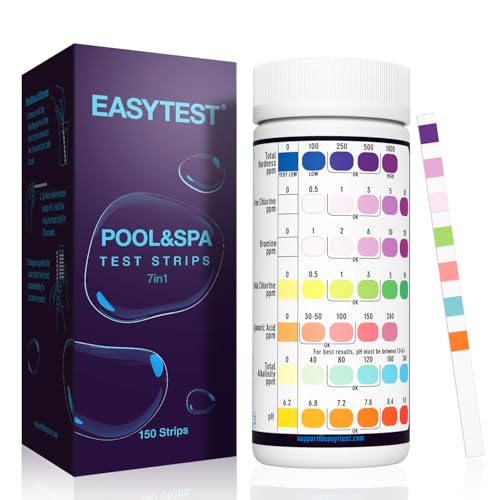
EASYTEST 7-Way Pool Test Strips, 150 Strips Water Test for Hot tub and Spa
- 150 Test Strips: Affordable water testing kit with 150 strips
- Quick and Accurate: Results in 15 seconds with color comparison
- 7-in-1 Testing: Measures Bromine, pH, Chlorine, Alkalinity, Hardness, Cyanuric Acid
As an affiliate, we earn on qualifying purchases.
As an affiliate, we earn on qualifying purchases.
Frequently Asked Questions
How Do Pool Terms Vary by Region or Country?
You’ll notice pool terms vary a lot by region or country due to regional language differences and cultural terminology variations. For example, what’s called a “skimmer” in the US could be known as a “leaf trap” elsewhere. You might also find different terms for pool accessories or maintenance routines, so adjusting your language helps communication. Understanding these regional nuances ensures smoother service conversations and helps you connect better with local clients or teams.
Are There Industry-Standard Definitions for Common Pool Terms?
Yes, industry-standard definitions for common pool terms exist, helping you communicate effectively. Familiarizing yourself with pool terminology and maintenance vocabulary guarantees clarity when discussing issues or services. These standardized terms cover everything from water chemistry to equipment parts, making service conversations smoother. Using consistent language reduces misunderstandings, speeds up repairs, and helps you better understand your pool’s needs. Staying updated on these standards empowers you to manage your pool confidently.
How Can I Learn Pool Terminology Quickly?
To learn pool terminology quickly, immerse yourself in pool maintenance resources like online guides, videos, and industry articles. Focus on key terms related to chemical balancing, filtration, and equipment. Practice by using these terms during actual pool care or conversations. Joining forums or asking professionals helps reinforce your understanding. Consistent exposure and hands-on experience will boost your confidence and make the technical language second nature in no time.
Do Pool Terms Differ Between Residential and Commercial Pools?
Pool terminology does differ between residential and commercial pools, especially in maintenance jargon. Commercial pools often require more specialized terms related to safety regulations, filtration systems, and chemical management. Residential pools tend to use simpler language focused on basic upkeep. Understanding these distinctions helps you communicate effectively with service providers, ensuring proper maintenance. Learning the specific pool terminology for each type will make your service conversations smoother and more efficient.
What Resources Are Available for Mastering Pool Service Language?
Think of mastering pool service language as opening a treasure chest of knowledge. To do this, you can access online courses, industry manuals, and training programs focused on pool maintenance and equipment troubleshooting. Joining professional associations also helps you stay current with terminology. These resources act as your map, guiding you through the language of pool service, making communication smoother and your skills sharper.

Hayward CL200EF in-Line Automatic Chlorine Feeder, Offline Pool Chlorinator and Chlorine Dispenser, Up to 9 lb Capacity, for In-Ground Swimming Pools
- Automatic Off-Line Chlorination: Consistent chlorine distribution for pools
- High-Capacity Chlorine Feeder: Holds up to 9 lbs of chlorine
- Corrosion-Resistant Construction: Durable, chemical-resistant housing
As an affiliate, we earn on qualifying purchases.
As an affiliate, we earn on qualifying purchases.
Conclusion
Mastering pool terms can truly make your service conversations smoother and more efficient. When you speak the same language as your clients, you build trust and clarity. Did you know that 86% of customers are more likely to stay loyal when they feel understood? By using simple, familiar pool terminology, you guarantee your message hits home. So, keep learning those terms—you’ll find that service interactions become quicker, easier, and more effective for everyone involved.

Aqua Comb Pool Filter Cartridge Cleaning Tool
- Durable UV-Protected Materials: Made of UV protected ABS and nylon
- Comprehensive Filter Cleaning: Fully cleans deep pleated cartridge filters
- Effective Debris Removal: Removes debris, dust, and particles from filters
As an affiliate, we earn on qualifying purchases.
As an affiliate, we earn on qualifying purchases.
As an affiliate, we earn on qualifying purchases.