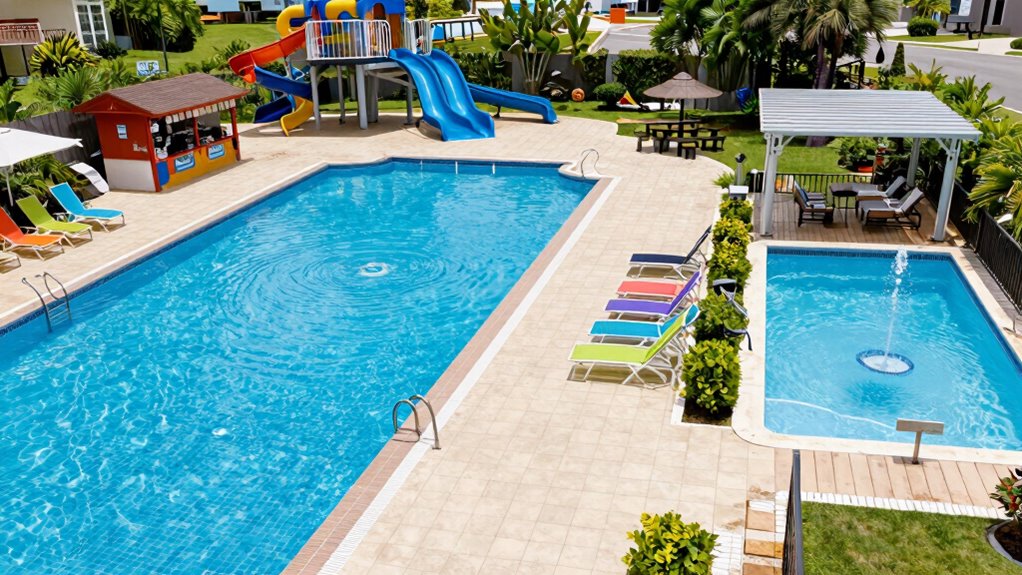
Public aquatic facilities are different from backyard pools because they have trained lifeguards, strict safety protocols, and regular maintenance handled by staff. They also offer amenities like swim lessons and social events, creating a community environment. In contrast, backyard pools rely on your vigilance for safety and require you to manage cleaning and repairs. Want to discover more about their advantages and differences? Keep exploring to learn the key details.

Get pool and patio gear delivered free with Prime
- Fast, free delivery on millions of items
- Prime Video, Amazon Music and more included
- Member-only deals all year
Key Takeaways
- Public aquatic facilities have trained lifeguards and strict safety protocols, unlike private backyard pools relying on owner vigilance.
- Maintenance in public pools is handled by staff, while private pools require owner responsibility for upkeep and repairs.
- Public pools offer additional amenities like swim lessons and social events, whereas private pools prioritize privacy and personal convenience.
- Public facilities are funded through user fees or community budgets, with regular safety and cleanliness checks; private pools involve personal financial and time commitments.
- Public pools typically accommodate larger groups and community interactions, while backyard pools are more private and customizable.
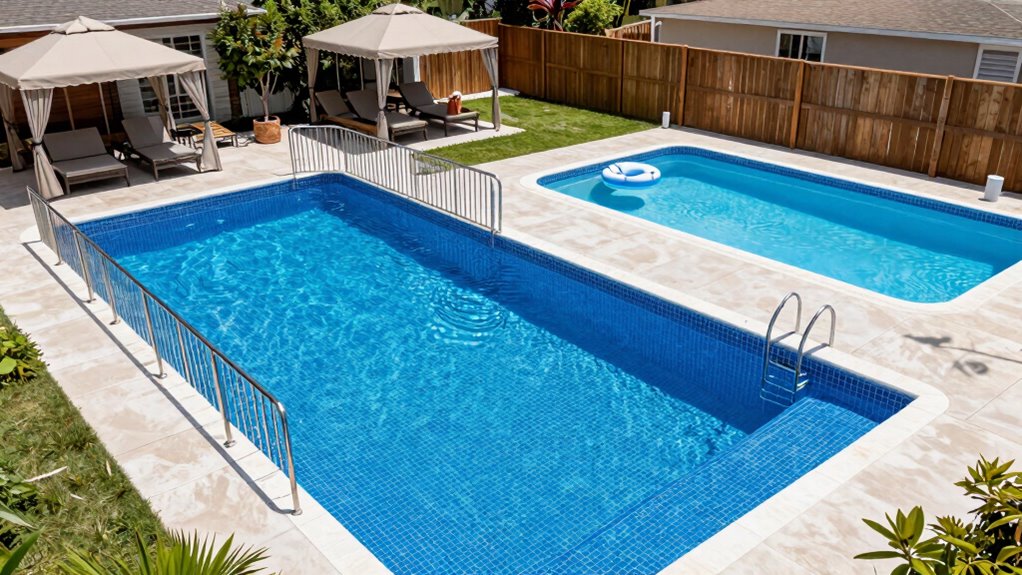
When choosing between public aquatic facilities and backyard pools, you’re faced with a decision that affects your summer enjoyment, budget, and convenience. Public aquatic centers often draw larger crowds, which means community safety becomes a top priority. These facilities typically have trained lifeguards, strict safety protocols, and regular maintenance to keep the environment secure for swimmers of all ages. You can feel confident knowing that safety measures are in place to prevent accidents and respond quickly if an emergency arises. Conversely, with a backyard pool, safety depends largely on your vigilance and the measures you put in place. You might need to install fencing, alarms, or covers to prevent unsupervised access, which adds to your responsibilities.
Public pools prioritize safety with lifeguards and protocols; backyard pools rely on your vigilance and safety measures.
Maintenance costs are another significant difference. Public aquatic facilities handle the expense of regular cleaning, chemical balancing, and equipment upkeep. These costs are usually covered by user fees, memberships, or community budgets, which means you aren’t directly responsible for the ongoing upkeep. This arrangement helps keep the facility inviting and safe without extra effort on your part. On the other hand, owning a backyard pool means you shoulder all the maintenance costs. You’ll need to budget for chemicals, filtration systems, repairs, and seasonal opening and closing. These expenses can add up quickly, especially if your pool requires frequent repairs or upgrades. Additionally, the time investment for cleaning and maintenance of a backyard pool can be substantial, taking away from your leisure time. Proper maintenance practices are essential in both settings to ensure safety and longevity of the pool. Moreover, understanding water safety protocols is vital for preventing accidents and ensuring a secure swimming environment.
Public pools often offer a variety of amenities beyond just swimming, including swim lessons, water aerobics, and social events, which can enhance your overall experience. They also provide opportunities for your family to meet others in the community, fostering social connections. Backyard pools, while offering privacy and convenience, limit these social interactions to your immediate circle. They also require you to plan around maintenance schedules, weather conditions, and safety checks, which can sometimes disrupt spontaneous swimming sessions. Furthermore, proper maintenance and safety protocols are crucial in both settings to ensure a safe swimming environment, especially with the increased risks associated with water safety. Being aware of and adhering to safety guidelines can greatly reduce the likelihood of accidents and ensure a positive experience for everyone involved.
Ultimately, your choice depends on what you prioritize: is it community safety and low maintenance costs, or privacy and personalized convenience? Public aquatic facilities offer a safe, well-maintained environment for all, but come with larger crowds and ongoing fees. Backyard pools grant you control over your space and schedule but demand significant upkeep and safety measures. Both options have their merits, so consider your budget, lifestyle, and safety concerns to make the best decision for your summer fun.
Products Worth Considering

Philips Hue White and Color Ambiance A19 Smart Bulb Starter Kit, 2-Pack

Ring Alarm 5-Piece Wireless Security System

eufy Security Essential 7-Piece Alarm System
As an affiliate, we earn on qualifying purchases.
Frequently Asked Questions
What Safety Standards Are Unique to Public Aquatic Facilities?
Public aquatic facilities have stricter safety standards, like requiring lifeguard training and certification to guarantee proper rescue skills and supervision. They also prioritize water quality through regular testing and maintenance to prevent health hazards. Unlike backyard pools, these facilities implement thorough safety procedures, enforce capacity limits, and maintain detailed records. These standards help protect swimmers and create a safe, enjoyable environment for everyone.
How Do Maintenance Costs Compare Between Public and Private Pools?
Think of maintenance costs as a never-ending water slide—public pools charge you more for pool chemicals and upgrading filtration systems, which seem to get more expensive with every visit. You’ll find that public pools demand constant chemical balancing and robust filtration systems to handle larger crowds, making maintenance considerably pricier than backyard pools. Meanwhile, your private haven stays relatively low-cost, with fewer chemicals and simpler filtration needs.
What Are the Licensing Requirements for Public Aquatic Facilities?
You need to obtain specific licenses and permits to operate a public aquatic facility, ensuring compliance with local health and safety regulations. Regular pool filtration maintenance and water testing are mandatory to keep water quality safe. You must meet standards set by health departments, including proper filtration systems and routine water testing protocols. Staying current with these licensing requirements helps prevent violations and guarantees a safe, enjoyable environment for all visitors.
How Do Crowd Control Measures Differ in Public Versus Backyard Pools?
You’ll find crowd control differs greatly; in public pools, strict access restrictions and trained lifeguards manage large groups, ensuring safety amidst chaos. In contrast, backyard pools rely on homeowners’ judgment, with no formal crowd control or lifeguard training, making safety more personal but less reliable. Public pools prioritize safety protocols to prevent accidents, while backyard pools depend on close supervision, often leaving gaps in protection during busy or unforeseen moments.
What Environmental Impacts Are Associated With Public Aquatic Facilities?
Public aquatic facilities impact the environment through water use, chemical runoff, and energy consumption. You can reduce these impacts by implementing eco-friendly practices like water recycling, which conserves resources, and using energy-efficient systems to lower electricity use. Additionally, proper chemical management prevents pollution. By adopting these measures, you help protect local ecosystems while maintaining a safe, enjoyable space for everyone.
Conclusion
In choosing between a public aquatic facility and a backyard pool, you weigh convenience against privacy, safety against spontaneity, and variety against consistency. Each offers a different experience—one open to all, one private for your family. Both invite enjoyment, both promise refreshment, both satisfy your craving for water fun. Ultimately, it’s about what fits your lifestyle, your needs, your dreams—whether you seek community or comfort, public or personal, shared or secluded.